Sculptural/Illusionary Fashion Inspiration: Mugler

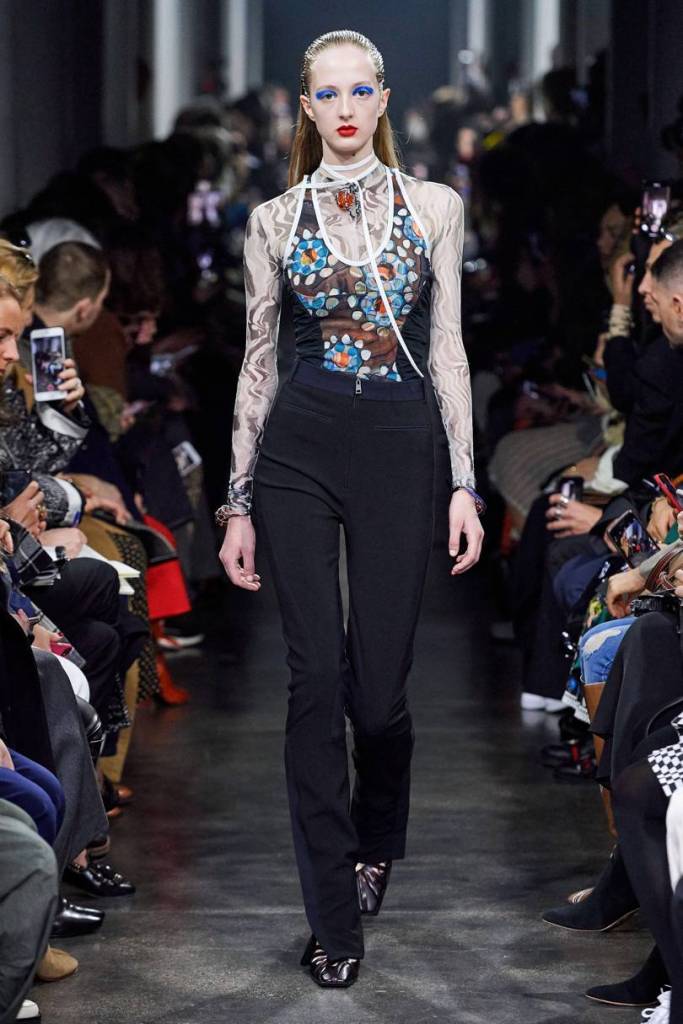
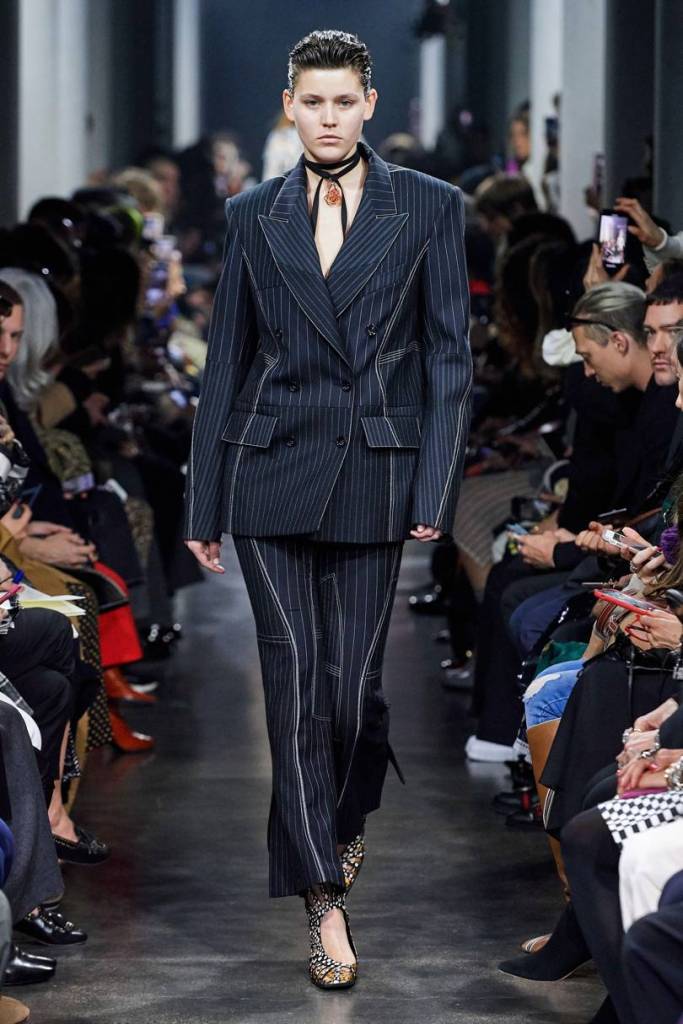
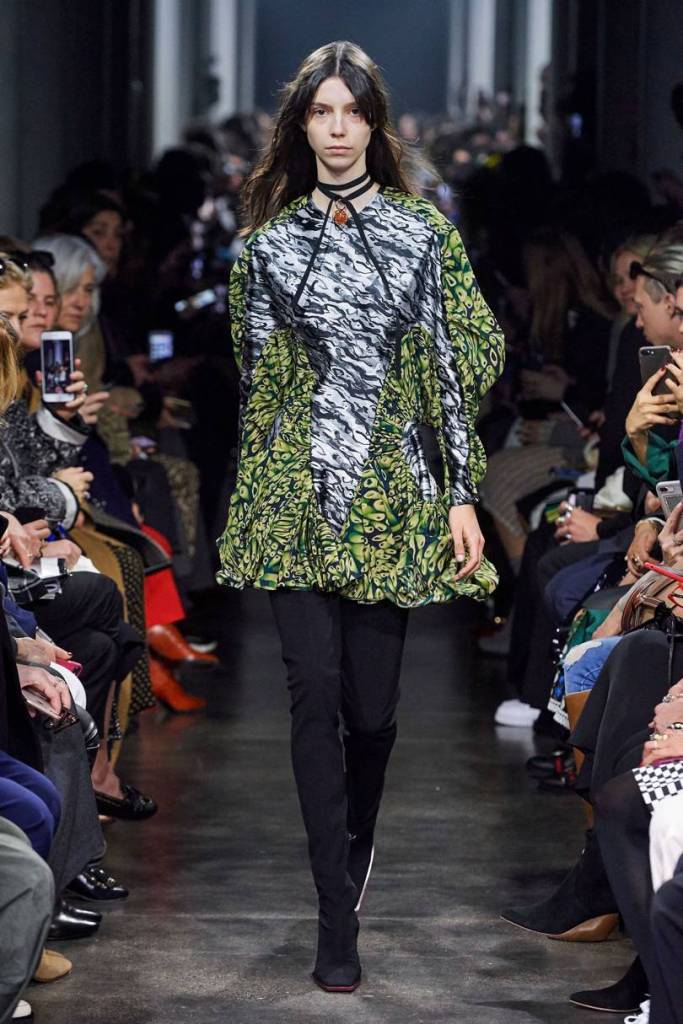
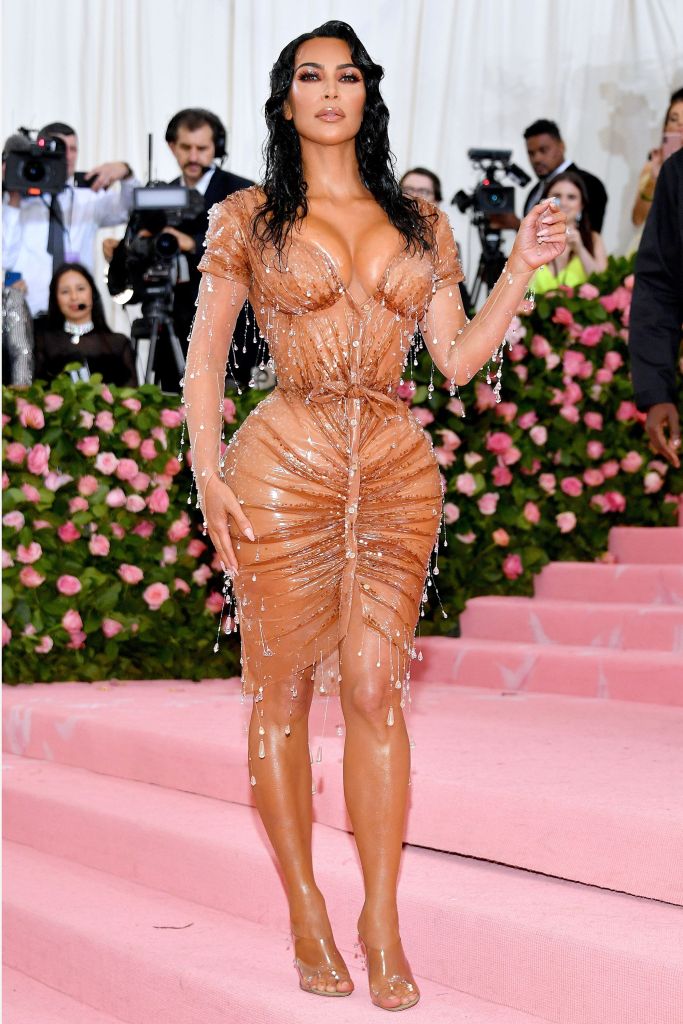
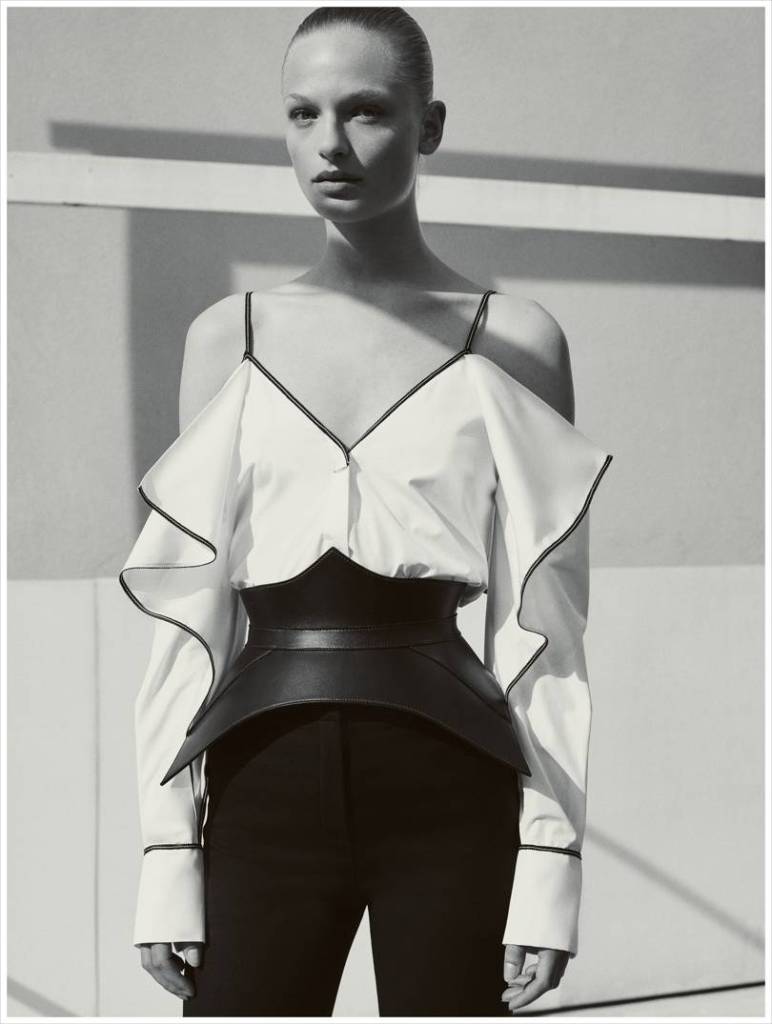
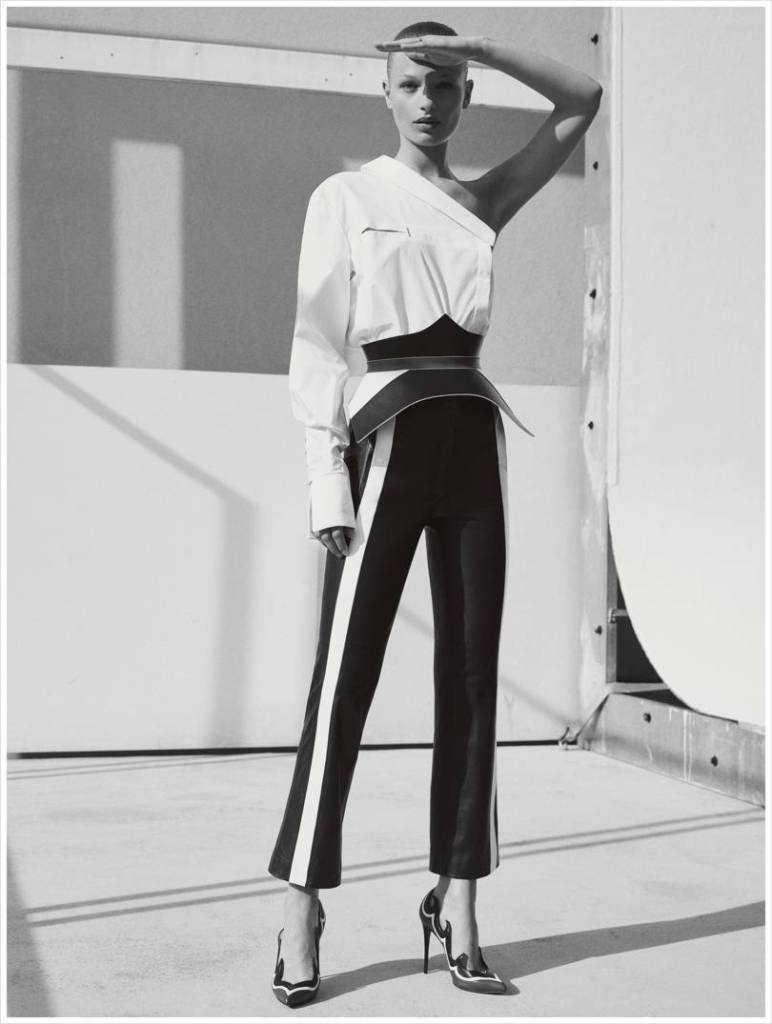
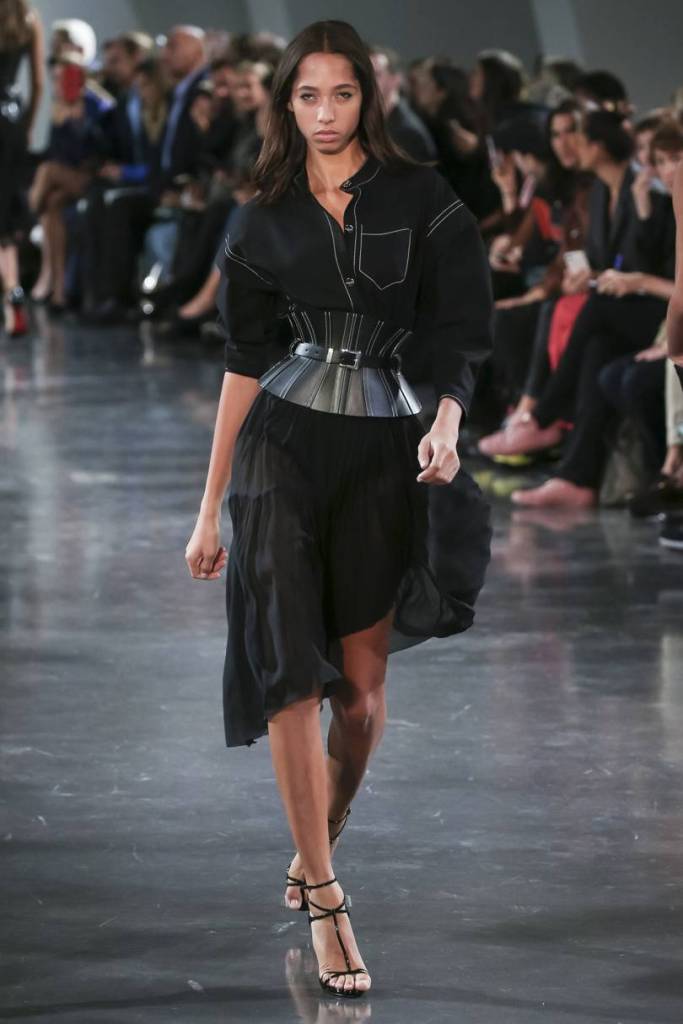
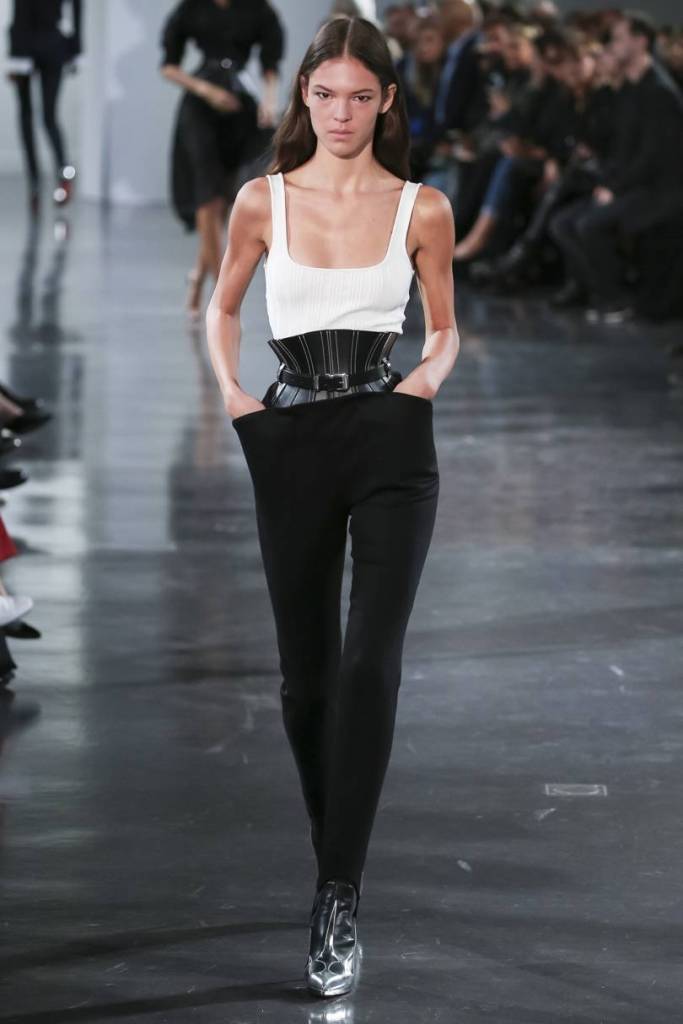
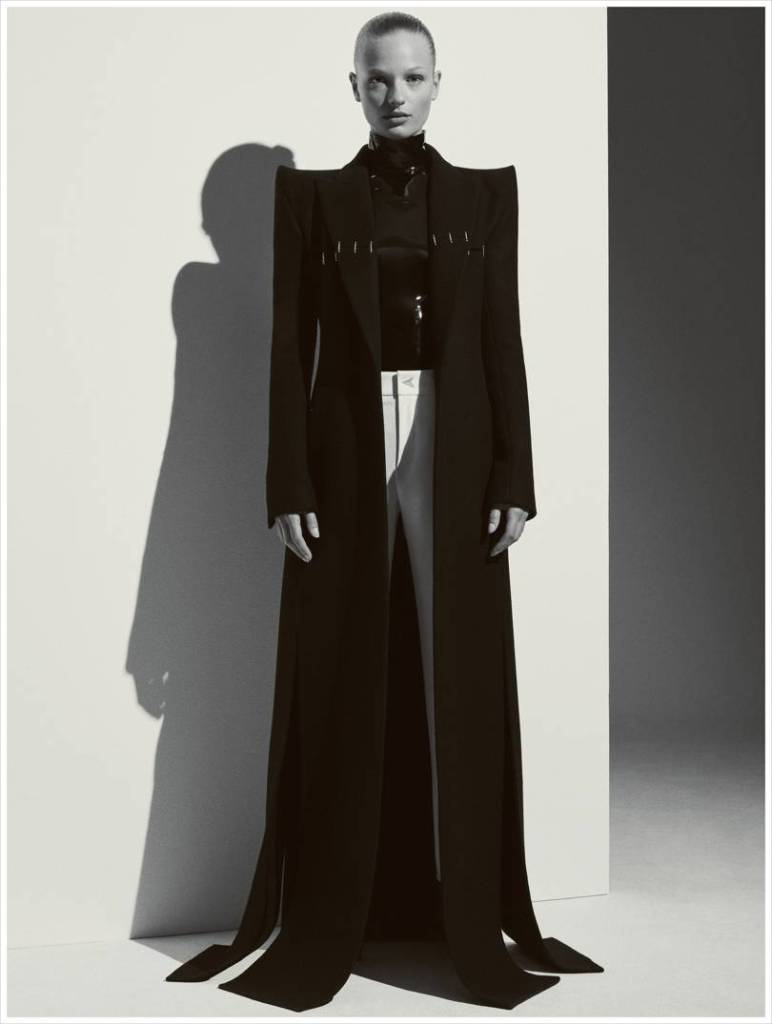
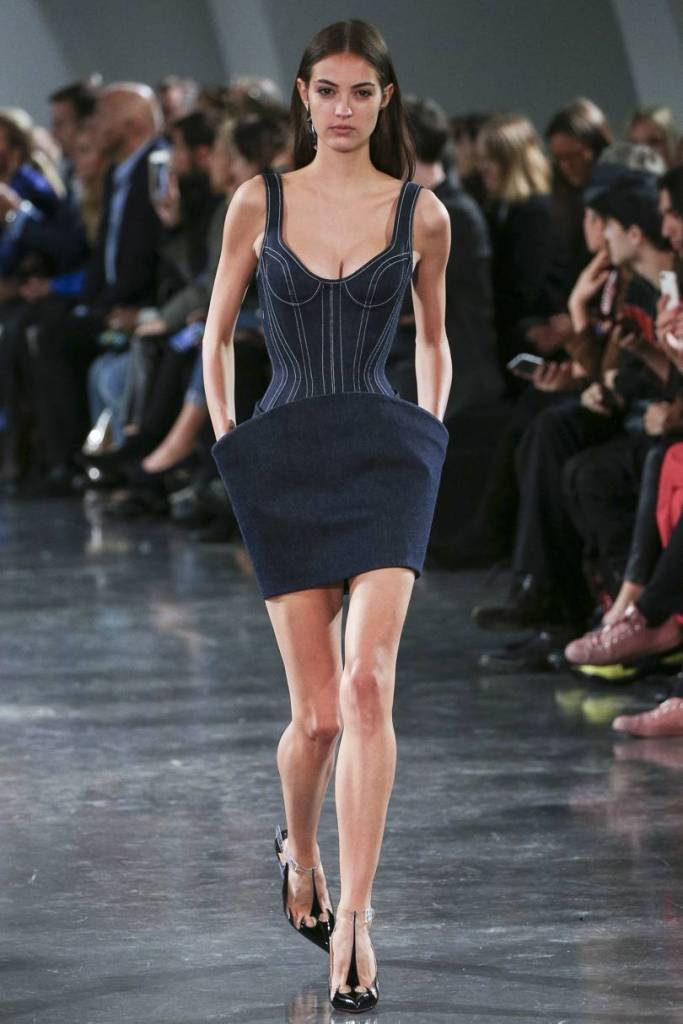
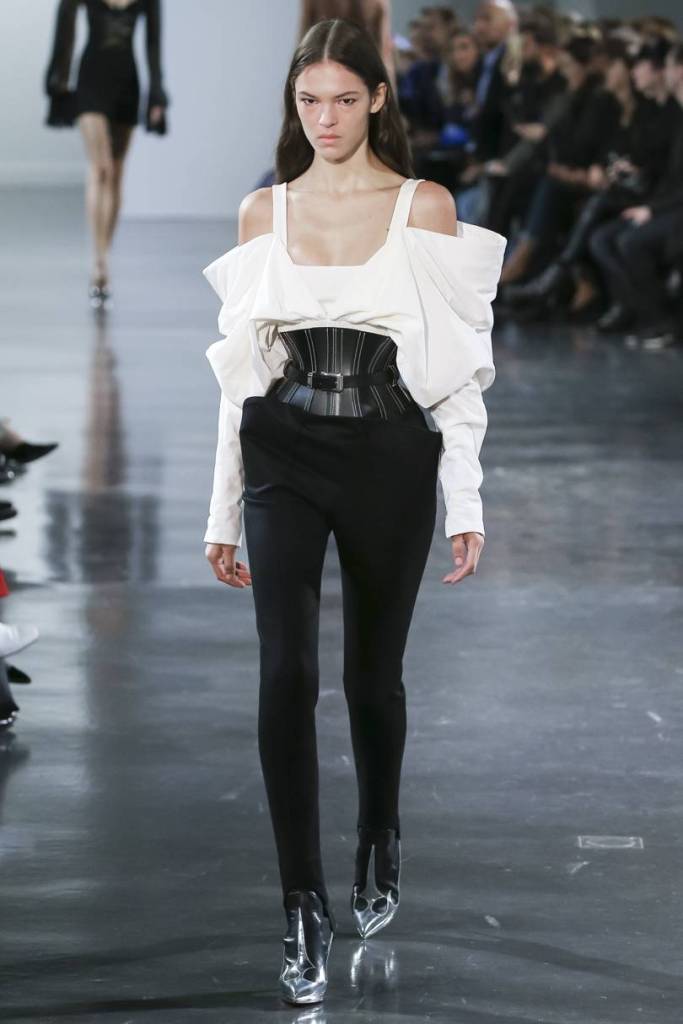
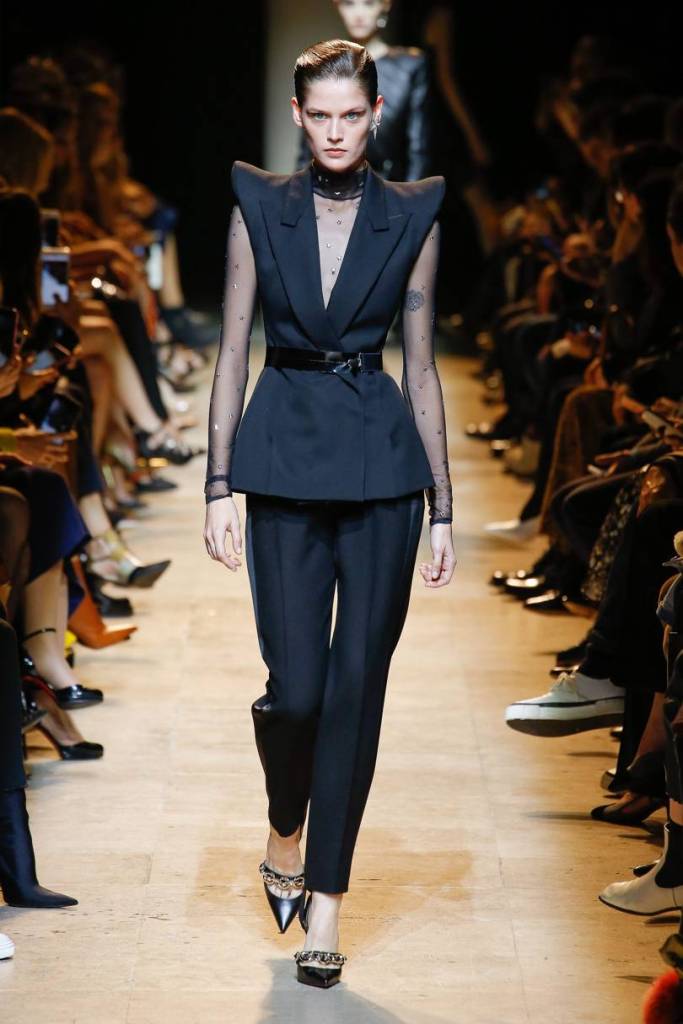
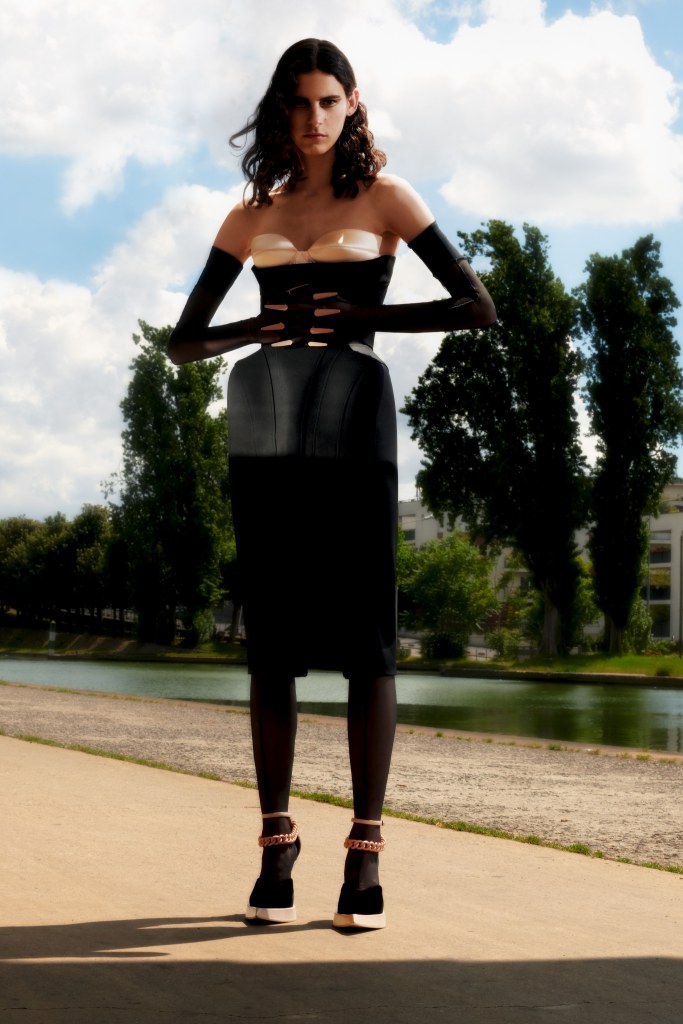
In my personal practice, I realized that I love to experiment with reshaping the body in ways that almost look like an illusion. Historically, I’ve achieved this type of look using my corsetry skills, but I am trying to push myself to experiment with different methods and ways of achieving this aesthetic/feel.

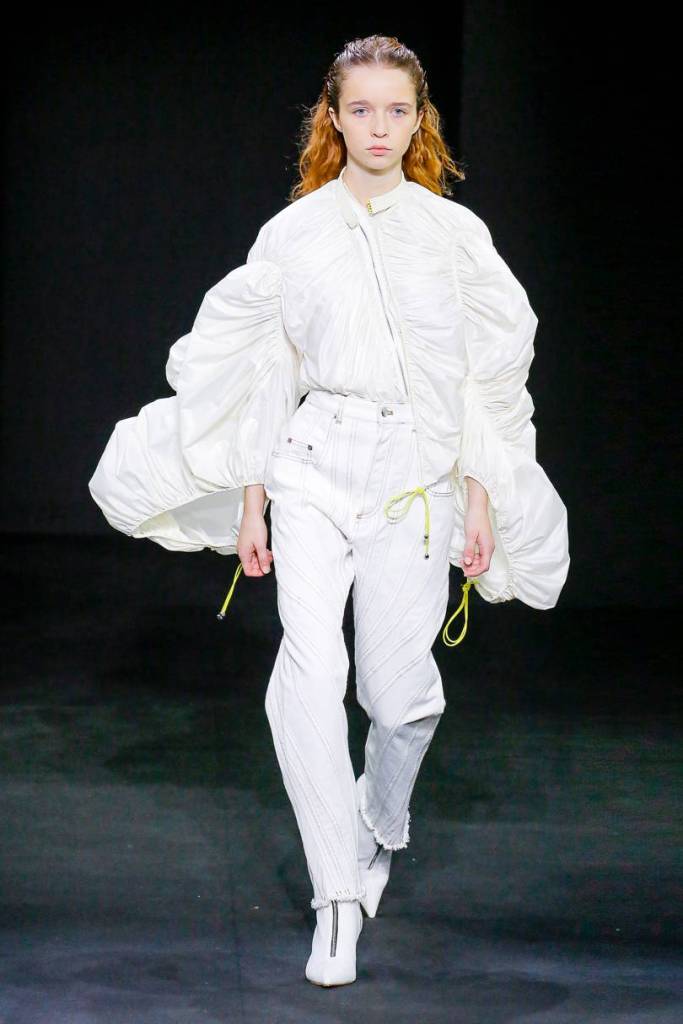
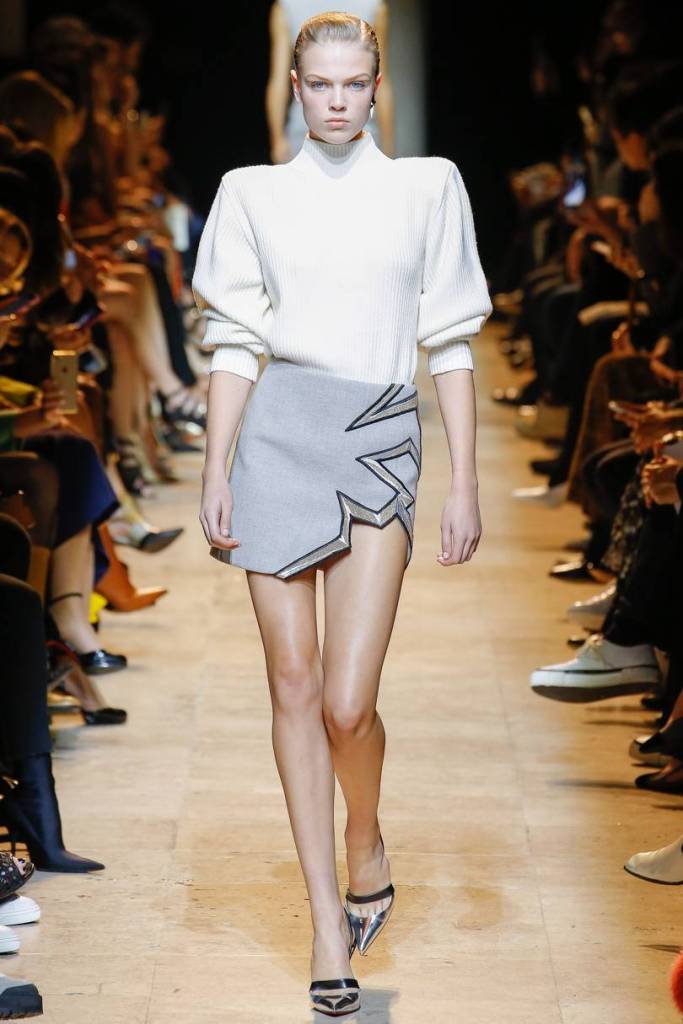
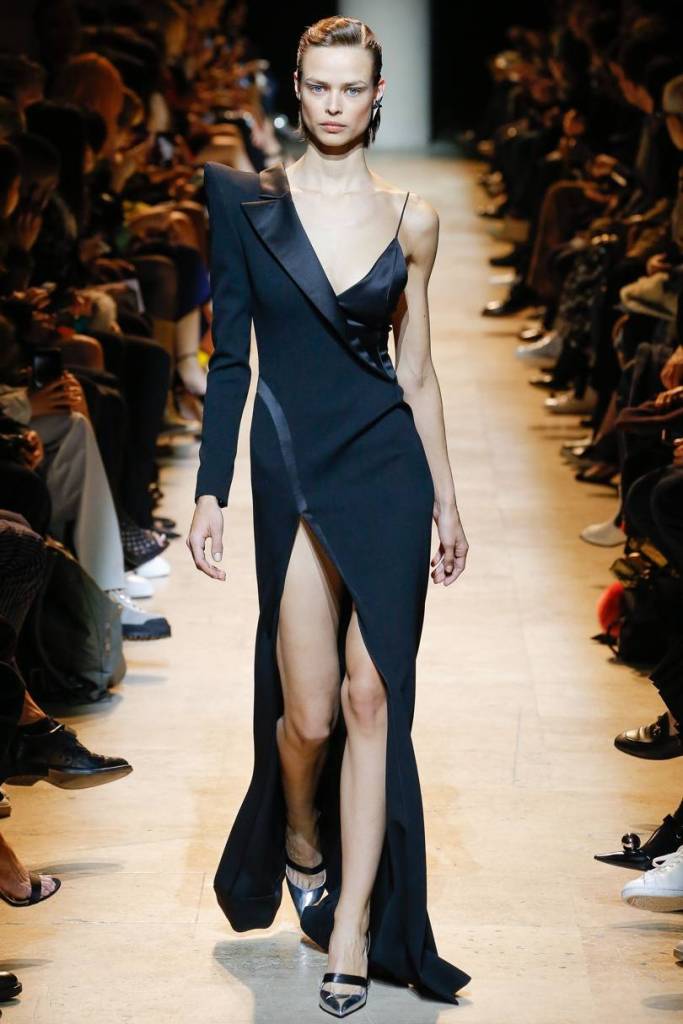
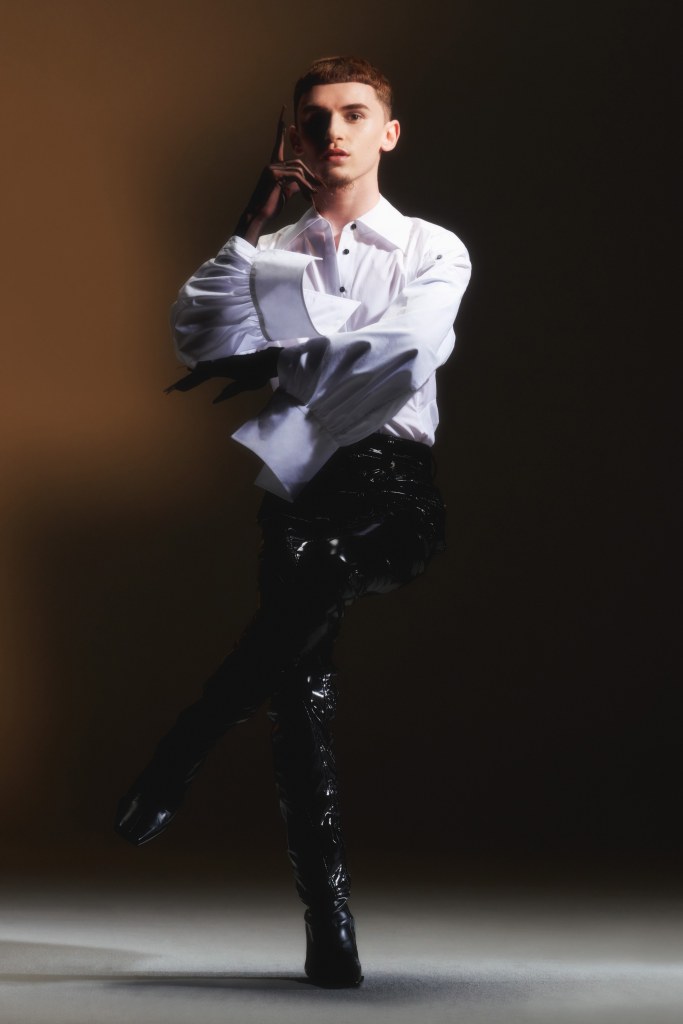
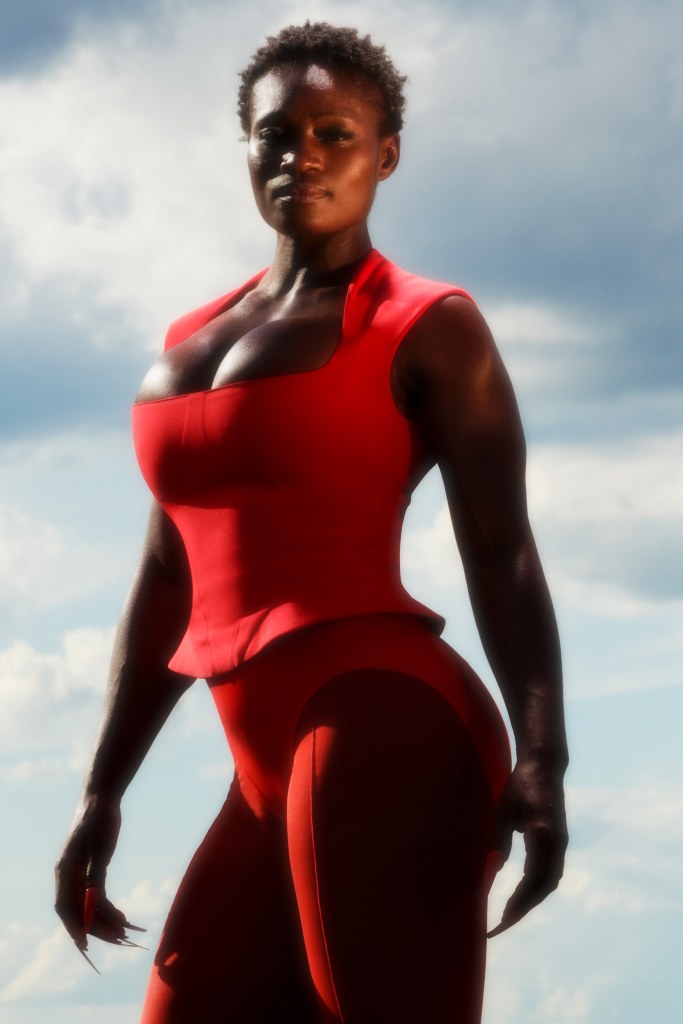
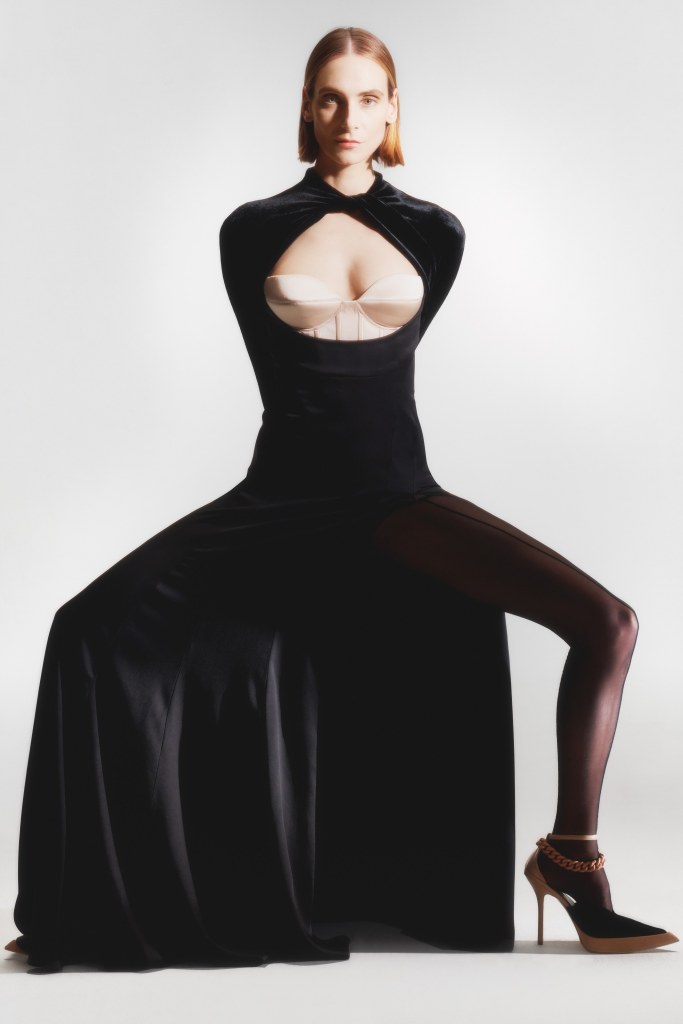
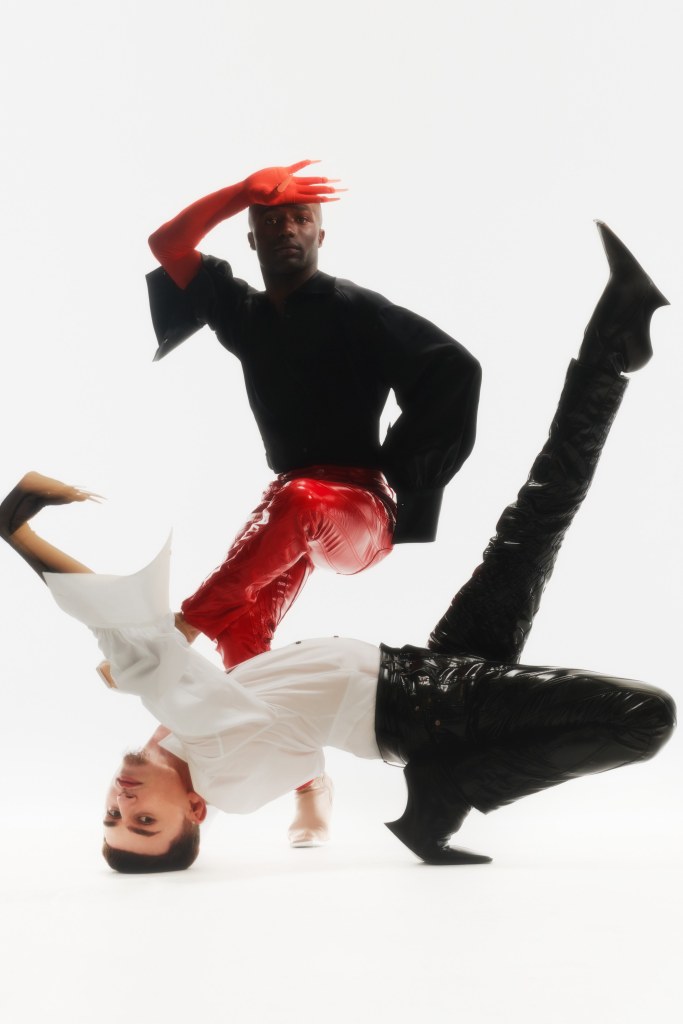
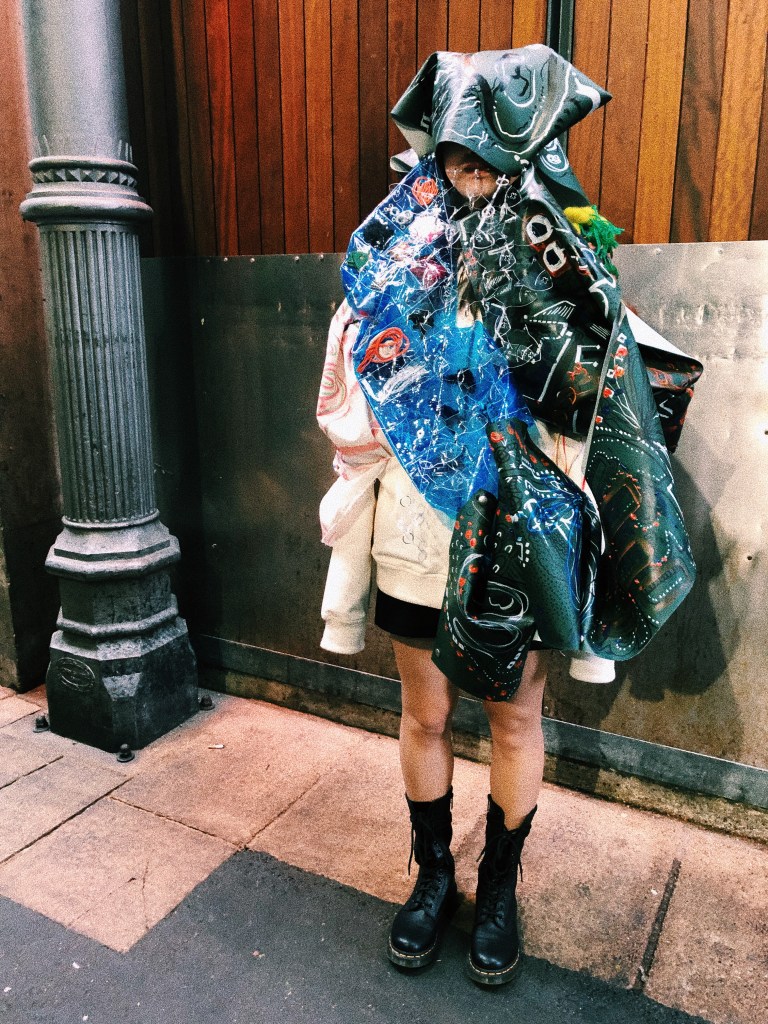
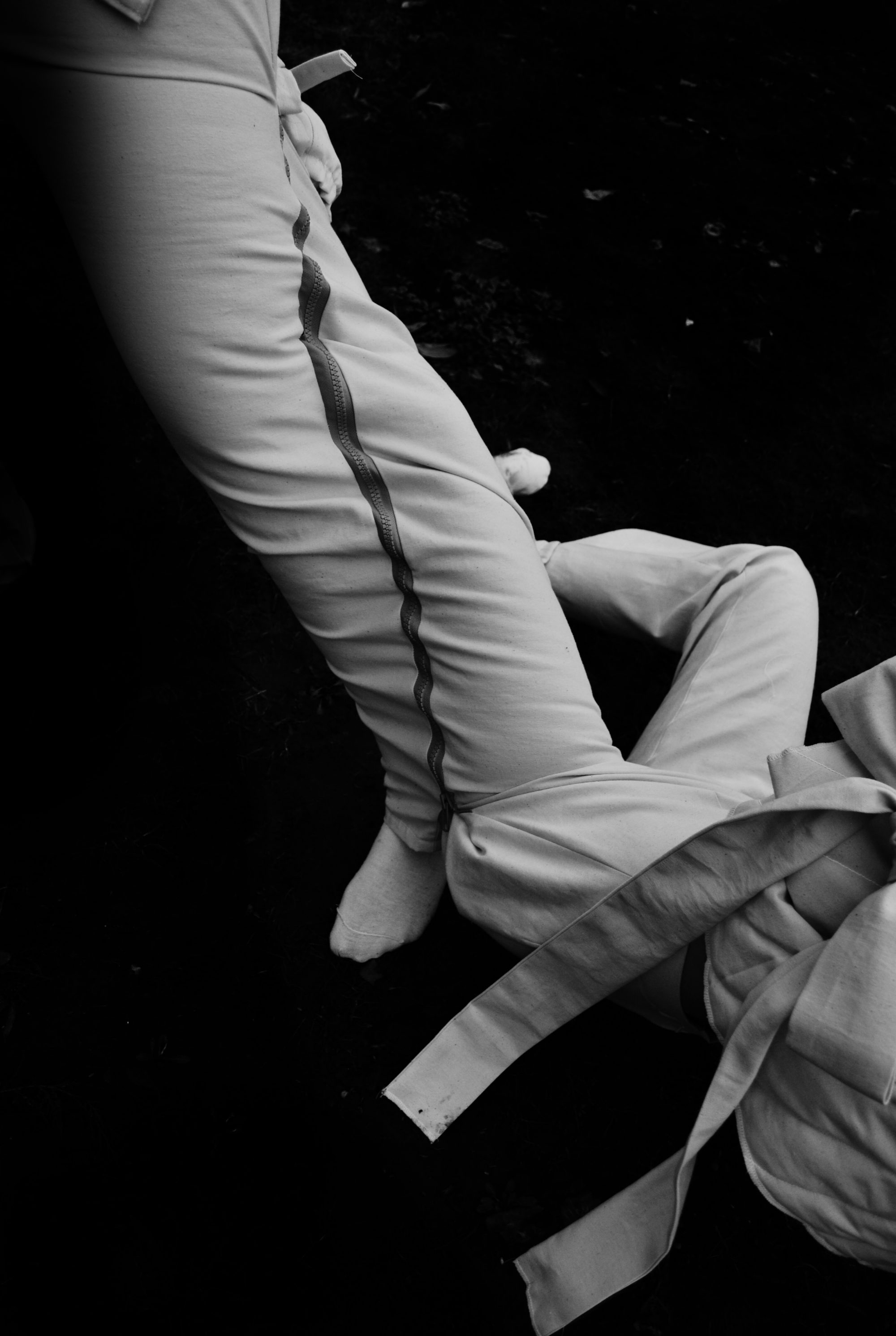
I have found Mugler to be very inspirational. A lot of the brand’s collections explore this illusionary effect. Here are some of the ways I’ve isolated as examples of how this look is achieved:

  1. Print Placement/Seamlines:
  2. Corsetry
  3. Structural Construction
  4. Using the Skin for Contrast/Shape
  1. Print Placement/Seamlines

2. Corsetry

3. Struture

4. Skin Showing

And here are some of my favorite posts from their instagram .
Cultural Mixing: Alexander McQueen at Givenchy

Suey and I have the Capture studio booked this Thursday, and we plan to take videos and photography of draping different shapes on each other with our various material tests.

However, after watching the Netflix Documentary on Alexander McQueen, I was so inspired to try some new methods in our documentation. The documentary discusses some of the cultural differences that occurred when Lee McQueen started working at Givenchy (some of which included language and barriers). I thought that these miscommunications were so interesting. It reminded me of when I first learned to sew and I could not understand sewing instructions. With both of these examples there is a clear difference between what is expected or told and the outcome. I then thought it would be interesting to create a garment, and write thorough instructions in order to see if Suey would be able to re-create it. And we could put both of the films side by side to compare. Literally, this would communicate a successful or unsuccessful verbal exchange.

Citation

McQueen. Peter Ettedgui and Ian Bonhôte. Netflix. 2018.

Psychogeographical Experiment in Borough Market

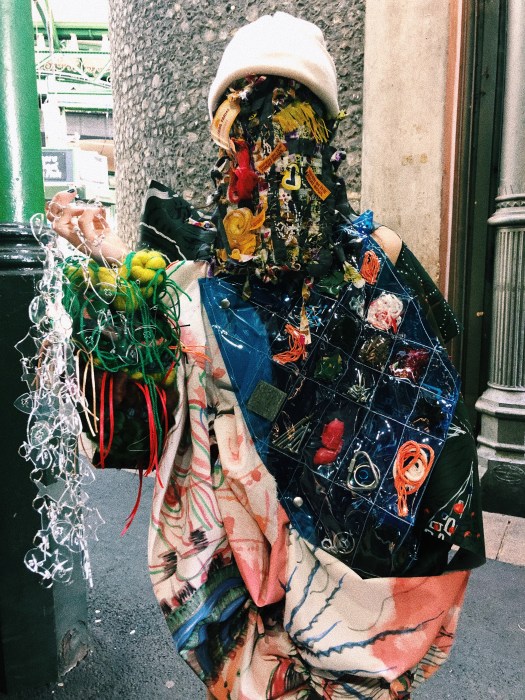
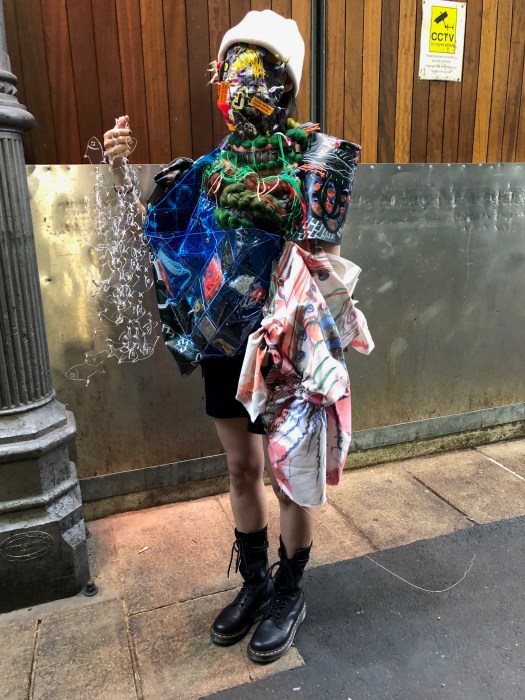
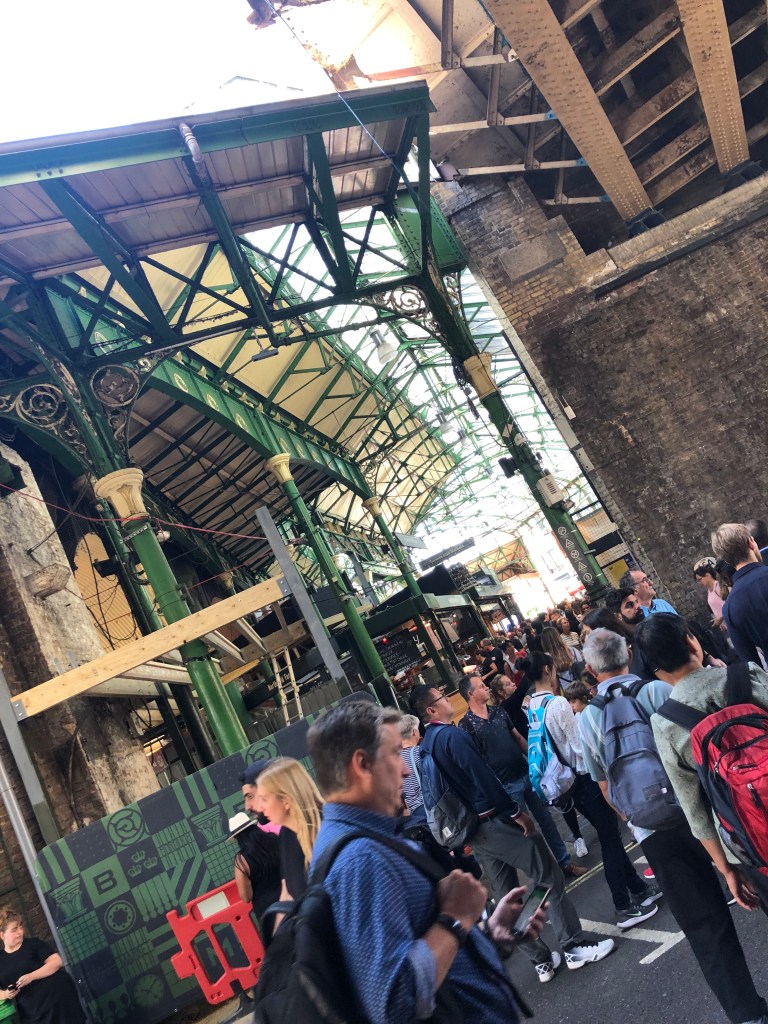
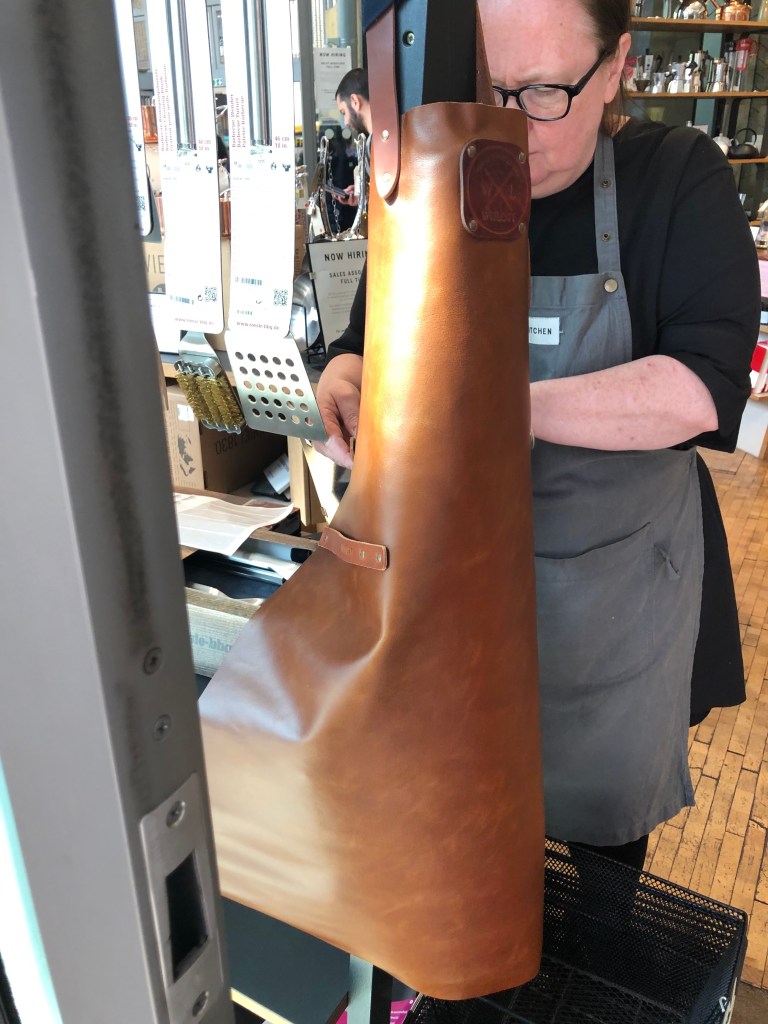
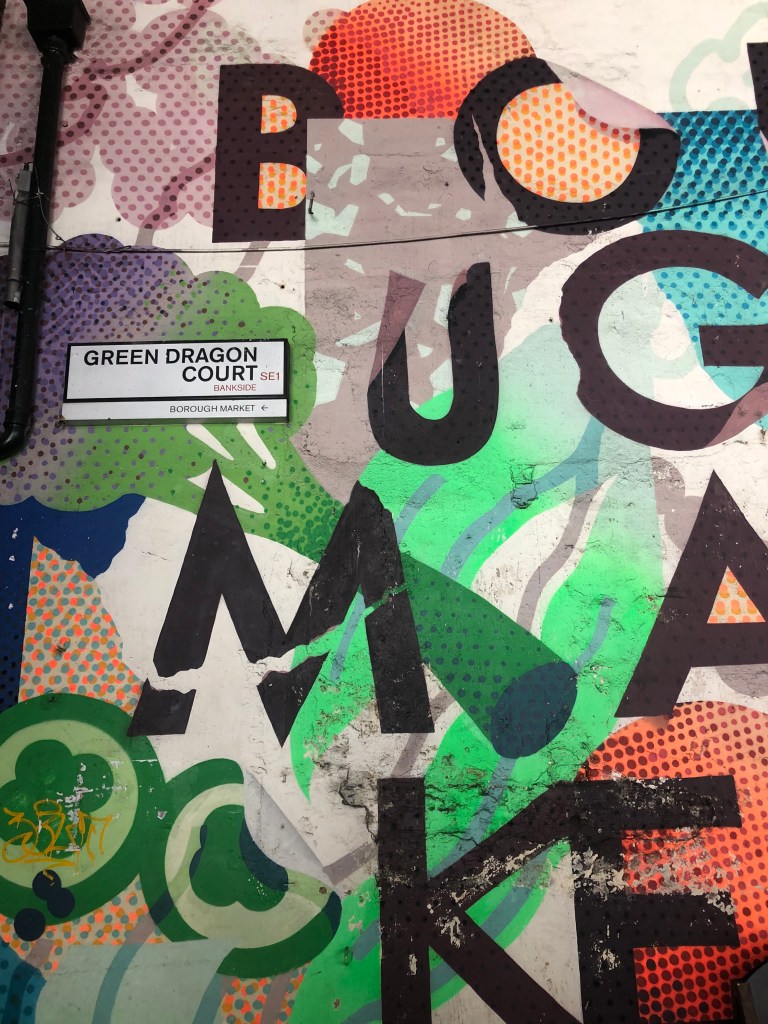
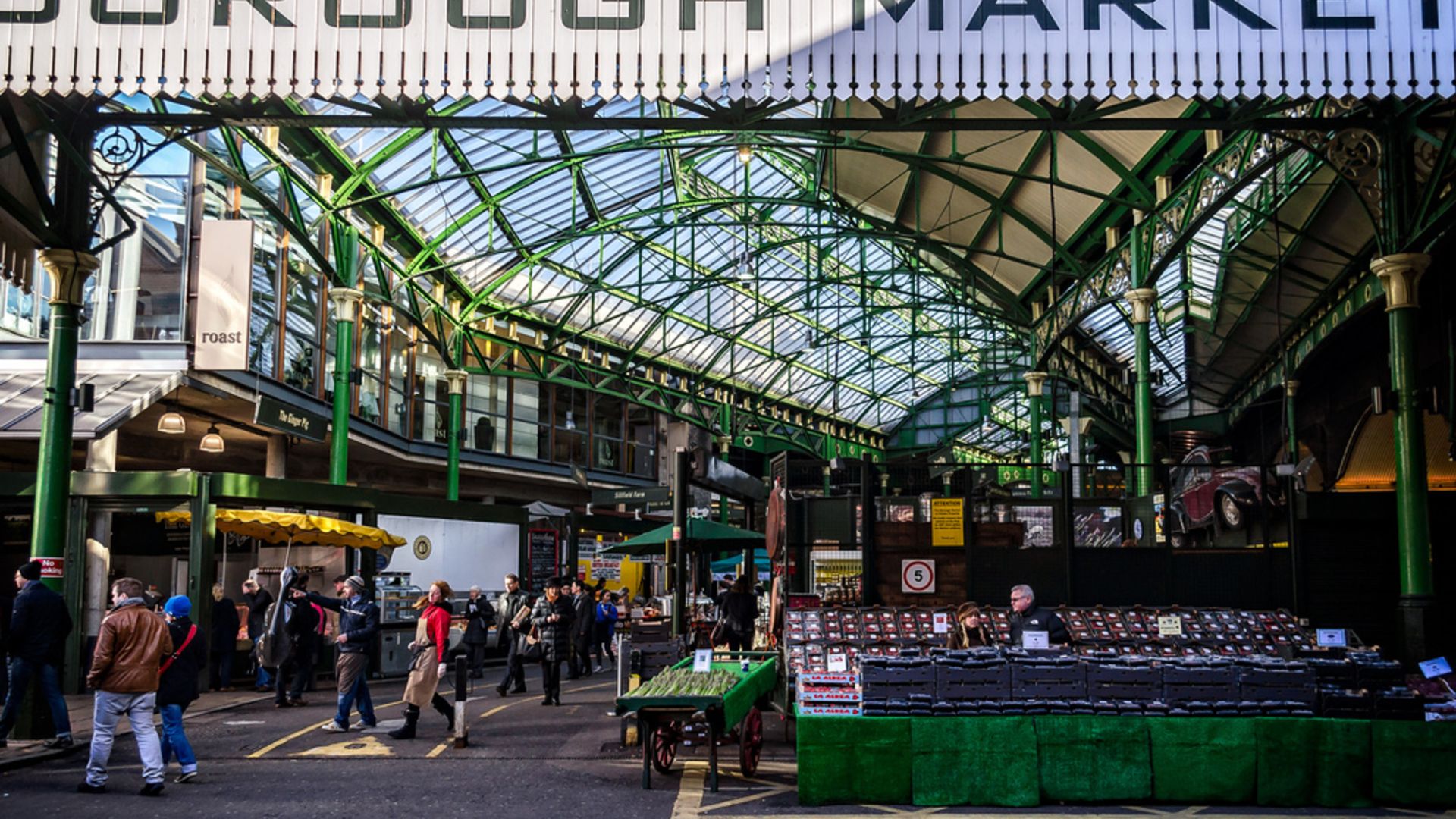
Me and Suey tried to do a psychogeographical experiment in the middle of Borough Market. I was thinking we might get inspired by the interactions, smells, sounds, lighting, and structures in the market.

I was also very inspired by the writings of Yi Fu Tuan, saying that people’s trails leave an interlocking mesh. I thought, theoretically, me and Suey could put ourselves in the middle of the mesh. Overall, this was a cool experiment. We definitely got some weird looks from the shoppers and store owners.

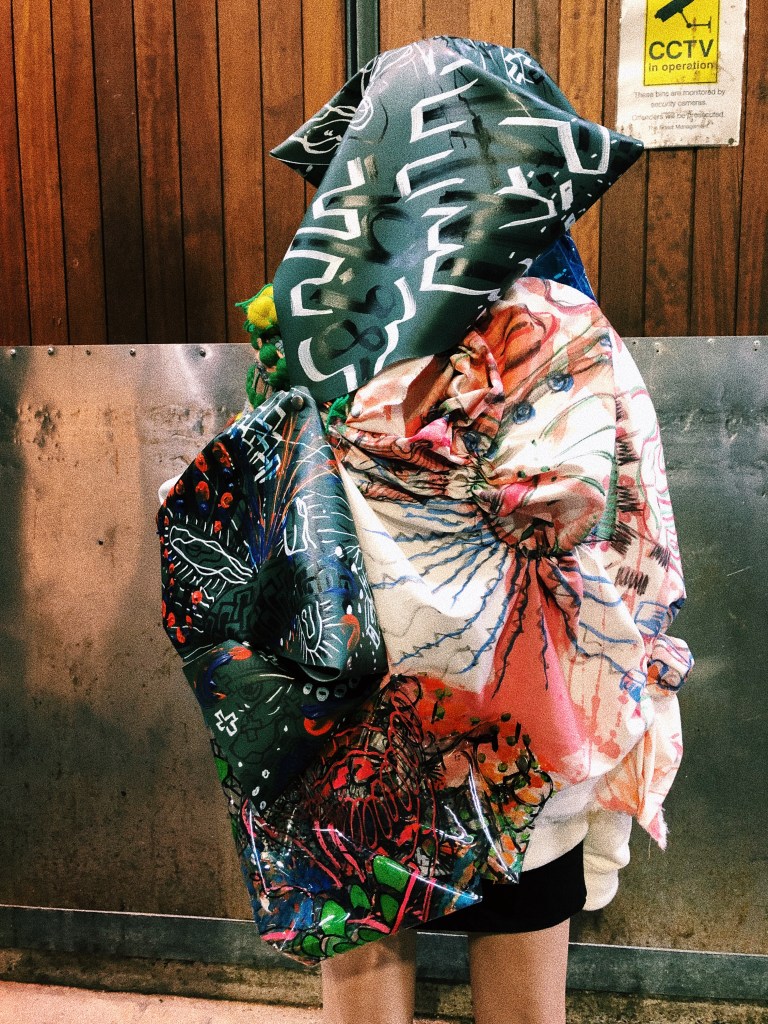
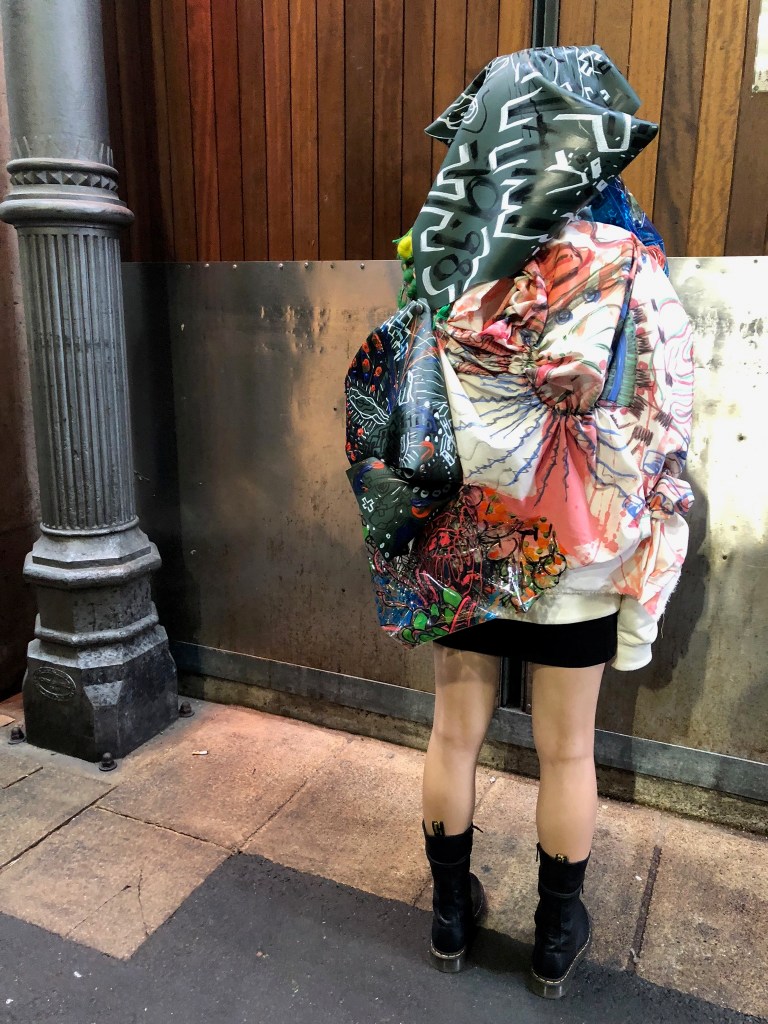
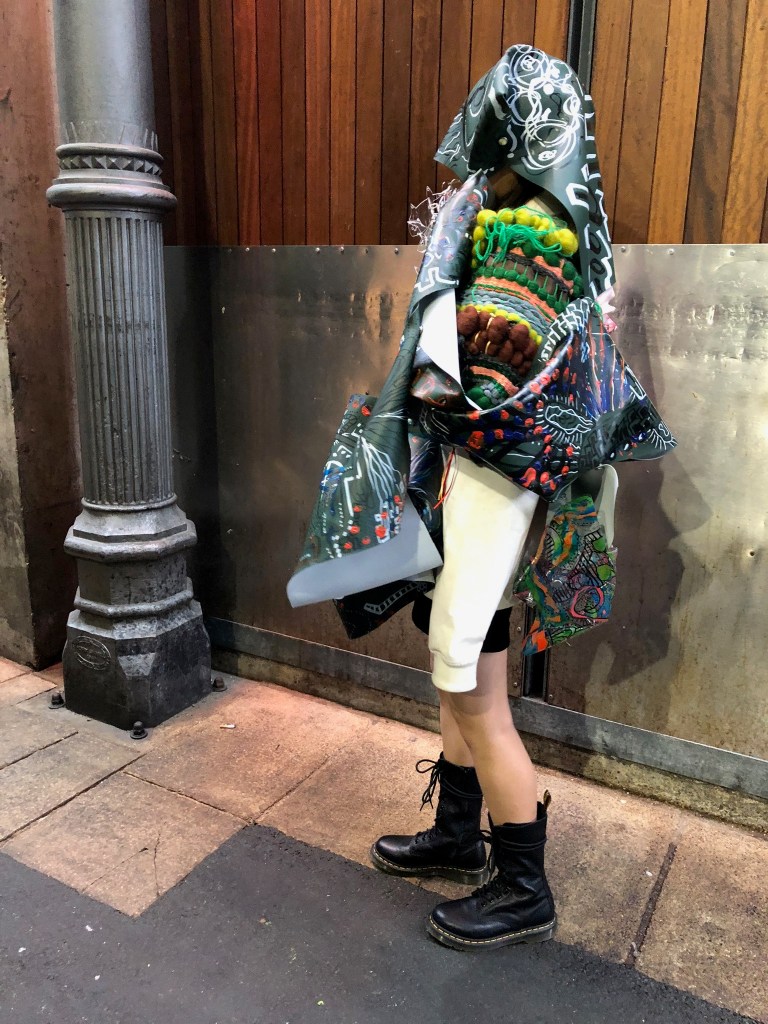
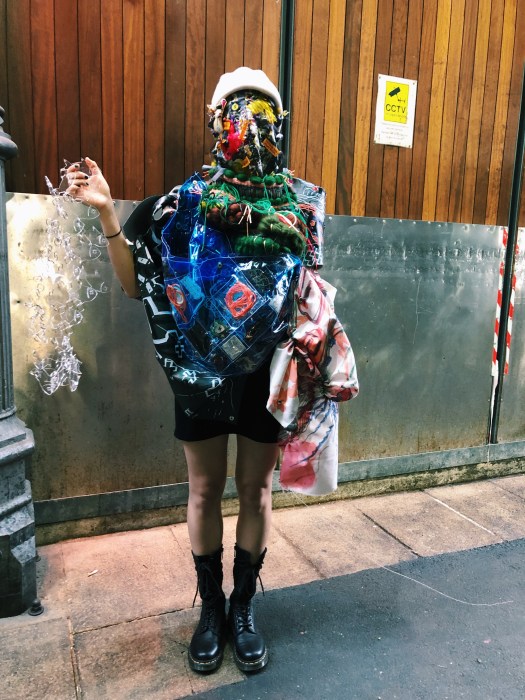
While I was draping I was experimenting with layering and structural shapes.

This video is NOT DONE YET because I wanted to add some sound and maybe a color mask to highlight me and Suey a little bit more. I will discuss this with Anna on Monday.

Cultural Exchange the Wrong Way: Study on Dolce and Gabbana

As our original inspiration was cultural exchange, I decided to research brands in the fashion industry who have done cultural appreciation successfully, but also ones who have appropriated different cultures.

One of the most glaringly obvious cases of cultural appropriation (and honestly, overt racism and sexism as well) was Dolce & Gabbana’s 2018 Shanghai fashion show, which ended up needing to be cancelled due to racist and sexist marketing.

A video shared by the brand before the show was criticized for being degrading towards Chinese culture. The model was eating italian food with chopsticks, and many Chinese people were offended, saying it trivialized their culture, due to the nature of the filming of the video.

Later on, screenshots from the Instagram account of Domenico Dolce revealed degrading and racist private messages about China.

The brand claimed that the accounts were hacked, but overall the entire execution of the show was poor. Maybe if the company had decided to collaborate with Chinese designers, the execution would have been more appropriate and successful in appreciating Chinese culture, rather than imposing their culture and brand onto another culture.

Citation

Ana Colón. “Everything You Need to Know About Dolce & Gabbana’s Canceled Shanghai Fashion Show”. Glamour. < https://www.glamour.com/story/dolce-and-gabbana-canceled-shanghai-fashion-show >. [13 September 2019].

ADAS Writing with Aleah

Today we discussed how we might want to execute our creative writing portion of the assignment. Aleah brought out the French word, “derive”. We discussed how this connoted a person who walks, writes, and goes with the flow while exploring a place. She recommended we employ this technique while writing.

The work of Yi Fu Tuan was brought up, and I found it particularly interesting. He wrote, “Space and Place- the Perspective of Experience”.

“An object of space receives concrete reality when our experience of it is total, that is through all the senses as well as with the active and reflective mind… ideas of abstract space are developed out movement — out Of the direct experiencing of space movement.”

Yi Fu Tuan

Tuan describes walking as a way of creating an interlocking mesh or net among people. I found this so interesting because he compares it to the rigidity of a public transportation system. I thought this idea of an interlocking web was very relevant to what me and Suey are doing with cultural exchange, and it may be interesting to explore this further in our final video (maybe by having the models wrap string or yarn everywhere they walk in the market-we could do this when the market is closed and overlay it with videos when the market is bustling). We are also doing a video of draping the interchangeable pieces we have made in a variety of ways (on each other as a way to explore exchange).

Psychogeography

  • movement
  • sensation
  • space and place
  • time
  • experiences
  • emotions
  • behaviors

Material Tests Round 2 & Prep for Round 3

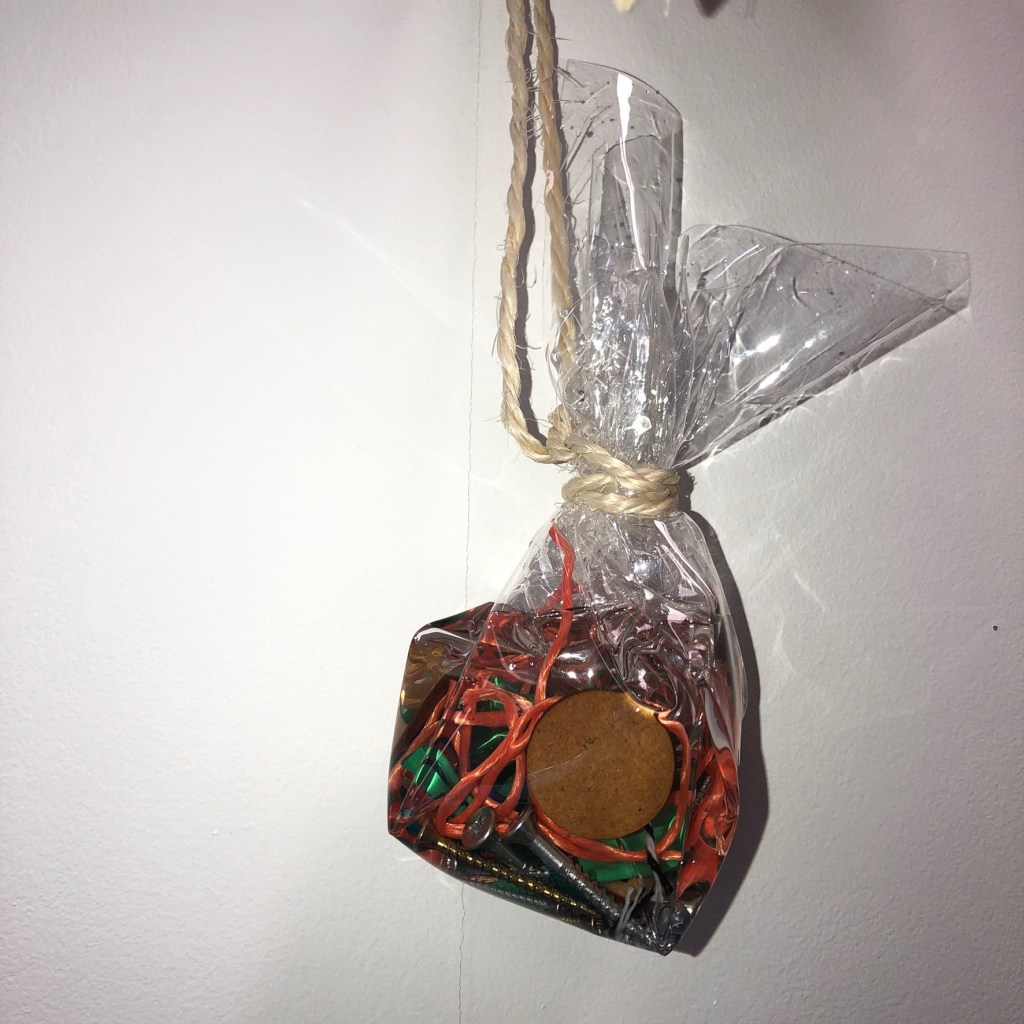
Today Suey and I met to do some material tests together, and prepped to do some more tests tomorrow. We are really excited about using the clear fabric and water for some tests, however its a bit messy and hard to control. Suey recommended we try resin to encase different materials, so I bought some for further testing tomorrow.

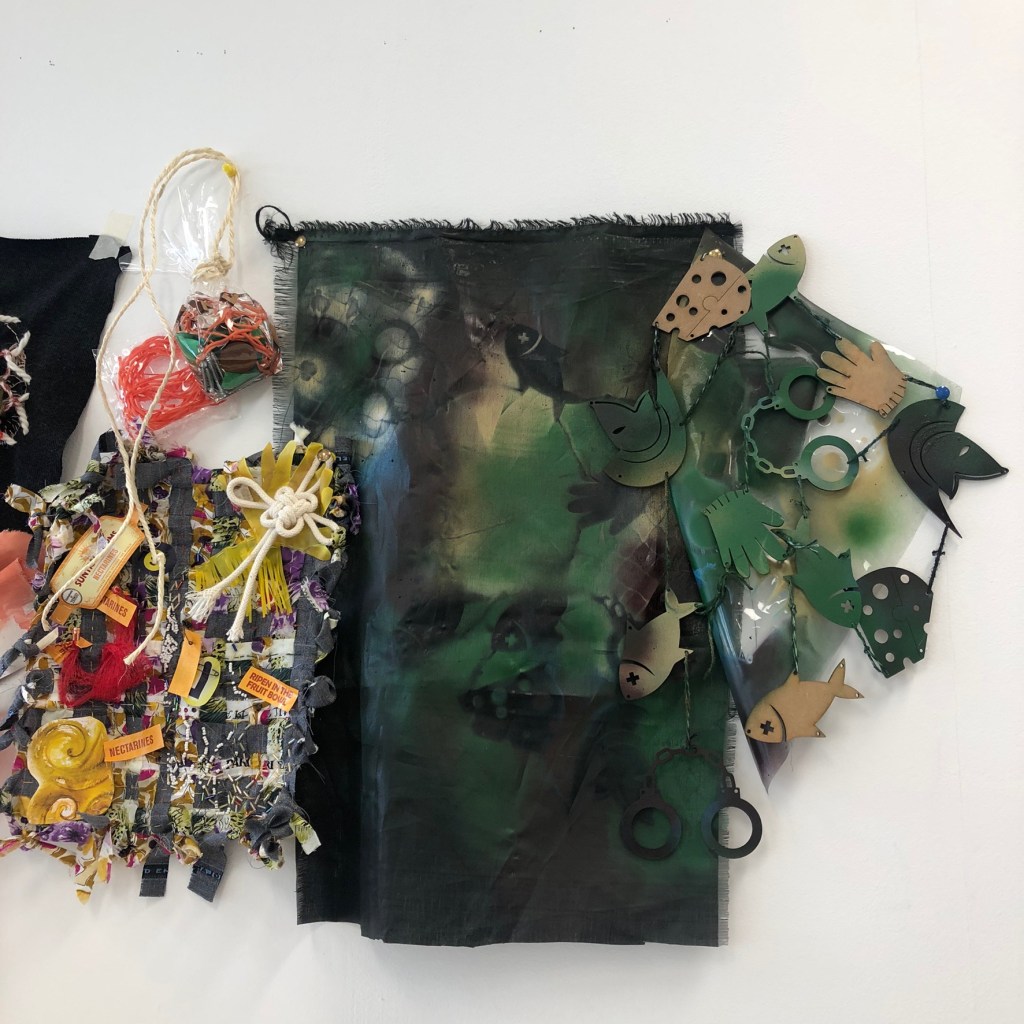
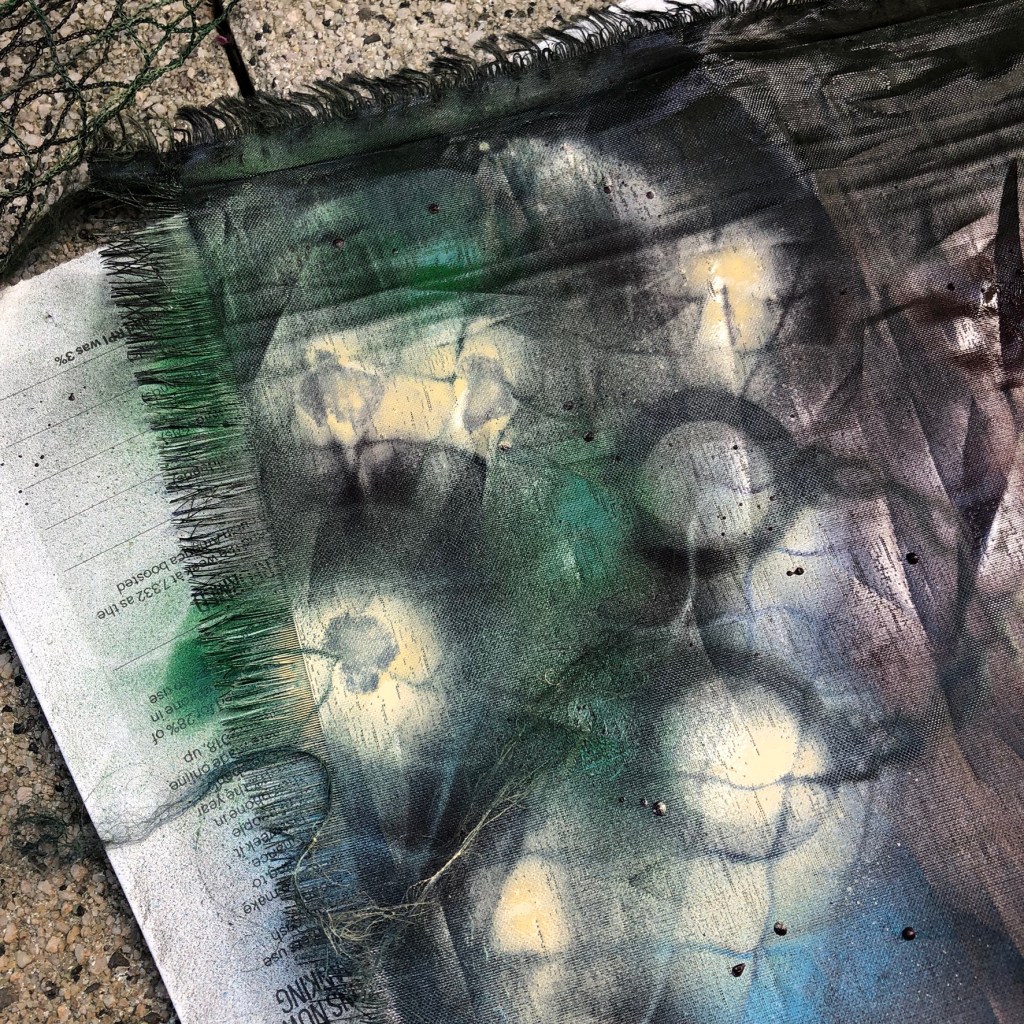
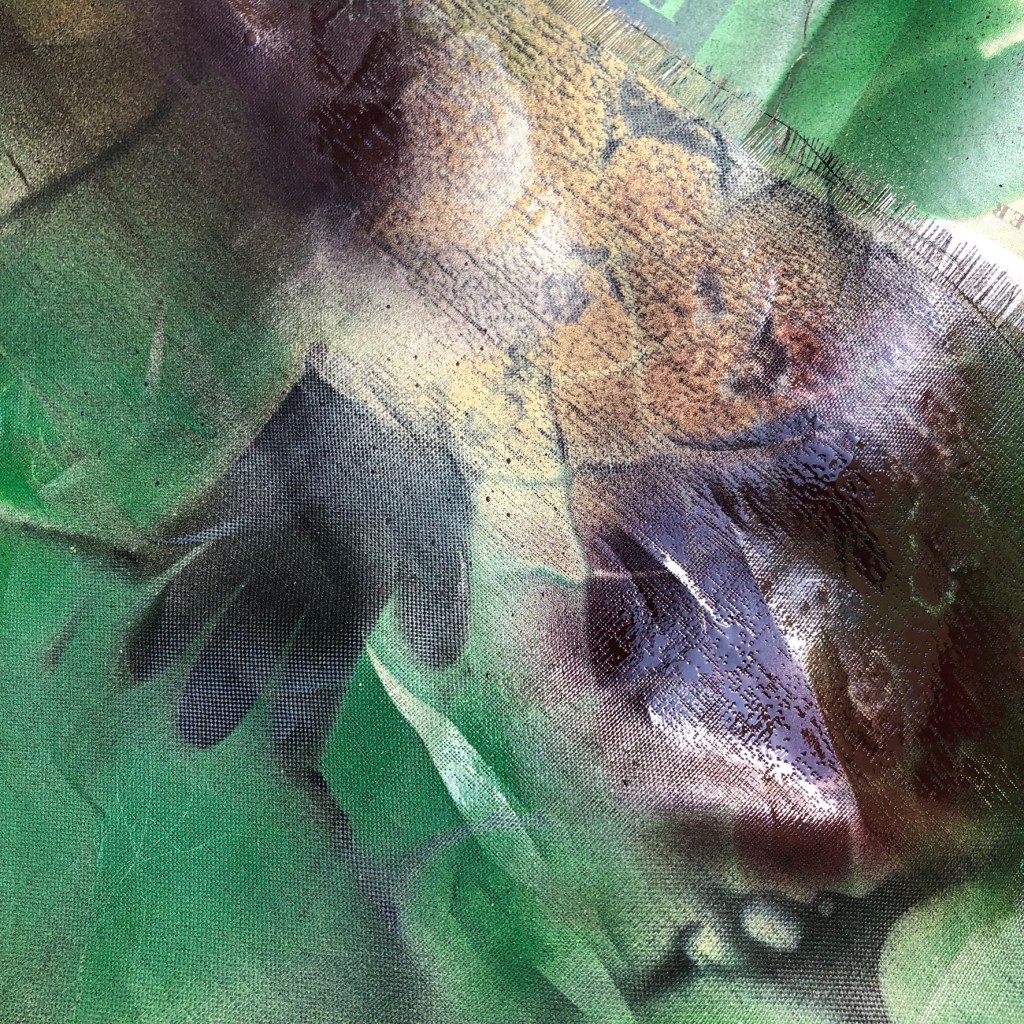
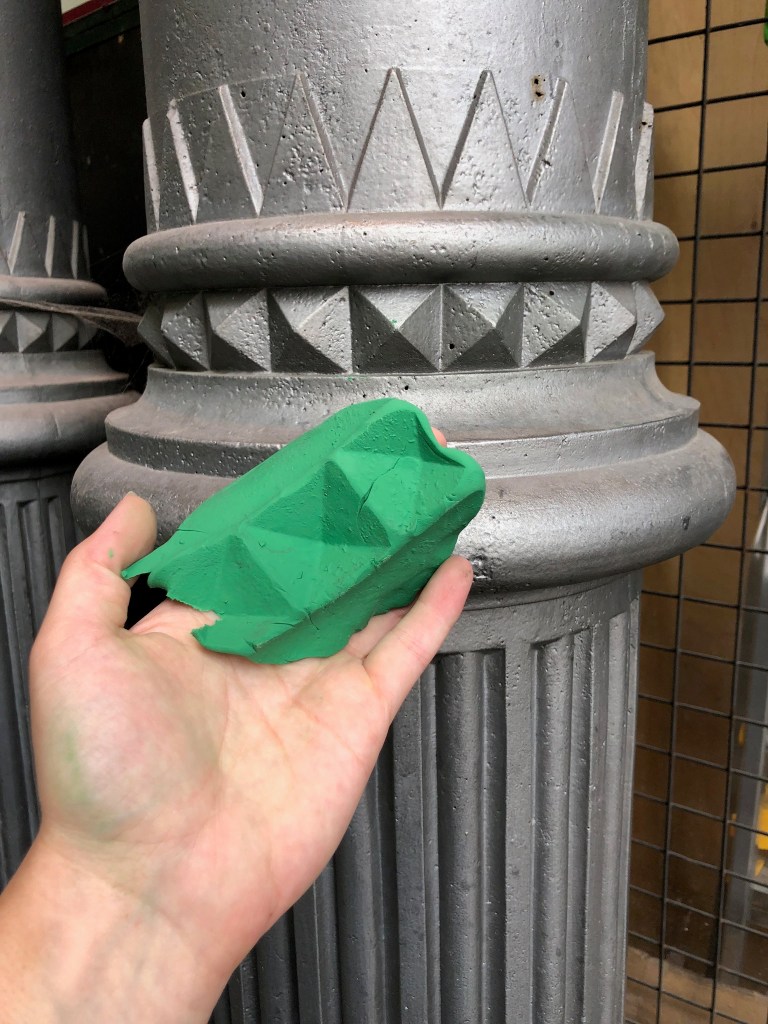
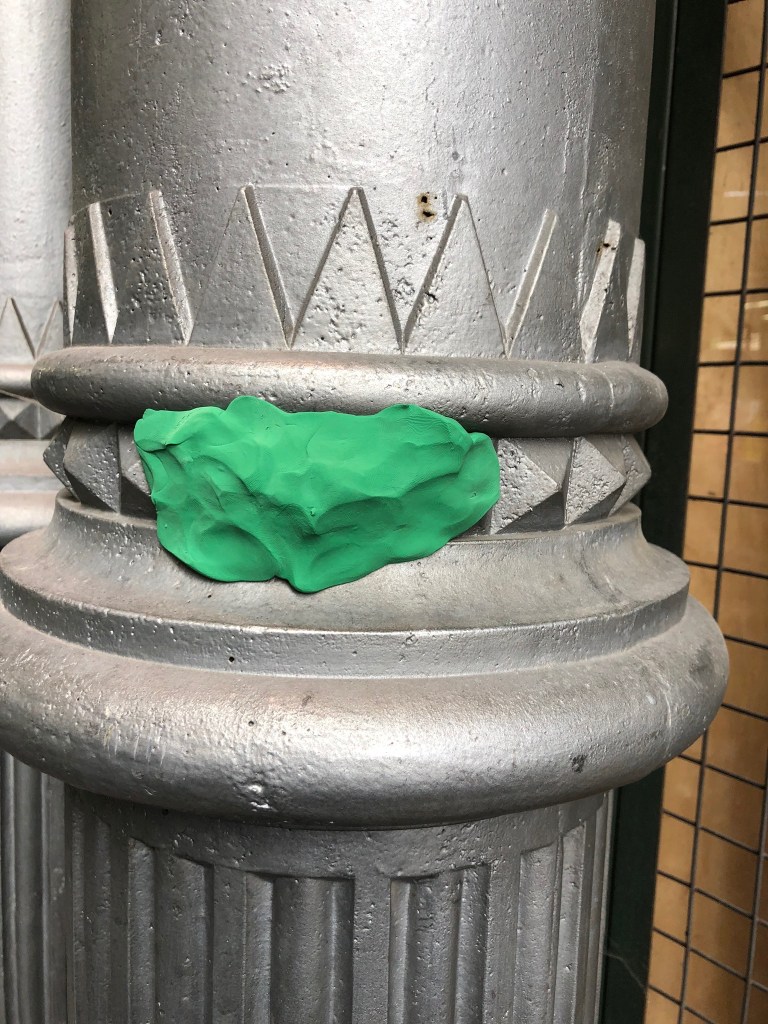
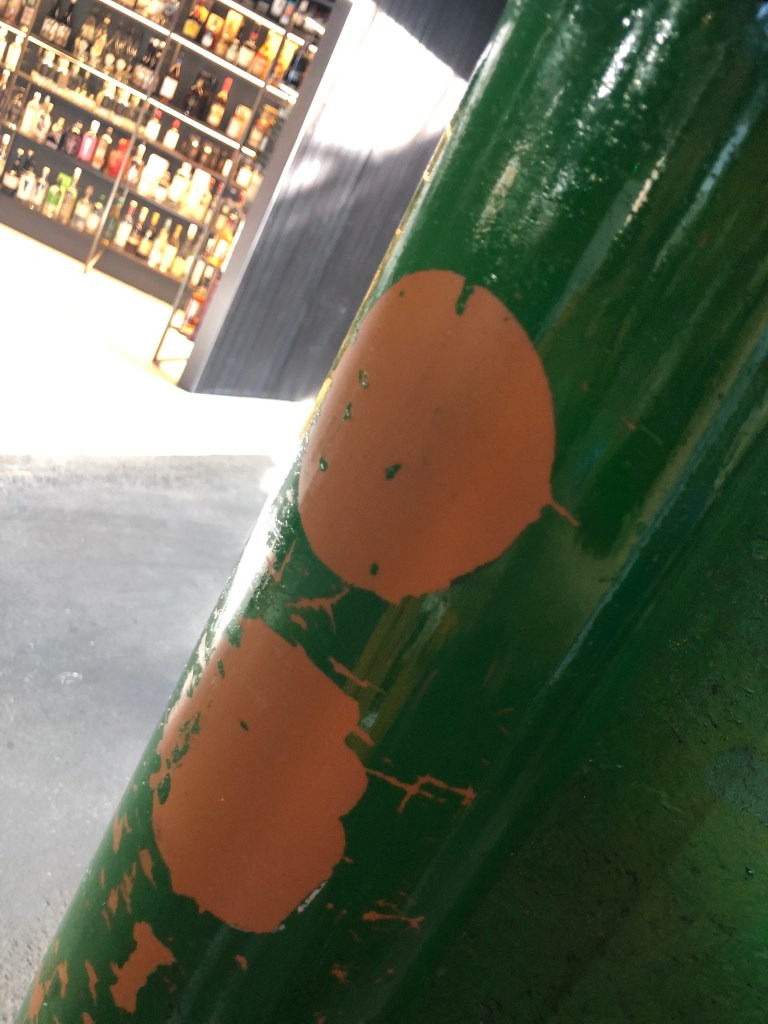
We also did some spray painting with colors inspired by Borough Market, and that turned out really nice.

Tomorrow I plan to:

  • do some tests with resin and the casts I took at the market this weekend
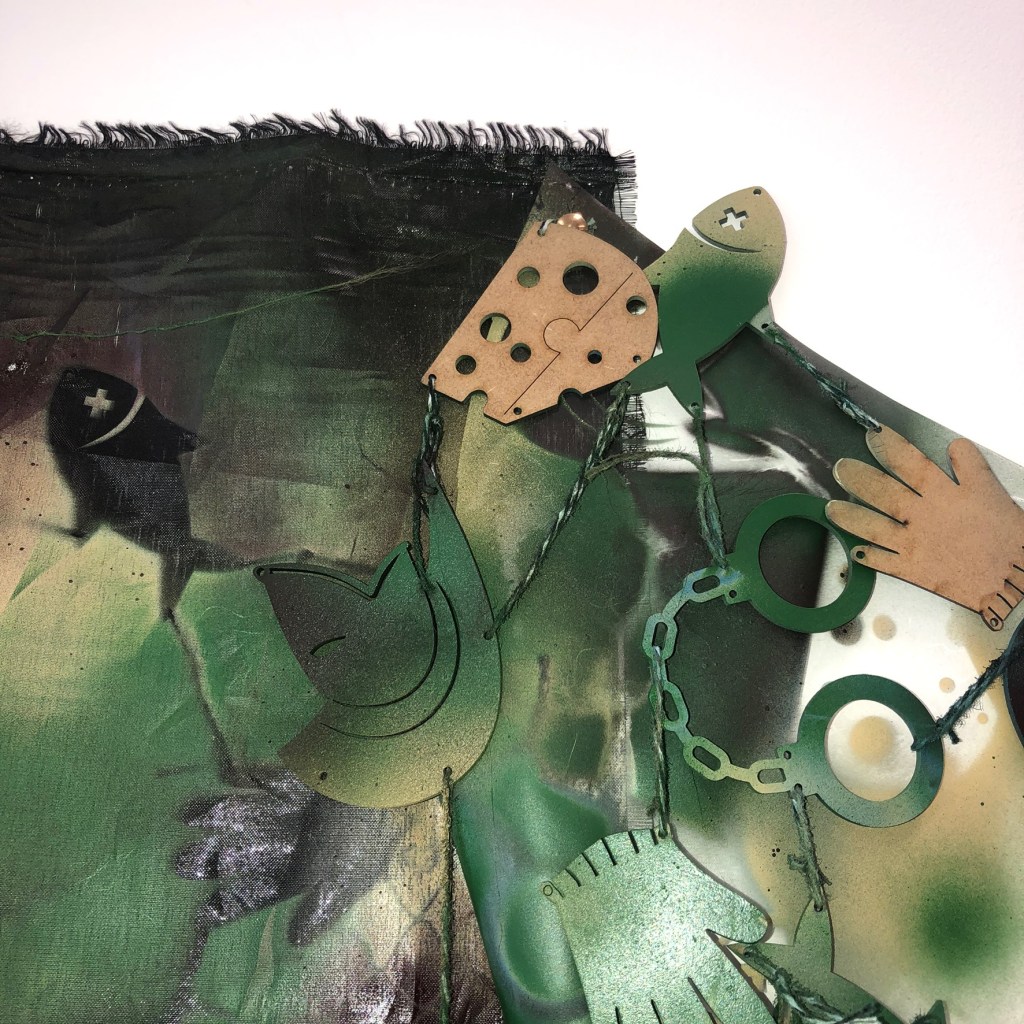
  • laser cut the dead fish motif onto clear acrylic
  • laser cut weaving holes onto felt and leather
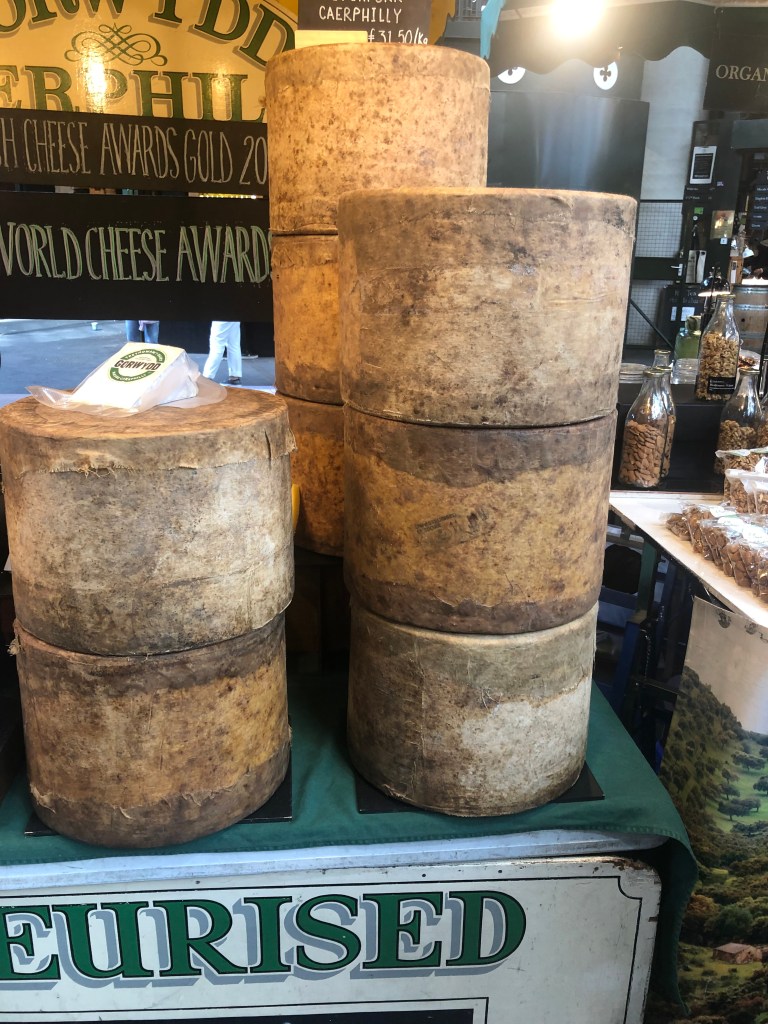
  • laser cut cheese motifs out of board
  • work on tying fruits up in both macrame and nets

Suey is going to work on some graphic heat press images while I work on these. and we are going to collaborate on the water samples if we have time.

Permeate

verb (used with object), per·me·at·ed, per·me·at·ing.

to pass into or through every part of: Bright sunshine permeated the room.

to penetrate through the pores, interstices, etc., of.

to be diffused through; pervade; saturate: Cynicism permeated his report.

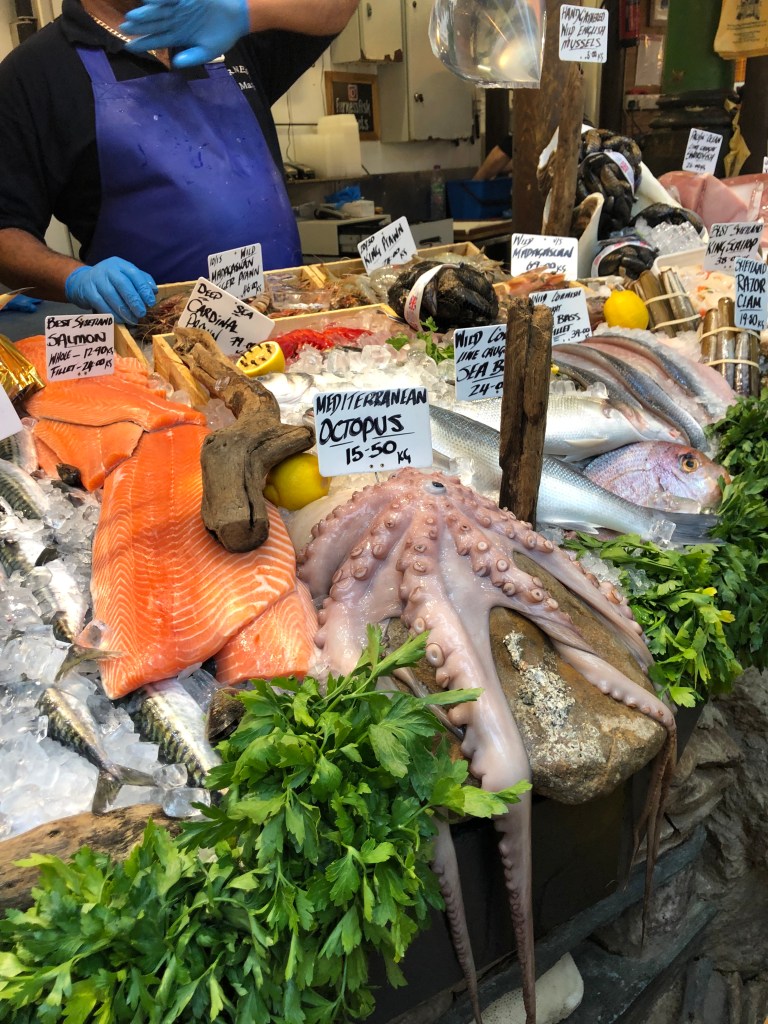
One of the themes I’m looking at with Borough Market

  • people permeate the space every day
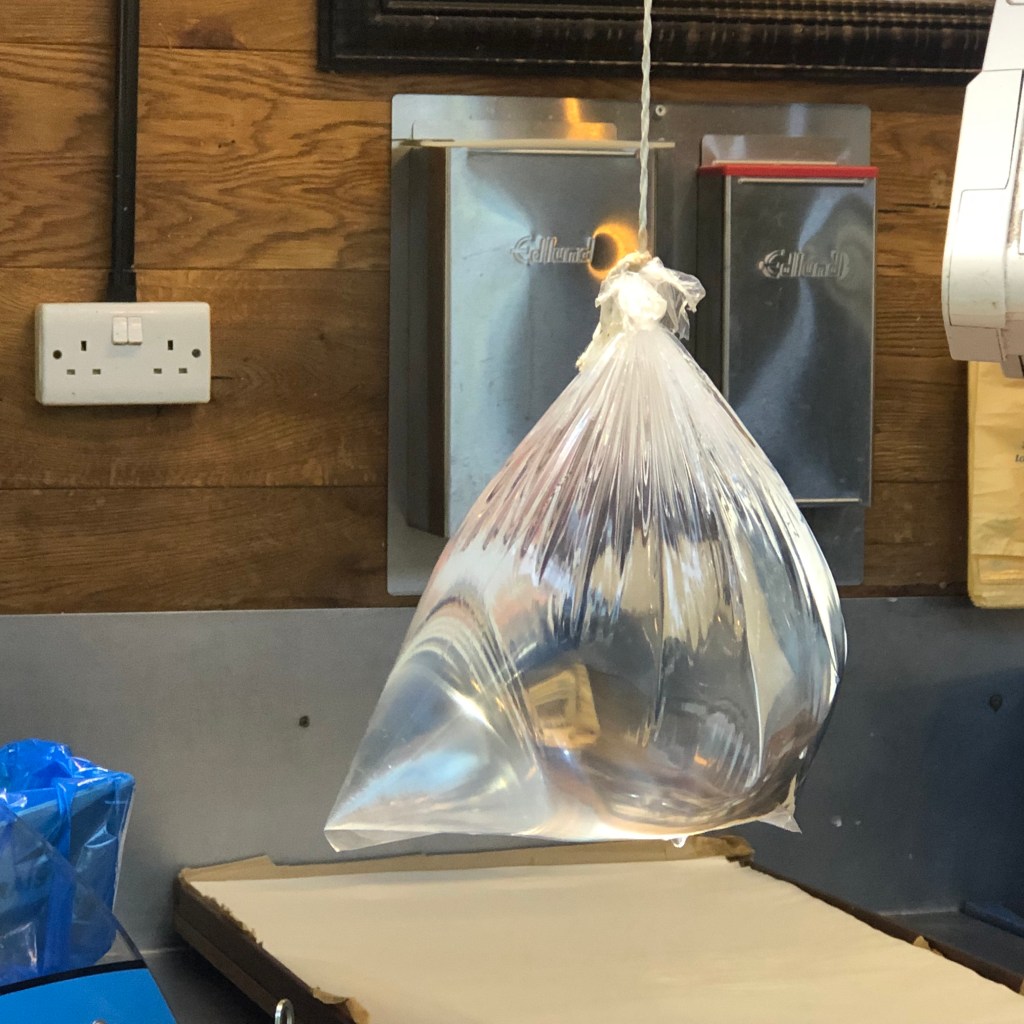
  • certain objects may permit and prohibit permeation (nets; plastic wrappers; doors; water bags; the structure itself)
  • some objects may permit and prohibit visual permeation
  • different cultures may permeate each other (also though time) in both good ways and bad ways
  • physical permeability of a space

Tutorial with Suey and Lee (8/28/19)

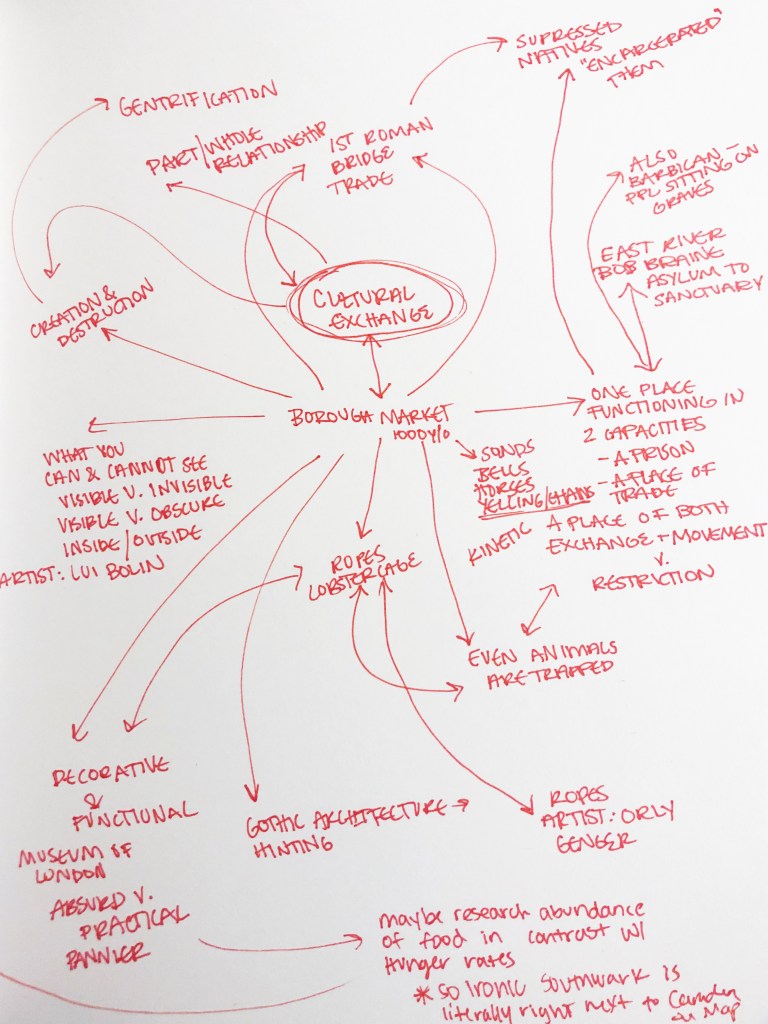
Suey and I needed some direction after the creation of our original material tests. We explained to Lee our initial inspiration of “cultural exchange” as a theme or topic after our research on the Northern Line, and we told him that we wanted to zero in on Borough Market as an example of exchange.

My interest in Borough Market stemmed from the dichotomies that I saw as intrinsic to the place. It is a rather posh market full of food, in a city where people are starving. It is also archeologically placed on top of a prison, which I found strange as it was the location of the first Roman Bridge (around 47 AD and 410 AD) and its right along the Thames, which is a place for exchange between countries.
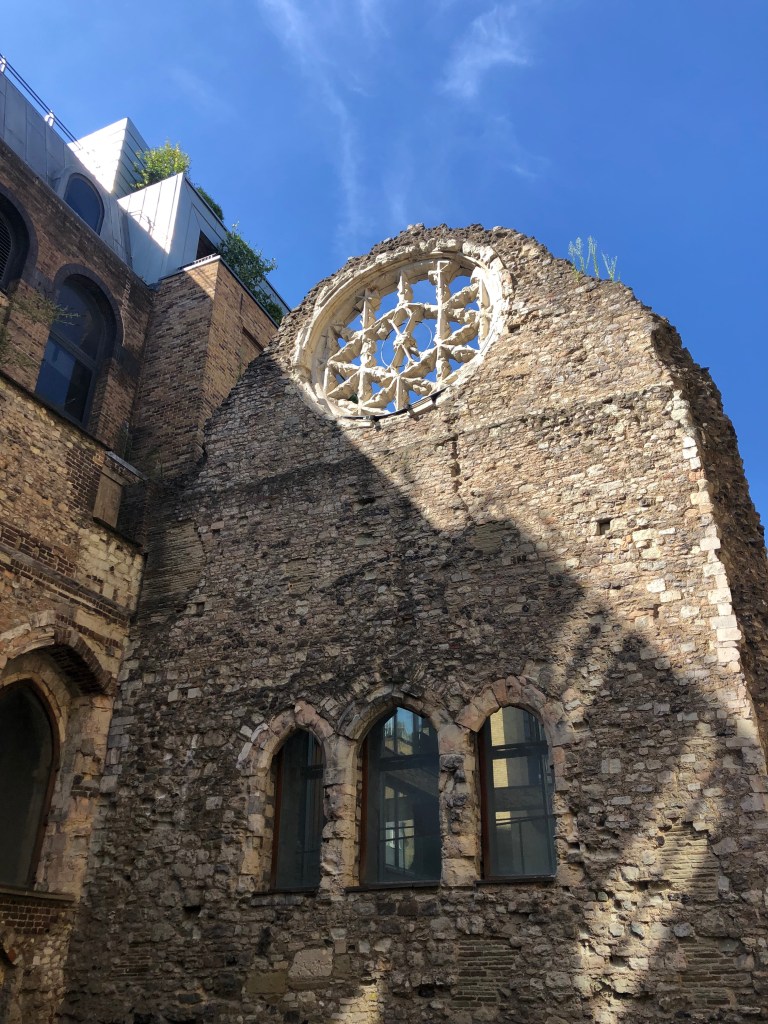
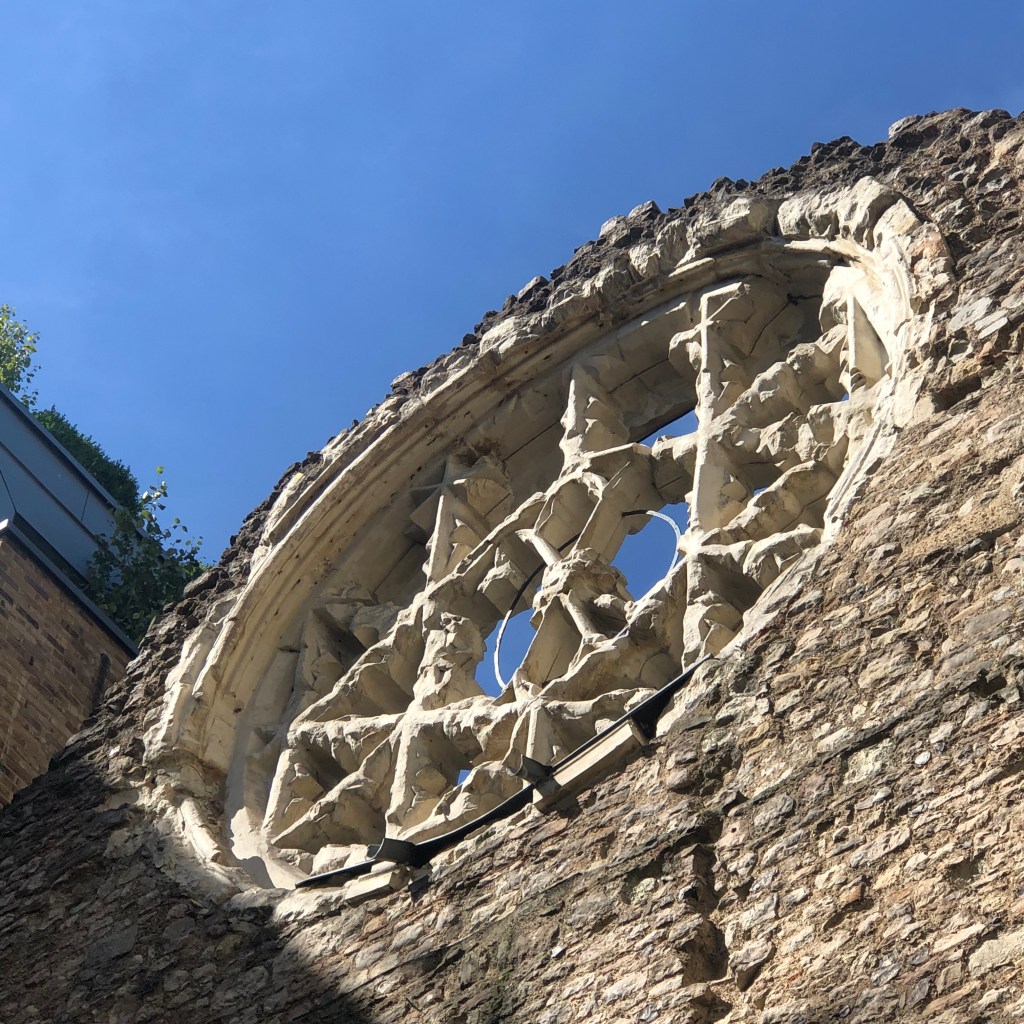
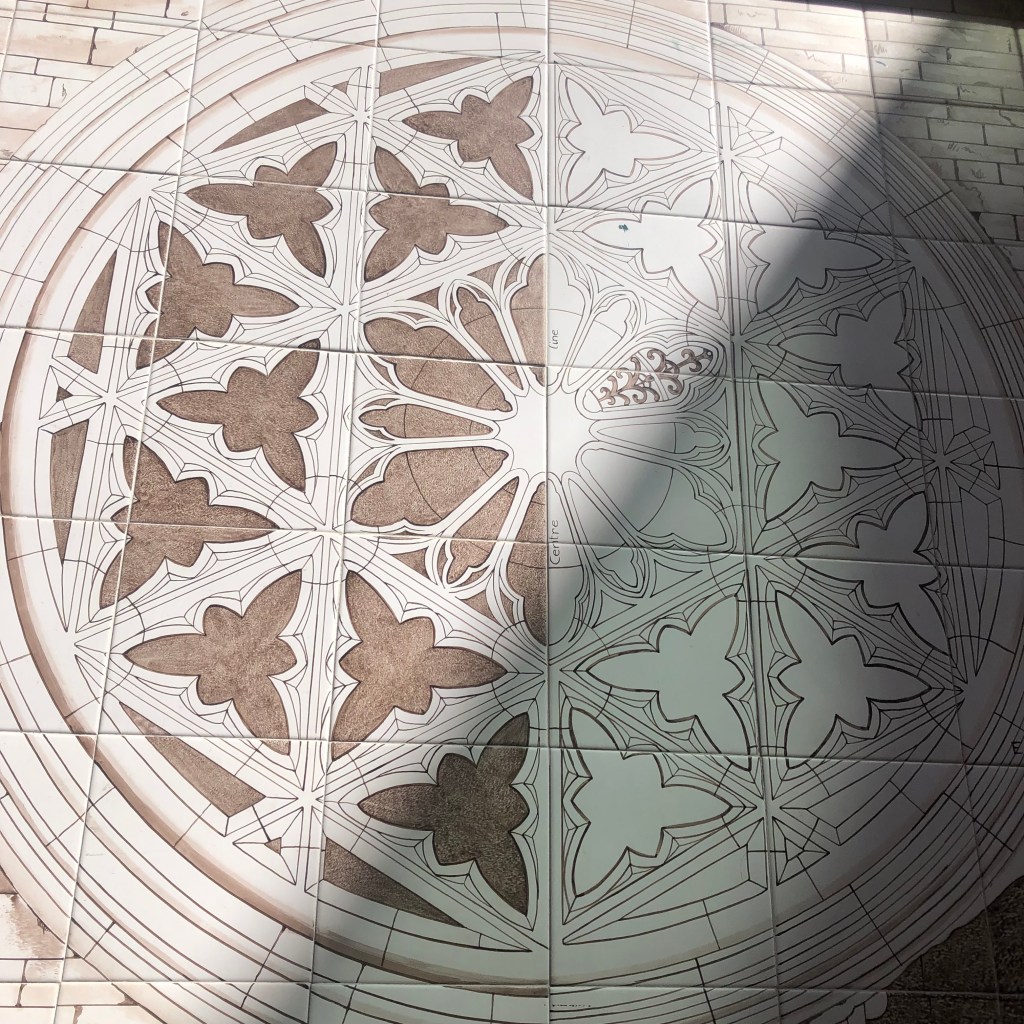
  • Some Facts about the Clink Prison: In 1129, Henry of Blois, brother to King Stephen (and grandson to William the Conqueror) was invested Bishop of Winchester, and became second in power only to the King himself. His Thames-fronted residence, Winchester Palace (of which The Rose Window of the Great Hall is still visible today), was completed in 1144 and contained two prisons within the palace grounds: one for men, and one for women.

Lee recommended we return to the market with our eyes more fixated on our topic of exchange, but also layering, as Borough Market is such a multi-dimensional place.

  • Layering through time– (Winchester Palace & Clink Prison, the sight of the first Roman Bridge, modern exchange in the ports and the market,
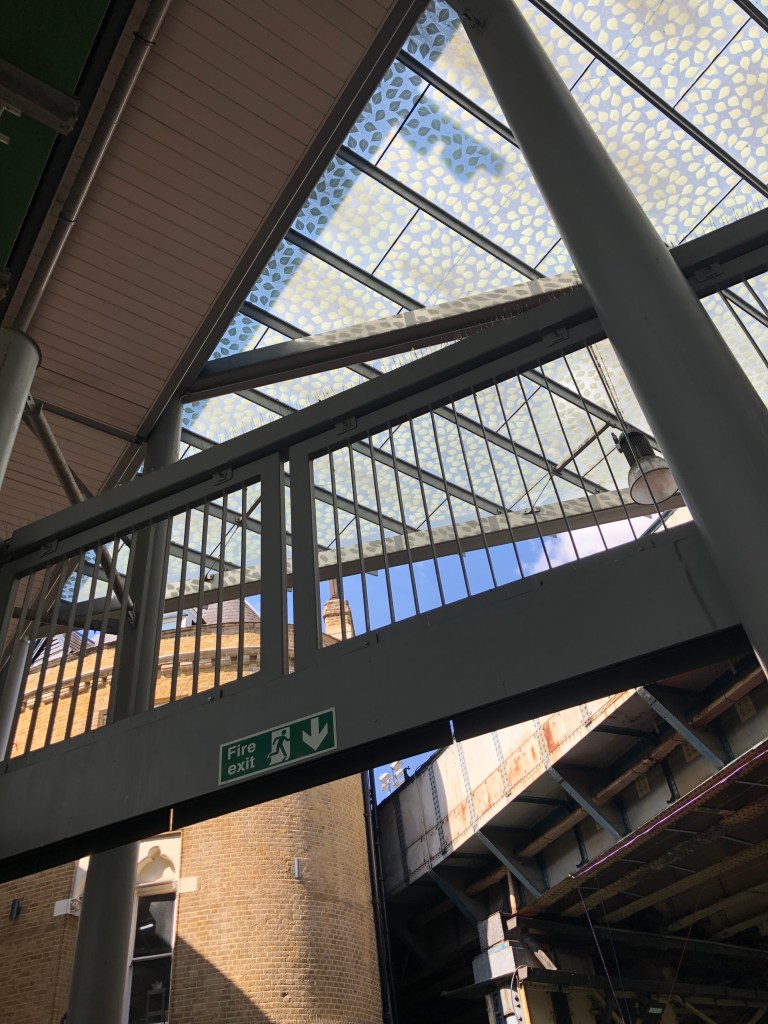
  • Architectural layering- Layering in the physical market; how the stalls are set up; how the materials are layered (transparent/see through)
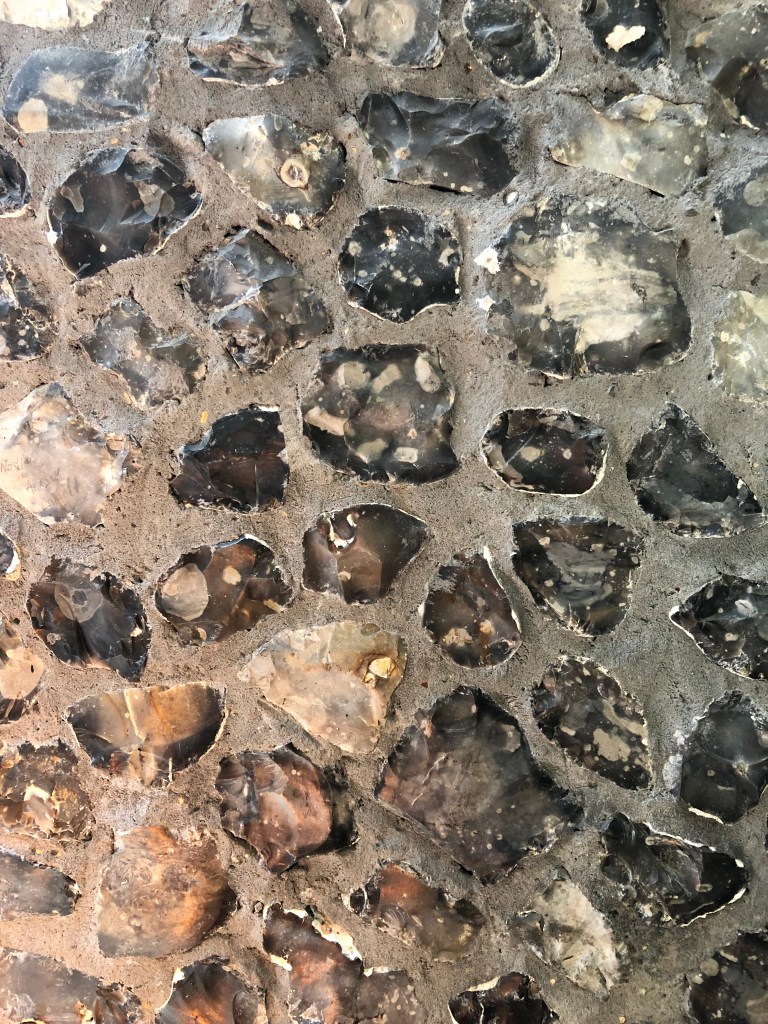
  • Archeological layering- the different people who have occupied the are over time and what marks they have made on different levels
  • Modern exchange– goods in the market and the ports

Themes to Explore in further Material Tests

  • Permeability/Porosity/Transparency
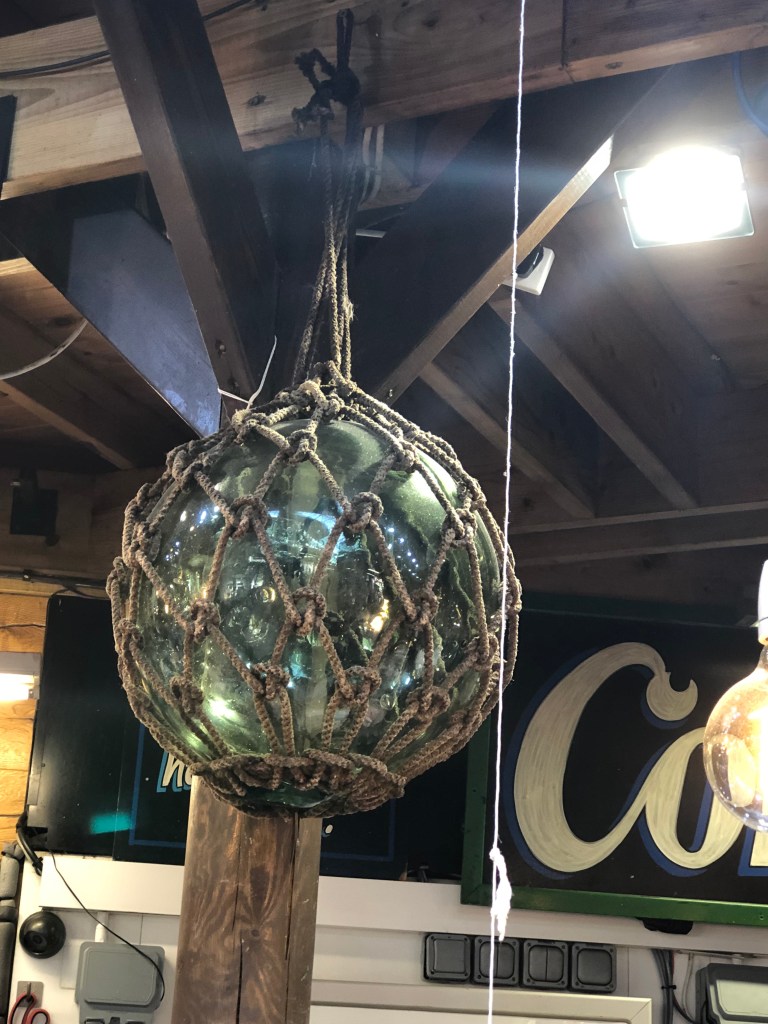
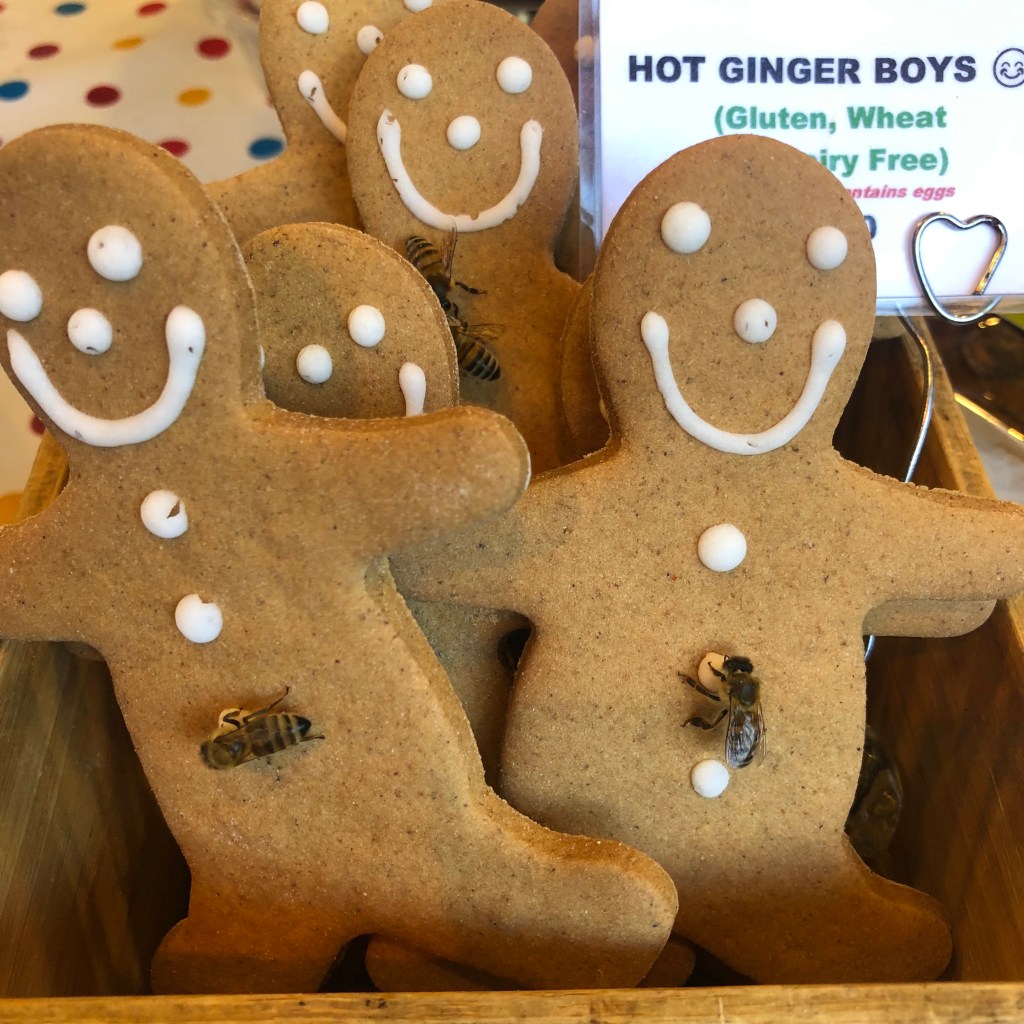
    • some spaces were permeable to birds/bugs while others were not (openings in architecture and iron bars on doors)the spaces that were not permeable, were at times still transparentobjects that demonstrated permeability: water bags, architecture, birds, bees, clear glass ball, rose window (cheesy metaphor of a window into the past)
  • Permeability in relation to light and shadows
  • How far through the layers do you have to look to get the information you need
  • Layering and Transparency: how many layers are present; when do the layers stop; what is the last layer, WHAT ORDER ARE THE LAYERS IN?
  • Micro/macro and part whole relationships (materials and stalls in the market, maybe even knowing that one part of time is only a part of the whole story of an area)

Preliminary Material Tests

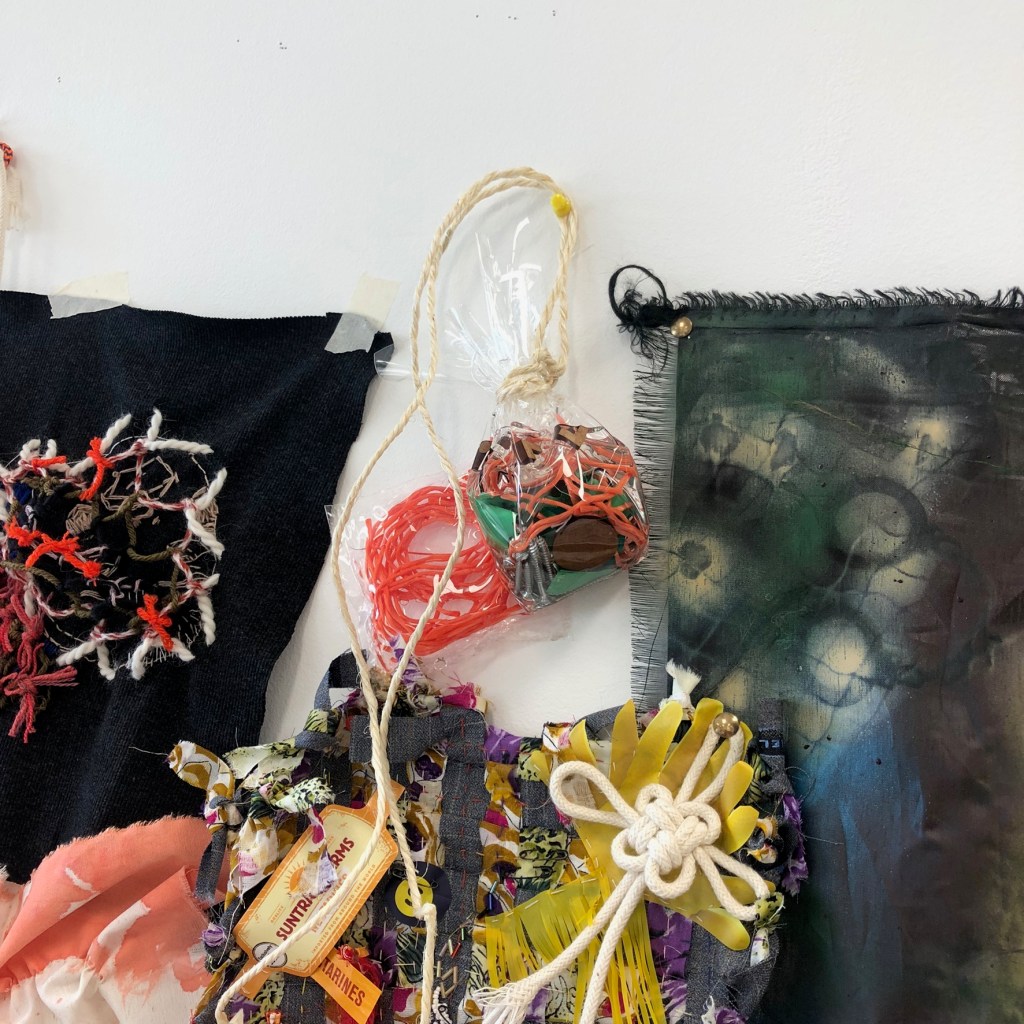
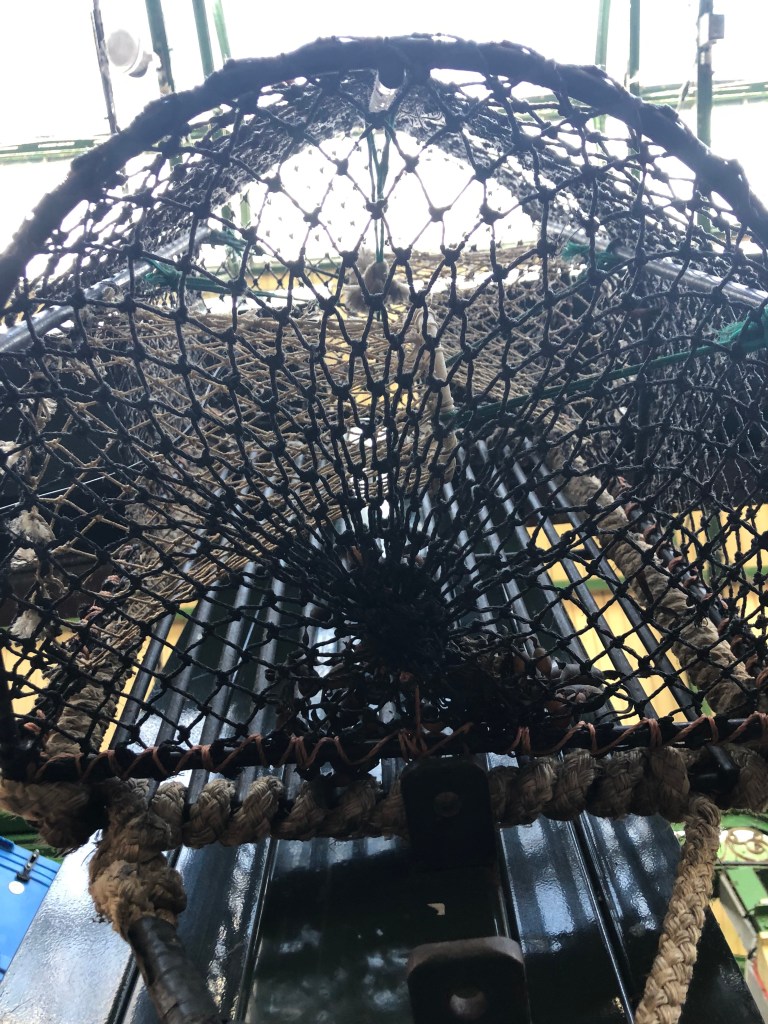
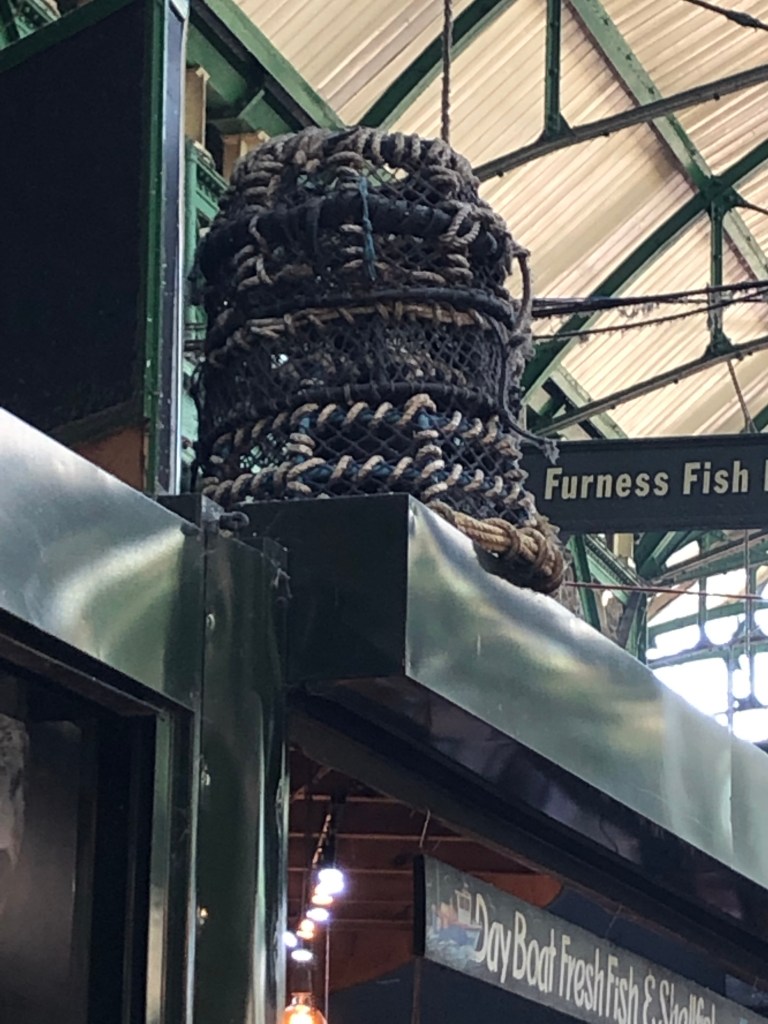
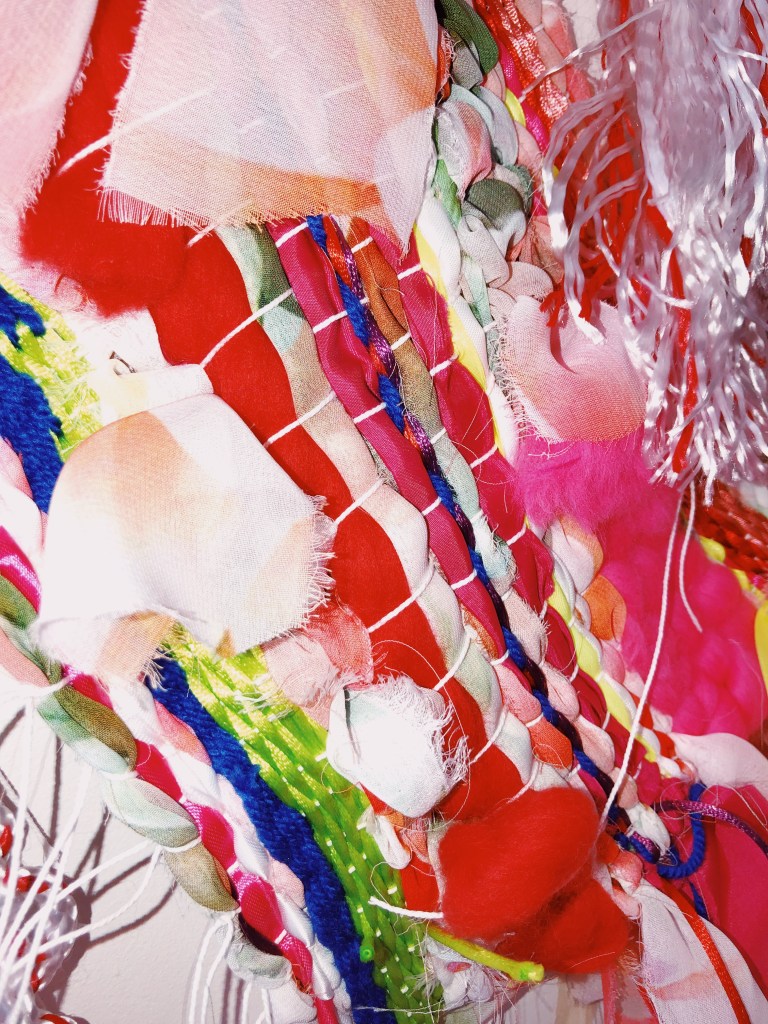
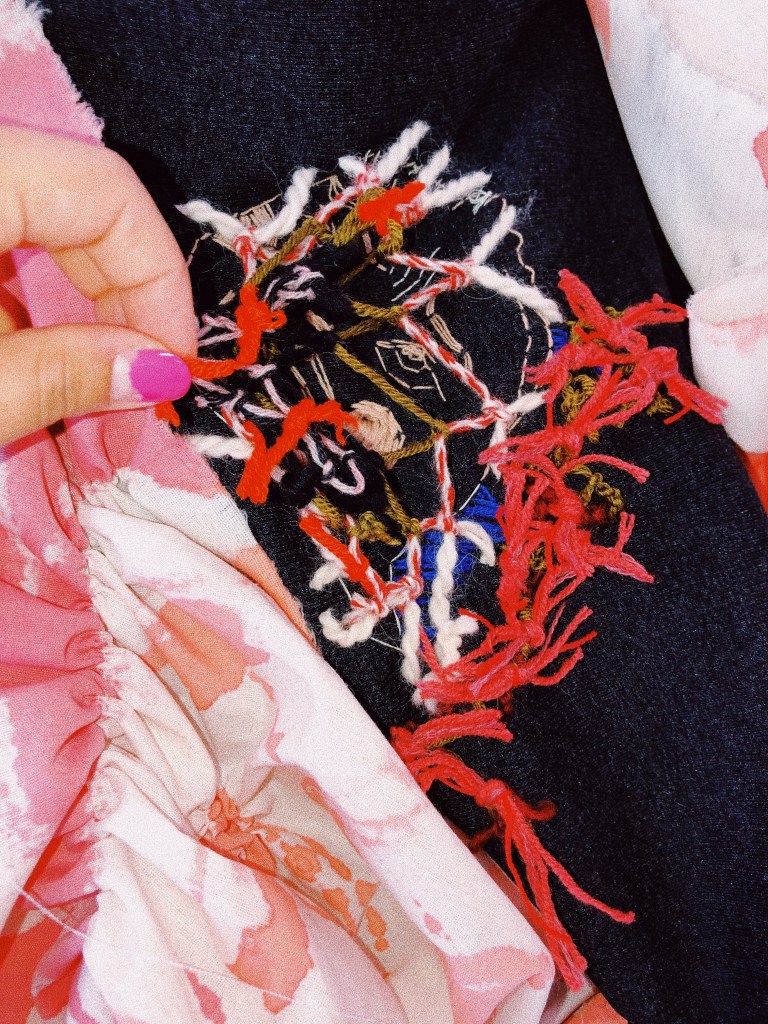
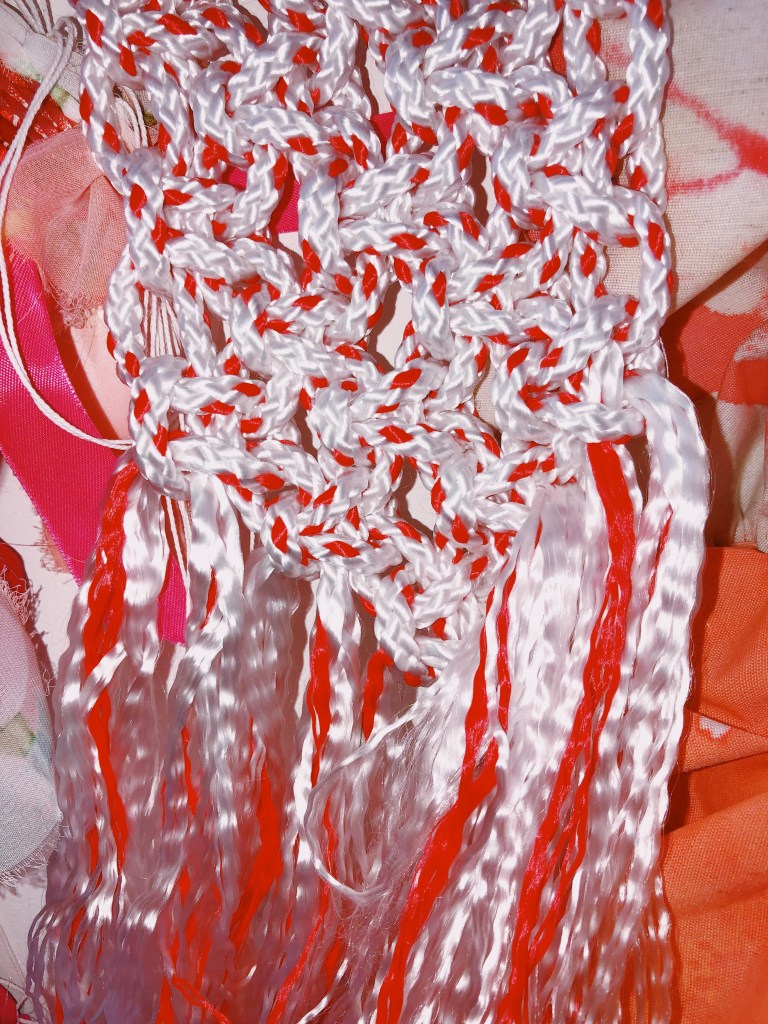
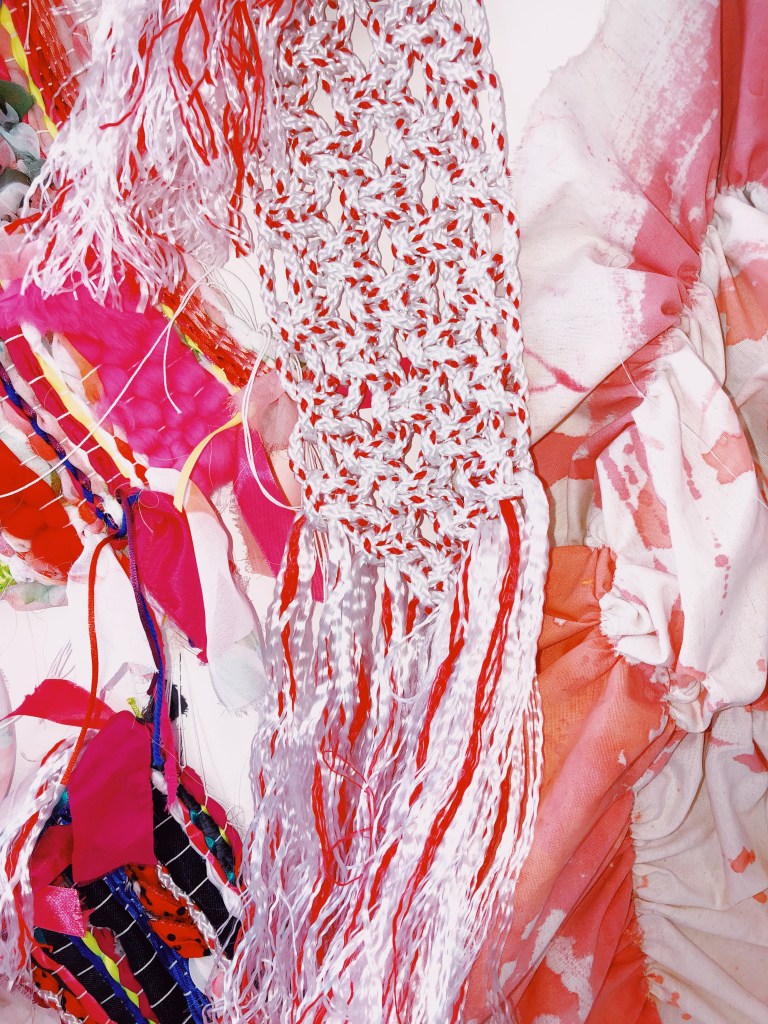
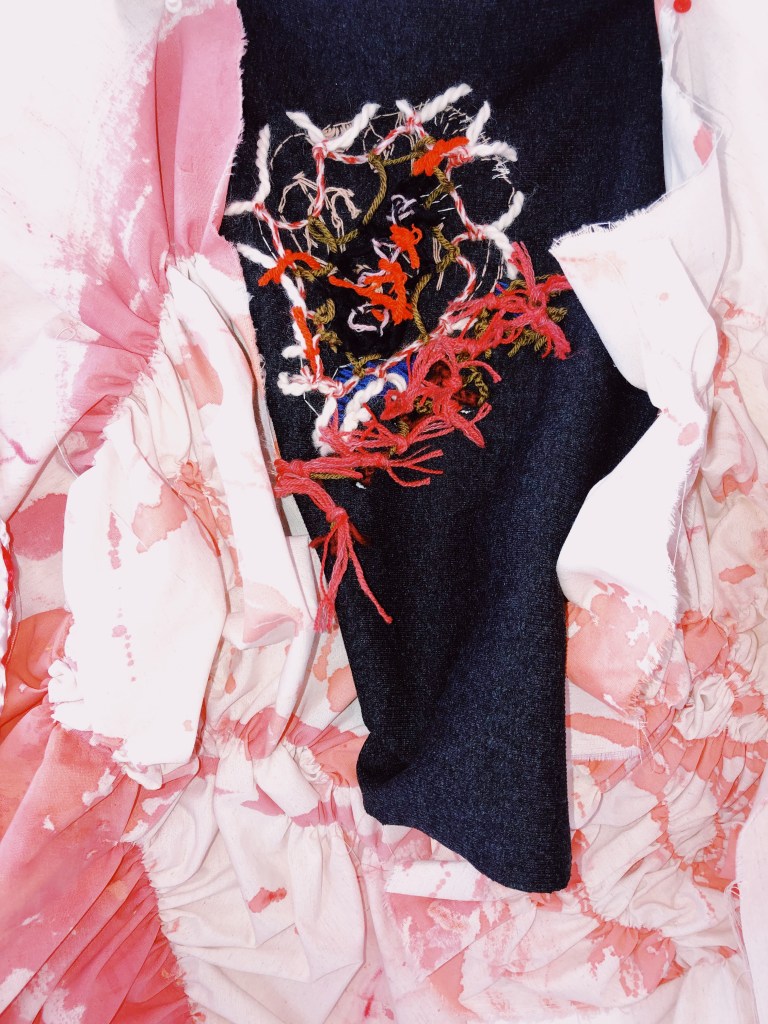
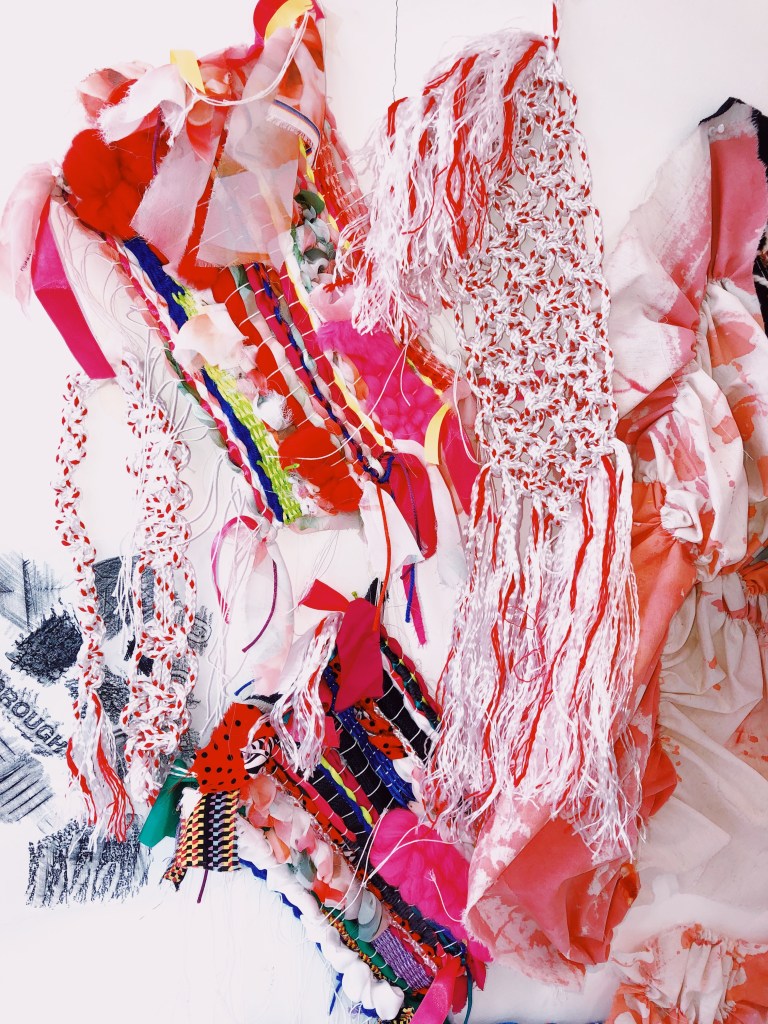
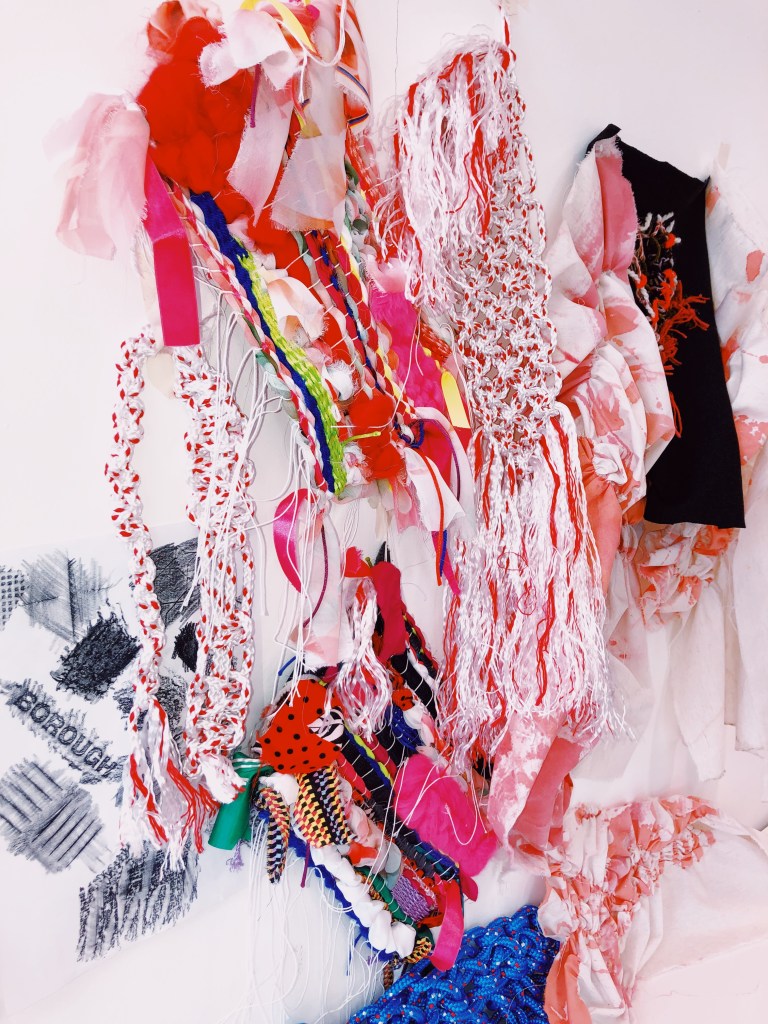
Suey and I are very interested in layering textures. I experimented with rope because I was interested in the lobster traps at the market. I also think it ties back into restriction and prisons (clink prison under borough market) .

I’d like to take my weavings and make them more three dimensional.

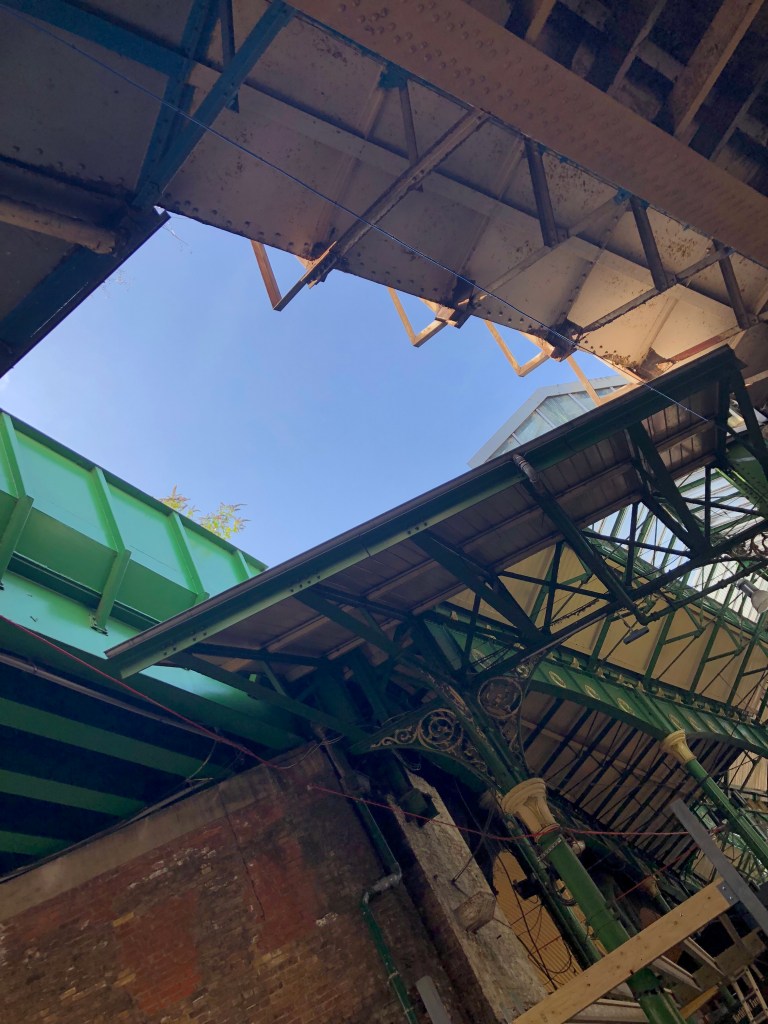
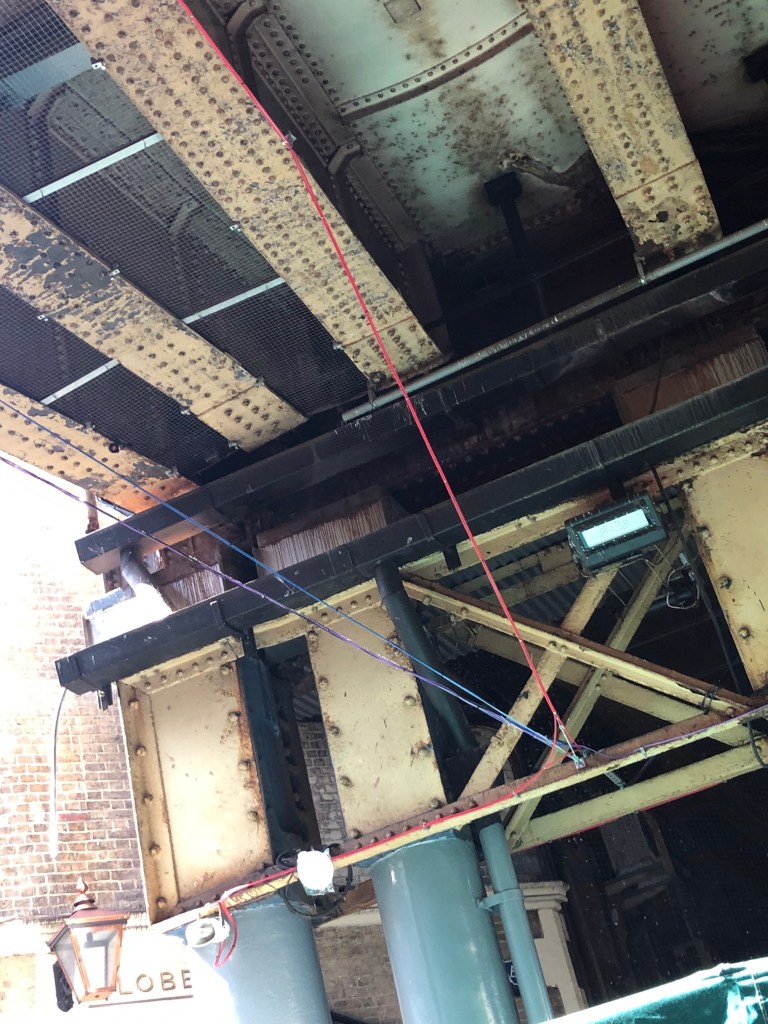
Borough Market: History and Inspiration

“Borough Market is a riot of colours, smells and human engagement. “

http://boroughmarket.org.uk/about

Facts:

  • 1000 years old in 2014
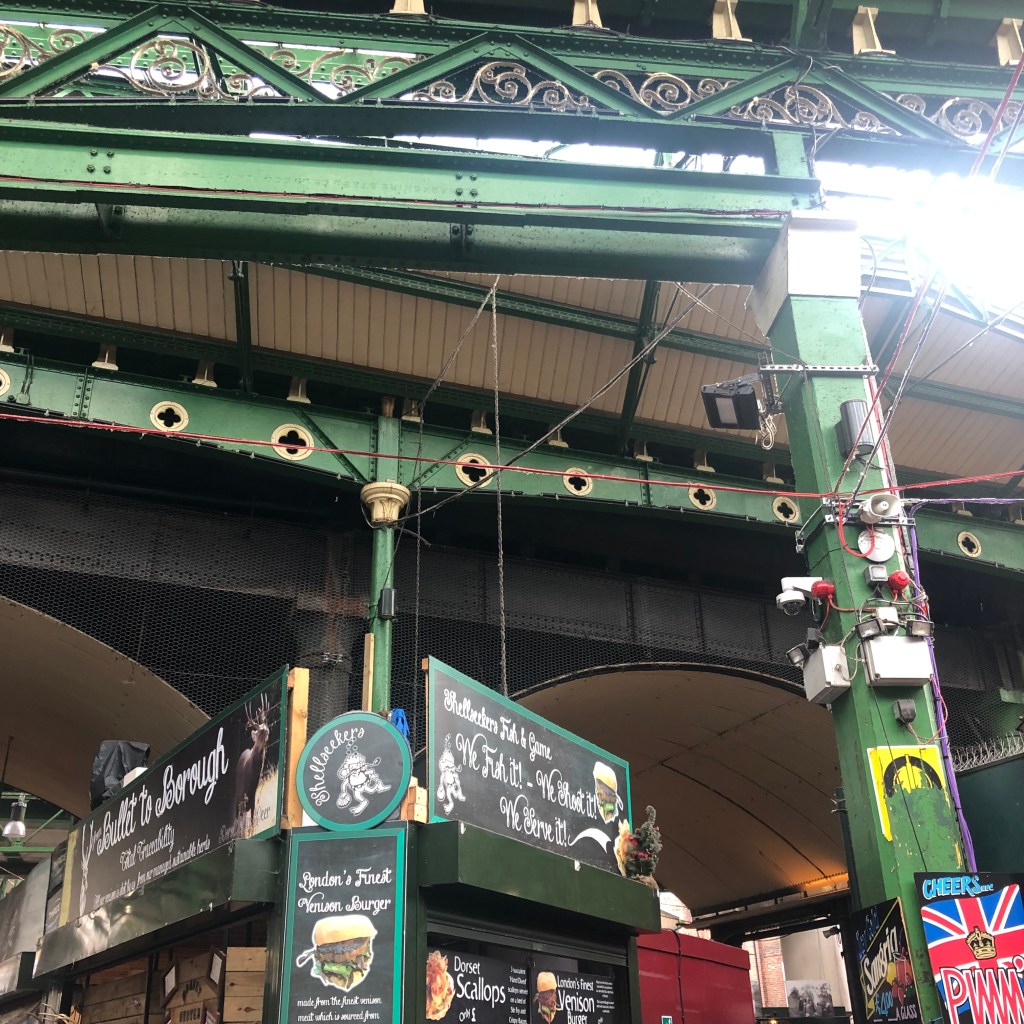
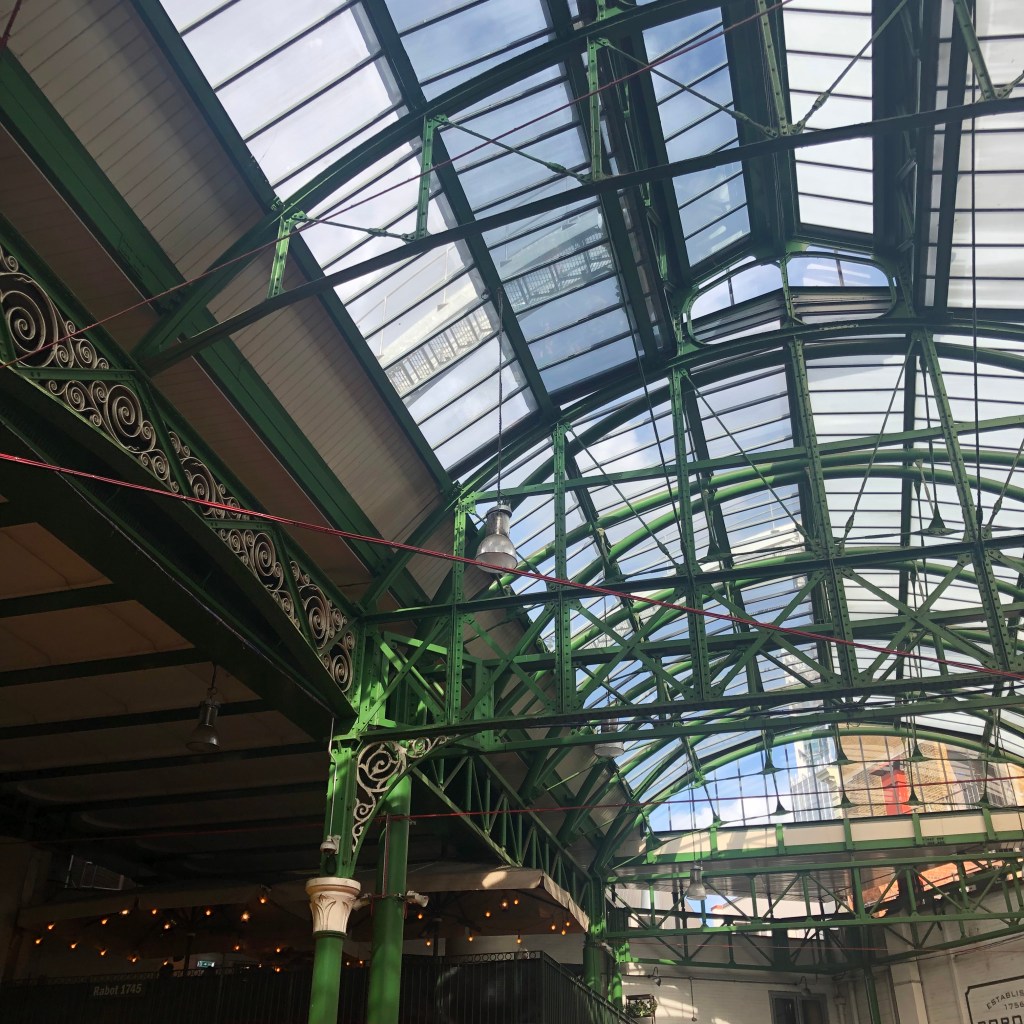
  • The present buildings were designed in 1851 by Henry Rose, with further work in 1863-64 by Edward Habershon.
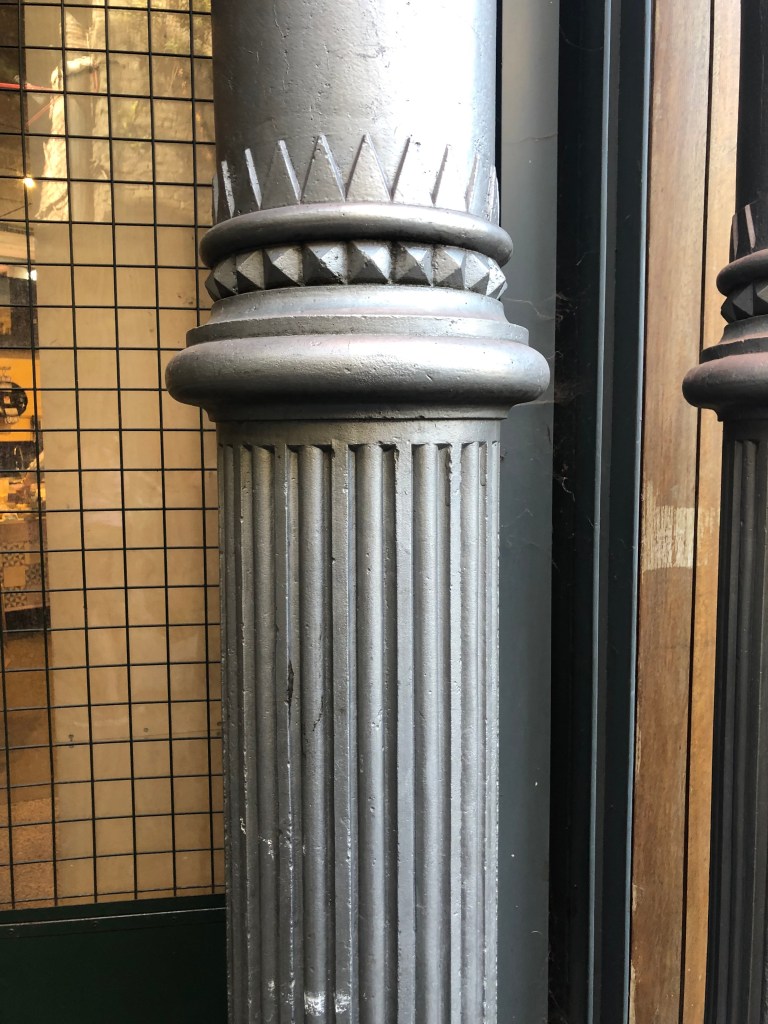
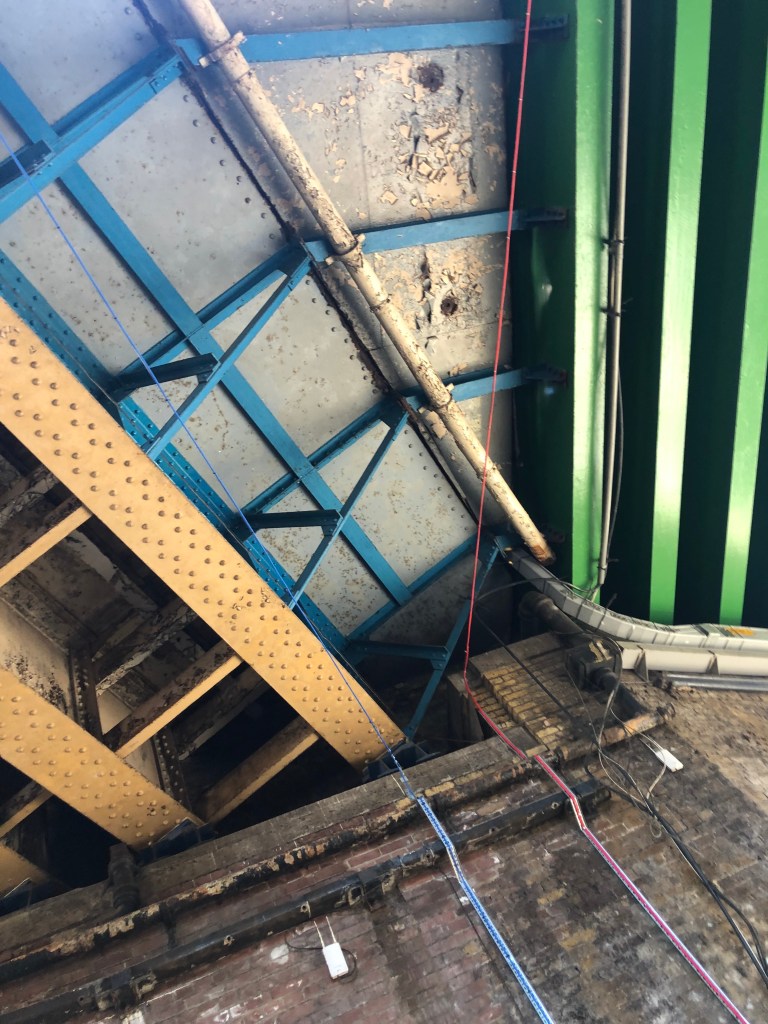
    • Both architects were chiefly associated with ecclesiastical designs, which accounts for the ‘Gothic’ character of some of the market buildings, particularly the elaborate wrought ironwork.
  • There is a bell in Middle Road in the market. Traditionally, a bailiff used to ring a bell to announce the start and the end of the day’s trading — it was one of the rules of the market when the current market was founded in 1857.
  • There is a prison underneath called “clink prison”

Themes:

  • visible v. invisible
  • exchange and movement v. restriction
  • decorative and functional

Citations:

Underneath the Arches: Celebrating Borough Market. History Today. < https://www.historytoday.com/archive/underneath-arches-celebrating-borough-market > [26 August 2019]

Design a site like this with WordPress.com
Get started