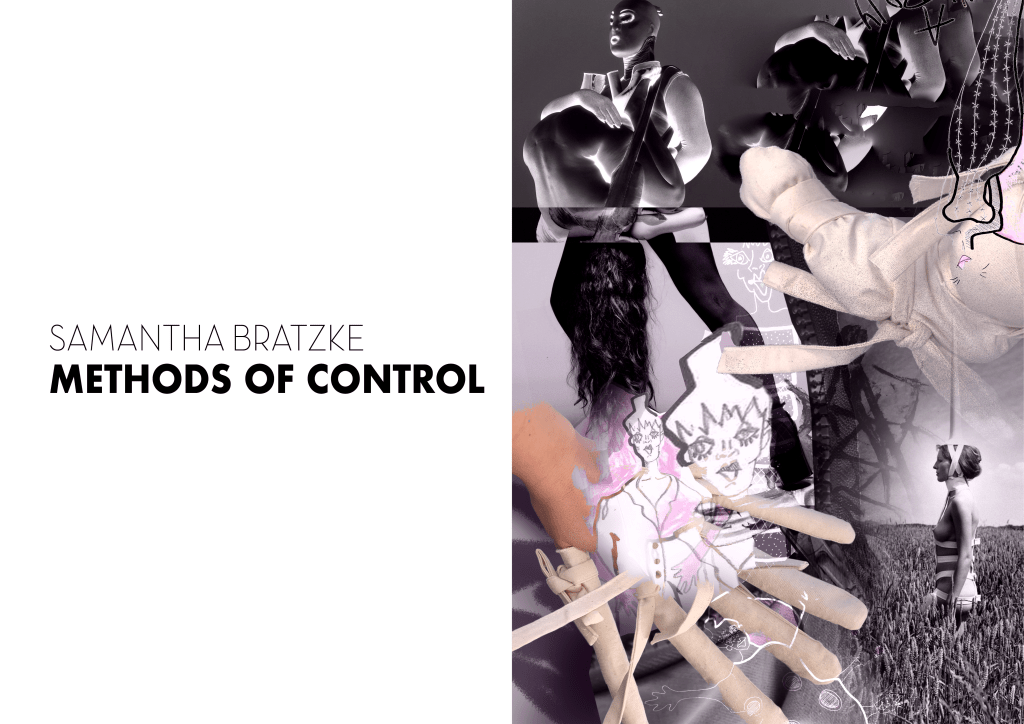
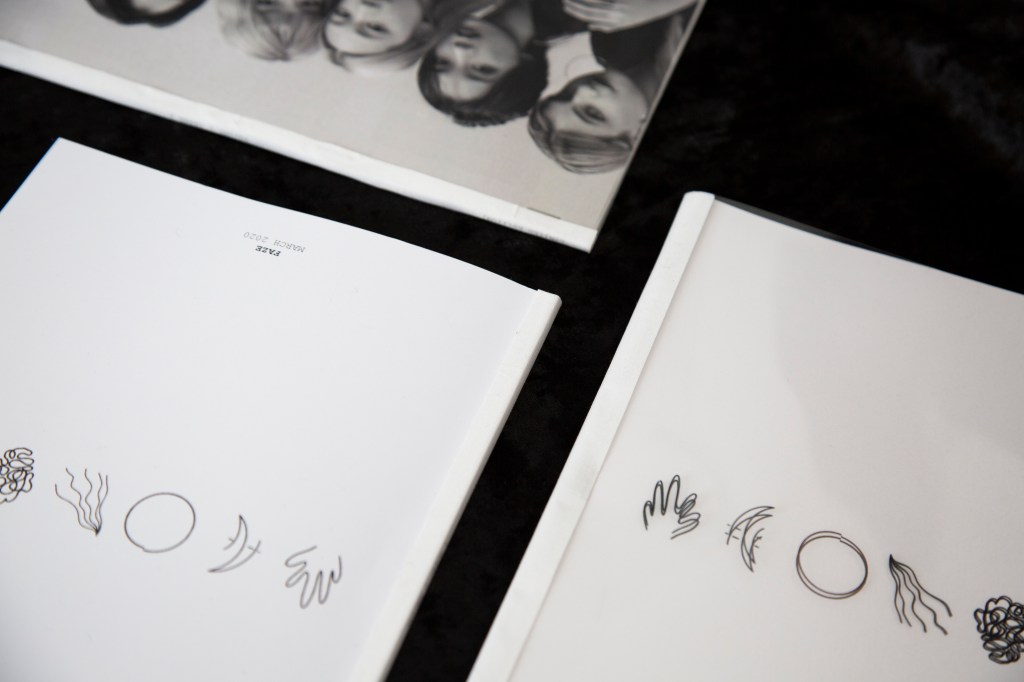
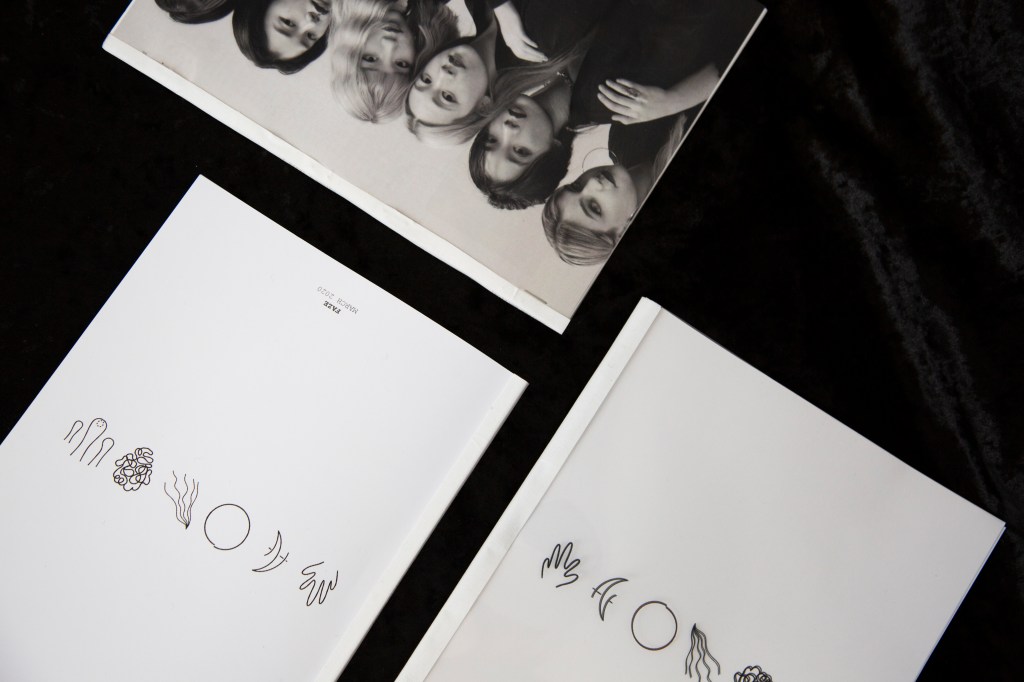
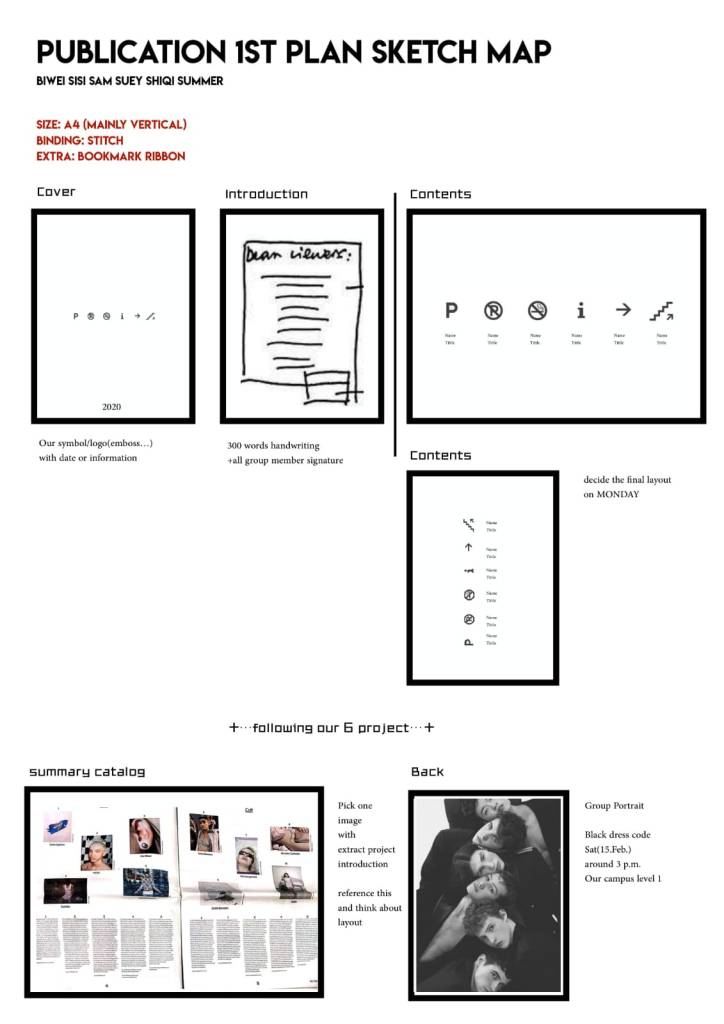
I really liked how I talked about my work in the publication. I put a lot of thought into it because putting words to my work feels very final. For the publication we decided to write in the third person, because we wanted it to look & feel like a magazine, which was weird but our final printed publication looks so amazing.
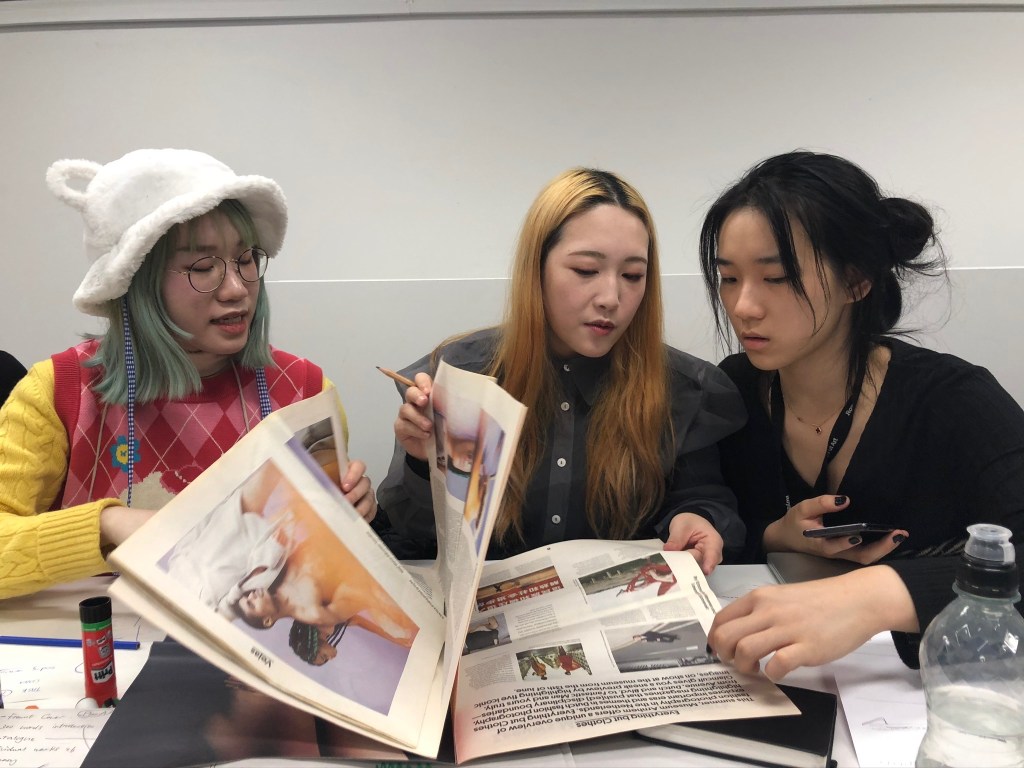
I’m so proud of how my team worked so quickly to lay everything out and get it printed. We completed the whole thing in a matter of a few days because we wanted printed copies for the final assessment.
Here is my writing in response to the 300 words:
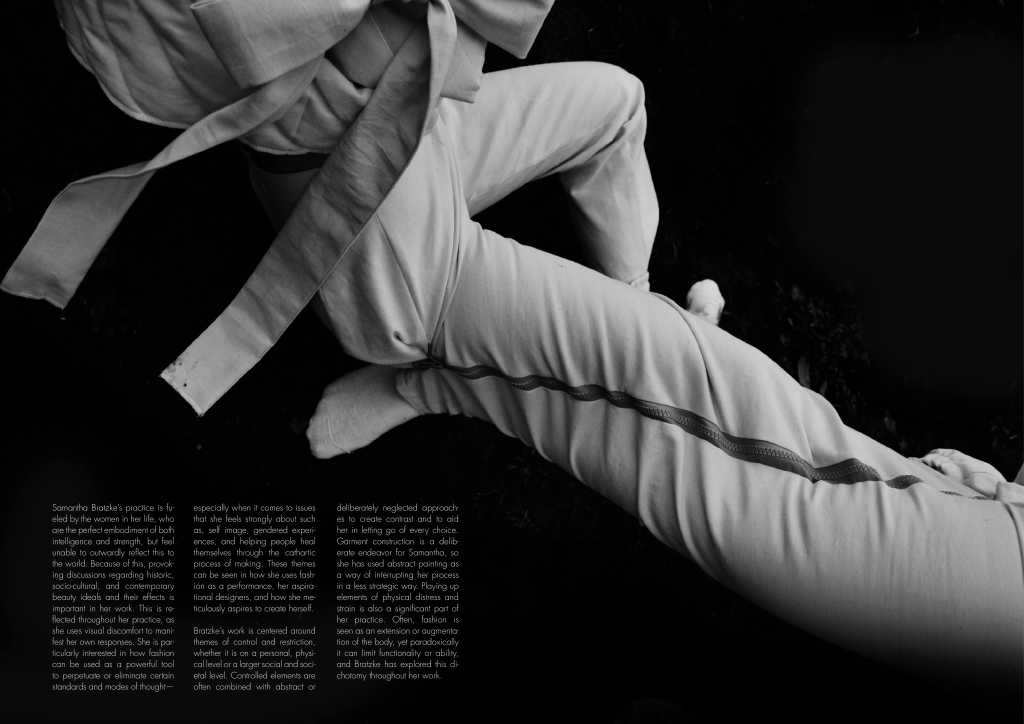
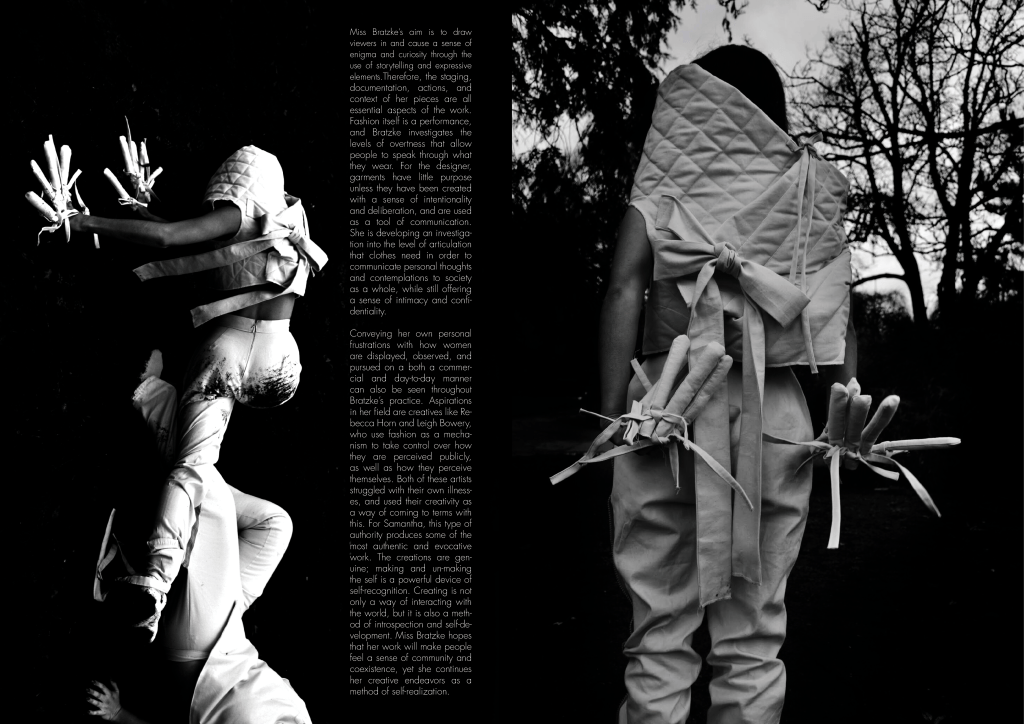
Samantha Bratzke’s practice is fueled by the women in her life, who are the perfect embodiment of both intelligence and strength, but feel unable to outwardly reflect this to the world. Because of this, provoking discussions regarding historic, socio-cultural, and contemporary beauty ideals and their effects is important in her work. This is reflected throughout her work, as she uses visual discomfort to manifest her own responses. She is particularly interested in how fashion can be used as a powerful tool to perpetuate or eliminate certain standards and modes of thought—especially when it comes to issues that she feels strongly about such as, self image, gendered experiences, and helping people heal themselves through the cathartic process of making. These themes can be seen in how she uses fashion as a performance, her aspirational designers, and how she meticulously aspires to create herself.
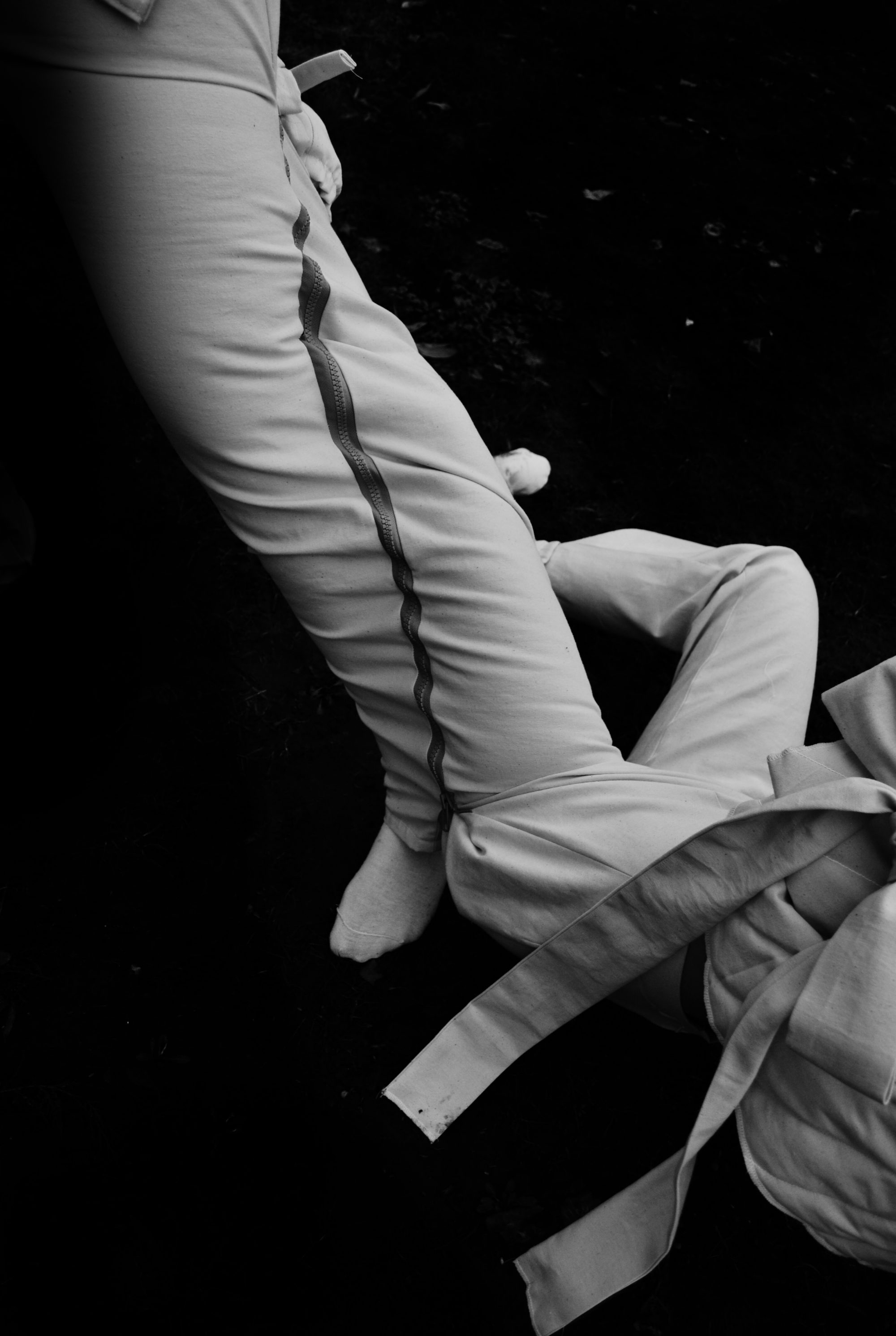
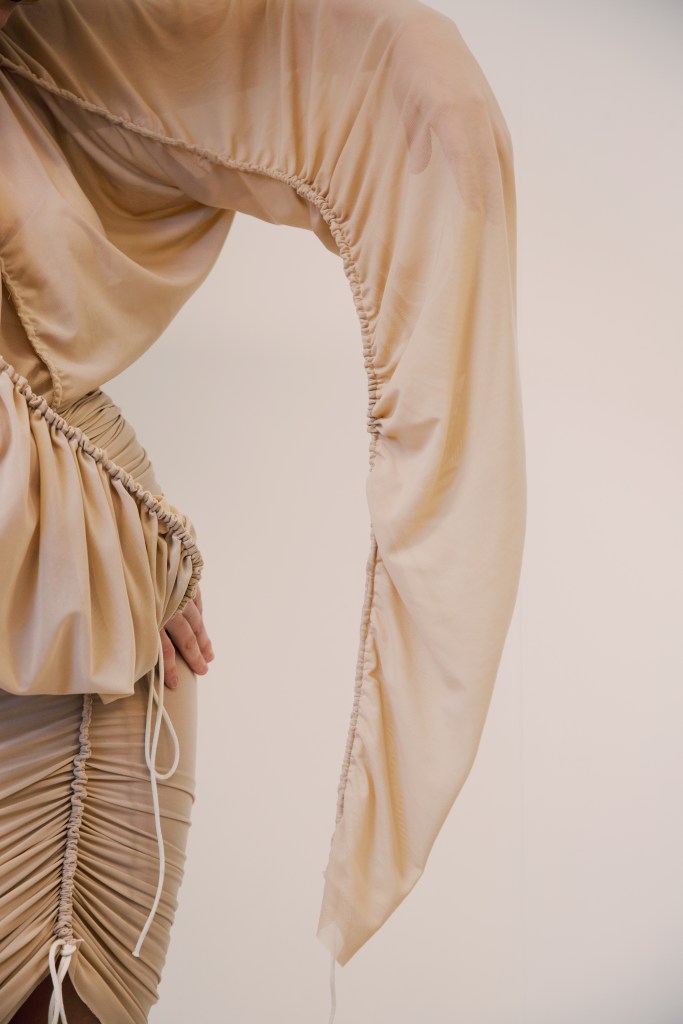
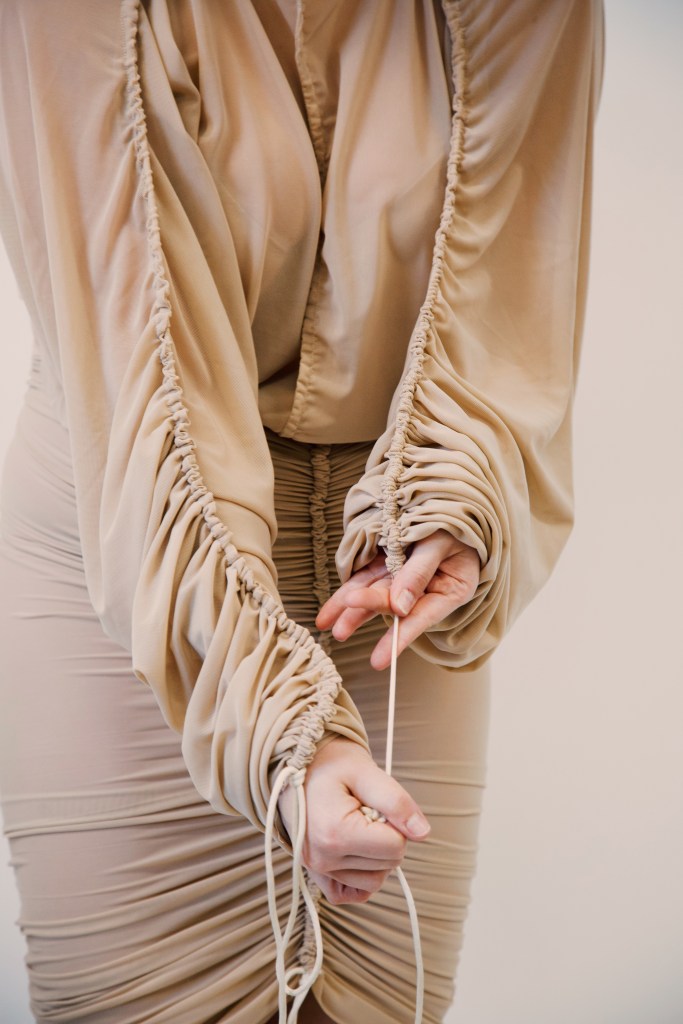
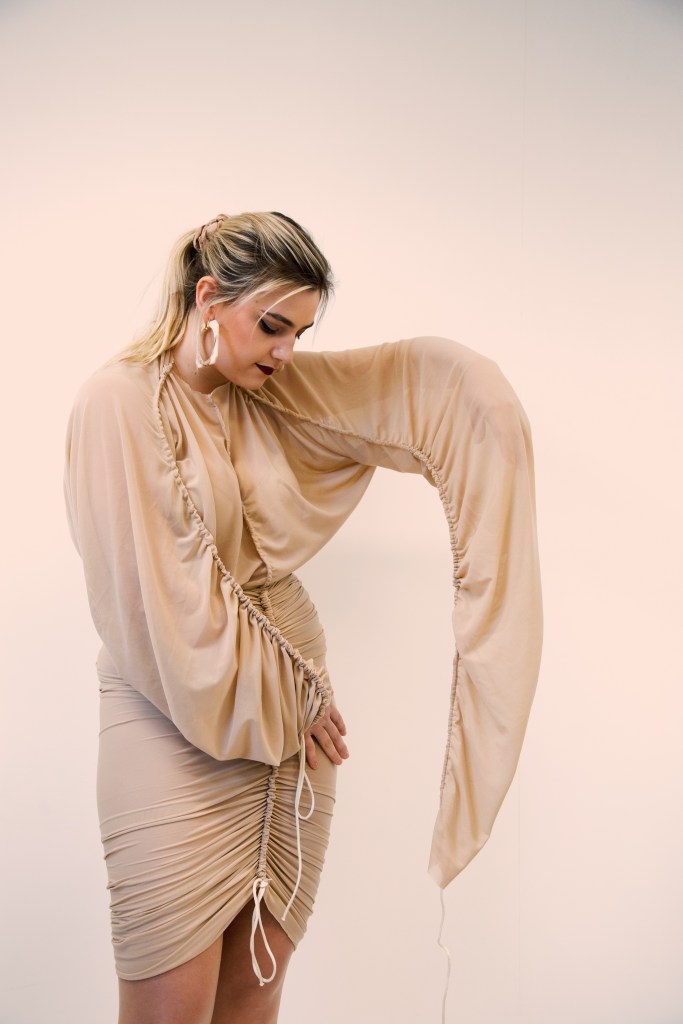
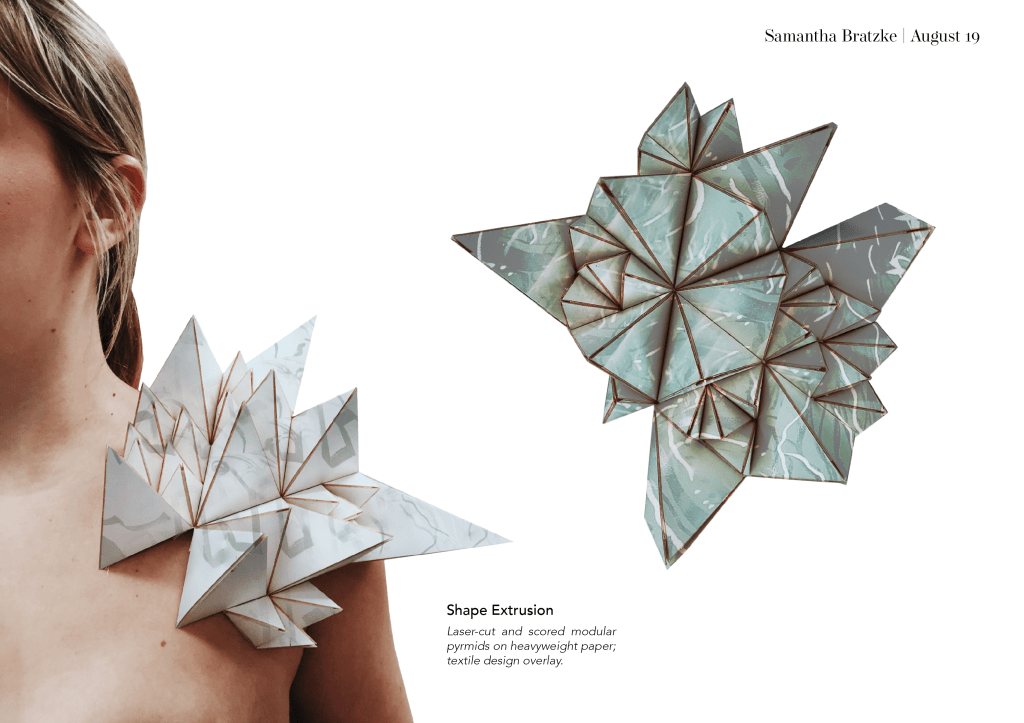
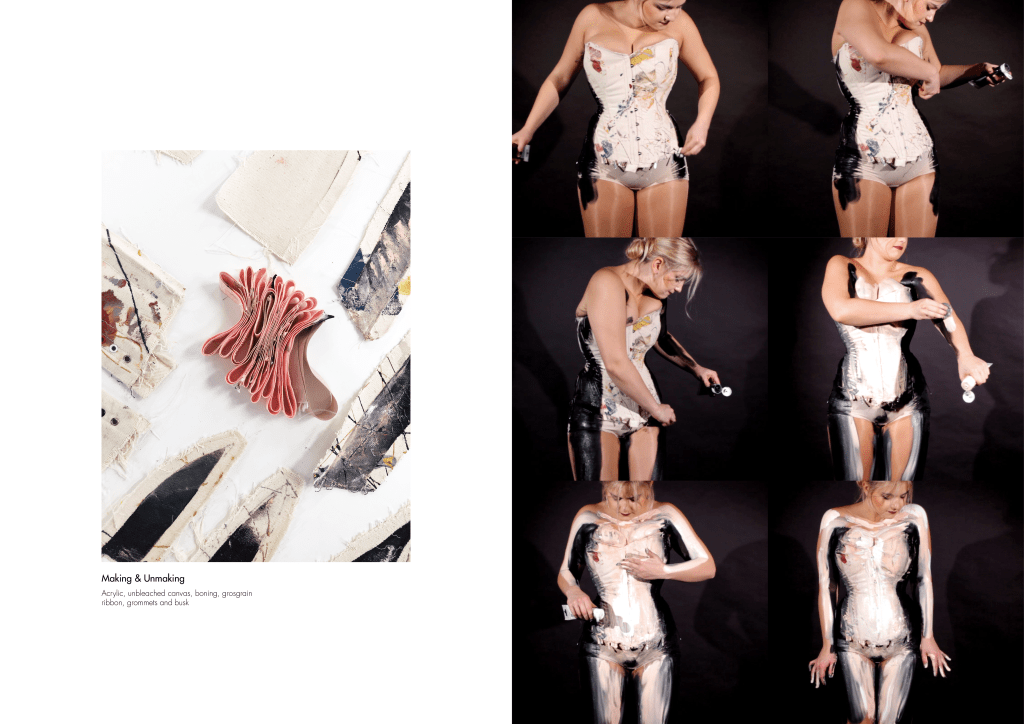
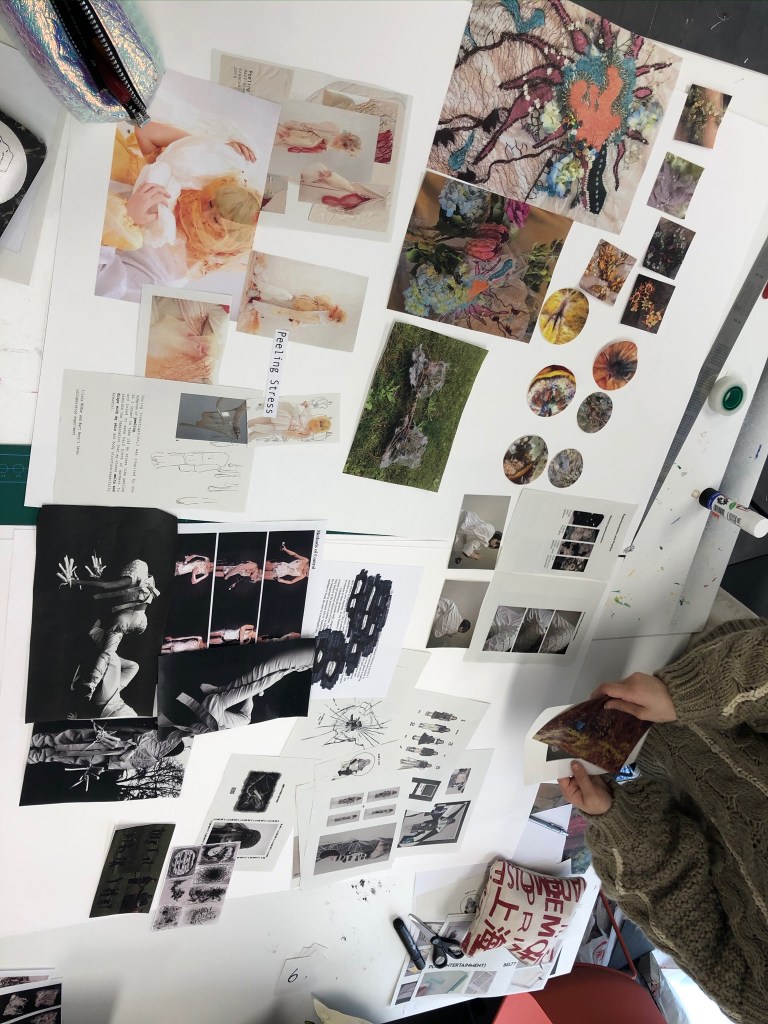
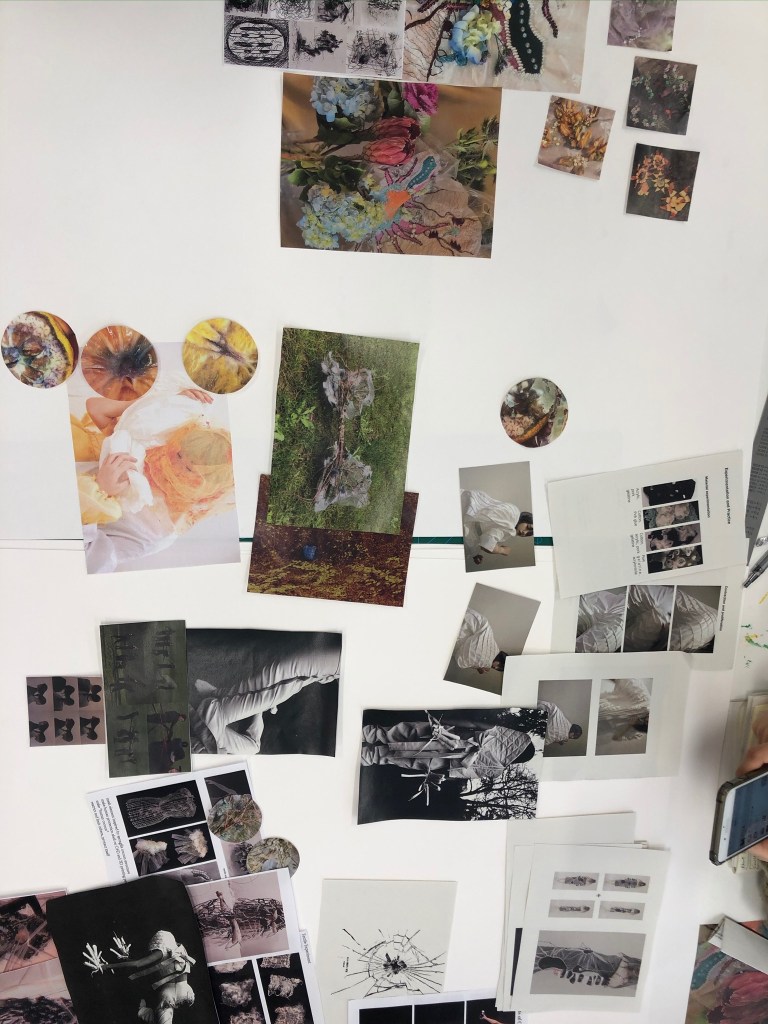
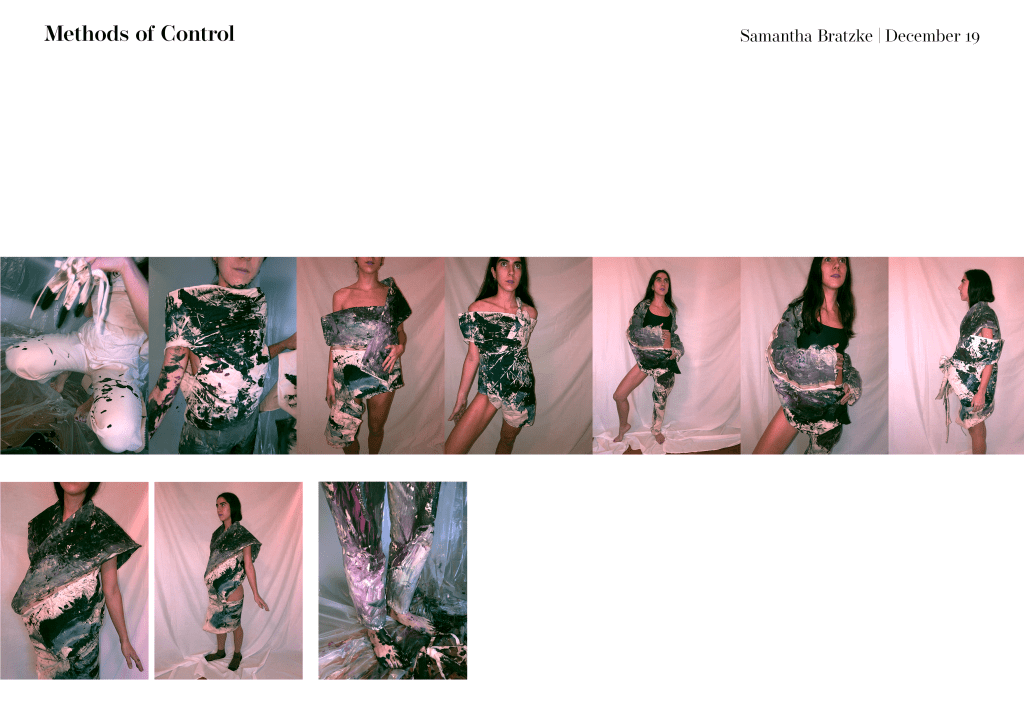
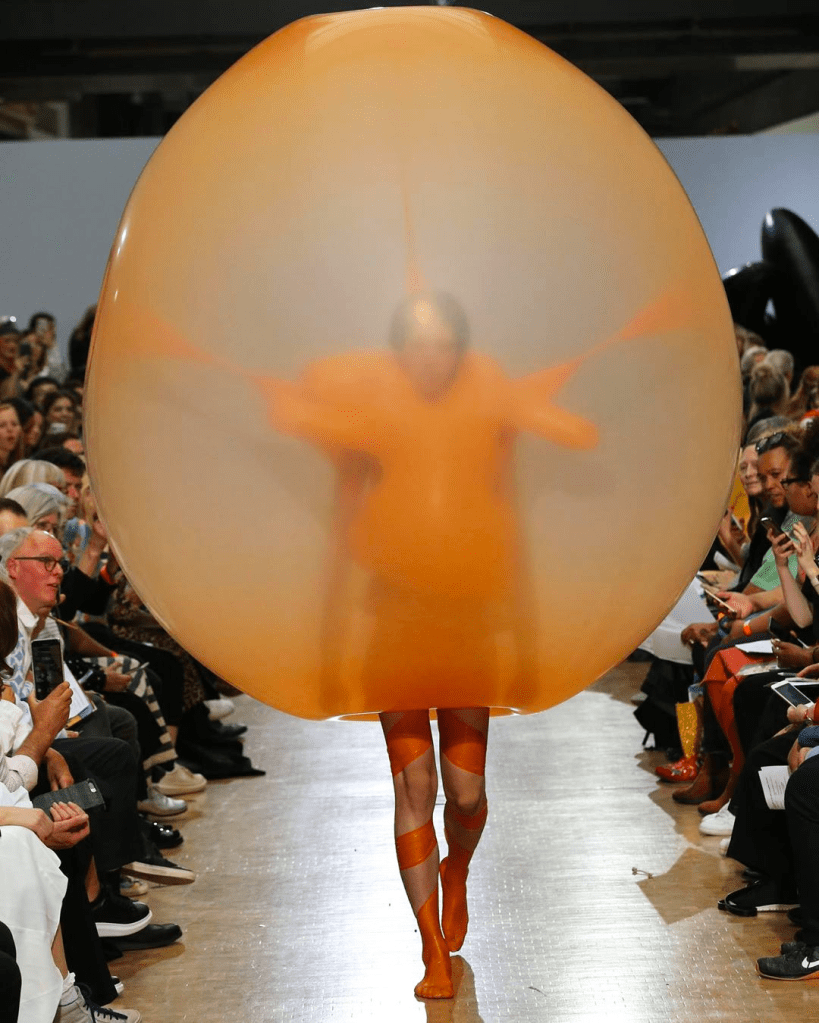
Samantha’s work is centered around themes of control and restriction, whether it is on a personal, physical level or a larger social and societal level. Controlled elements are often combined with abstract or deliberately neglected approaches to create contrast and to aid her in letting go of every choice. Garment construction is a deliberate endeavor for Samantha, so she has used abstract painting as a way of interrupting her process in a less strategic way. Playing up elements of physical restriction and discomfort is also a significant part of her practice. Often, fashion is seen as an extension or augmentation of the body, yet paradoxically it can limit functionality or ability, and Bratzke has explored this dichotomy throughout her work.
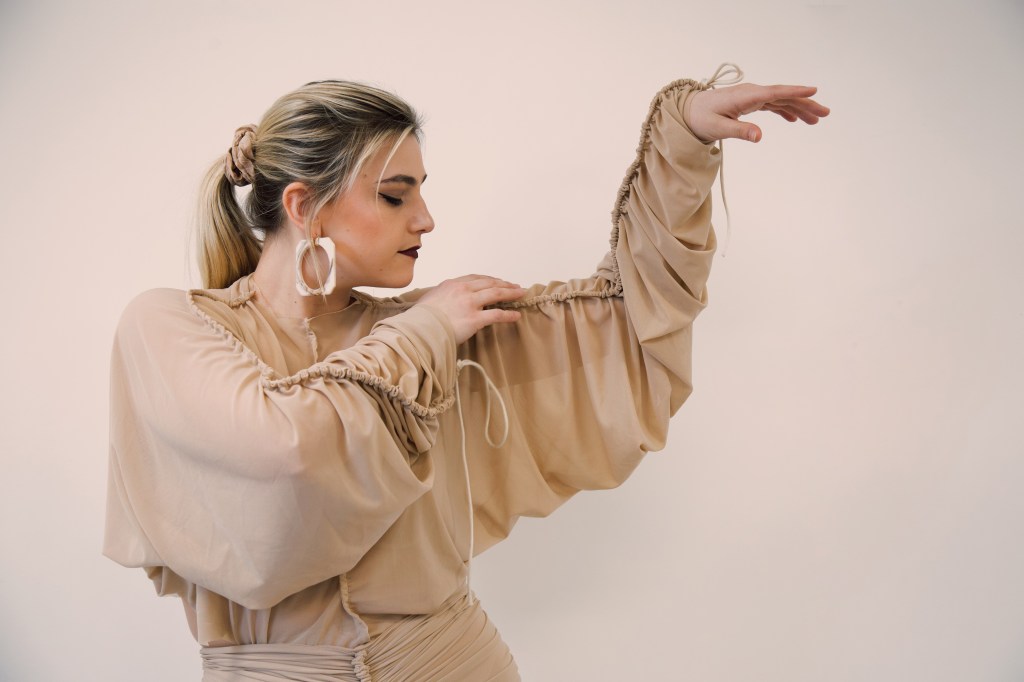
Miss Bratzke’s aim is to draw viewers in and cause a sense of enigma and curiosity through the use of storytelling and expressive elements. Therefore, the staging, documentation, actions, and context of her pieces are all essential aspects of the work. Fashion itself is a performance, and Bratzke investigates the levels of overtness that allow people to speak through what they wear. For the designer, garments have little purpose unless they have been created with a sense of intentionality and deliberation, and are used as a tool of communication. She is developing an investigation into the level of articulation that clothes need in order to communicate personal thoughts and contemplations to society as a whole, while still offering a sense of intimacy and confidentiality.
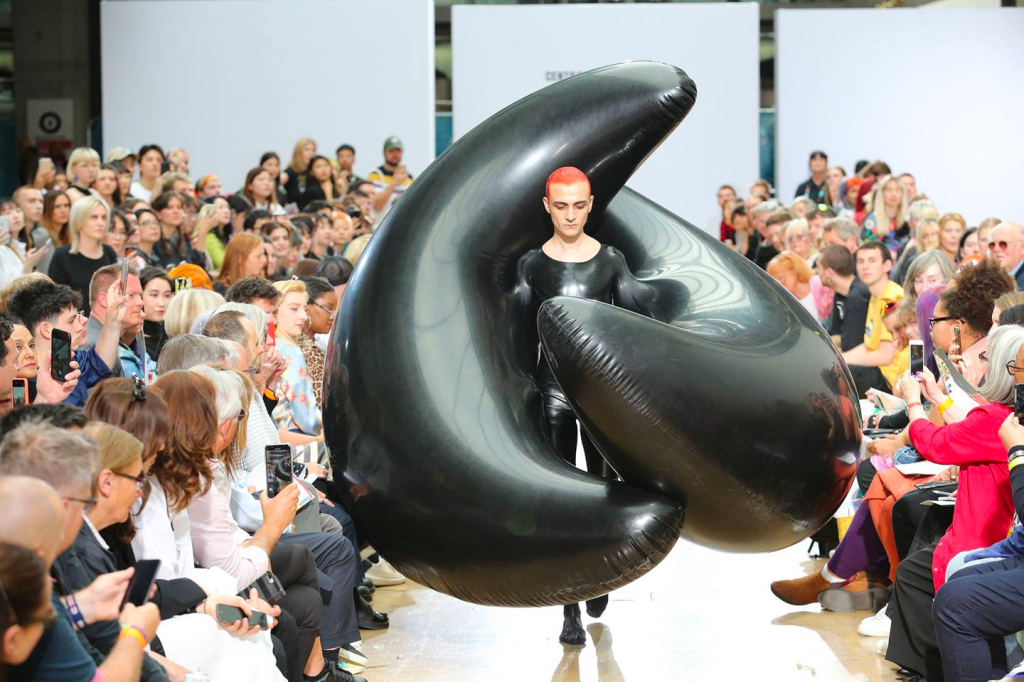
Conveying her own personal frustrations with how women are displayed, observed, and pursued on a both a commercial and day-to-day manner can also be seen throughout Bratzke’s practice. Aspirations in her field are creatives like Rebecca Horn and Leigh Bowery, who use fashion as a mechanism to take control over how they are perceived publicly, as well as how they perceive themselves. Both of these artists struggled with their own illnesses, and used their creativity as a way of coming to terms with this. For Samantha, this type of authority produces some of the most authentic and evocative work. The creations are genuine; making and un-making the self is a powerful device of self-recognition. Creating is not only a way of interacting with the world, but it is also a method of introspection and self-development. Miss Bratzke hopes that her work will make people feel a sense of community and coexistence, yet she continues her creative endeavors as a method of self-realization.


 Samantha's RCA Process