Speed of Thought.

Francesca, I agree with you that this type of display was perfect for the work being presented by Architype, and it definitely caught my eye! For me, the most interesting aspect of this exhibition was the range of mediums and methods used to create “sketches”. It was obvious to me that creatives use a variety of methods to visualize their thoughts. For example, Julian approached sketching from a very painterly and geometric/pattern cutting perspective. His work seems to put a lot of emphasis on the whole body and how it moves in space. And the piece by Evy Jokhova (‘From Memory’) showed how a fiber artist might sketch through embroidery stitches, which happen to be very intricate and detailed.

I don’t know about you, but seeing how so many different scientists and artists conceptualize their ideas through these mediums made me think about how I might approach sketching in the future… I’ve always found sketching with a pen and paper is convenient in a gallery setting (and helpful), but it may behoove both of us to try other, more three dimensional approaches?

Let me know if you have any thoughts

Best, Sam

🙂
Timetable

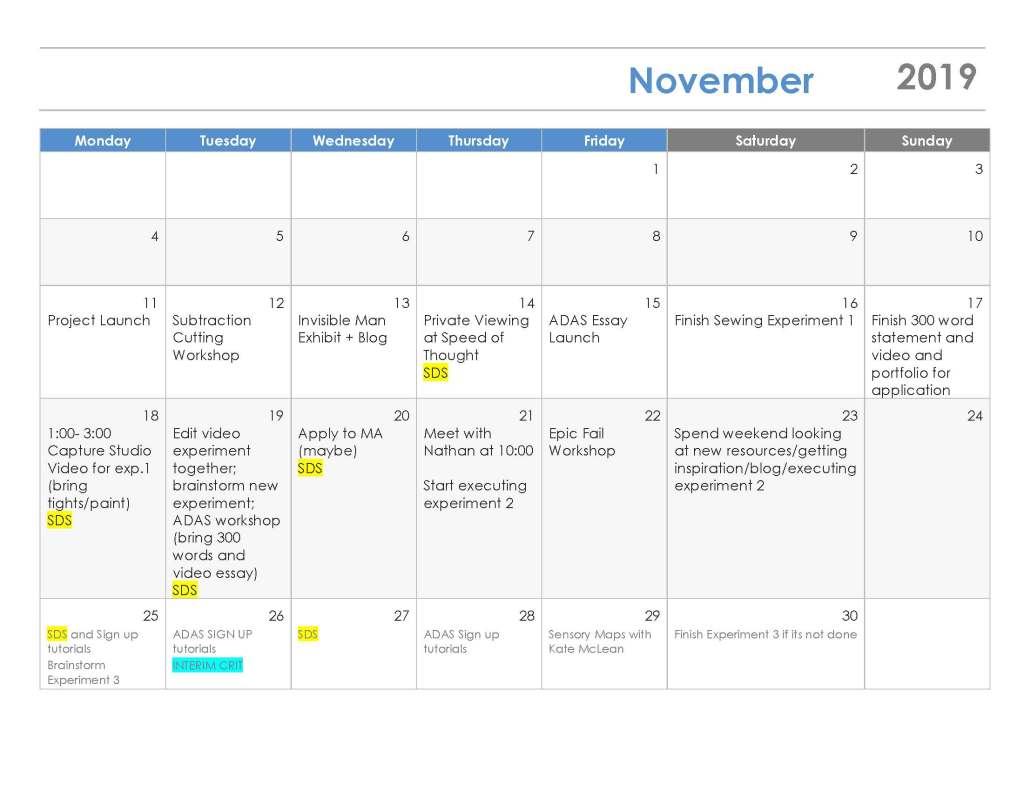
My Goal is to have 5 really solid experiments throughout this process. Hopefully I can realize this, as I’ve already started the first. See images below for timetable.

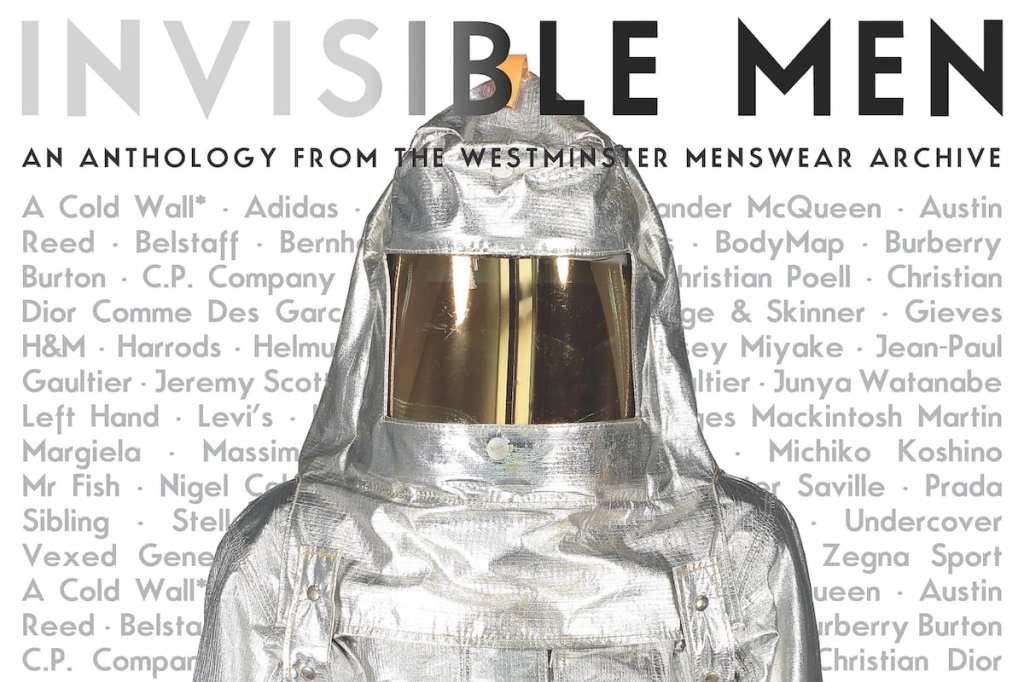
Invisible Men + Thoughts

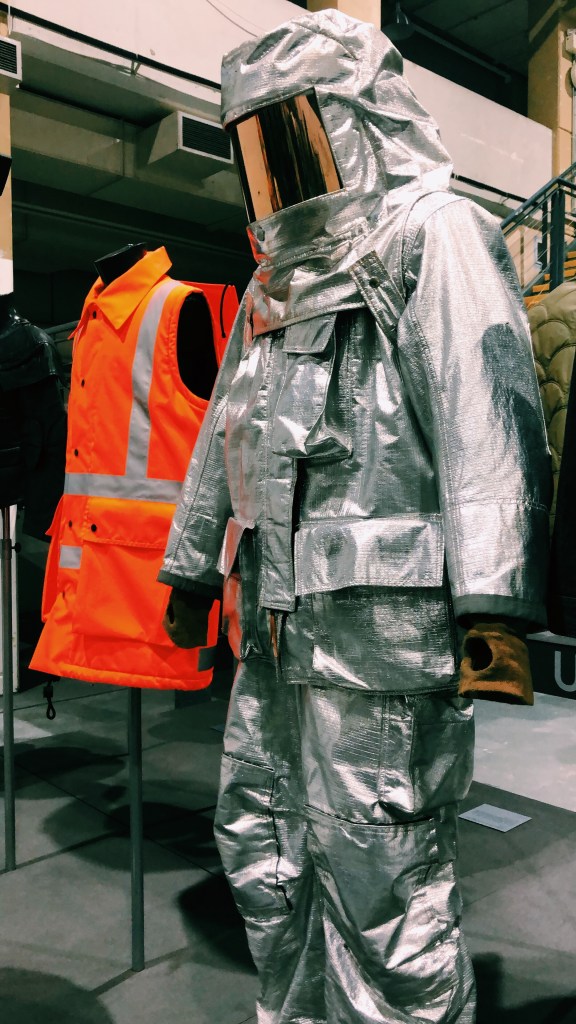
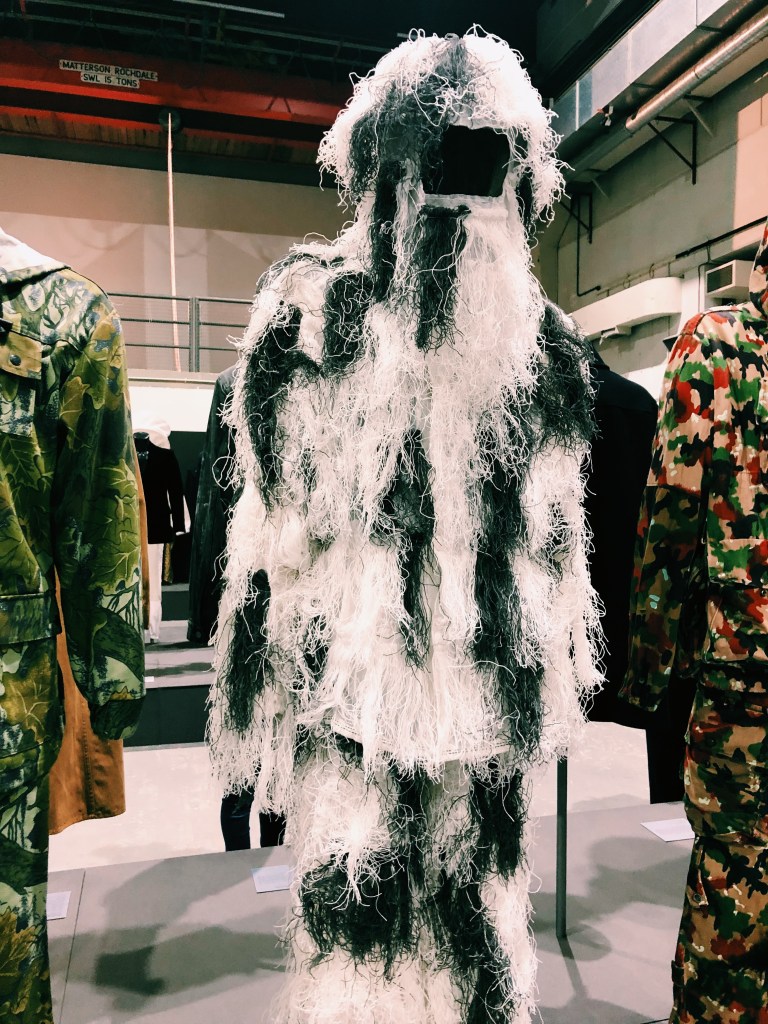
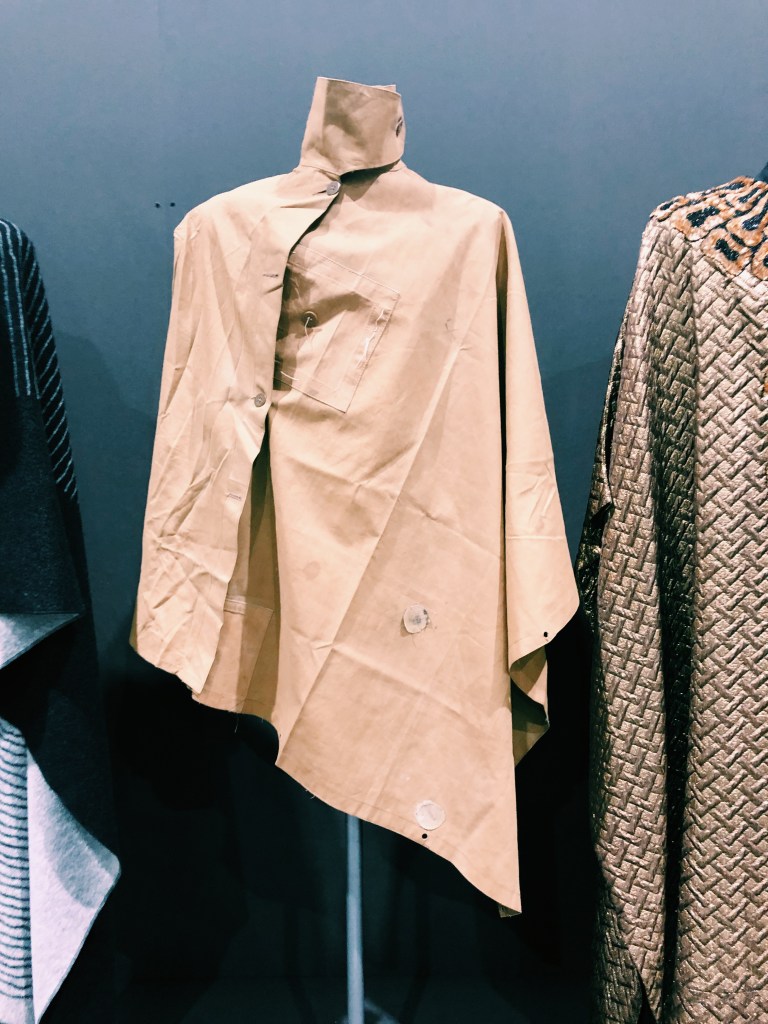
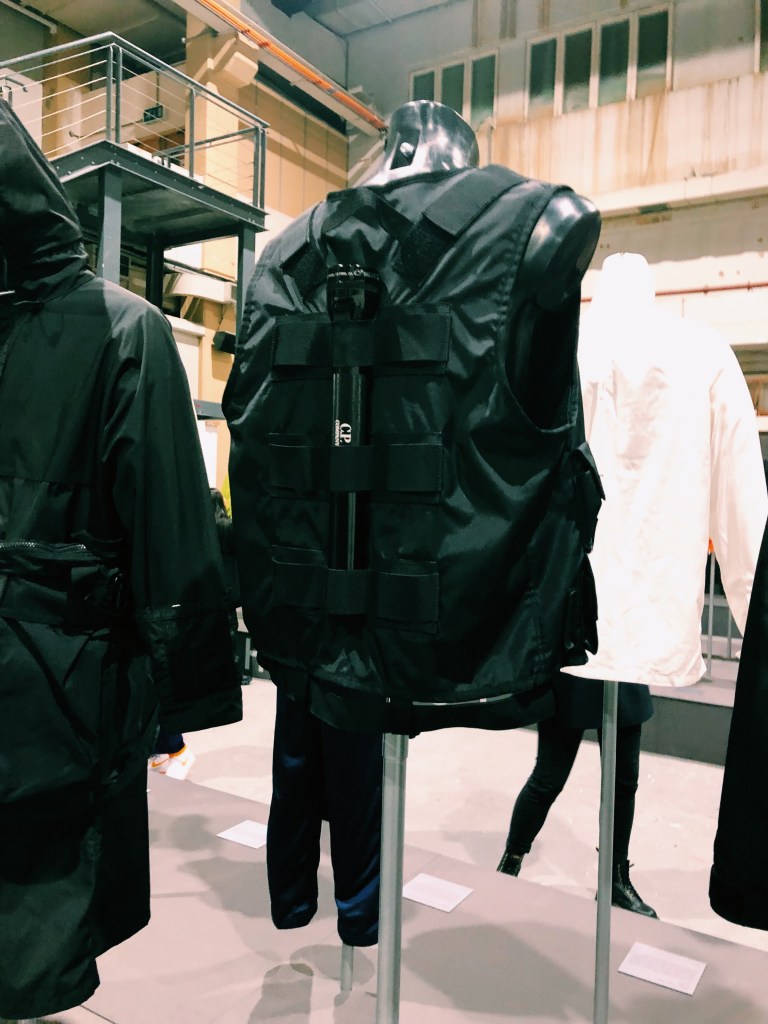
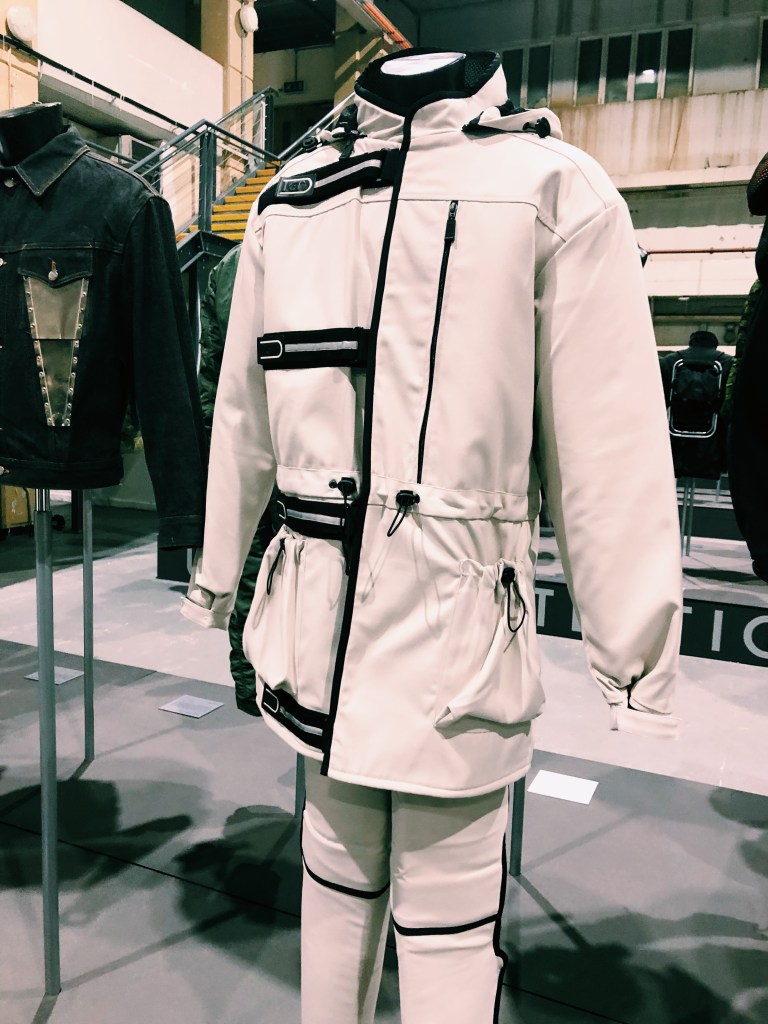
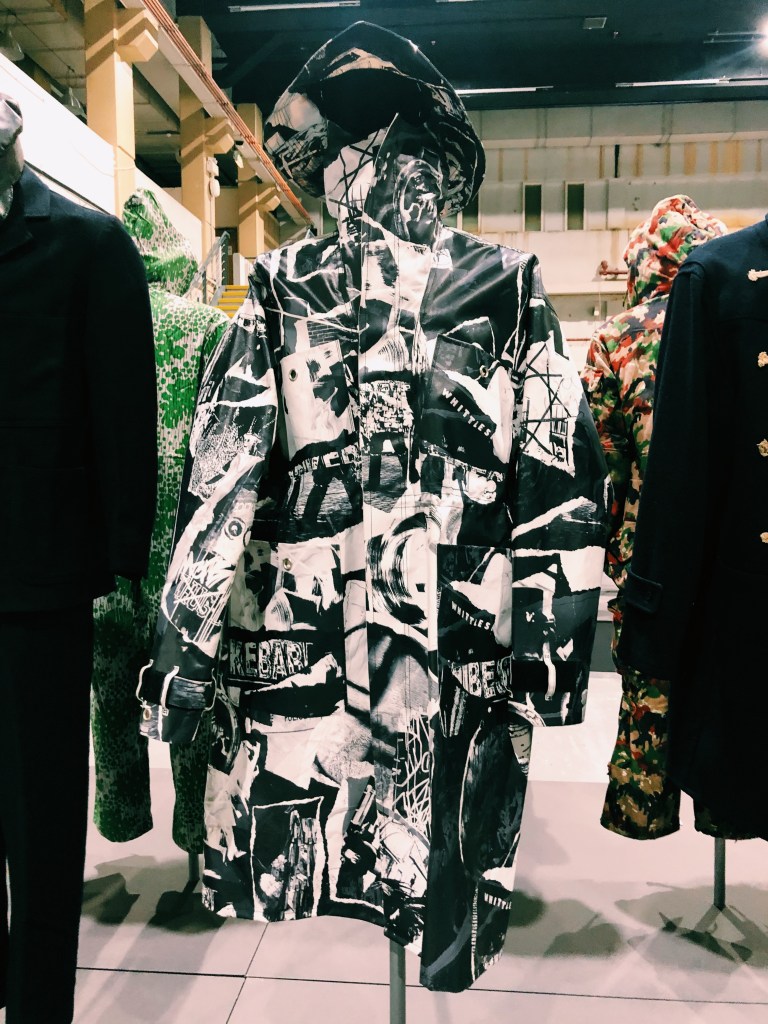
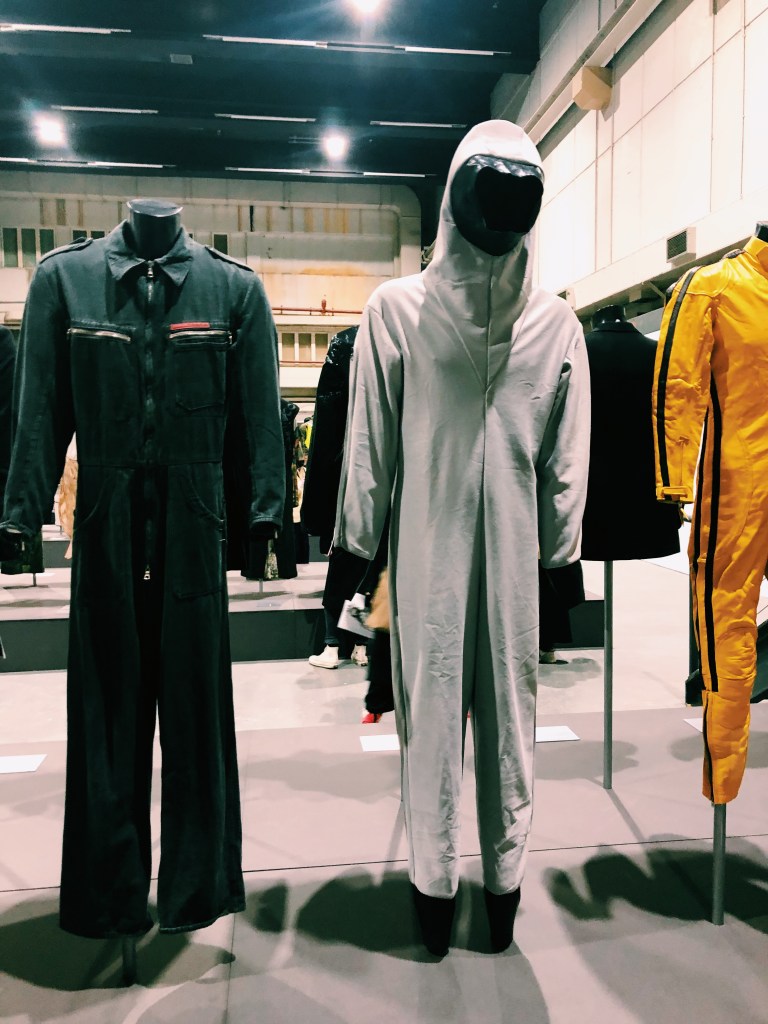
Overall, the purpose of the exhibition was to pair designer garments alongside military, functional, and utilitarian outfits. This was done because these types of garments have dominated menswear design as a source of inspiration throughout time. Some of the original garments subverted the original inspiration, while others replicated the sources. The original meaning and function has been lost from iteration to iteration. In the pamphlet, this approach to menswear design is described as almost, “fetishistic”.

I found this exhibition very enlightening because there is a stark contrast between menswear and womenswear when it comes to functionality. All of the garments had a “purpose” some of which included (but were not limited to):

  1. protection from heat
  2. protection from cold
  3. protection from biological, chemical, nuclear, and radiological sources
  4. protection from animals
  5. protection from human beings
  6. camouflage
  7. protection from water
  8. protection from electricity
  9. protection from being stabbed or shot or tazed
  10. functional carrying of objects on the body
  11. disguising the face

In contrast, meany womenswear garments don’t even have pockets!

I started to think about how utilitarian or functional garments might be different if they were created for a modern woman’s needs. Some of these needs may include:

  • wanting to be hands free
  • wanting to blend in/stand out
  • wanting to have “eyes in the back of your head” so you can watch and protect yourself more easily
  • maybe having a weapon for self defense built in
  • having a better range of motion
  • more comfortable shoes
  • capes – synonymous with the ideas of concealment, disguise, and invisibility; acts as a garment that hides the body; has made a resurgence recently because the garment is genderless
  • Overalls – cover up what is worn underneath allowing the user to hide identity; functional use to protect clothes; used in many professions that are considered “mens work”
  • Black Jacket – subtle differences that are almost undetectable to the untrained eye; respectability and formality
  • Camouflage – making objects hard to see (crypsis) or disguising them as something else (mimesis); motion dazzle confuses the observer with a striking pattern making the object harder to locate; Disruptive Pattern Material (DPM)
  • Armour – status of protection and bravery
  • Urban Protection– Moreno Ferrari/ how to make daily life better for “modern men”

Unit 1: Reflection + Future Actions

Practice/Research

  1. The performative elements to my practice have been successful in illustrating my ideas so far- continue to use and develop this (even if its just a quick, impromptu video)
  2. Try to use more innovative or haphazard ways of construction that drift away from what I have been “traditionally” taught
    • Perhaps by setting up rules for myself to follow, I can begin to let go a little bit of what is “traditionally” correct
  3. Research restricted codes of conduct, systems that enforce a rigid “way of doing things” (like traditional crafts even), and restricted access to specific groups of people (perhaps looking at Helen Hamlyn center for design- aging exhibition.

Portfolio

  1. Have a chat with Julian to confirm if I should apply in November or January
  2. Connect elements of research directly to practice, and overall use more research in lieu of descriptive writing
  3. Revisit old work and connect it more to my current journey (I’d like to do this in a creative way-I need to think on this a bit more and get some suggestions)
    • my initial thought is to use one of the time consuming methods that I did in the past and create a multiple hour video of me doing this (maybe looking at how I develop my own meticulous practice; micro processes; the discomfort of an endless task; absurd approaches).

Discomfort: New Approach

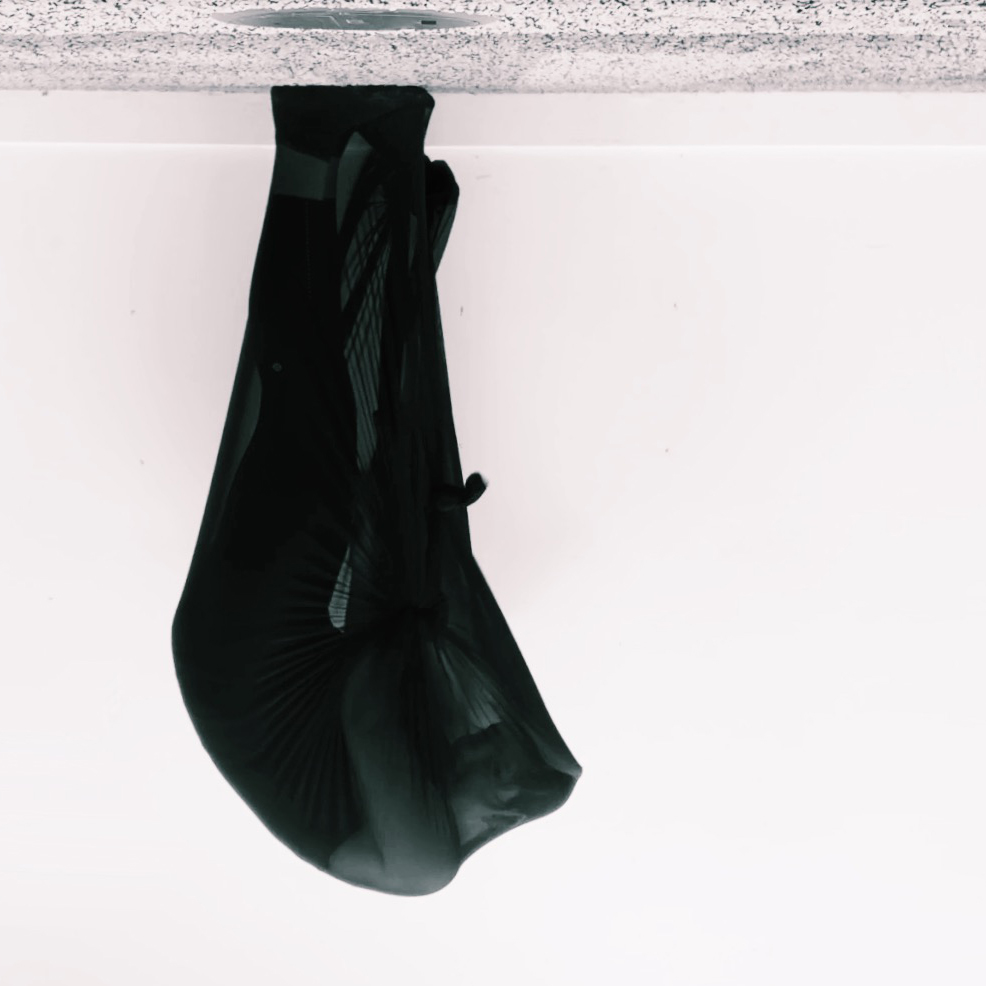
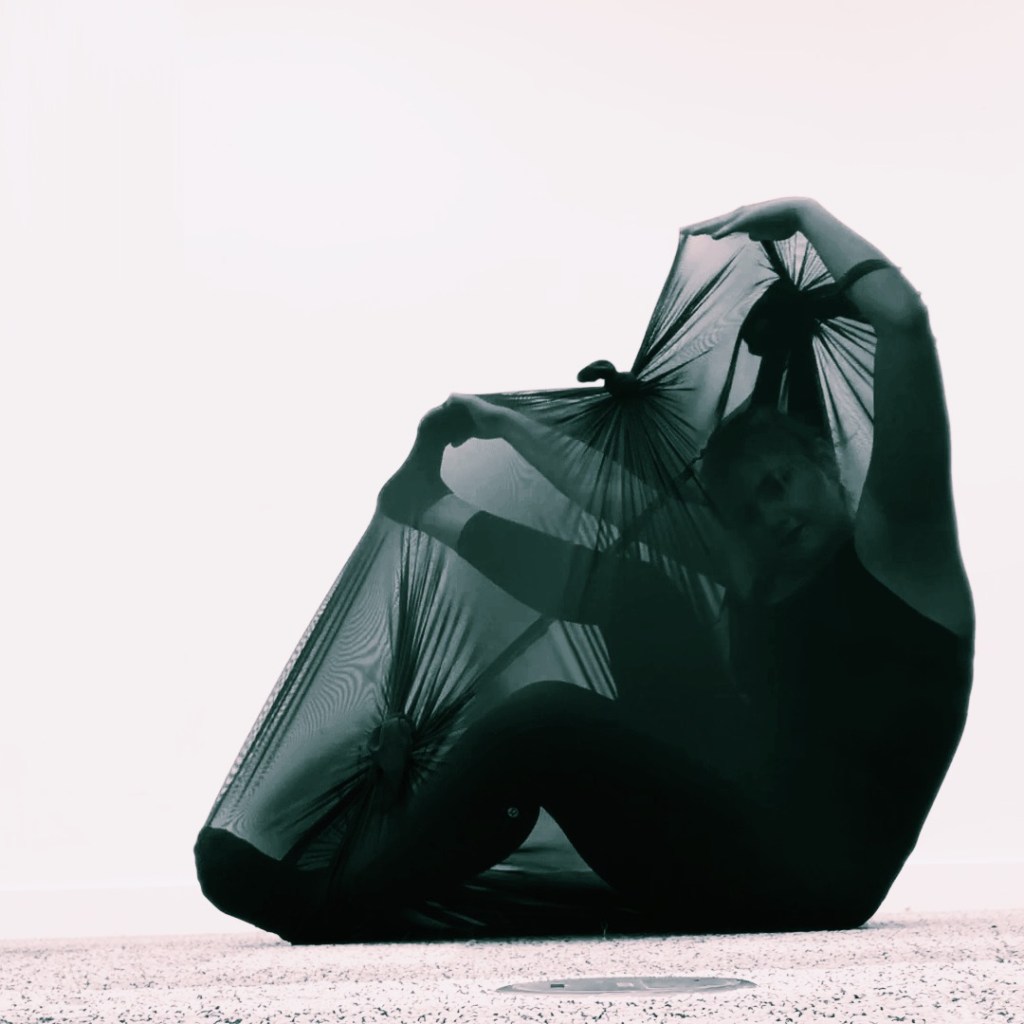
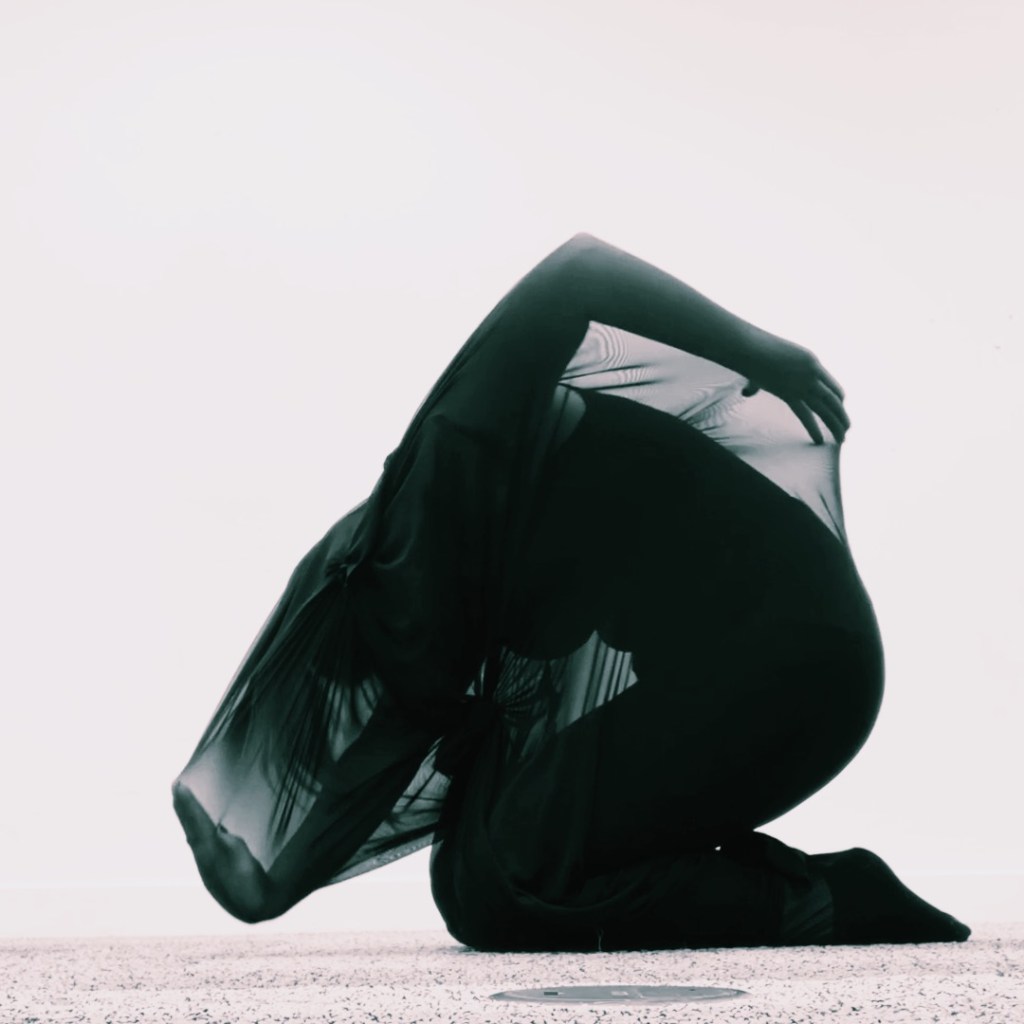
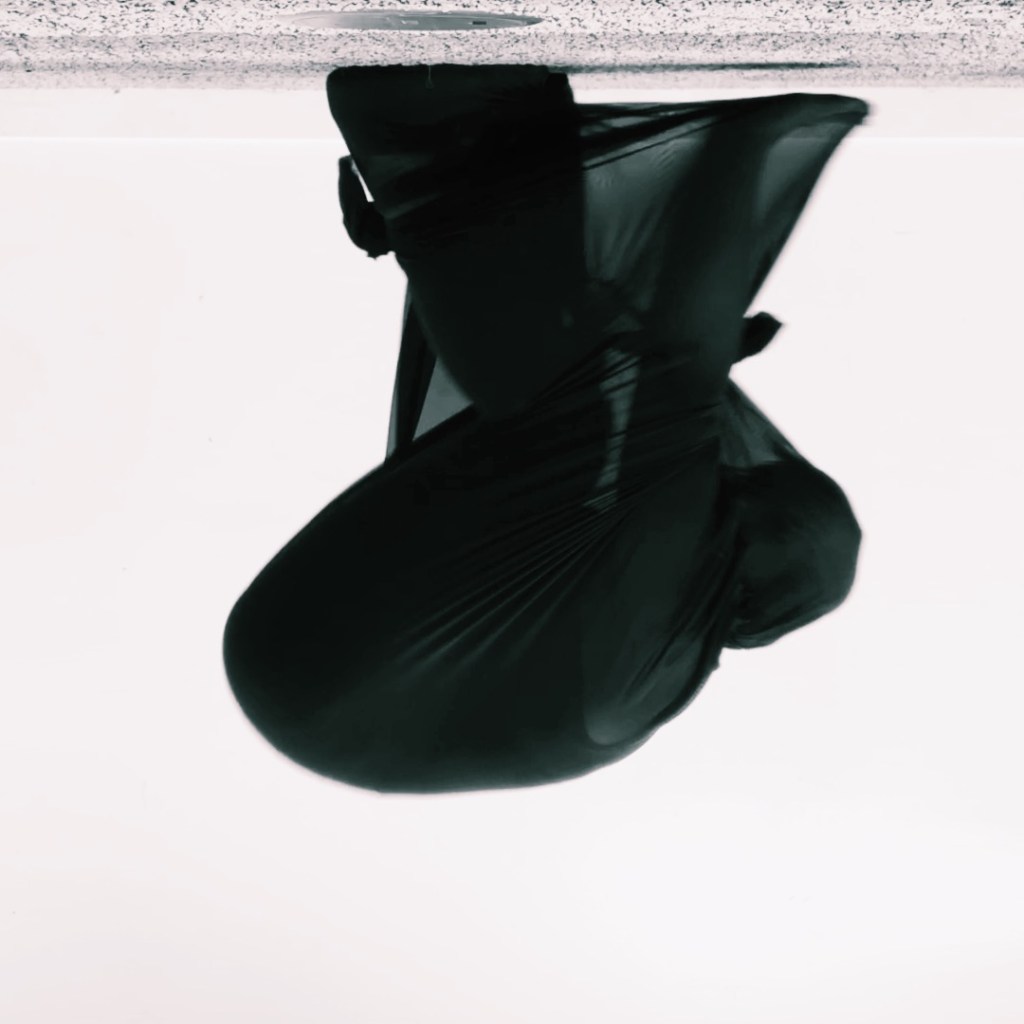
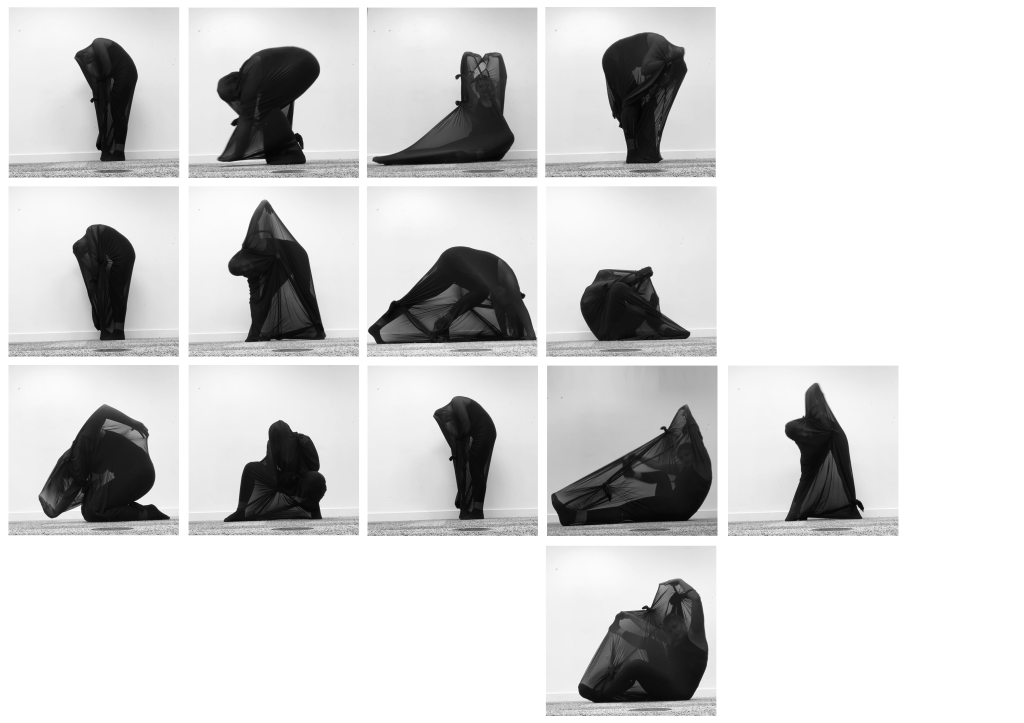
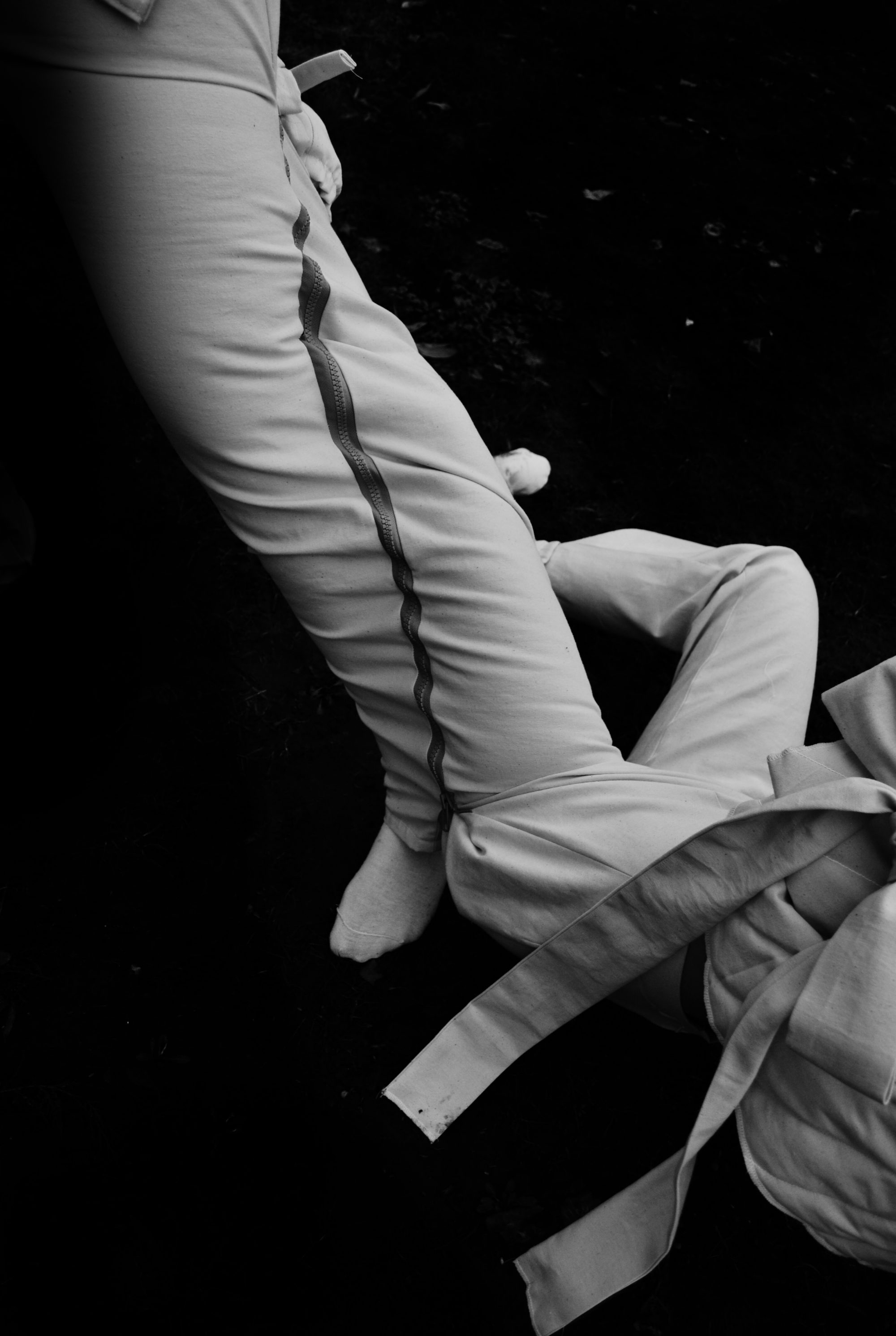
During this test, I was impressed with how badly my neck hurt. The most uncomfortable position was the first one pictured below.

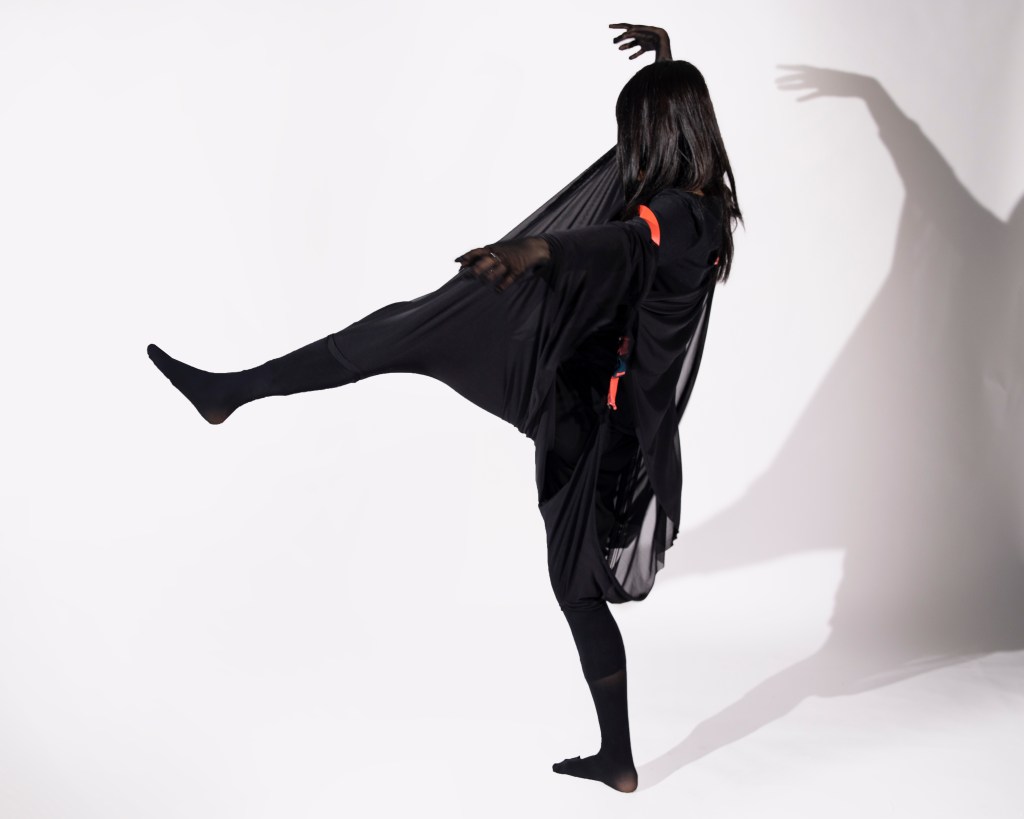
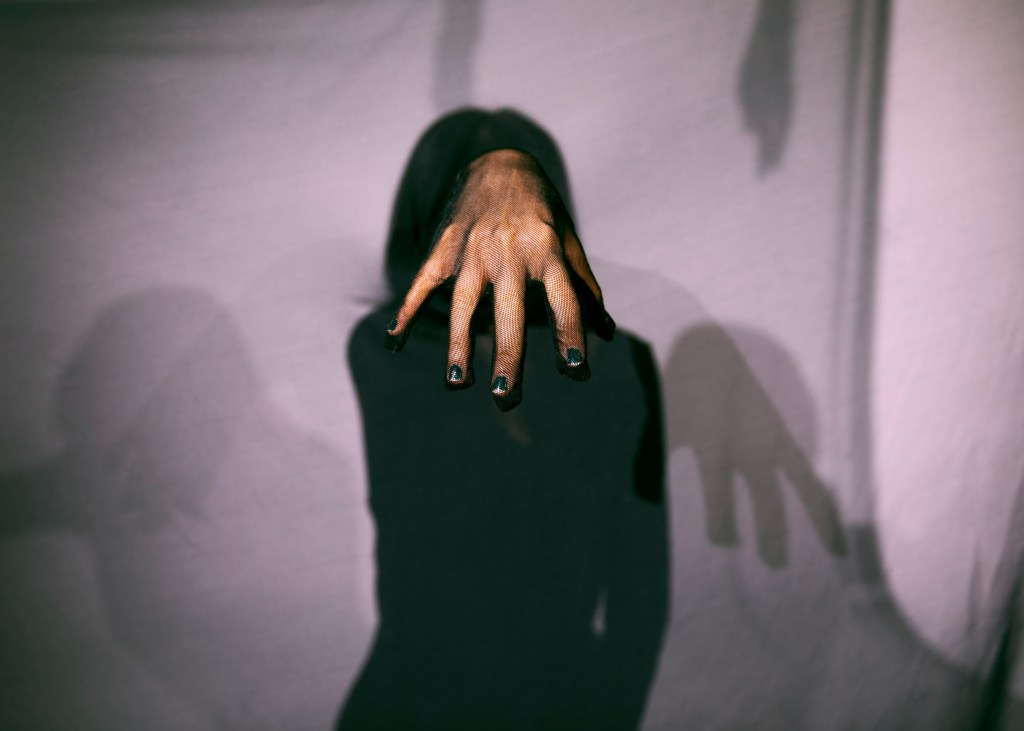
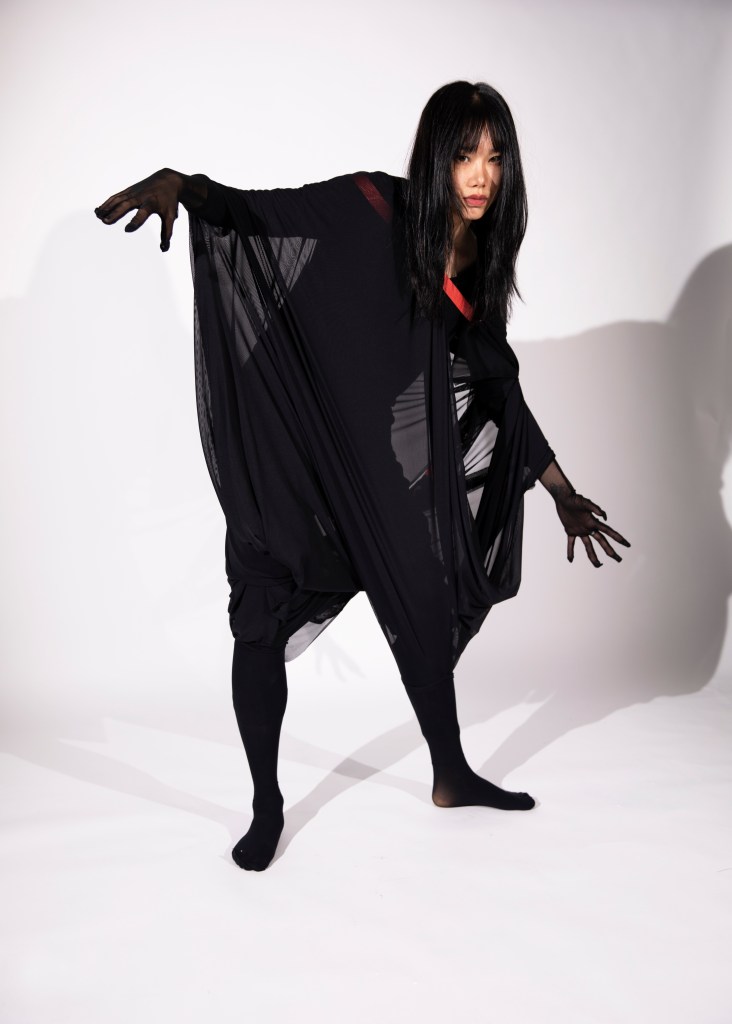
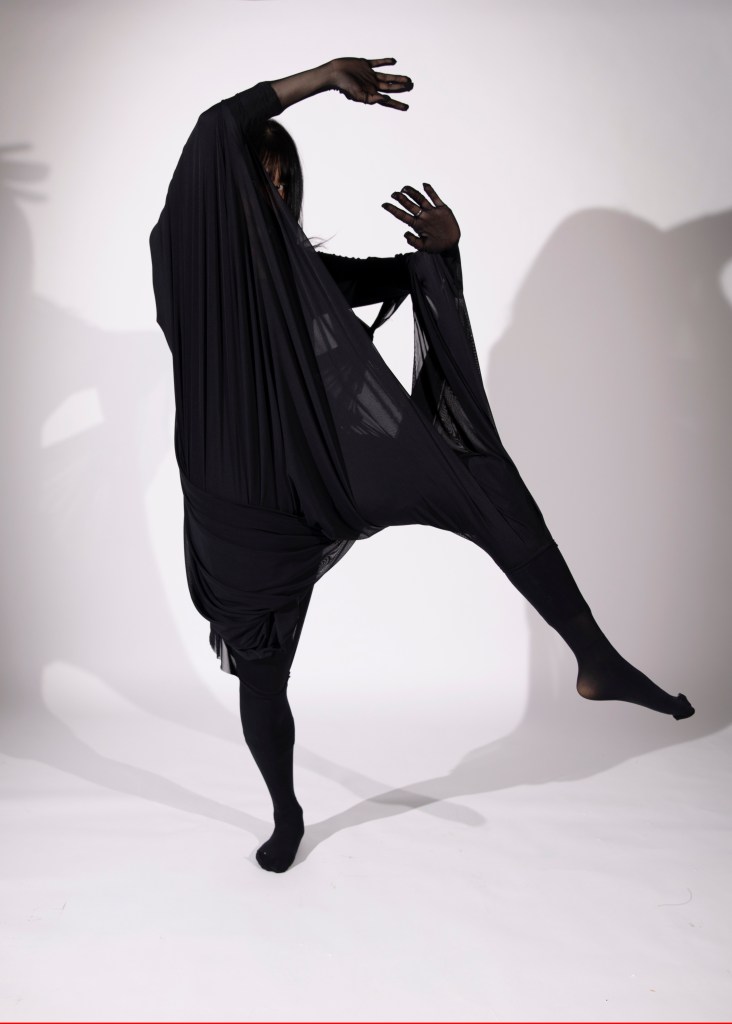
I did another experiment where I tried to dictate the movement of my limbs a little more by sewing in gloves and stockings. The idea that I had was that having a “cultural body” has an environmental element as well. I also liked the idea that it was something that we voluntarily step into, whether it is comfortable or not.

I think I’m going to sew it together into a sack shape again. I thought that produced some more interesting shapes. Or I am interested in having friends hold it and drape it around me as I step into it. Then it would illustrate how others might dictate what we do.

The final thing that I’m interested in doing is making something that bends my neck over to show that uncomfortable position.

My Life is Ruined / I Changed my Plans

I had this “super cool” thing planned:

But as I started draping this zero waste look onto the mannequin, it was not communicating ANY of the ideas I explored (a thought confirmed by Benji). So he recommended I start some other tests. I wanted to communicate discomfort and it wasn’t happening at all. I did another experiment which I think was more successful… check next post

Uncomfortable Painting

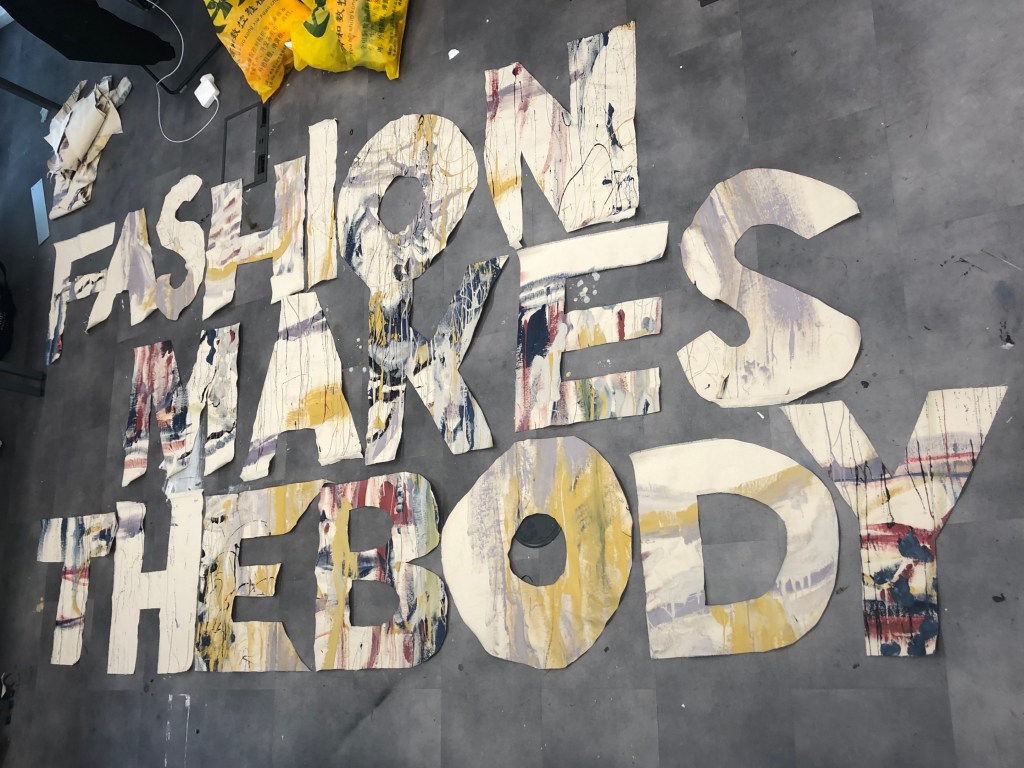
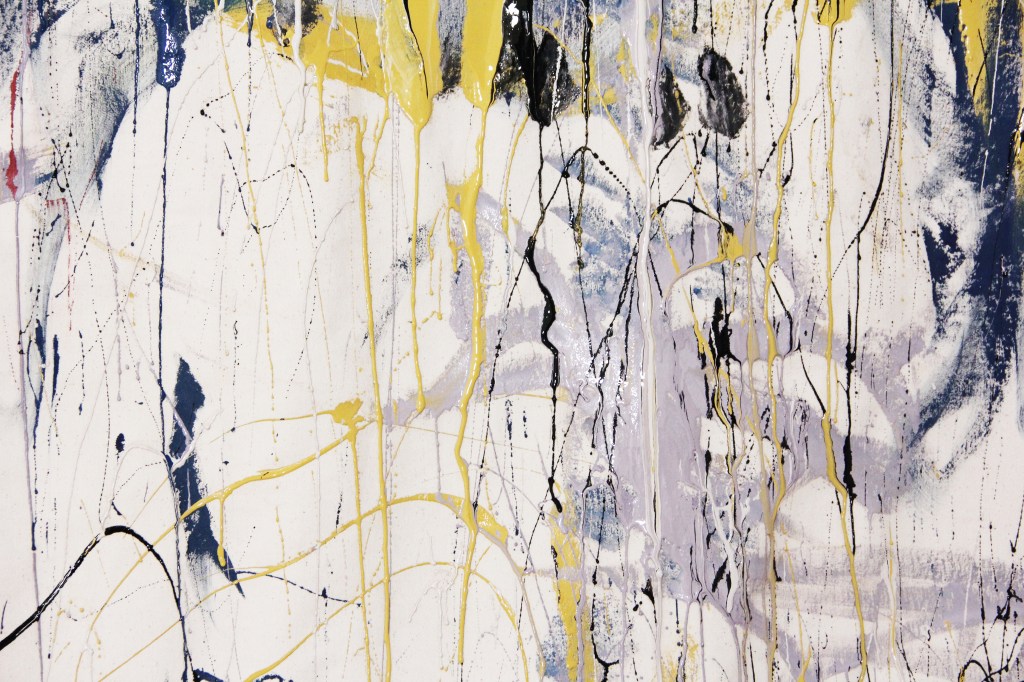
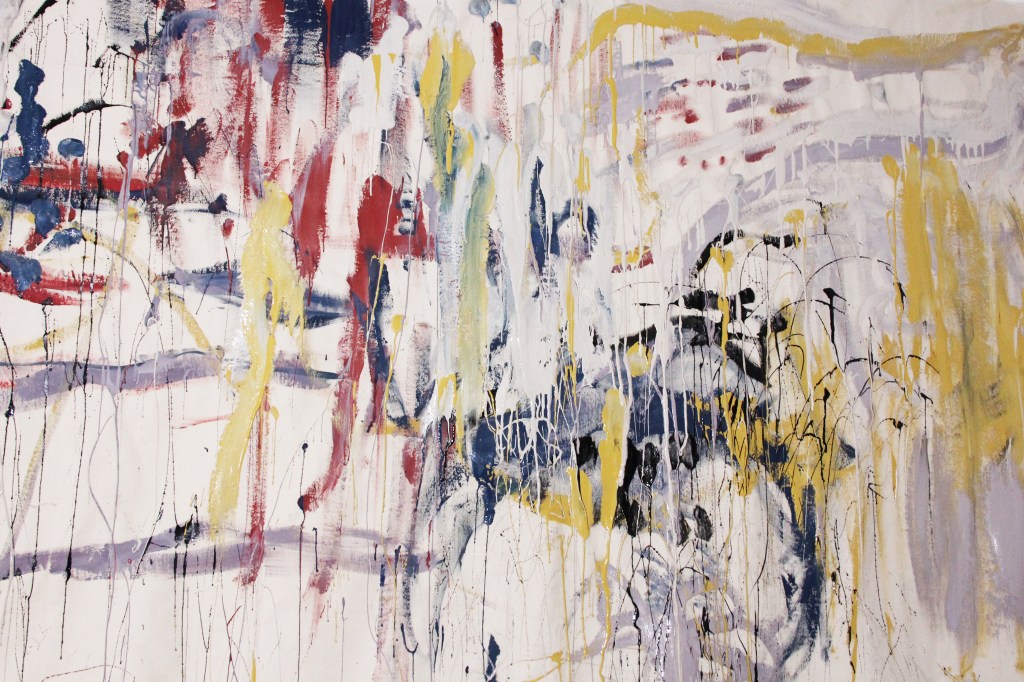
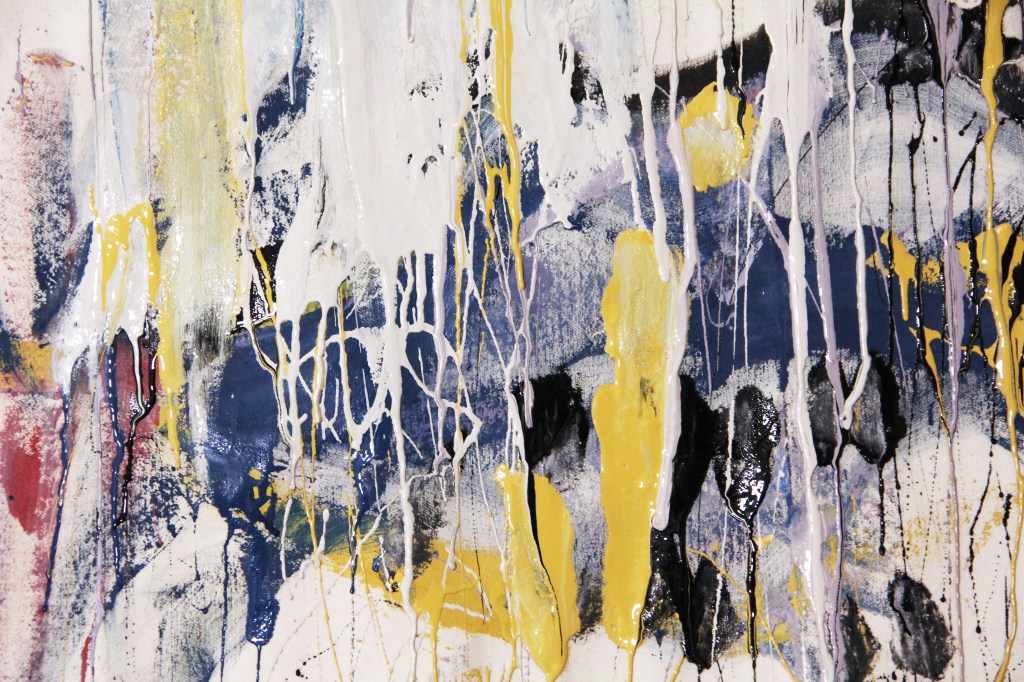
Today I conducted an experiment painting on a very large scale in a variety of uncomfortable/restricted manners. I have included a video and photos, and I am excited to start cutting the fabric tomorrow.

What I noticed is a clear difference in the types of marks made. For example, the marks of the fabric on the wall had a very different direction and pressure sensitivity than the marks on the floor.

Also, I found it so hard to paint with some of these poses. What created the most discomfort was:

  • a limited field of view
  • not being able to see my limbs while painting
  • having to be bent into uncomfortable positions
  • having to balance on one limb
  • having to use my toes

Going to research: Jackson Pollock; Uncomfortable ways to cut fabric; straight jackets

10/10/2019: Fashion Group Tutorial & New Plan

-Using the Living Hinges as an environmental device; exploring dimensions outside body

-Make the effects larger with shadows and lights

-explore atmospheric elements

-restrict movement as a part of experiment

-How do people connect with the space around them

I plan to take an area under the stairwell and conduct an experiment. I think I’m going to buy a large bolt of fabric and make a big sheet to put in the environment, and use my body to paint the shadows of the reflected living hinges. I’ll try to restrict movements throughout this experiment.

Is want to experiment with drawing and painting the shadows on a model.

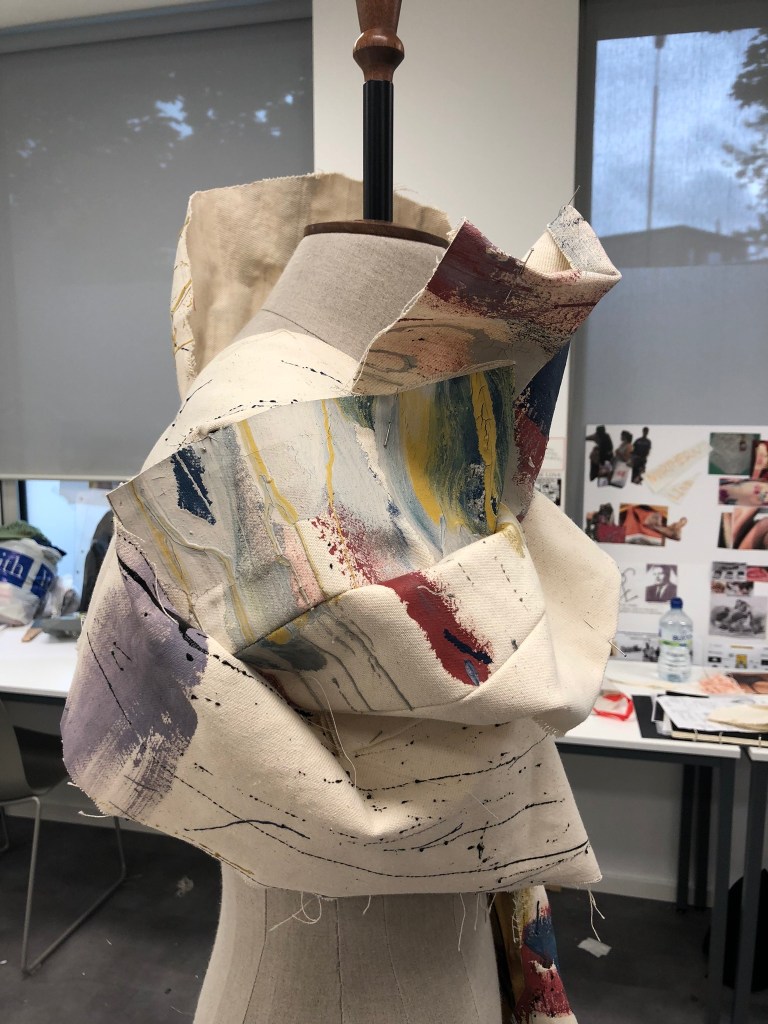
I like the idea of using the body to make the fashion. Perhaps using the painted patterns as a sewing pattern. And in this way I can turn the idea of fashion making the body on its head.

10/9/2019 Progress Report

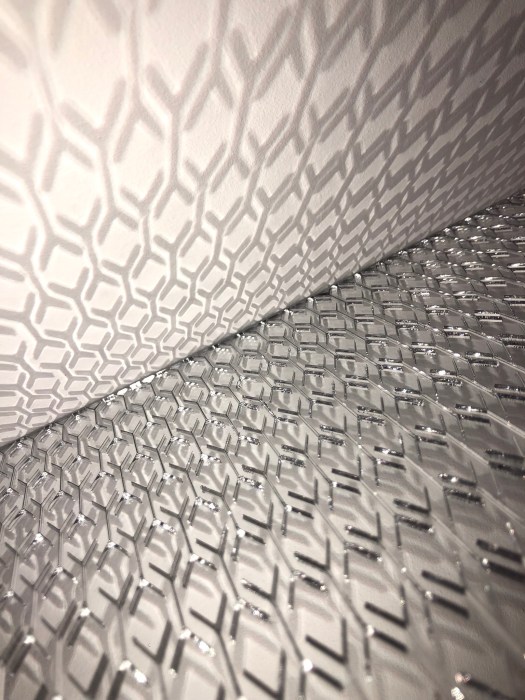
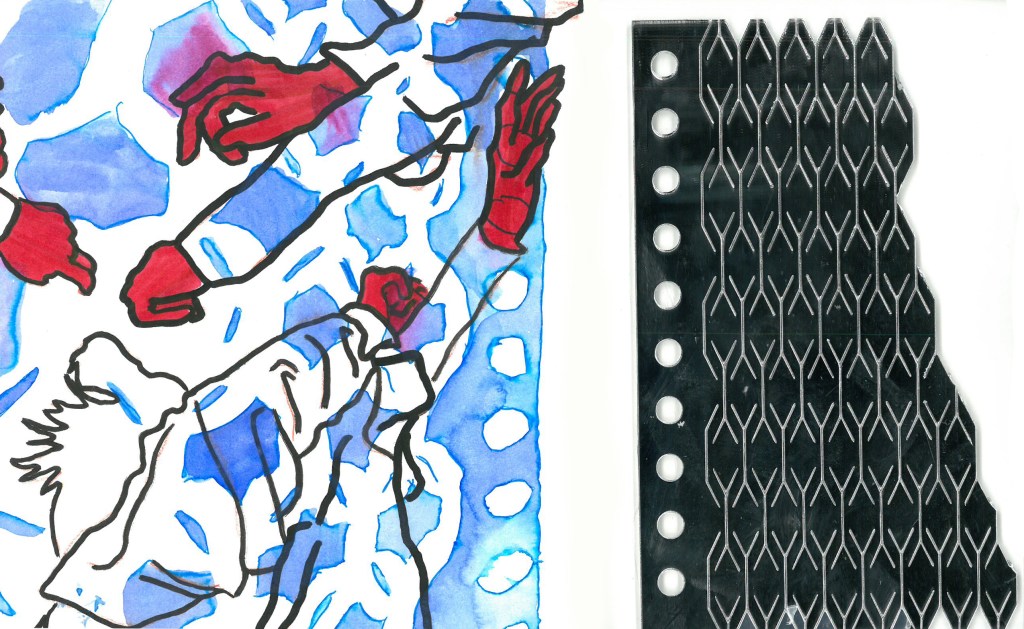
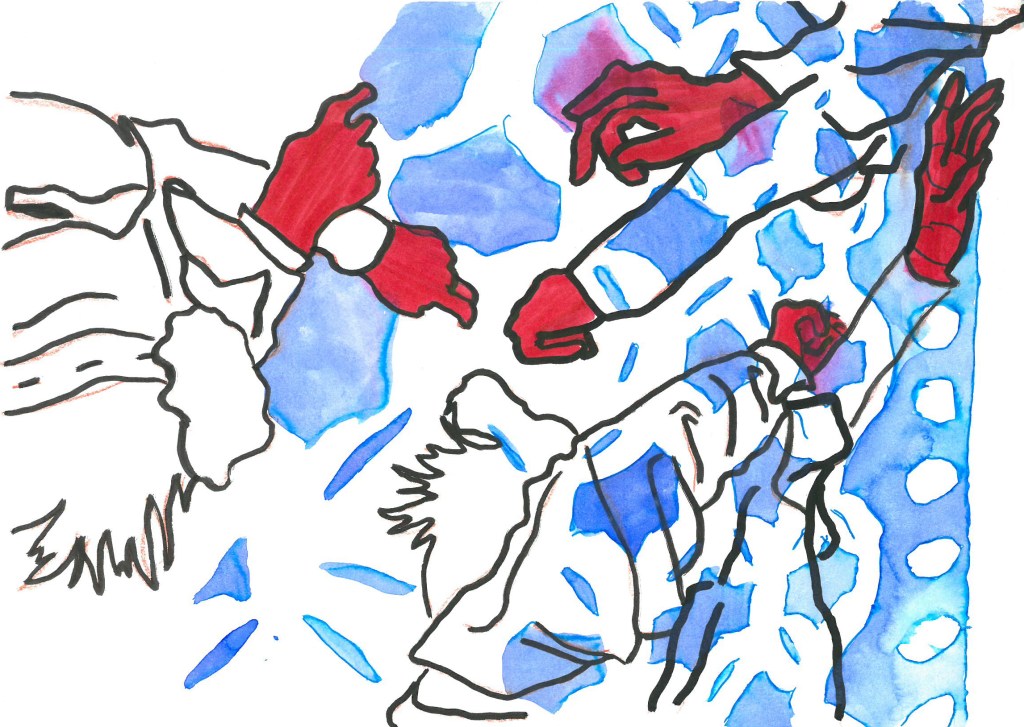
Today I laser cut some more (and new types of) living hinges. I began to explore the nature of the shadows (on the body and against a wall). I then created a collage. For the collage I drew some of the interesting hand gestures of my previous experiment, and I reflected mirror patterns overtop. I realized that at the core of both of these experiments is an element of illusion. I’m questioning how I can push this further.

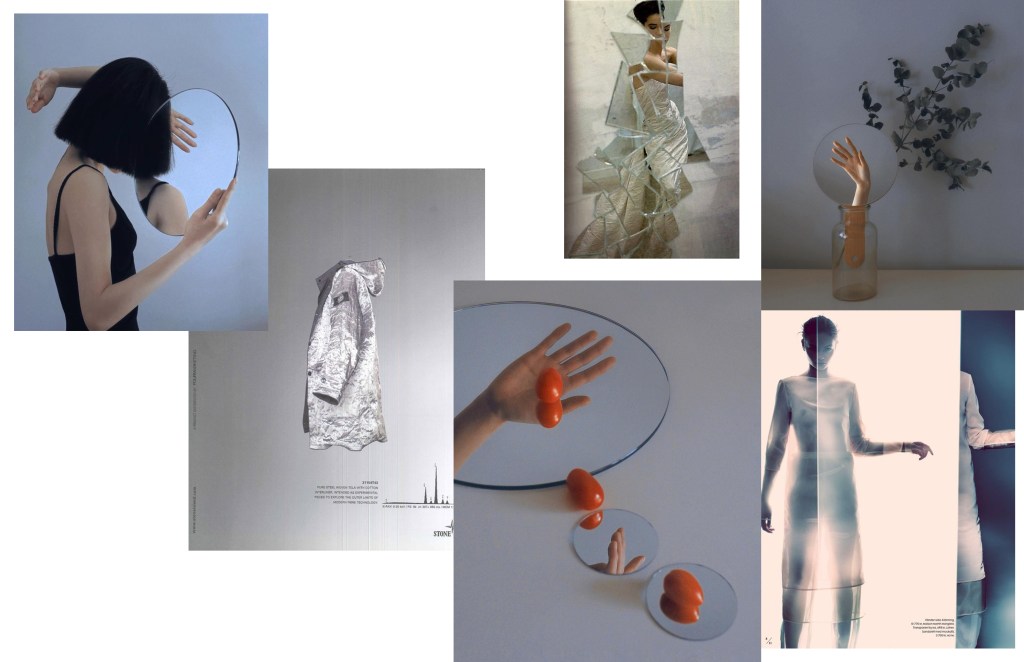
I also made a mood board to support my ideas. I need to keep experimenting. On tomorrow’s list: practice dyeing mirror pieces; talk to Julian about how this will actually “be on the form”

Design a site like this with WordPress.com
Get started