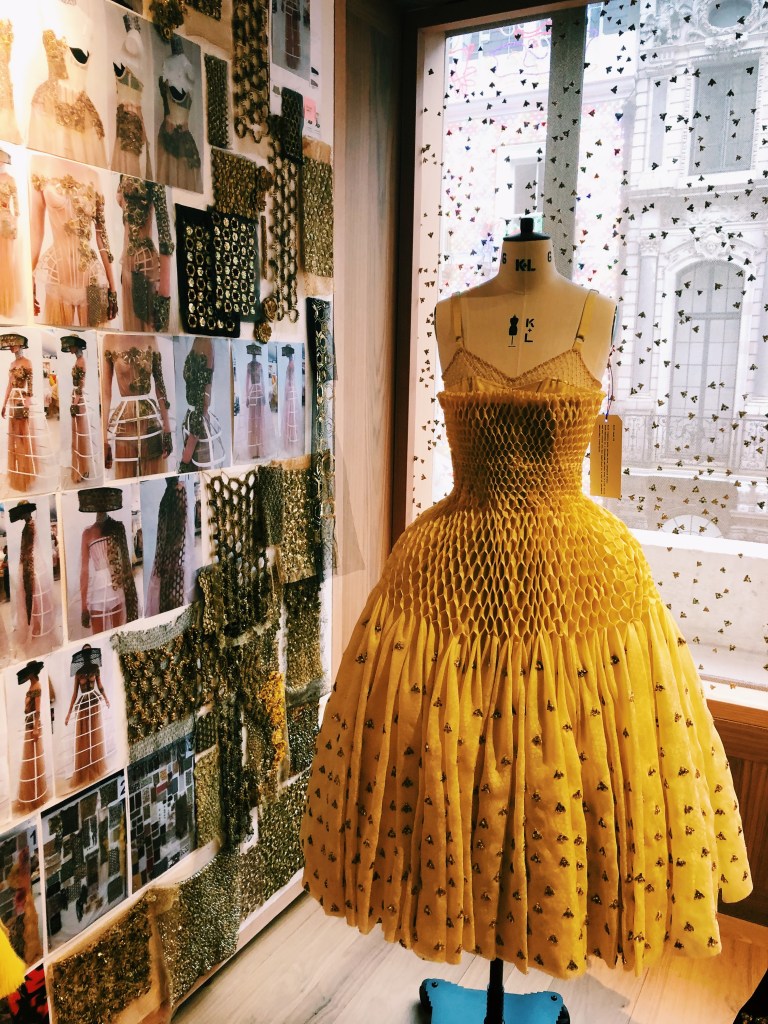
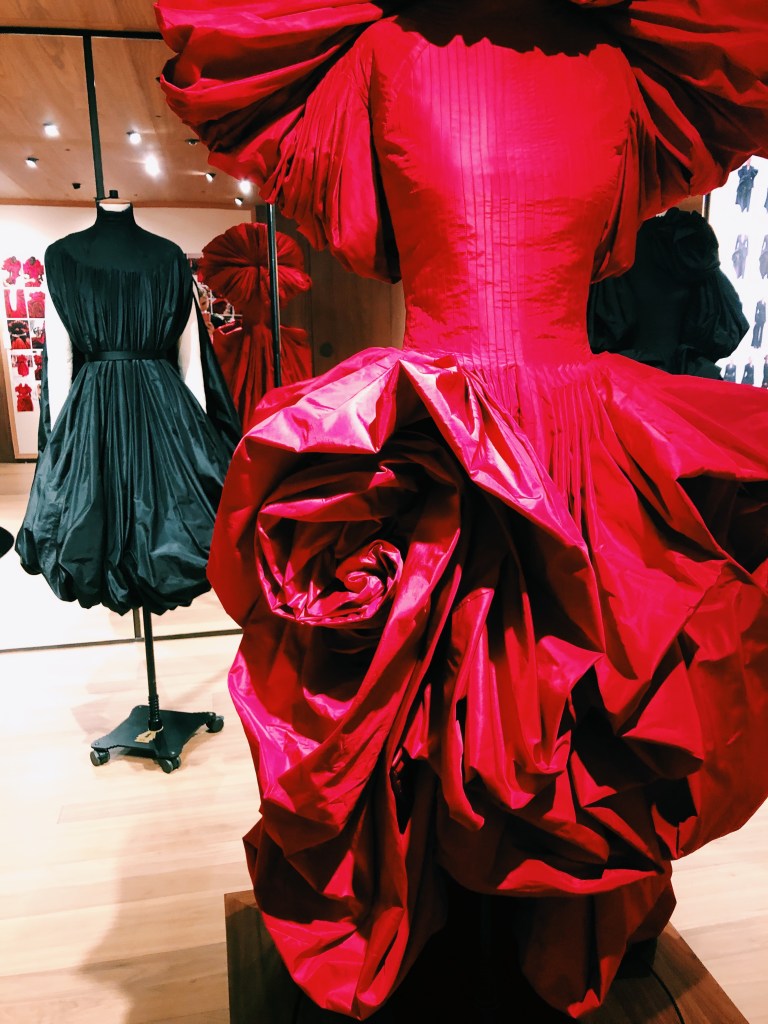
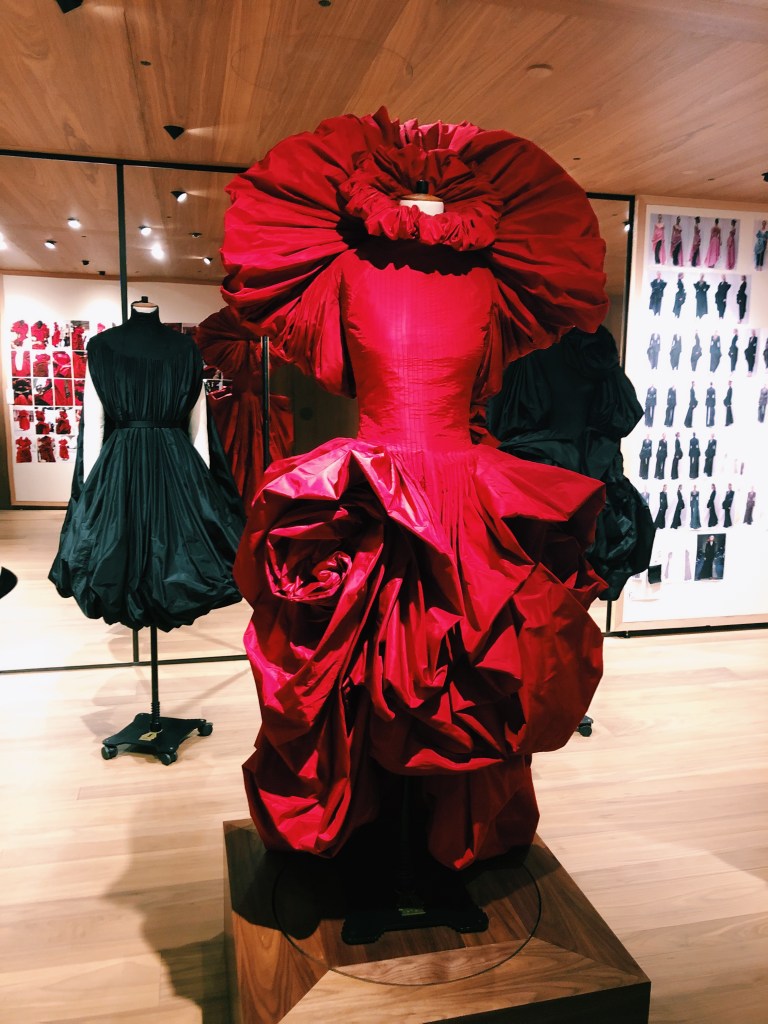
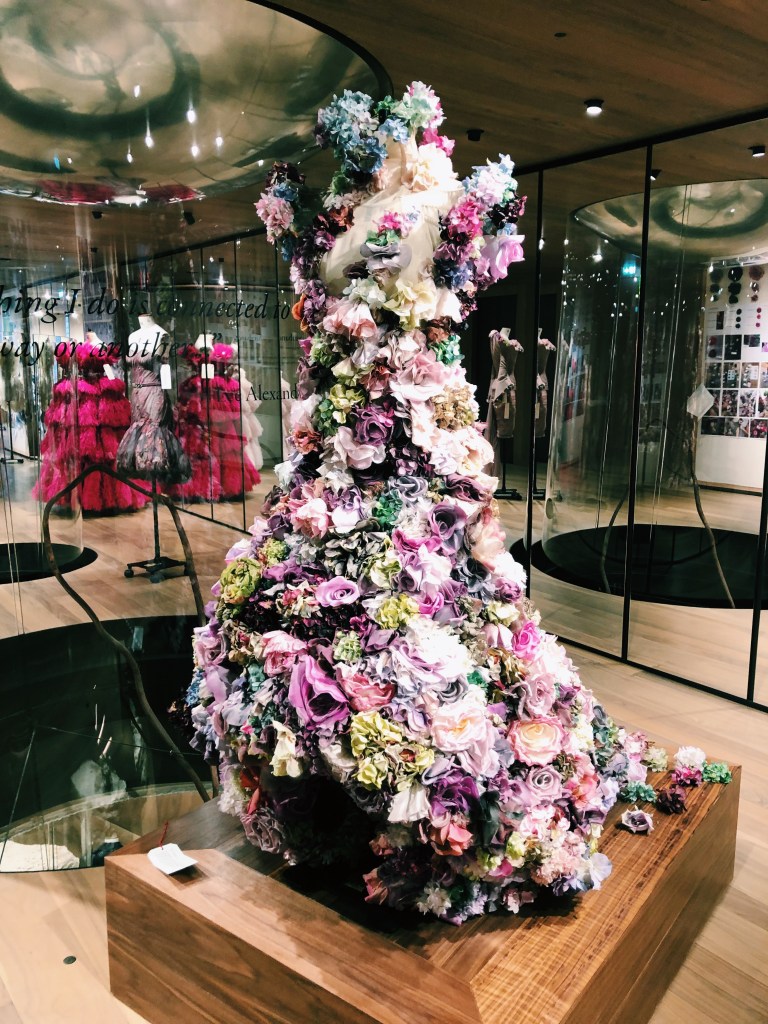
I’m writing my contemporary practitioner essay on both Sarah Burton and Alexander McQueen’s work at the brand, so this exhibition could not have come at a more perfect time.
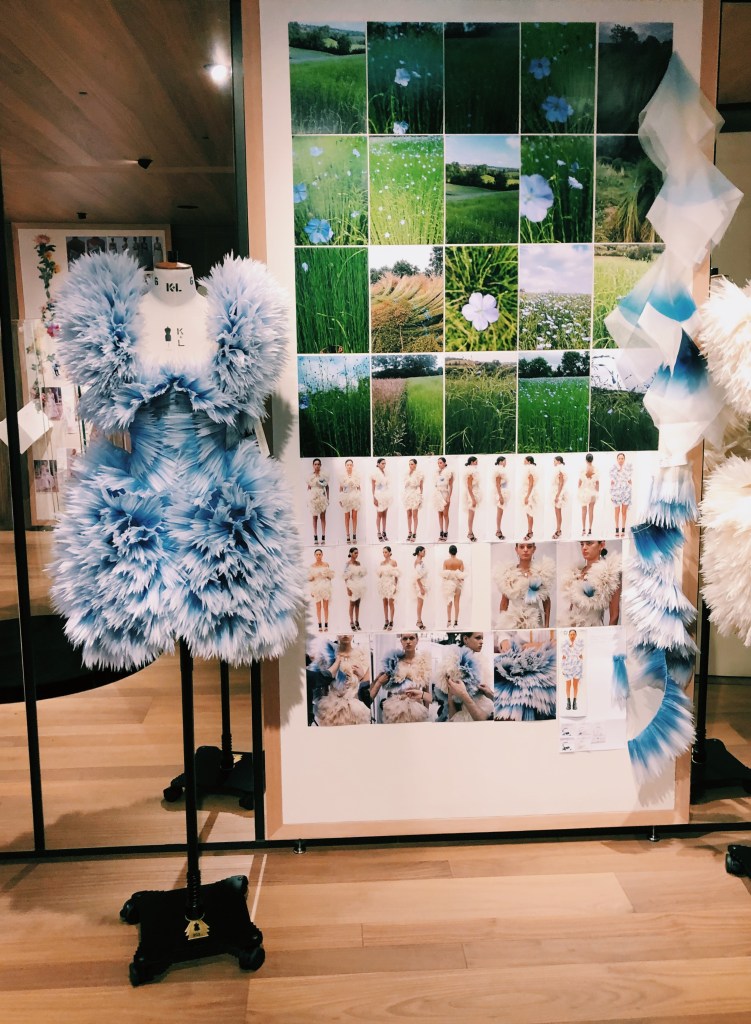
During this exhibition, I was trying to be very sensitive to material and whether or not it has a structural function. I was looking at how the smocking and draping can be used to create large and interesting shapes.
I admire how Burton was so open about process in this exhibition. She had walls of process work and a video of workers in the atelier showing how a garment is constructed. In the fashion industry people are so secretive about methods, and this was honestly refreshing.
In a way, this also “humanized” the brand for me. Seeing the garments so close up was helpful, I was even able to see the hand stitching! It reminded me of my previous post about high quality things having evidence of human craftwork.
On a completely separate note, the exhibition made me think a lot about nature, as the subject of the exhibition was roses. In relation to my work, it seems that fashion (specifically corsetry) is aimed at controlling what is “natural”. I think this is a theme I could expand upon in my experimentation. I’m interested in exploring nature and the human body in their basic forms as well as enhanced or manipulated forms. This will be the subject of tomorrow’s experiments: Control over what is Natural.
In the process of making my corset, and running the stitch experiment, I started to think about the discomfort of widely made objects in contrast with the personal-ness of handmade objects. There is something so much more intimate about an object that is made by hand.
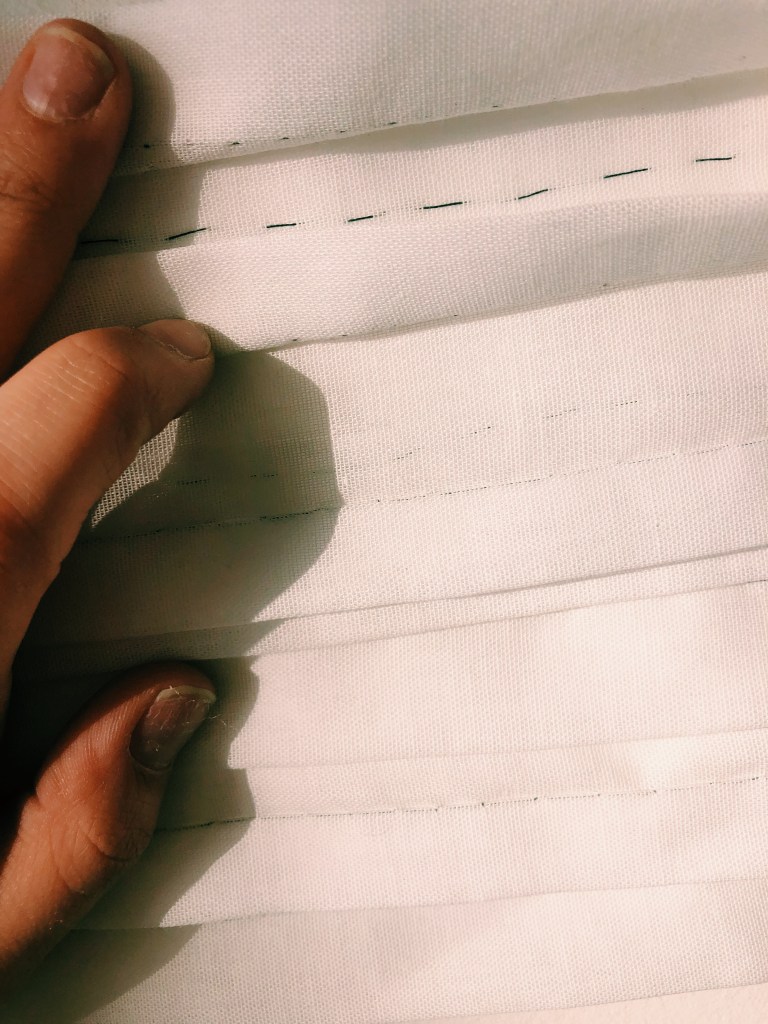
The first sample below, is a bunch of slip stitched hems, sewn together with running stitches. Whenever I look at a piece of homemade clothing, I always run my fingers along the lining to assess the slip stitches (see video below). For me, it is a way of checking quality, the talent of the maker, and I feel more connected to the garment in a way.
There is such a preciousness to something which is handmade. In my past research on sustainability, I know that creating a connection between a user and a garment is a strong way to lengthen the life of a garment.
I also found it interesting (in the video) how I had to dig through the sample. There was an element of surprise/veiling and unveiling that interested me about what I was creating.
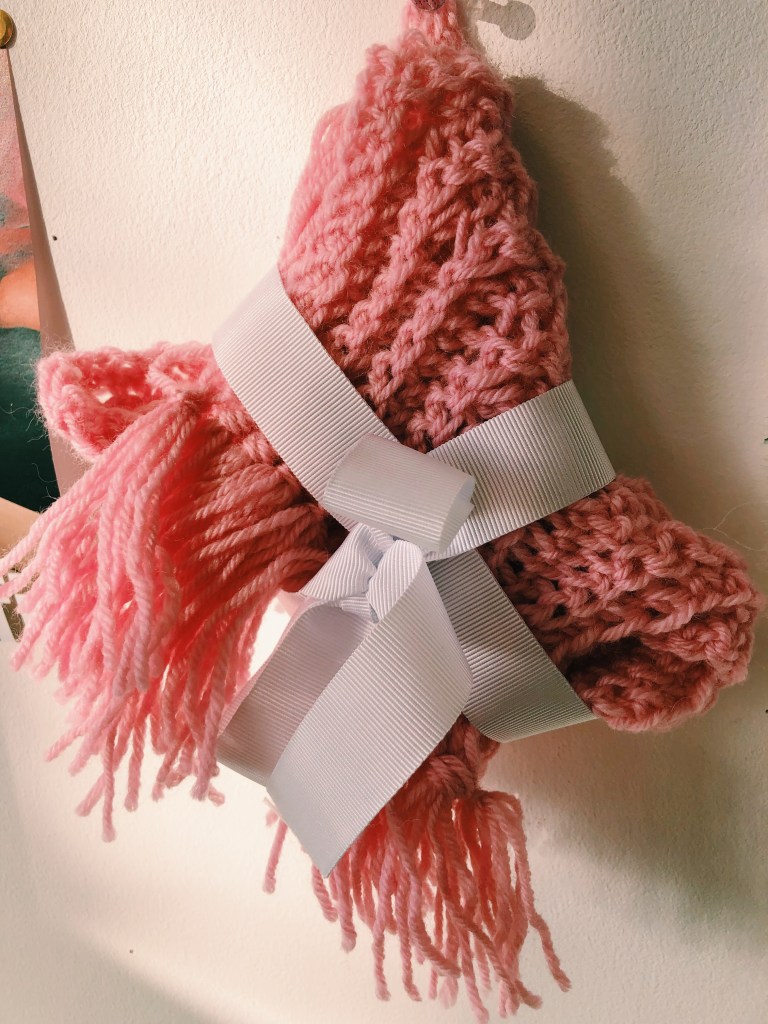
Below (crochet sample) I was thinking about my personal experiences with handcraft and tradition. Crochet is a practice in my family that has been passed down from generation to generation. My mom used to make baby blankets for people and wrap them in grosgrain ribbon, like how I showed it in the picture.
Again, for me there is so much more importance to an object that has been hand made (especially if it is by somebody who loves you). Also, I was thinking about material, and how the cotton has a grittiness to it. Its nice.
Both of these processes are “cathartic” to me. I think the repetitive action and simple task combined really just frees my mind up from any stress.
I don’t know if either of these experiments will go any further, but Julian wanted us to make more things and experiment.
While I am waiting for all of my responses from: Experiment 2: Emotions and Memory Test, I finally finished my first idea… WOOOOO.
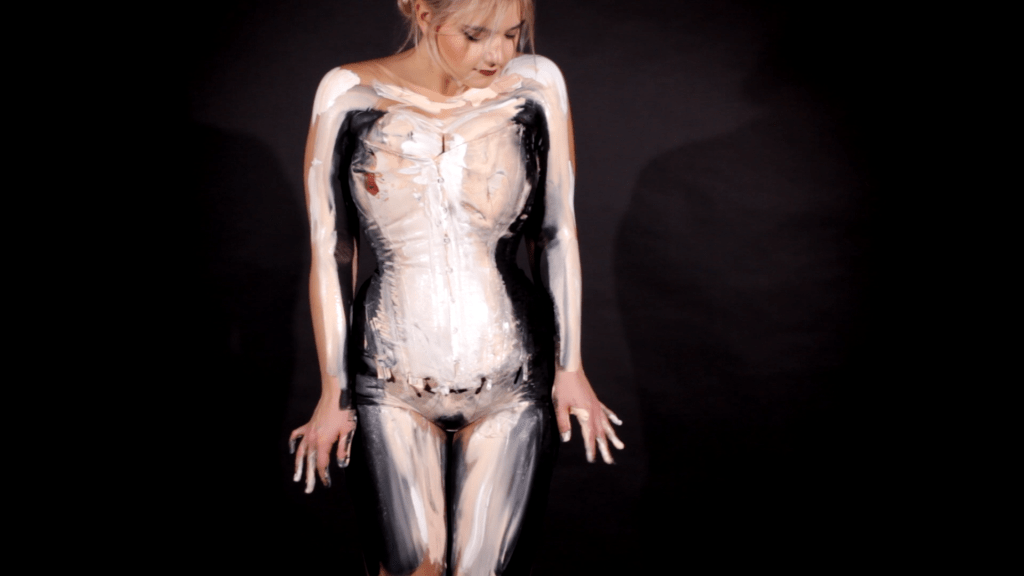
I think this is more related to my research for the “Artifact” project, but overall I’m happy with it. I am enjoying using performative elements in my work.
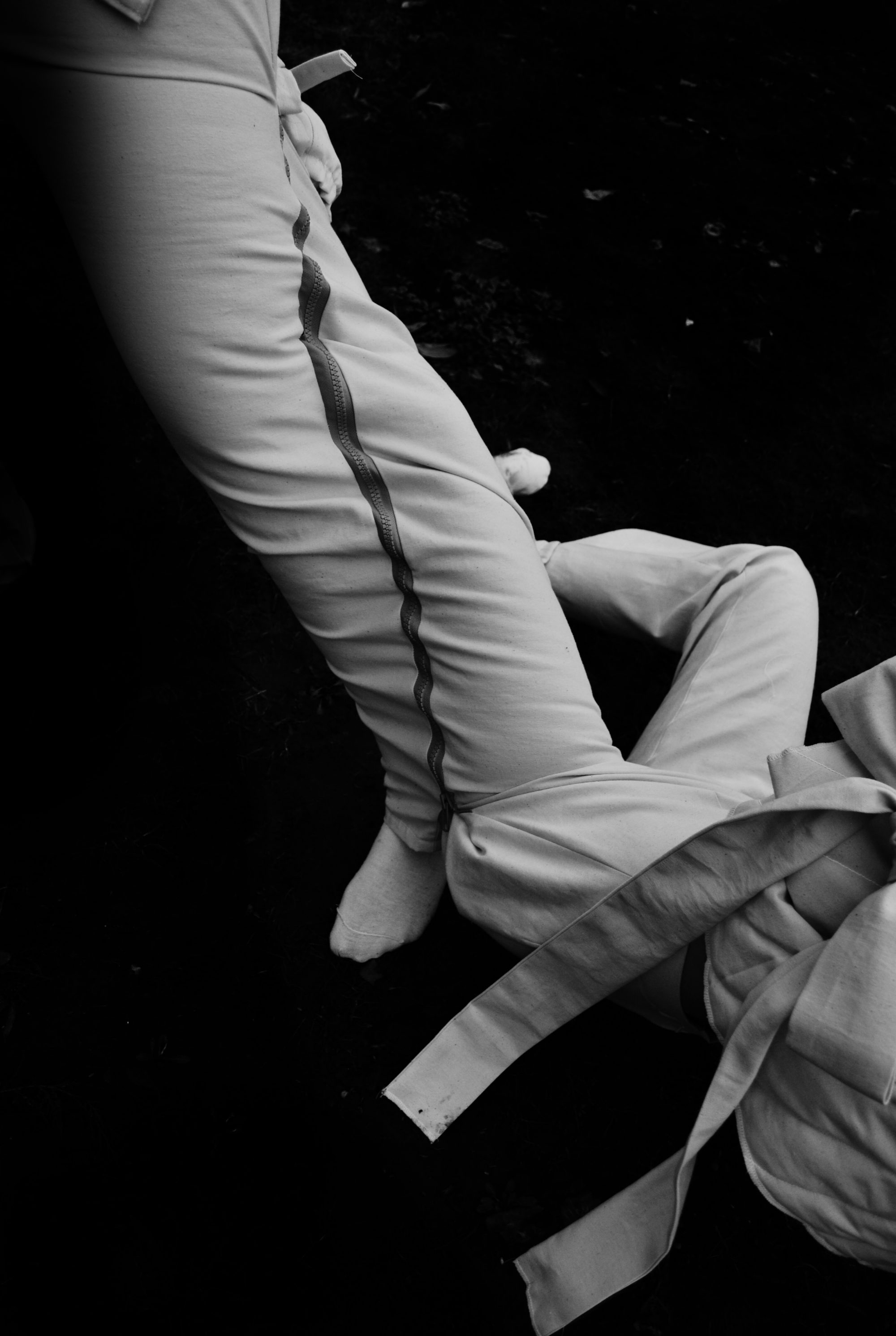
Before filming this, I knew what paint colors and background I wanted to use in order to create an optical illusion, but I struggled with the garments a bit. I chose the corset because I wanted to amplify the absurdity of the lengths people may go to in order to achieve their ideal body. I think the painting drove that home as well. And, by using a corset I was able to get another process video showing the difference in my figure, caused by the corset.
Now that I have finished the video, I want to use my corset as a tool to control other elements outside the body. I have a quick experiment lined up for tomorrow, and a slightly more in depth experiment lined up for Monday.
If at first you don’t succeed, failure may be your style
Quentin Crisp (English writer & actor)
During our lecture on Friday, Benji mentioned this podcast by Elizabeth Gilbert on creative genius / failure and I was really interested. I think Gilbert’s point that creativity needs to be almost externalized to protect the artist’s mental health/ego is really relatable.
…because writing was my home, because I loved writing more than I hated failing at writing, which is to say that I loved writing more than I loved my own ego, which is ultimately to say that I loved writing more than I loved myself.
Elizabeth Gilbert
In another related podcast, Gilbert talks about how she loves writing more then she loves herself, and when she finds herself lost or afraid to create the one thing that always centers her is writing. Even if she is writing something terrible, she says that she at least, “showed up” and that is the best you can do sometimes. I admire this so much because its easy to say that you can’t do any work because your ideas are bad, but her philosophy is that, even if the work is terrible, she is always working and trying to create.
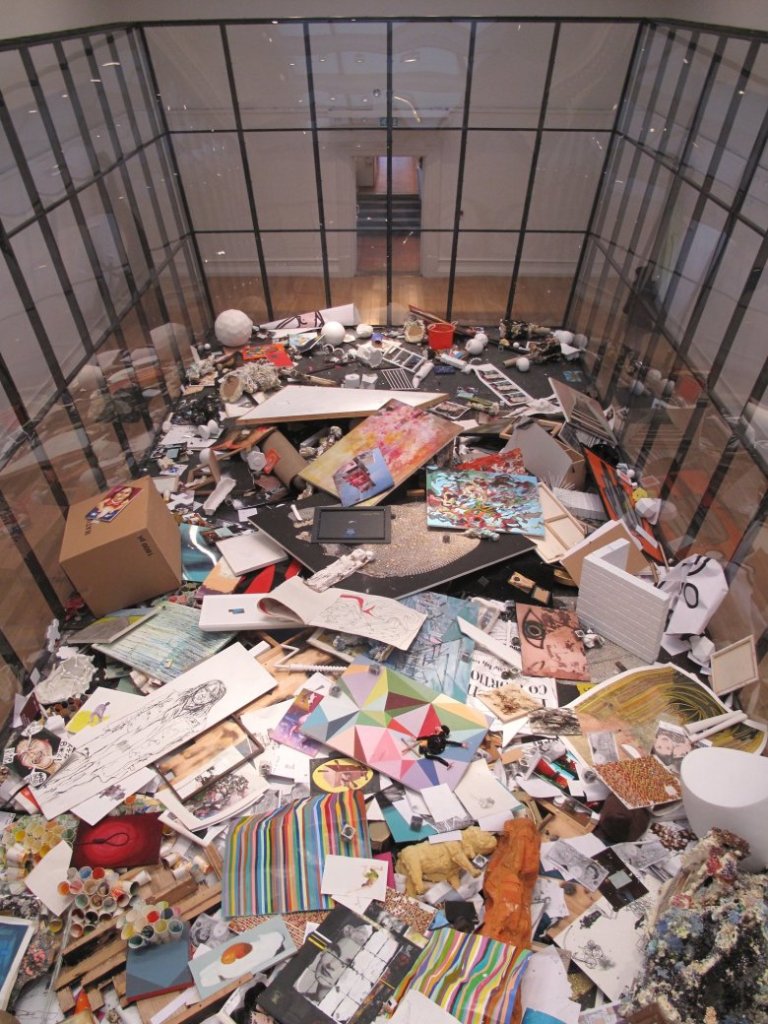
Michael Landy Art Bin
Another “failure” project I found interesting was Michael Landy’s Art bin. I liked the concept behind this, because I have so many past works that honestly need to be in the garbage, but I can’t bring myself to do it because of the amount of time that went into making those pieces.
Part of me wants to take a note from this and just destroy everything I’ve made in my past. I feel like it would be difficult to do, but at the same time I feel that some of my old works limit me and in the end I would feel cleansed. This would be a fun topic to play with over Christmas Break.
I also really like the idea of putting failures on public display. I feel like, if people actually did put their failures in the bin, it would be a humbling experience. I think it would also be a bit cathartic.
“The recounting of experience through the formal medium of plot, friction or spectacle permits us to repeat the past forward so to speak. And this very act of creative repetition allows for a certain kind of pleasure or release.” (p.51)
… the model of post-traumatic stress disorder to argue that narratives, as elaborate versions of dream-work, serve to ‘master the stimulus retrospectively, by developing the anxiety whose omission was the cause of the traumatic neuroses’. In short, the argument goes, when we find ourselves unable to deal with the traumatizing shock of a certain accident involving inadmissible pain… we actually prevent ourselves from experiencing it at the time and so need to retrieve the unexperienced experience after the event via narratives which represent the traumatic event in a vicarious fashion…” (p.56)
My Thoughts
It seems as if cathartic experiences are more related to negative emotions, as recounting the experiences is a way of letting go of it and moving on. This makes me rethink the original question of having people embroider their most positive or negative experience overall… and if I ask people to recount negative experiences that they aren’t ready to think about… it feels sort of insensitive to how they feel and what they have been through.
I’m weary of asking people to recount highly emotional experiences for my own experimental knowledge. It seems sort of unethical without first asking them if they would be willing to do so…? (Gonna chat with Nathan)
I think I need to talk to the tutors about this before I do any experiments with other people.
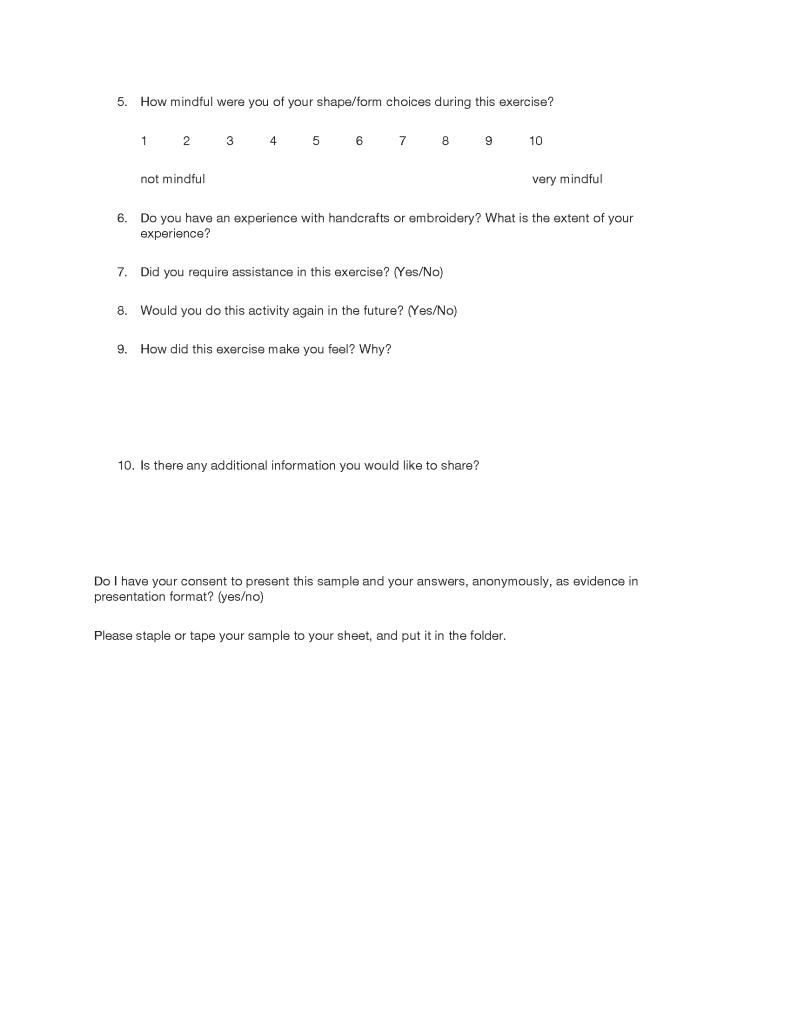
The way I frame my question is going to be very important, as to allow the participant freedom to recall memories that only they are comfortable with. Maybe asking:
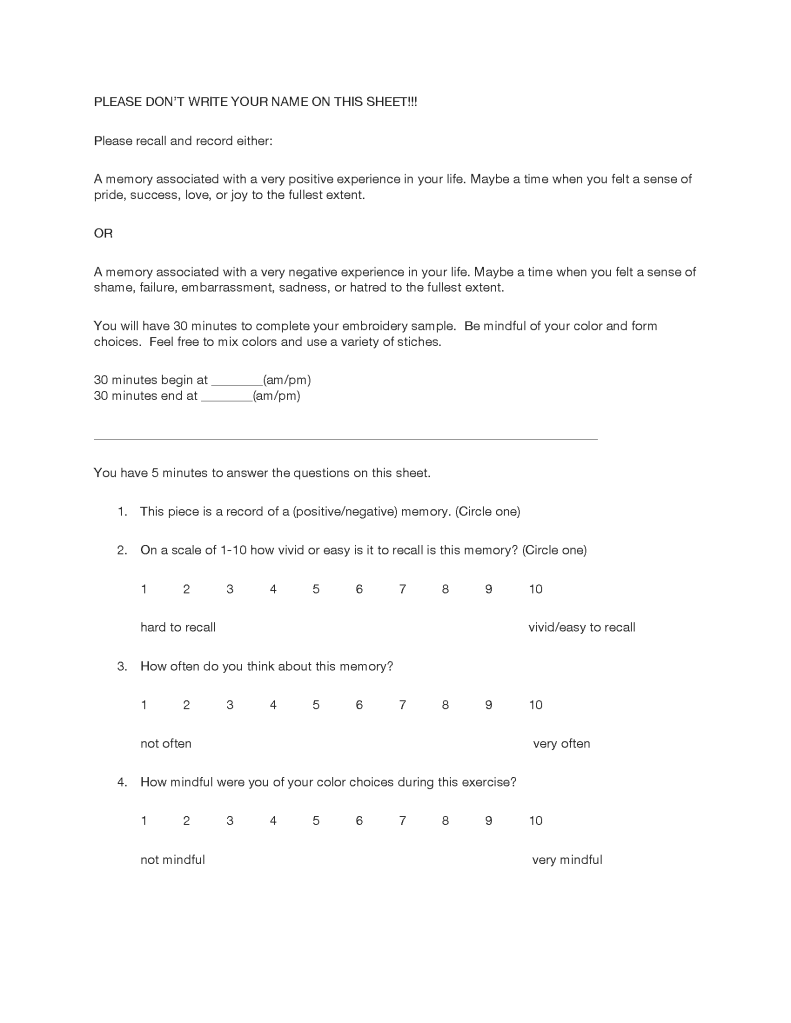
Please recall and record either:
A memory associated with a very positive experience in your life. Maybe a time when you felt a sense of pride, success, love, or joy to the fullest extent.
OR
A memory associated with a very negative experience in your life. Maybe a time when you felt a sense of shame, failure, embarrassment, sadness, or hatred to the fullest extent.
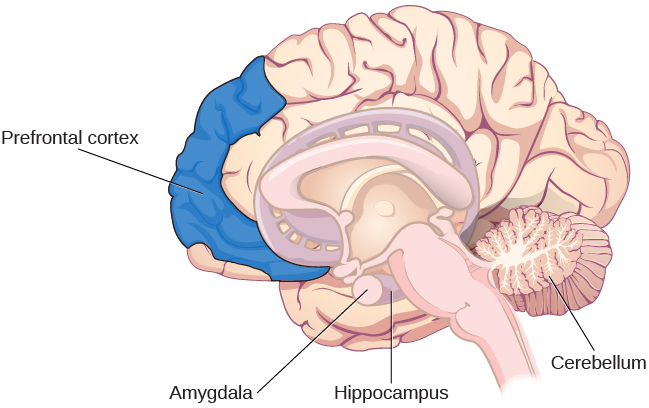
The main parts of the brain involved with memory are the amygdala, the hippocampus, the cerebellum, and the prefrontal cortex.
amygdala: The main job of the amygdala is to regulate emotions, such as fear and aggression. The amygdala plays a part in how memories are stored because storage is influenced by stress hormones. For example, if somebody hears a beeping sound before they are shocked multiple times in a row, their body might physically respond to help brace themselves- this fear response is due to the amygdala. Because of its role in processing emotional information, the amygdala is also involved in memory consolidation: the process of transferring new learning into long-term memory. The amygdala seems to facilitate encoding memories at a deeper level when the event is emotionally arousing.
hippocampus: the hippocampus is involved in memory, specifically normal recognition memory as well as spatial memory (when the memory tasks are like recall tests). Another job of the hippocampus is to project information to cortical regions that give memories meaning and connect them with other connected memories. It also plays a part in memory consolidation: the process of transferring new learning into long-term memory.
The Cerebellum and the Prefrontal Cortex:
Cerebellum and Prefrontal Cortex: Although the hippocampus seems to be more of a processing area for explicit memories, you could still lose it and be able to create implicit memories (procedural memory, motor learning, and classical conditioning), thanks to your cerebellum.
Neurotransmitters: There also appear to be specific neurotransmitters involved with the process of memory, such as epinephrine, dopamine, serotonin, glutamate, and acetylcholine. It believed that strong emotions trigger the formation of strong memories, and weaker emotional experiences form weaker memories; this is called arousal theory.
Personal Take
What struck me about this research into the physiology of memory is how tied memory is to emotions. Manipulating memory is something that would be very very difficult (without severely injuring somebody), so I am interested in recording and collecting emotional responses.
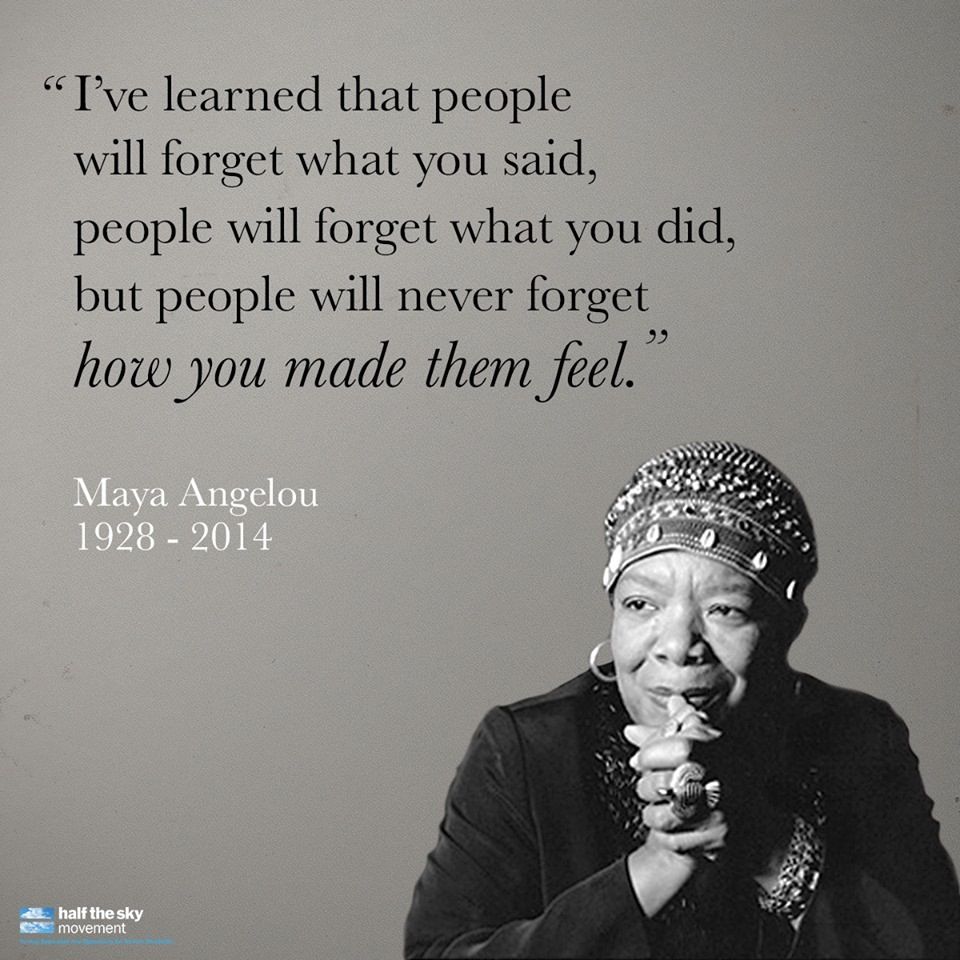
This research reminds me of my favorite quote by Maya Angelou:
I’m going to discuss this in the tutorial on Tuesday, but I am still attached to the idea of using stitching as a way to represent these emotions. I know cathartic experiences have strong ties to memory (view next post).
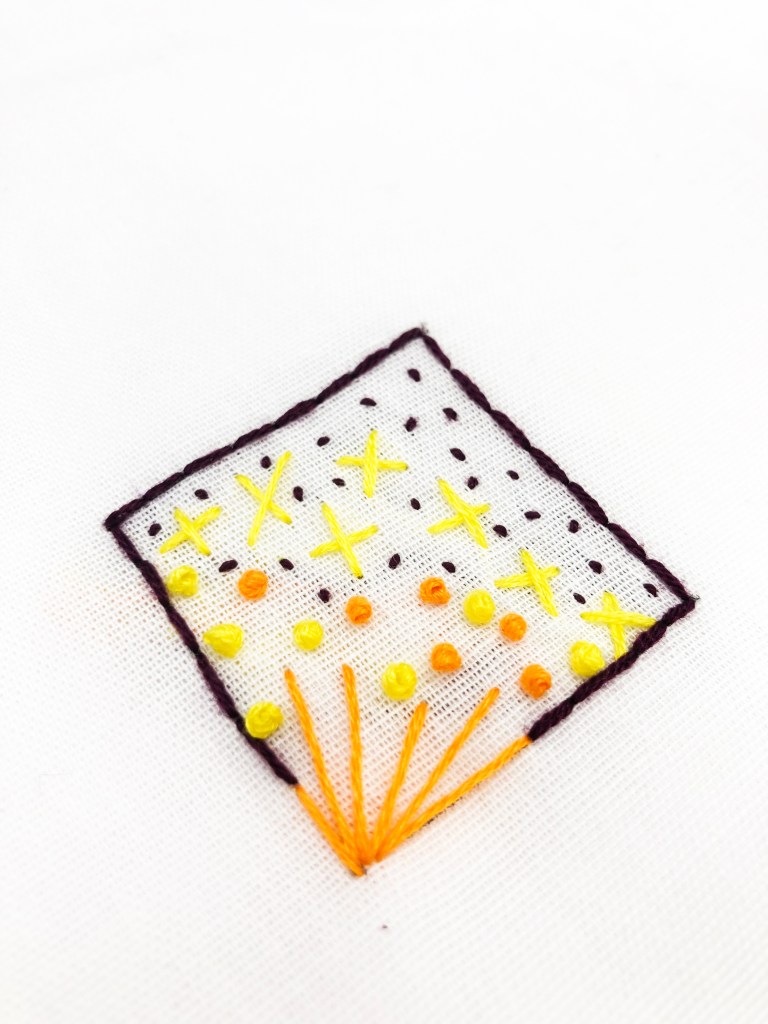
Maybe I will let people stitch their best or worst memory with whatever colors/shapes they want and only give them 20 minutes to do so, and see what associations with colors and shapes I can make.
I could also give them a little library of stitches to choose from if they need help expressing themselves through stitching.
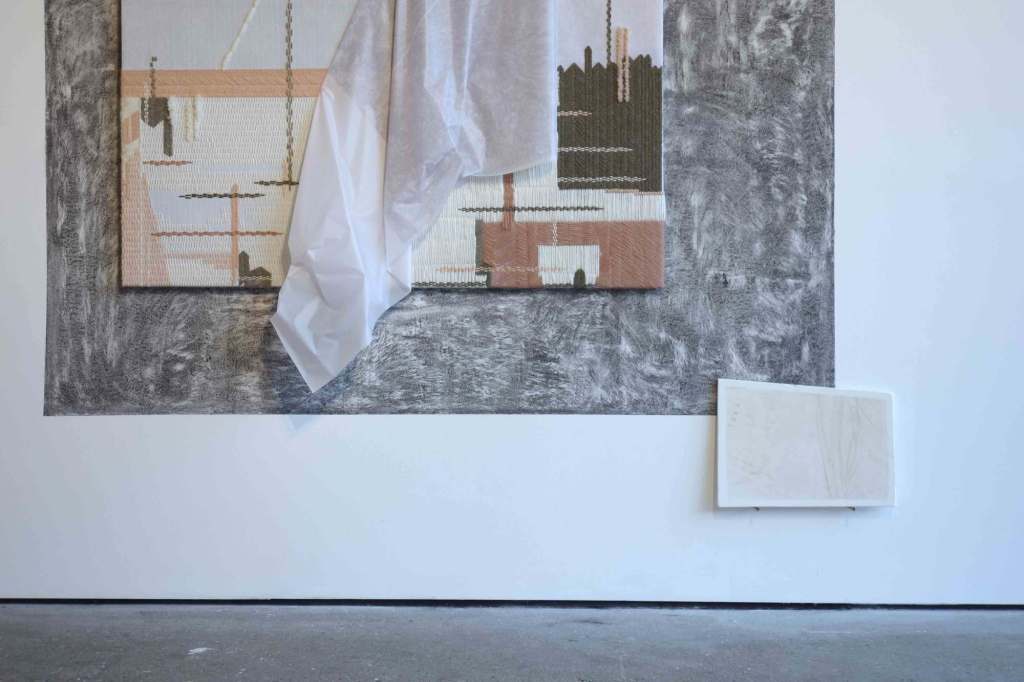
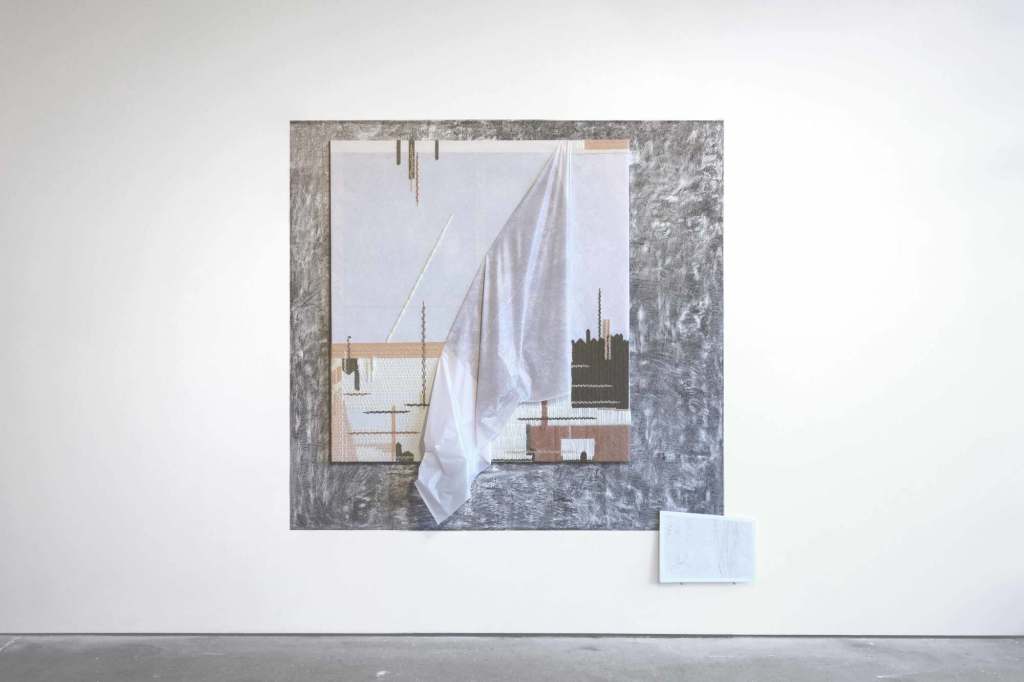
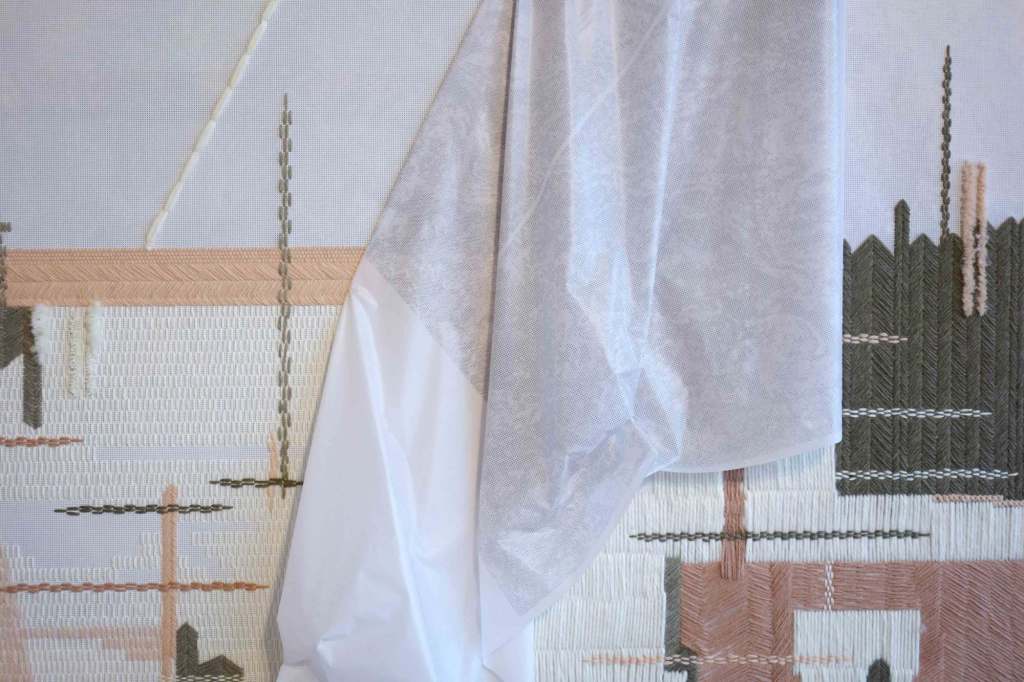
Photos taken from portfolio website of Evy Jokhova (see Citation)
During the Speed of Thought exhibition, one piece in particular caught my eye: ‘From Memory’ by Evy Jokhova. As I said in the previous post, I was intrigued that an artist might use stitching as a way to conceptualize his or her ideas. In my practice, working with materials seems to be a very pivotal and integral part of the way I learn… so infusing initial sketches with this practice is something I want to experiment more with in the future (definitely not on this scale though…).
This piece is, “a recreation from memory of a tapestry Evy’s mother spent a 1/2 of their entire family savings on in 1991 in Soviet Russia shortly before the Soviet Union collapsed and the Ruble completely devalued.” What struck me about this piece was the contrast of the materials used. The white backing is a banner mesh, which seems very rigid and almost shiny, while the yarn used is a very fuzzy wool. I had to resist the urge to run my fingers across the herringbone and running stitches when I viewed it in the gallery.
This piece was obviously labor intensive- anybody who stitches would know that this practice takes an incredible amount of thought, labor, and effort. It seems as if the artist is recalling her memories through her stitching process, which is often cathartic. Viewing this process reminded me that in my midterm review I wanted to investigate other ways that humans face restriction, and one of which was how people can be bound by their memories or time.
This is something I would like to do an experiment with- likely more toward week 3/4 as I want to research memory and repetitive and/or cathartic practices further.
My initial thought is to have pre-stitched patterns, that a viewer may only get a minute or two to look at before having to replicate the design themselves. I could record their errors, and how long it takes them to execute the task. I could photograph their physical positioning and ask them how they feel during and after the process.
I’d like to discuss this idea in a tutorial.
Also, I need to remember to research diseases that effect the memory (Alzheimers, Amnesia, Dementia)



 Samantha's RCA Process