Rebecca Horn

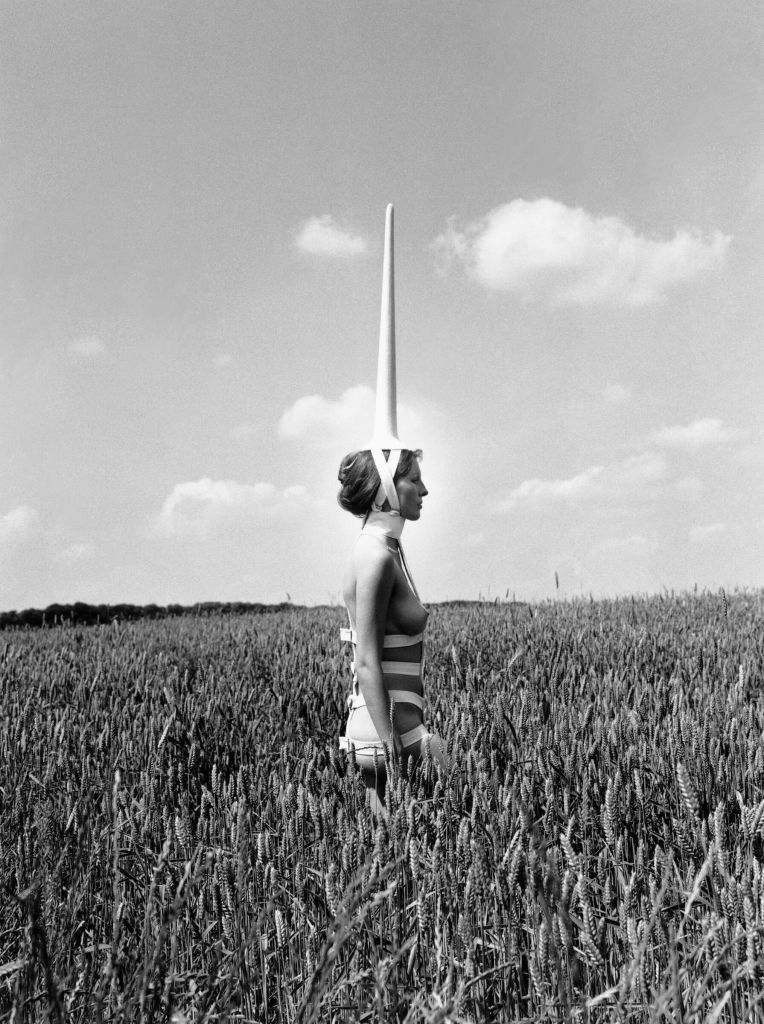
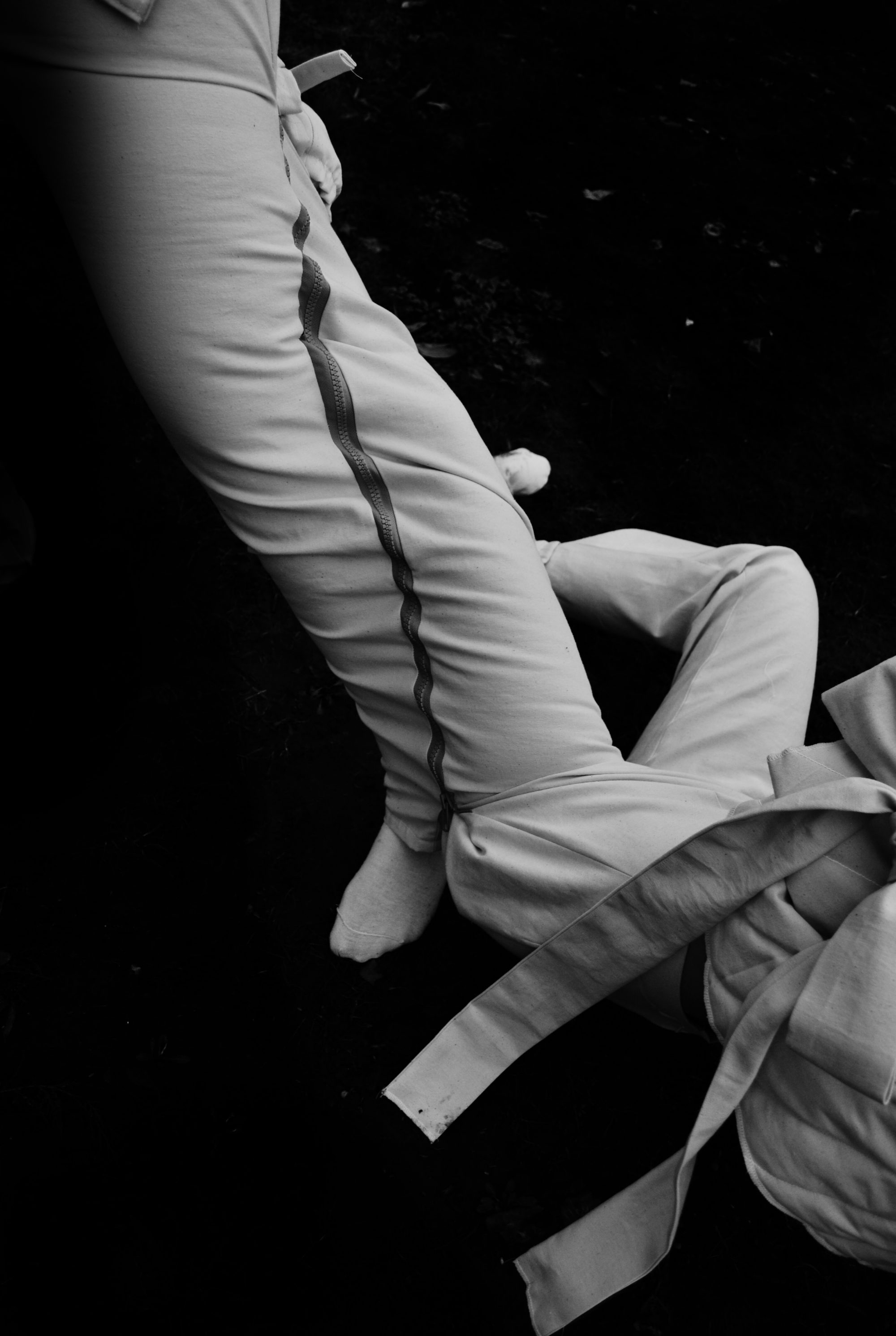
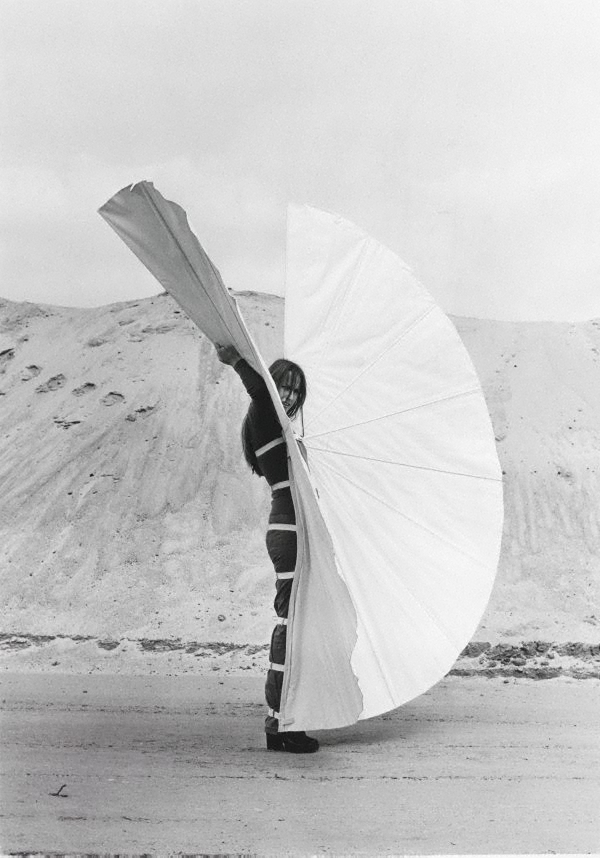
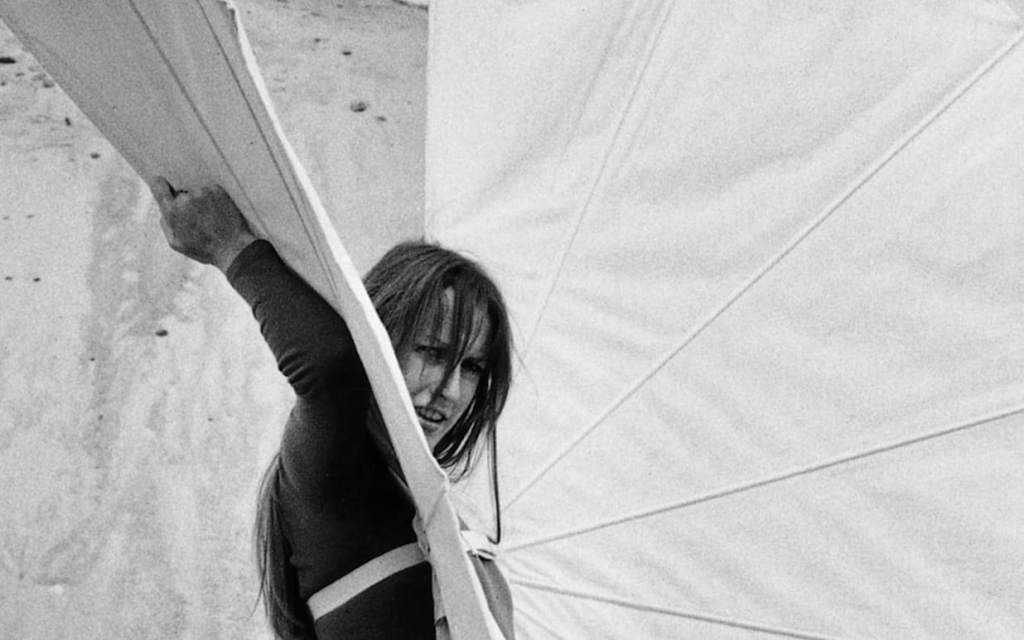
Niko Suggested that I look at Rebecca Horn’s work for her performative elements. Rebecca is a German visual artist, who is best known for her installation art, film directing, and her body modifications such as Einhorn (Unicorn), a body-suit with a very large horn projecting vertically from the headpiece.

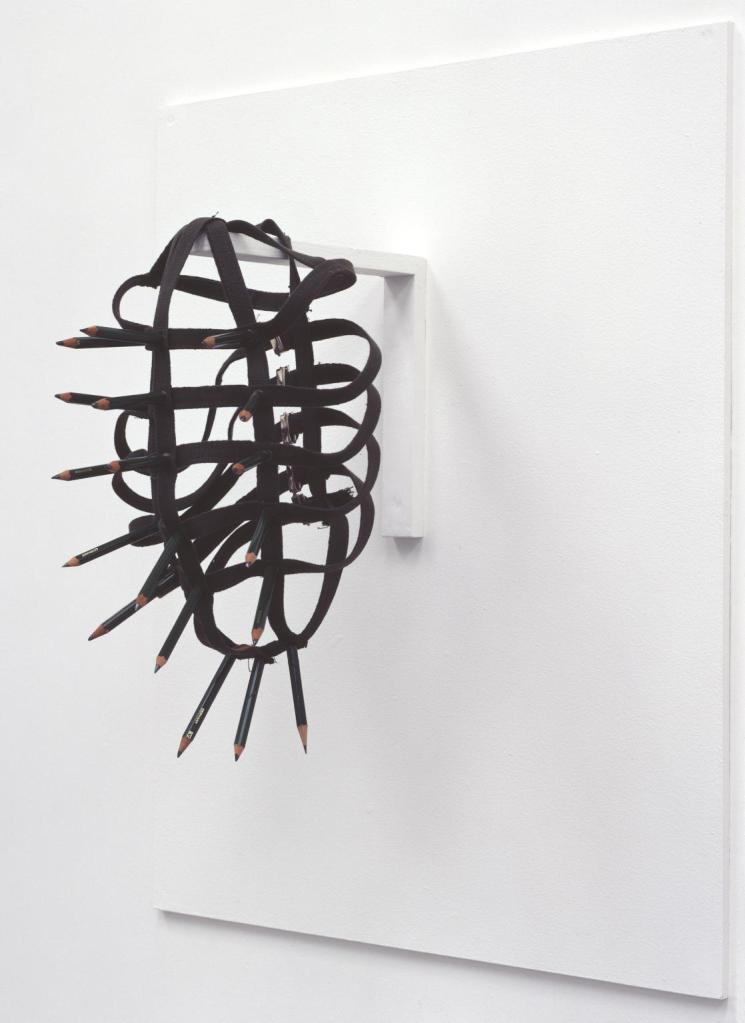
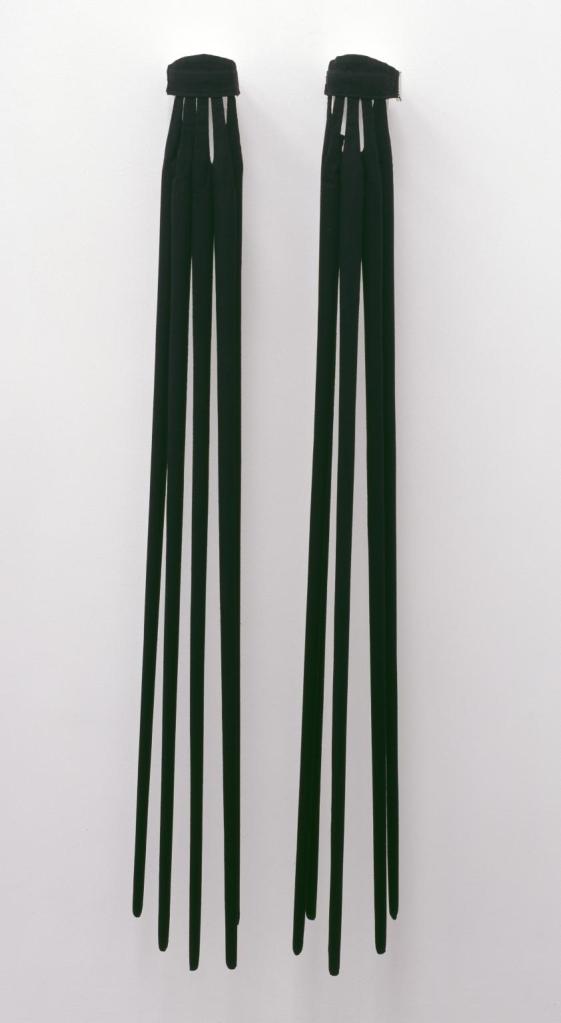
While these works seem like tools for improving human capability, the resulting effects are often debilitating or grotesque, serving only to draw attention to the limitations of the wearer’s body.

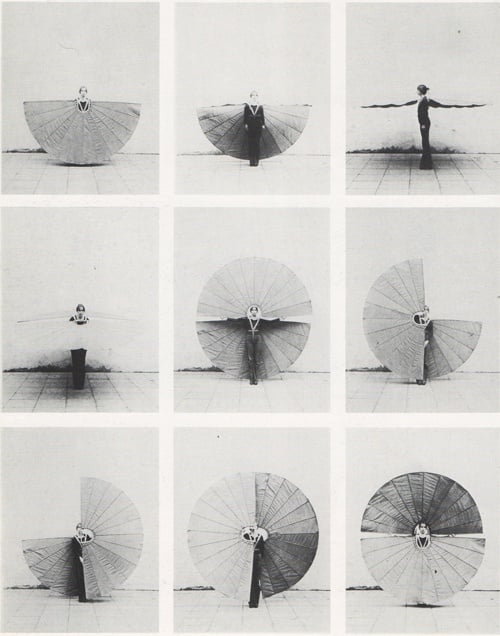
I obviously love how involved and performative her garments are. I also loved how she has documented them in a series (shown below). For me, what is most important is the kinetic elements to the work. Every single piece forces the viewers to look at the human body with a new focus, an this to me is exciting.
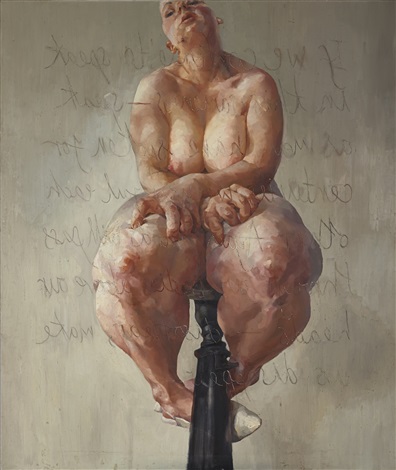
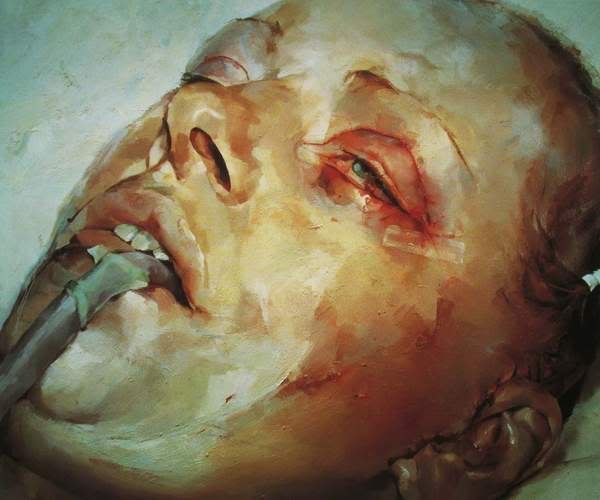
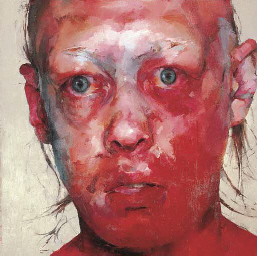
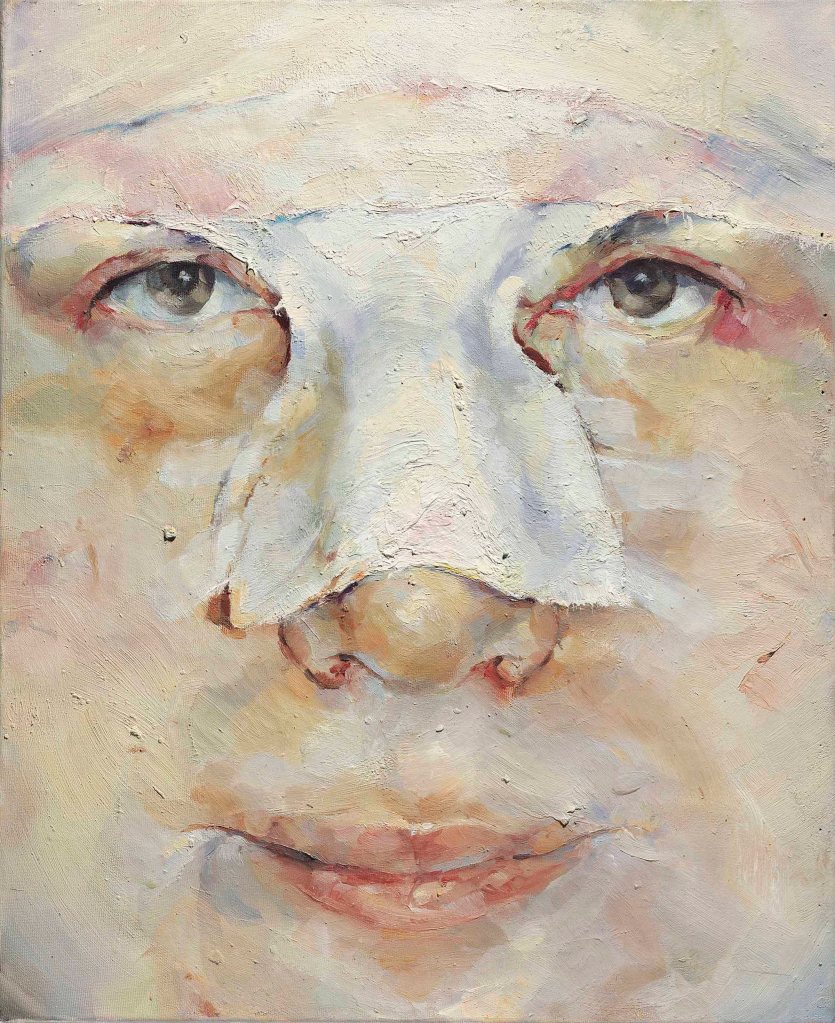
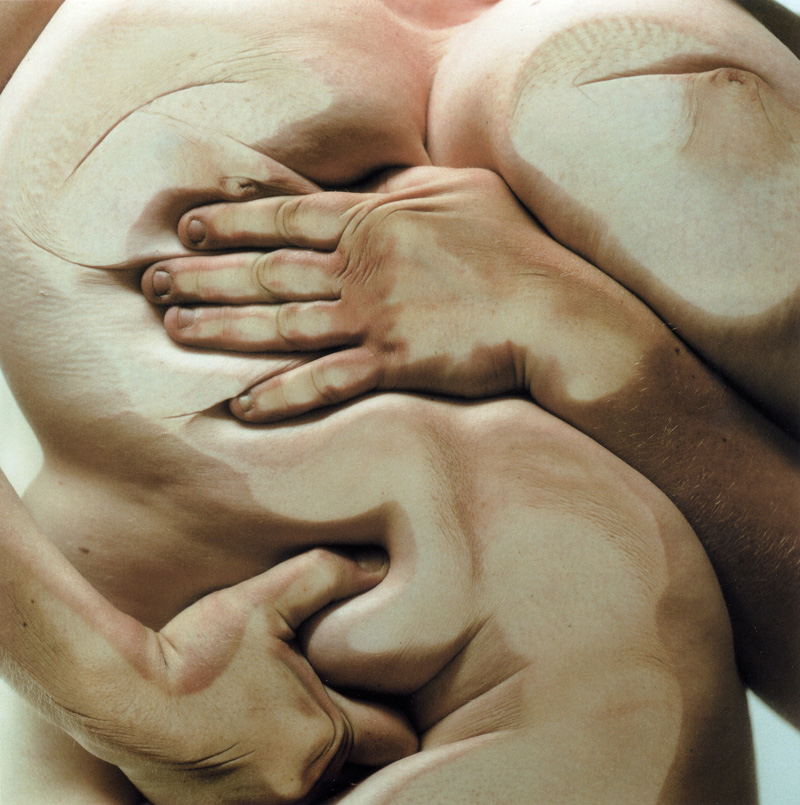
Jenny Saville

Teresa Santos suggested that I look at Saville’s work (in the comments of my last post) and I’m honestly in love with her work! The exaggerated proportions are so real in a way… very provocative to me.

Saville has an interesting background and study method where she actually goes to visit plastic surgeons as they work. She dissects animals and goes to the morgue, and deeply studies the figure, which is so important. In my opinion. To effectively, “break” the rules you have to know them first.

In her depictions of the human form, Jenny Saville transcends the boundaries of both classical figuration and modern abstraction. Oil paint, applied in heavy layers, becomes as visceral as flesh itself, each painted mark maintaining a supple, mobile life of its own. As Saville pushes, smears, and scrapes the pigment over her large-scale canvases, the distinctions between living, breathing bodies and their painted representations begin to collapse.

Gagosian

Realize: Background and Statement of Intent

Background: 

In the previous project, Investigate, I explored new methods of making, while reflecting on similar themes from the previous project.

  1. The method of working that I used was to make, paint and unmake. What I liked about this was that you could see the process, time and evolution of the pieces. You can also begin to envision what the object looks like in 3D, due to the drag lines across the ripples of the fabrics. I’M NOT SURE THAT I WANT TO USE THIS SPECIFIC METHOD IN THE NEXT PROJECT… but….
    • I like the contradiction of the abstract painting method and the restrictive elements together (how will I continue this?)
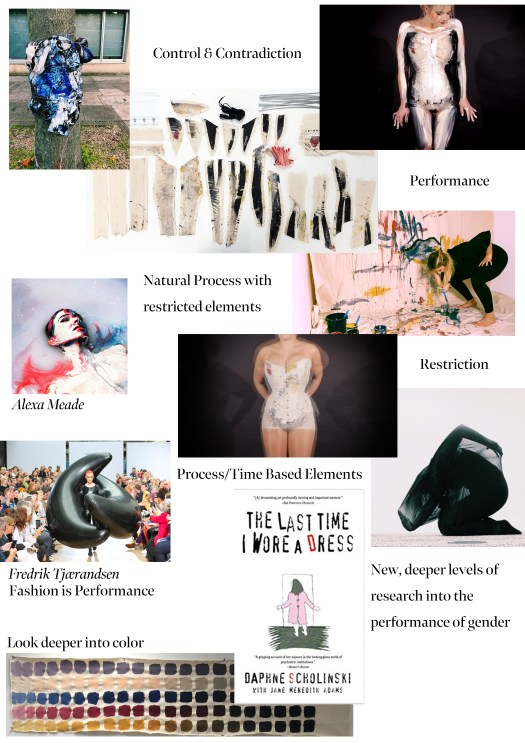
  2. Unilaterally, the tutors have agreed that video is a strong way to document my work, I really enjoyed the performative elements of the painting videos, and this is something that I would like to take into the next project– possibly creating a garment that would instigate a sort of performance (kinetic elements?)
  3. I am still very interested in themes of control (over what is natural/over our own bodies (related more to women)) and restriction
  4. I also enjoyed experimenting with color and I think that I can communicate the themes I am interested in, in more interesting ways by using a completely different color palette (meaning not red and black, as per usual with me).

I was also interested in craft and education but I have to put those on the back burner because I already have enough to think about.

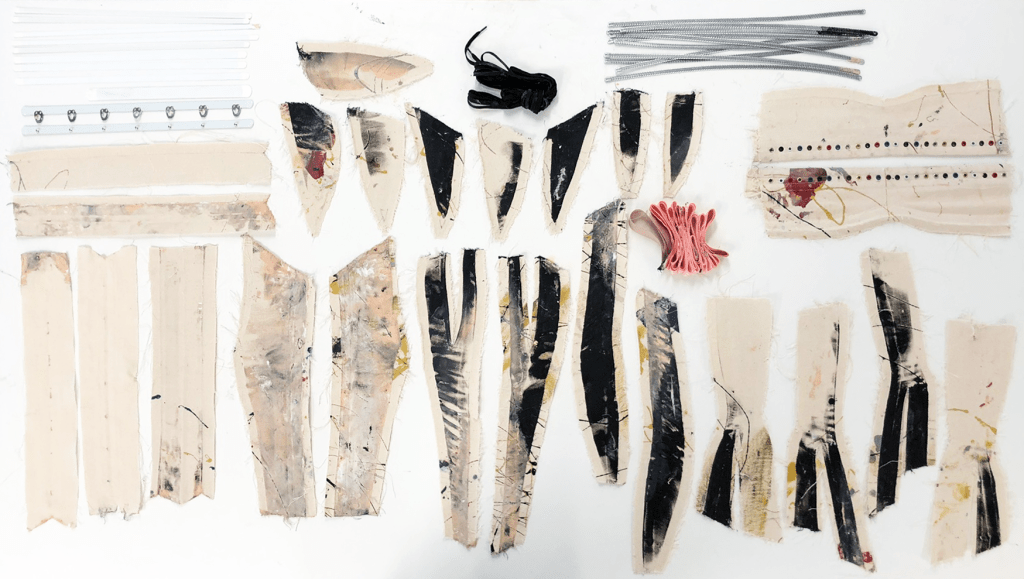
Something else successful was how I documented and catalogued the torn apart corset on one table. This is something I’ll keep in mind for the future.
Statement of Intent

  1. What is the concept/idea behind your proposed project? What is unique about it?
    • I think I want to make garments that instigate a performance or action. The actions could be unique and very telling (I’m thinking of perhaps making all of the fastenings reveal “ugly” parts of the body….?). I want to think of a narrative element for the garment.
    • I’m interested in taking these themes (control and restriction) and making garments that have a lot of “pretty” elements in them for a strong contrast (like the painting and restricted elements).
  2. What are the aims and objectives of your project?
    • Make a garment which lends itself to performance or actions
    • Be meticulous with color choices
  3. What research will you undertake? How does this research relate to your developing practice?
    • Research performative garments/fashion collections/designers
    • Research on the performance of gender
    • Research color palettes and fabrics
  4. How will your experimentation from the previous project become a resolved body of work?
    • I think I’ve done as much as I want to with the painting method, and I want to develop that further.
  5. What will the final outcome/s be?
    • a full “look”

Christo and Jeanne-Claude Wrapping

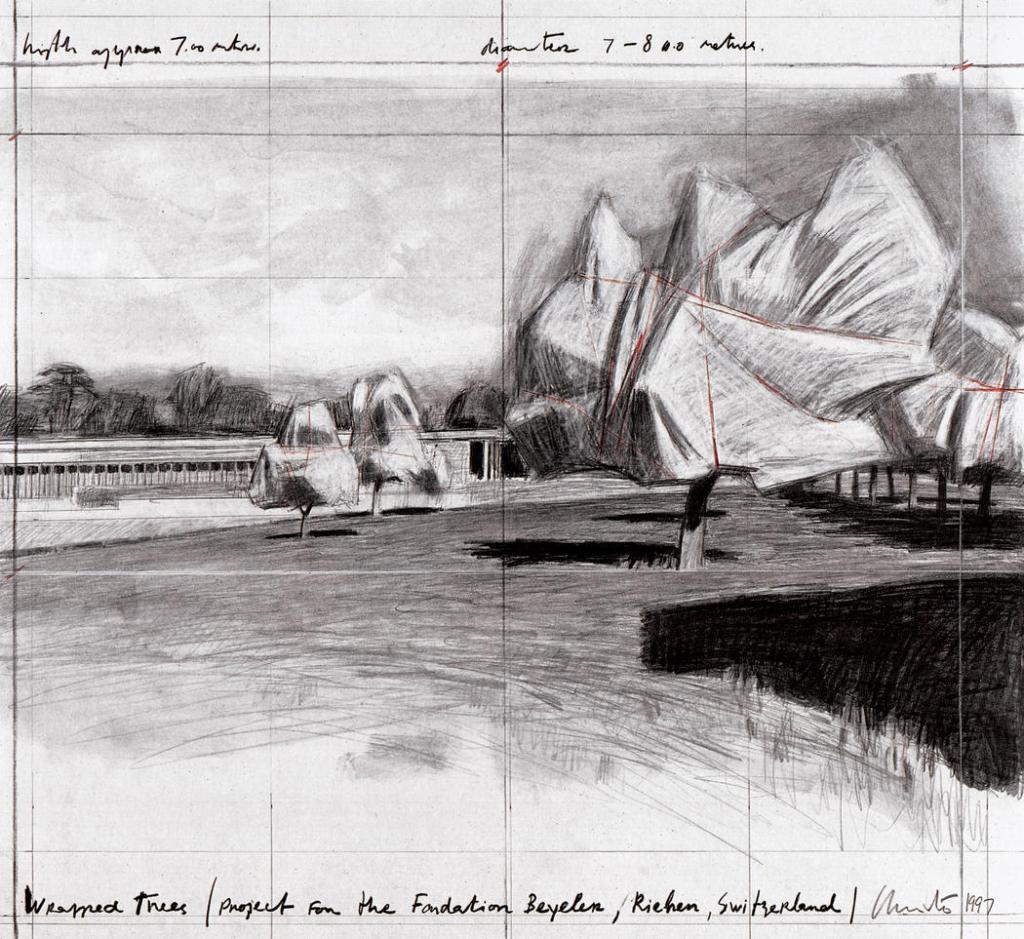
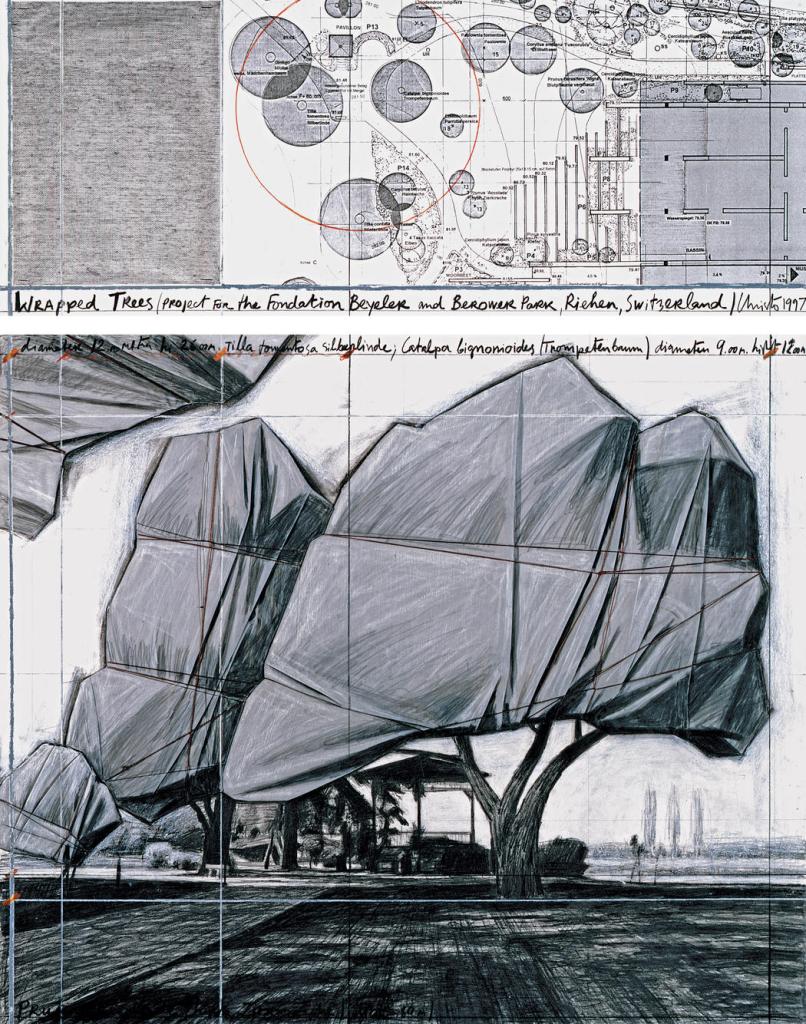
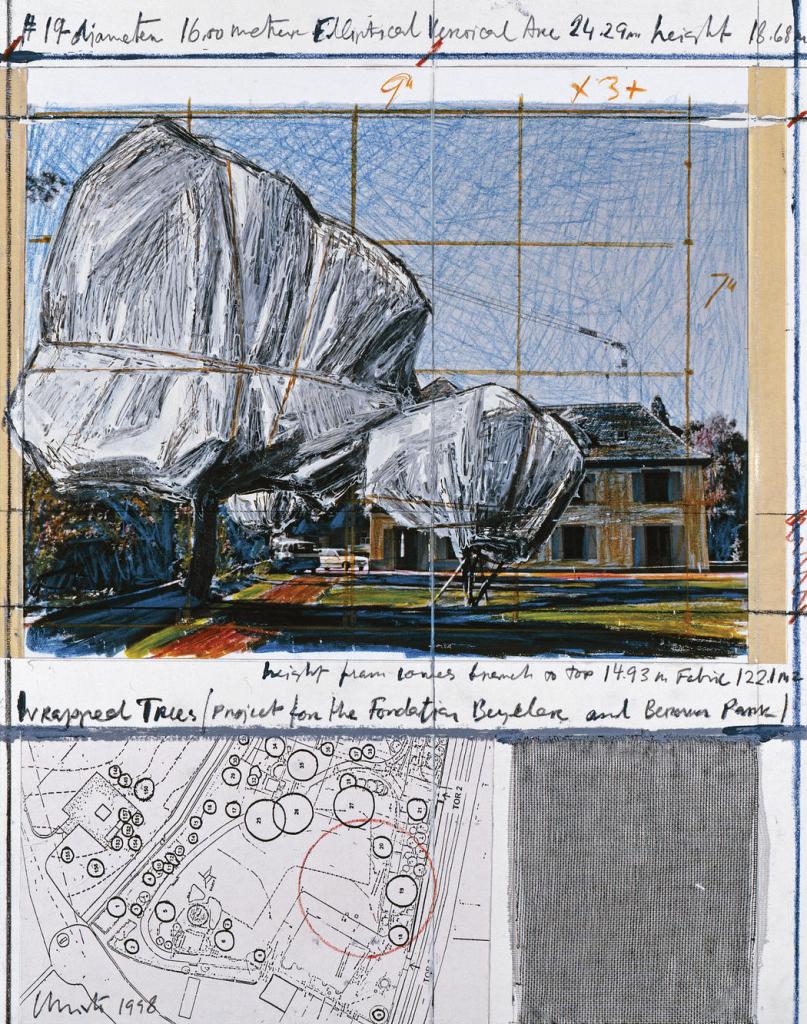
In my tutorial with Kyung Hwa, she recommended that I think about what shapes I am draping around. This project reminded me of the black mesh sack experiment that I did for Artifact. I think it might be nice to do some more geometric sketches like this, I really have found sketching to be a useful part of my process, and I know that I need to embed it in various parts of the investigating and research process.

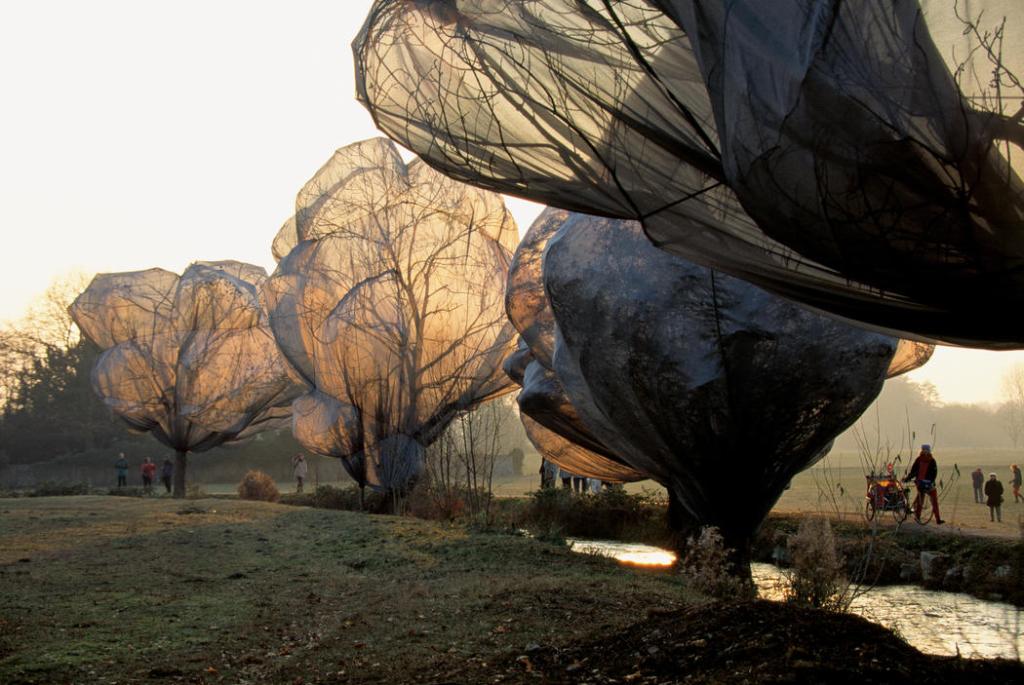
I think the way these projects are photographed is very nice as well. The photograph of the light shining through the fabric and showing the silhouette of the tree is very strong, and it makes me think about how I could document my own work. The final image is strong as well, it looks almost like a surrealist piece, which I’m into.

Overall, with these projects the scale is astounding… scale is something that keeps coming up in my research but it is SO HARD to execute large scale pieces as an individual. I’m not sure how to reconcile this in my own work, but it is something I will continue to think about in the future.

Side Note

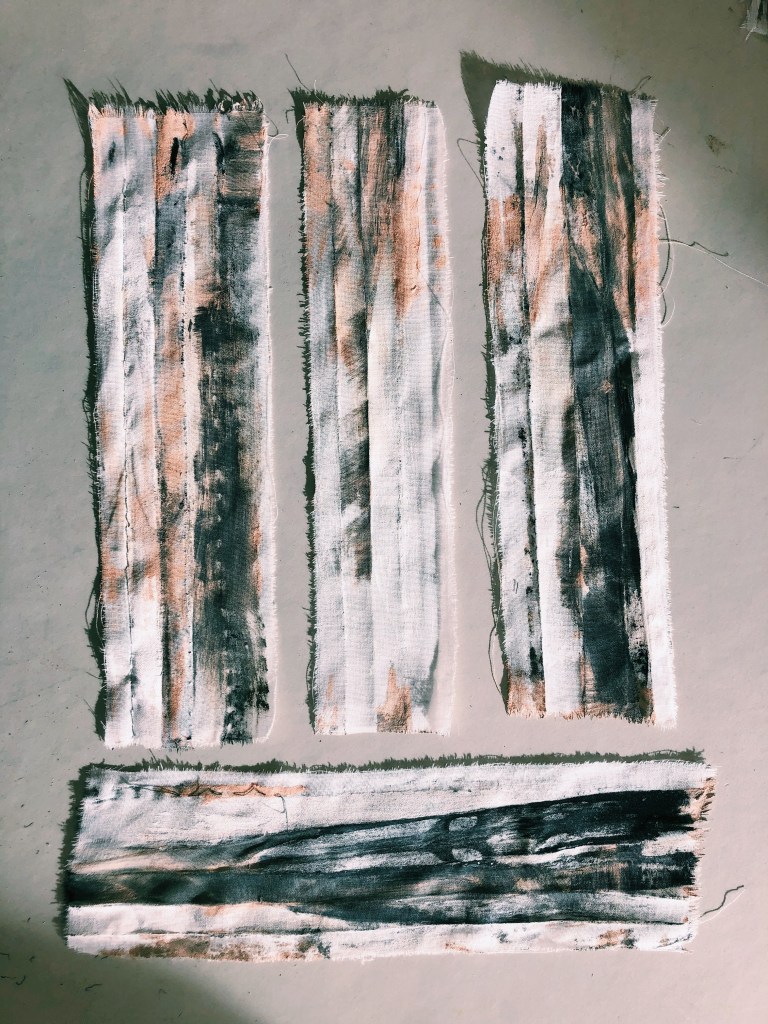
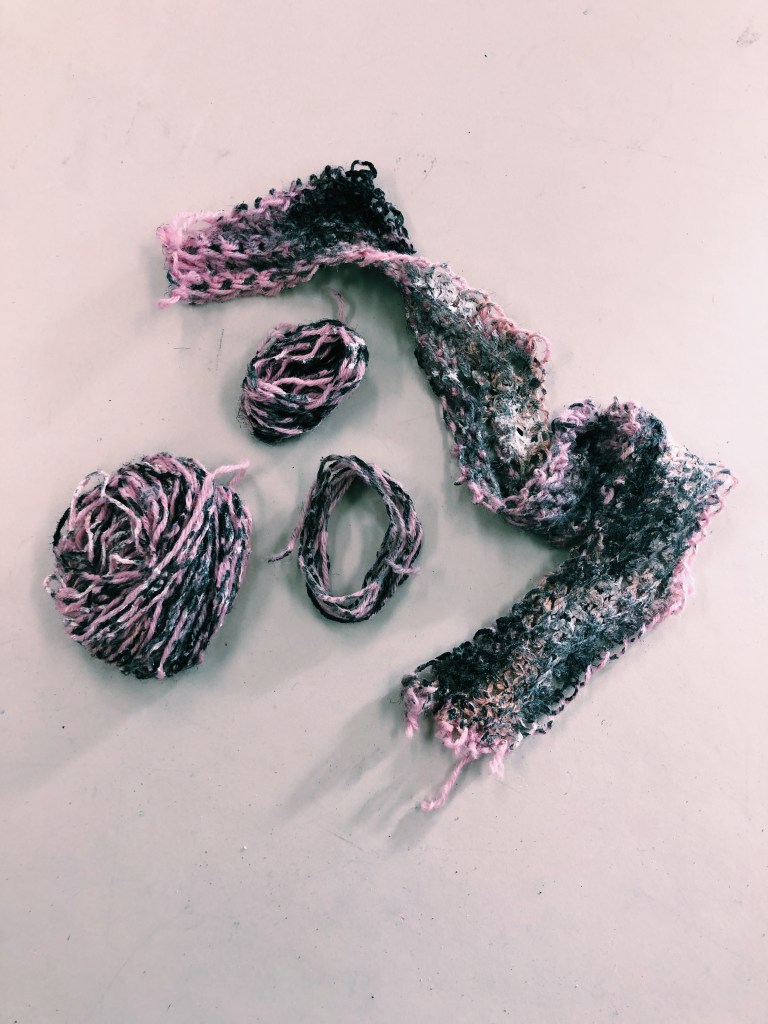
I also painted and unpicked the little samples from earlier in the project: These were little tests that I did before the bigger videos I posted in the last post.

Progress Update & Advise from Kyung Hwa and Julian

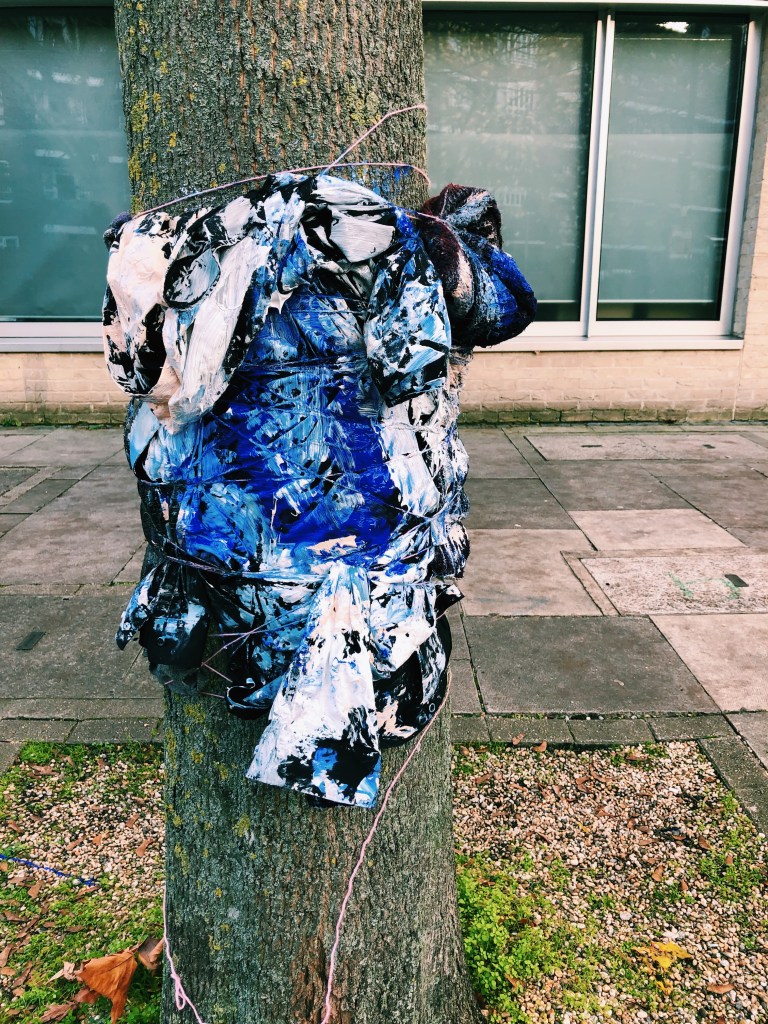
For this sample I was thinking about elements of control and looking at what is “natural”. I was also thinking about using a more abstract/free flowing methods of painting with more rigid or restrictive elements would be an interesting contrast. With both of the videos below, there is an element of control that is lost to the test being done, which I think produced interesting results.

Kyung Hwa pointed out that, even though it is a natural element, the tree is still somewhat rigid, and it may be interesting to capture more encompassing shapes. She also pointed out that by deconstructing the corset and painting it in such a free form way, I’m almost killing the idea of what a corset is– and this is something I could amplify in the next project. In this way the corset is almost taking on a new identity or having a rebirth that is the exact opposite of its original purpose. This gave me a lot of ideas about how I may move forward to create a more “final” piece.

She also said something similar to Julian, which really interested me. They were both interested in the spaces in between the corset patterns when I placed it out flat and deconstructed. Julian also talked a lot about exploded views of things, which would be super interesting with a corset. There are so many intricate pieces. Something me and Kaelan were discussing was the element of craft and education in fashion and making, which could be shown through this type of model. All of these elements are related, and I’m not exactly sure how I would do it yet, but it would be interesting to have visuals which reference these ideas in the final piece.

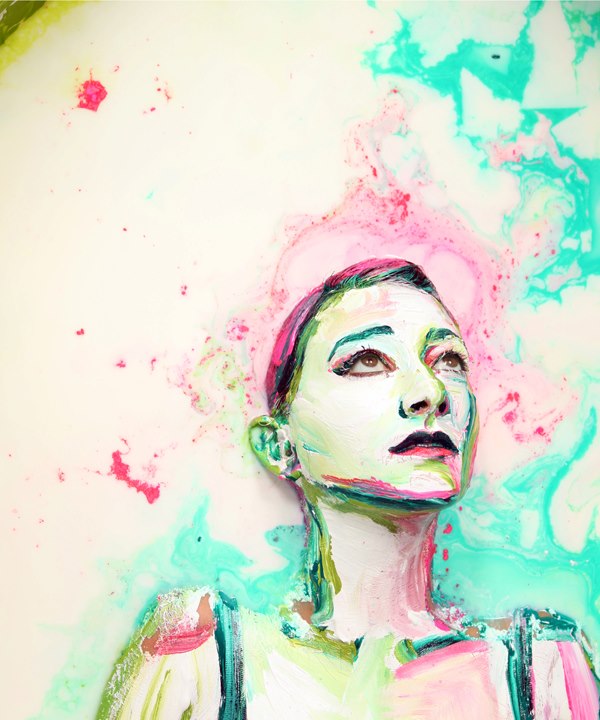
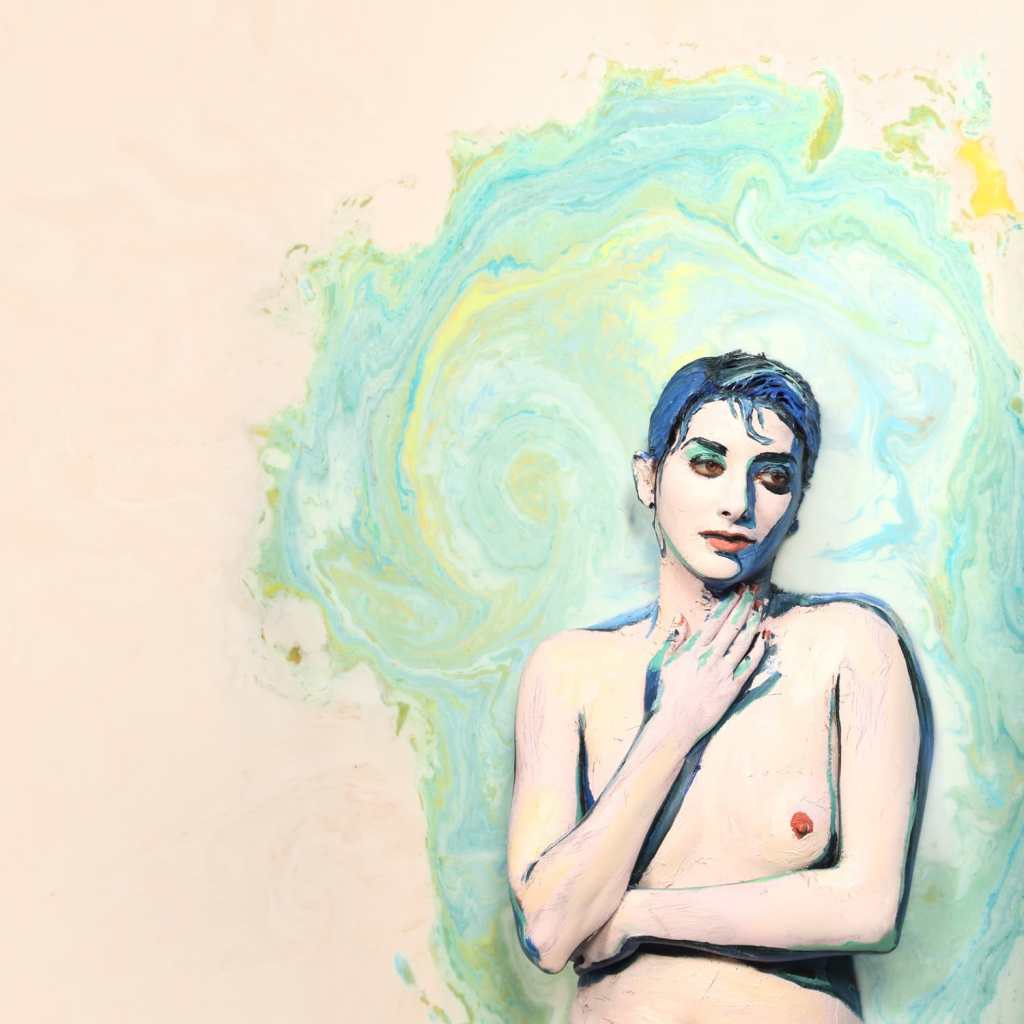
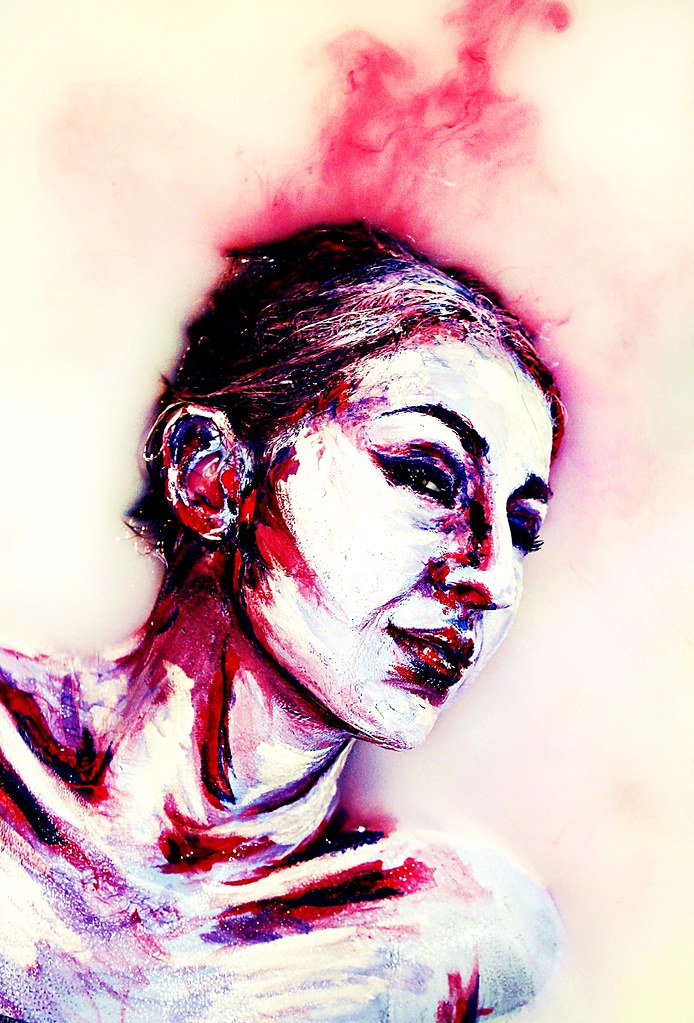
Alexa Meade

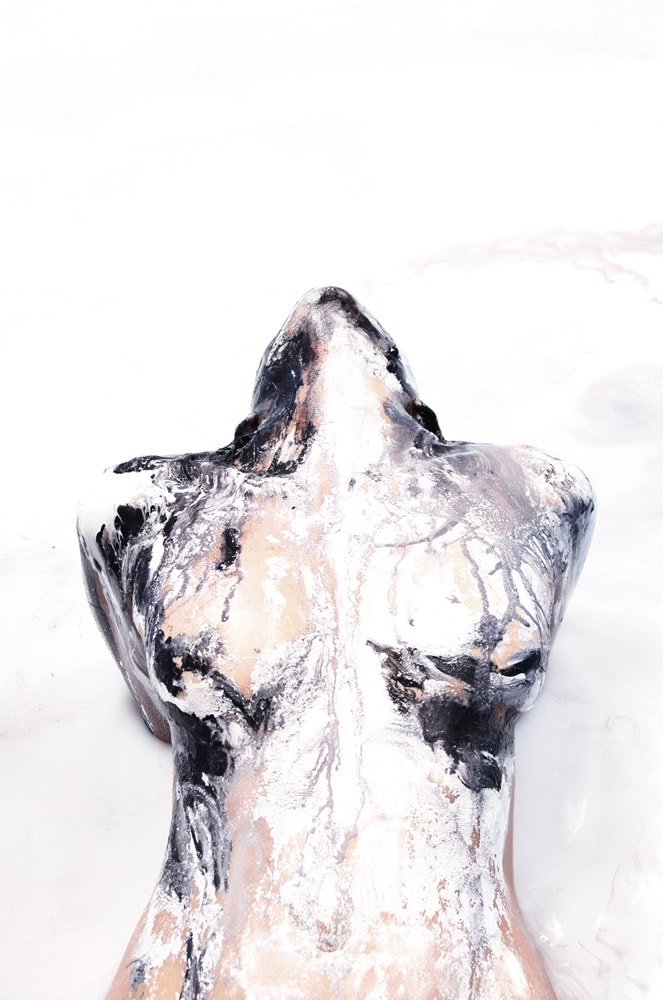
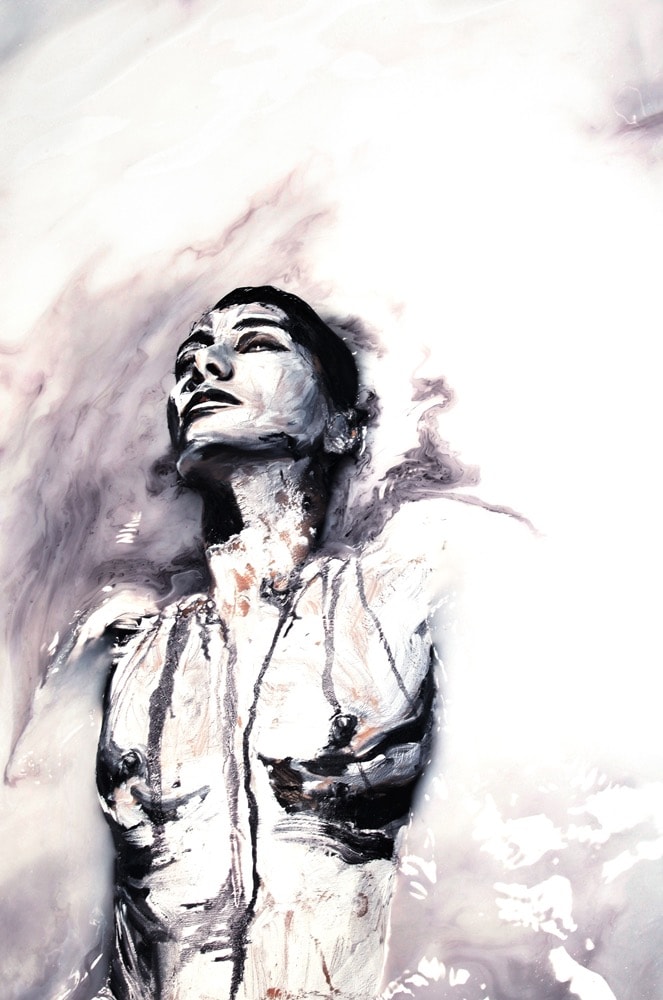
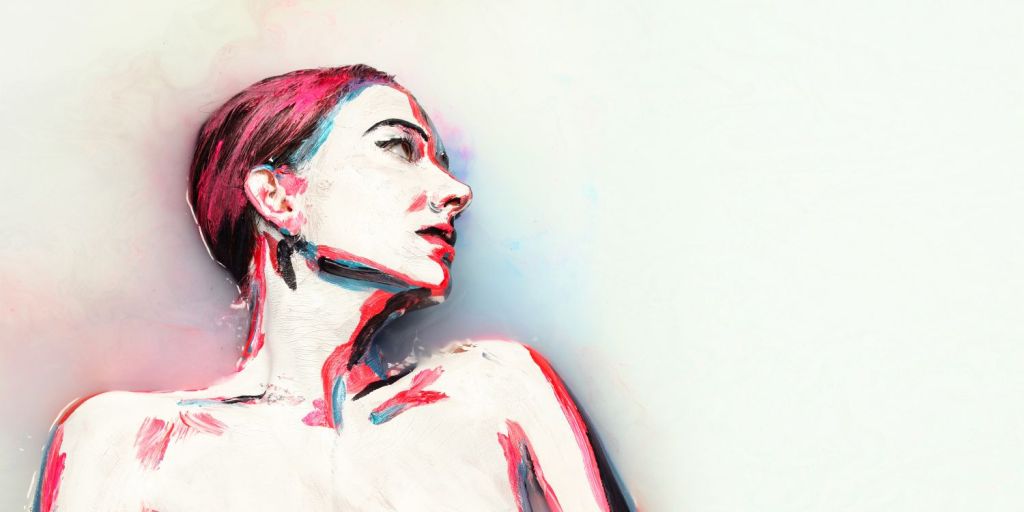
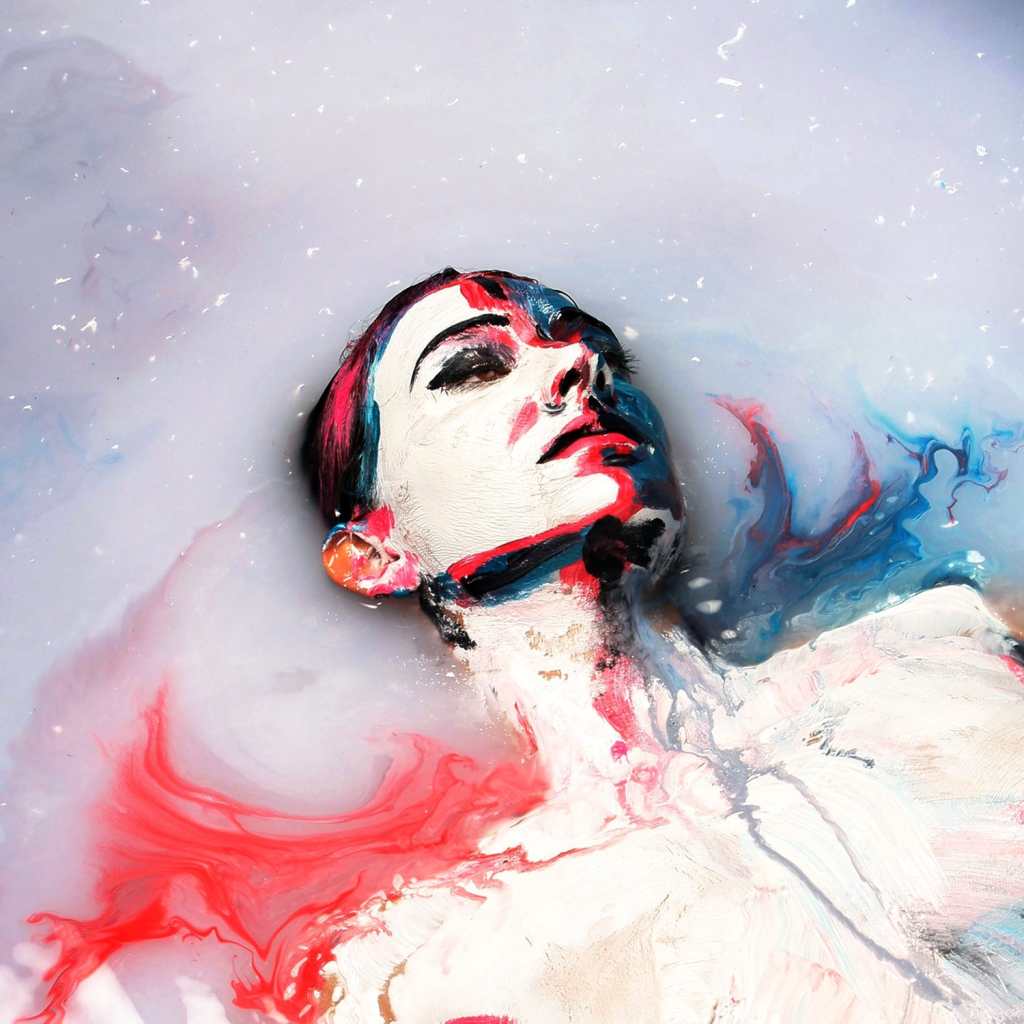
As I am doing some body painting, I thought I would look at other artists doing the same thing. Previously I had researched Lui Bolin, and enjoyed his work however I am also interested in Alexa Meade’s work.

I like how, in the video, they talk about how the work is time based and alive. The final pieces are so dependent on variables that the artists cannot control (the milk’s age, how the paint flows, etc).

Other Ways to Illustrate Control/Loss of Control

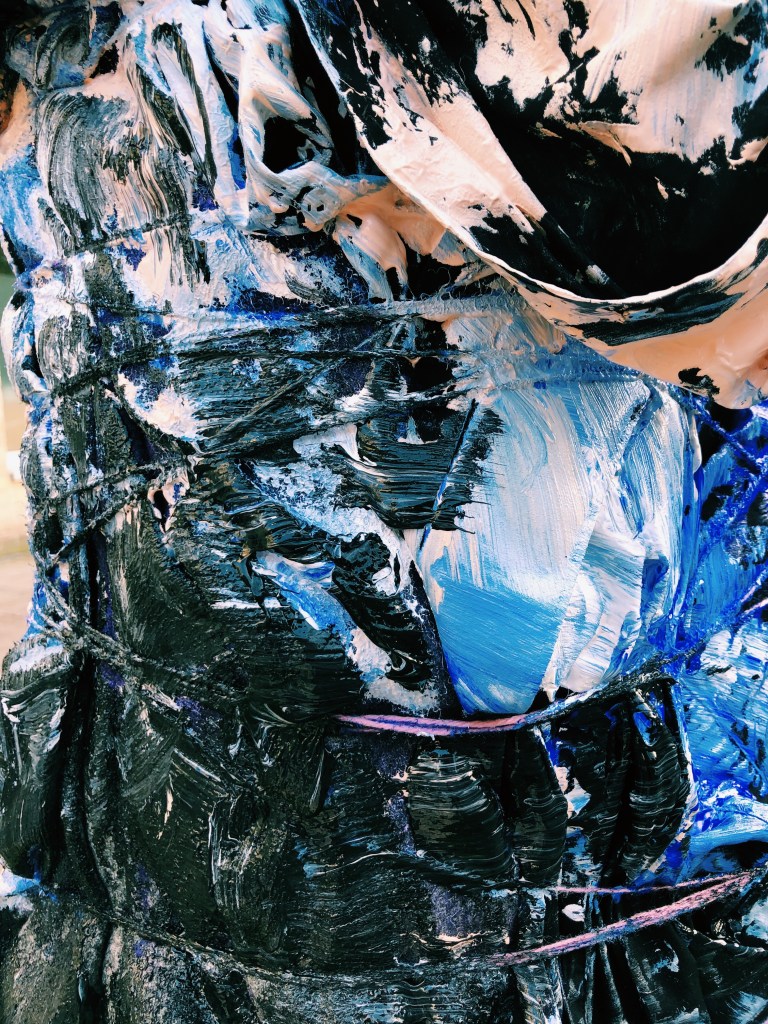
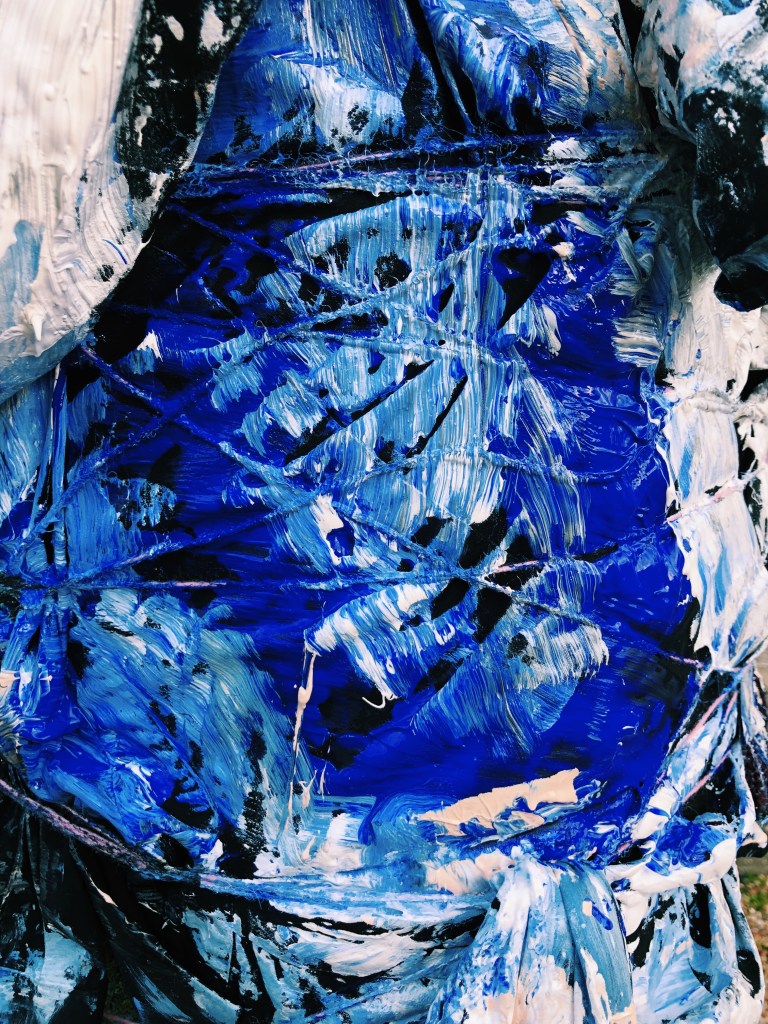
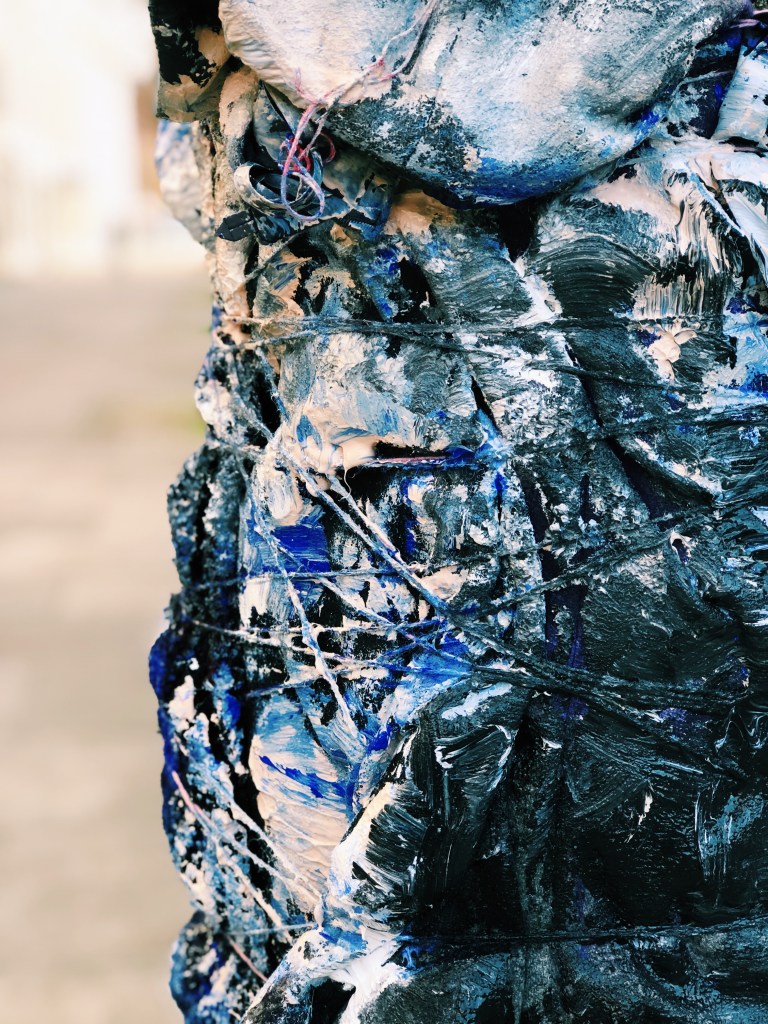
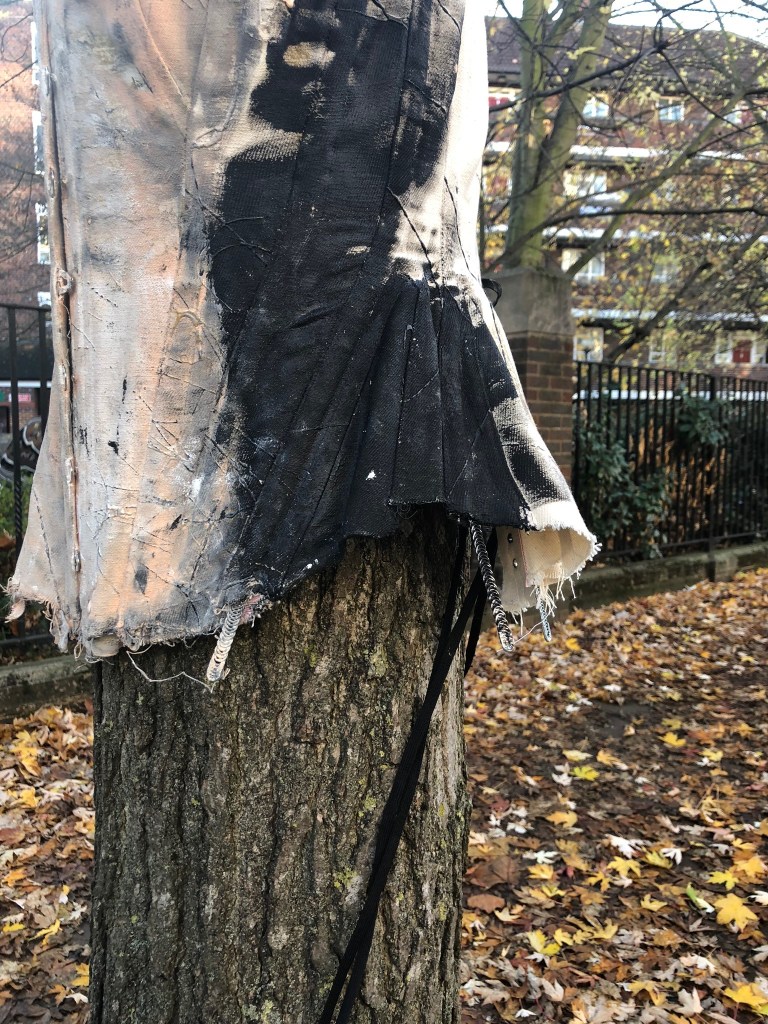
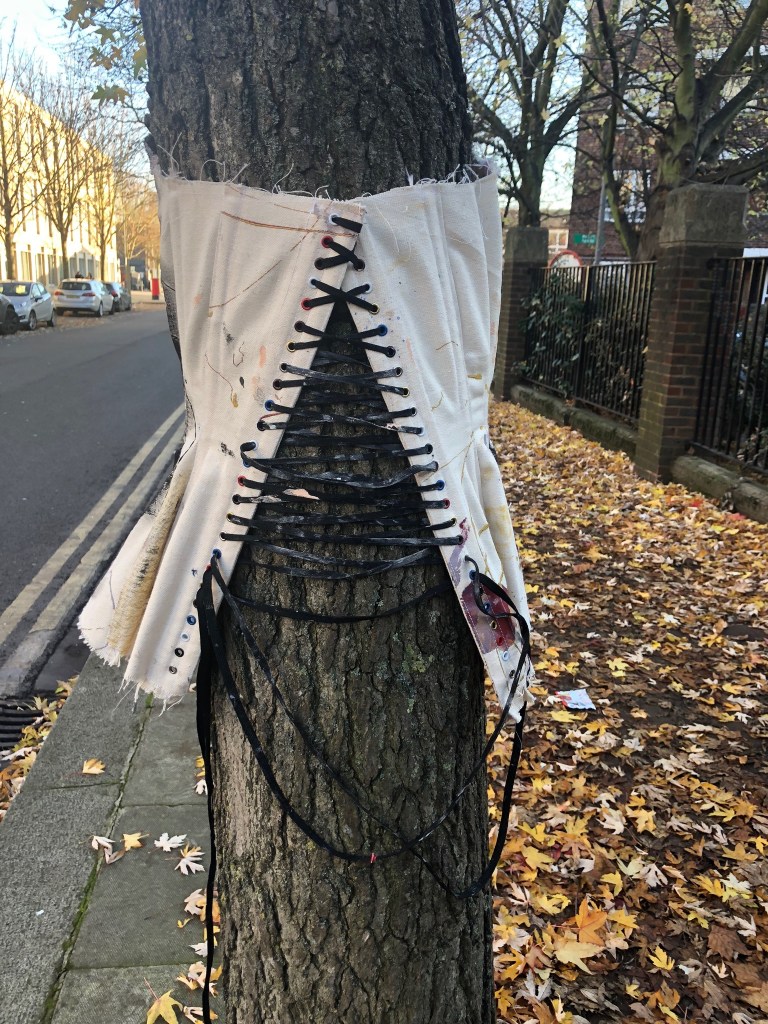
I put the corset on the tree, thinking about how it is a tool which controls what is natural. Viewing a corset as a tool has opened my mind to new possibilities (for example, incorporating or using other elements where I can use control or the loss of control as a theme to work with.

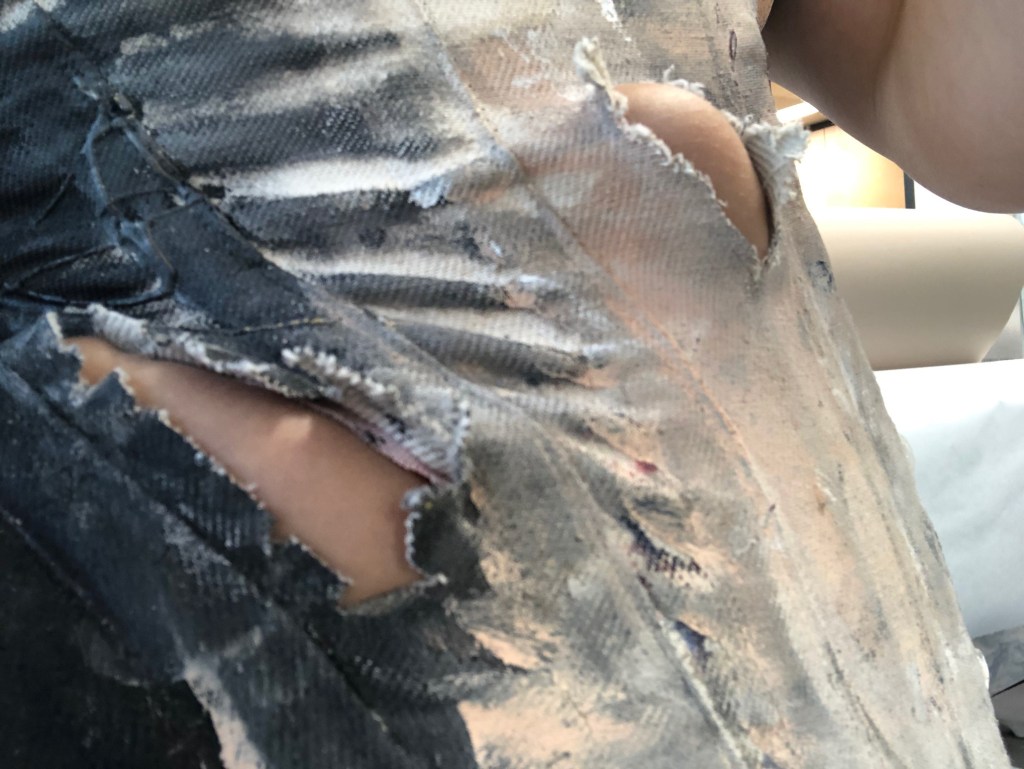
I the above photos and videos I ripped holes in the corset to Illustrate the loss of control, and even the failure of this tool. I think this could be a fun thing to work with in the future, because it honestly looked so gross.

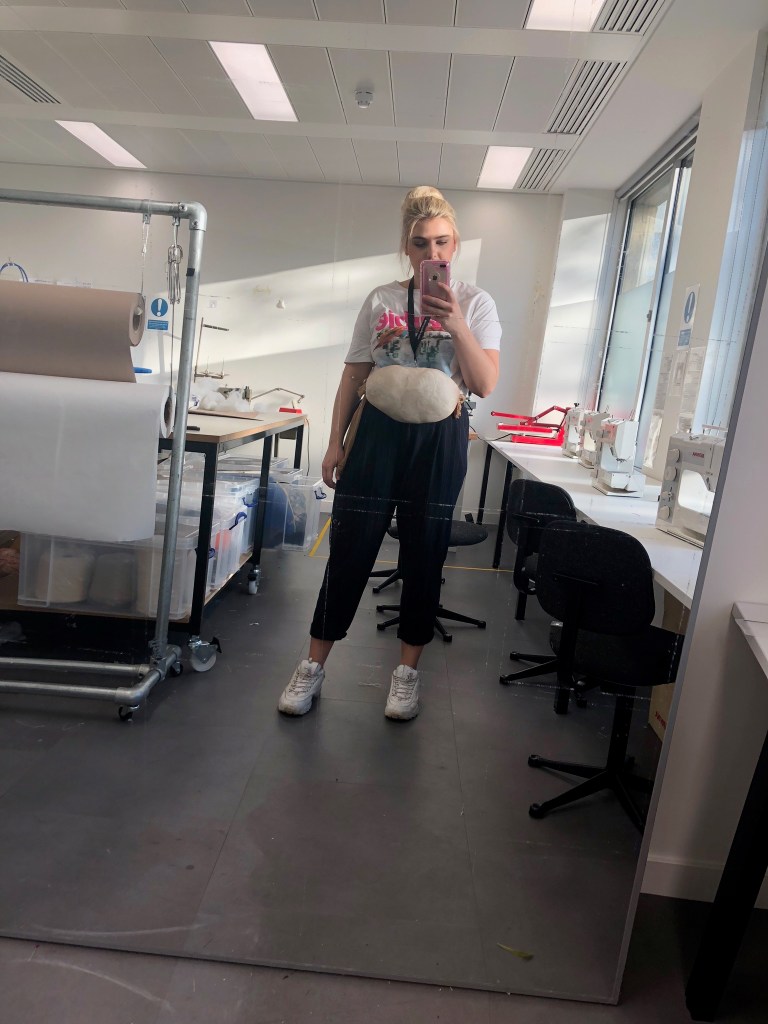
I then did an experiment where I made fat packs out of hosiery and cotton, which was fun. I don’t know if ill do anything with this in the future but it was good as an experiment.

Updates on Corset: Deconstructed.

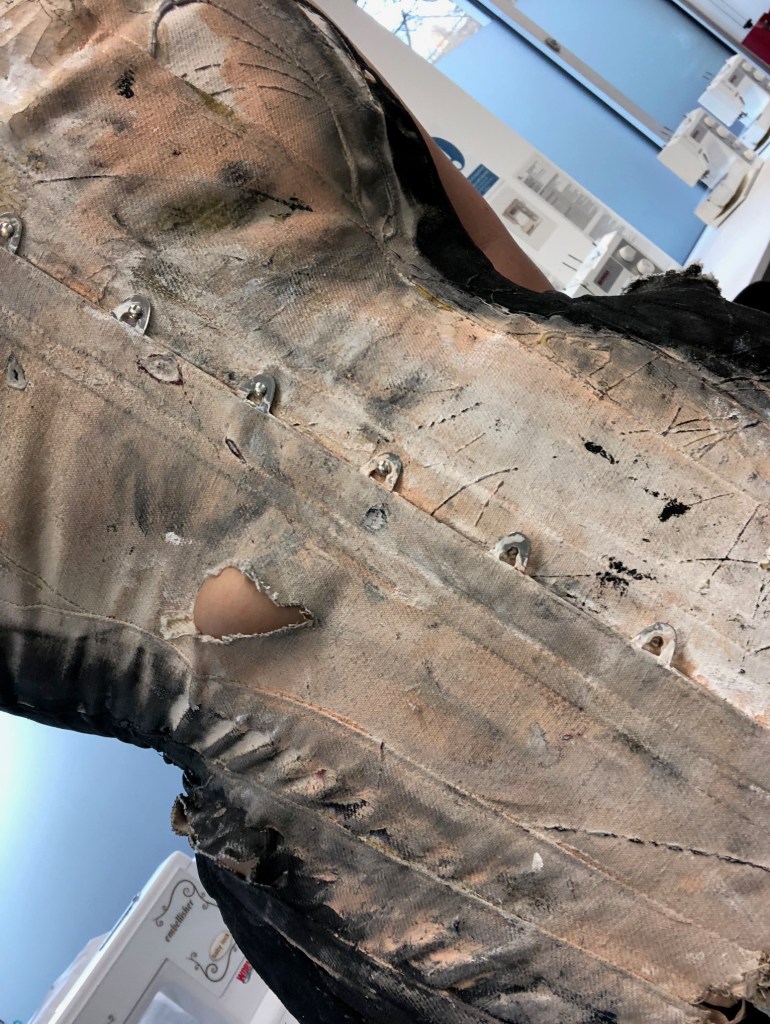
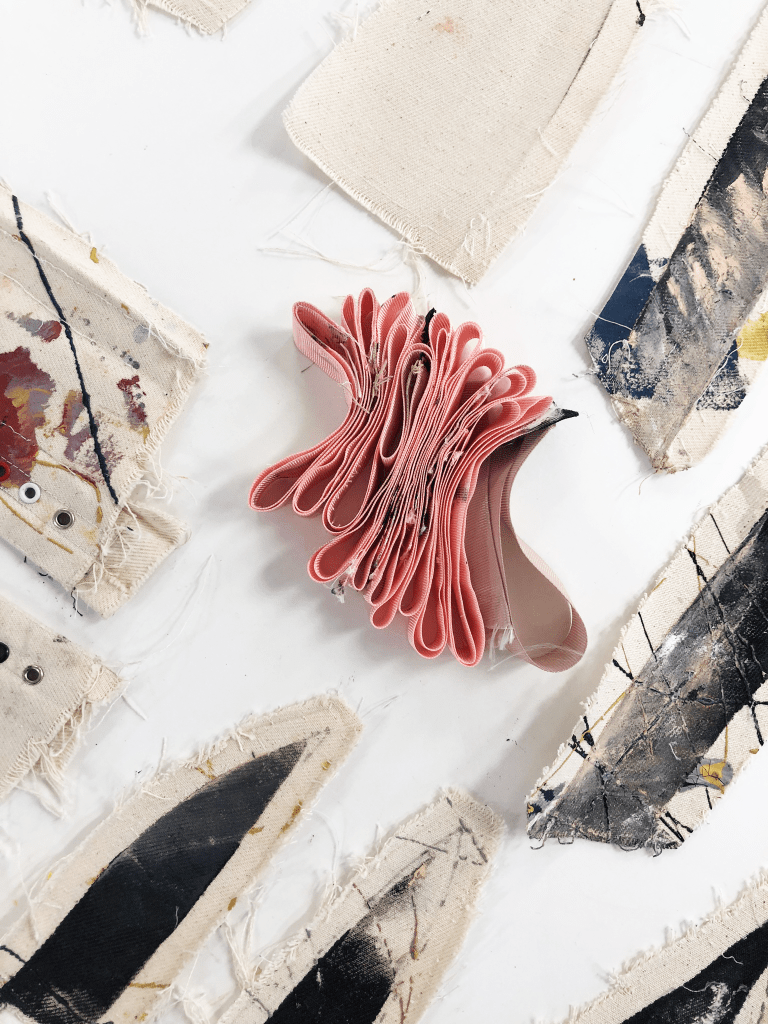
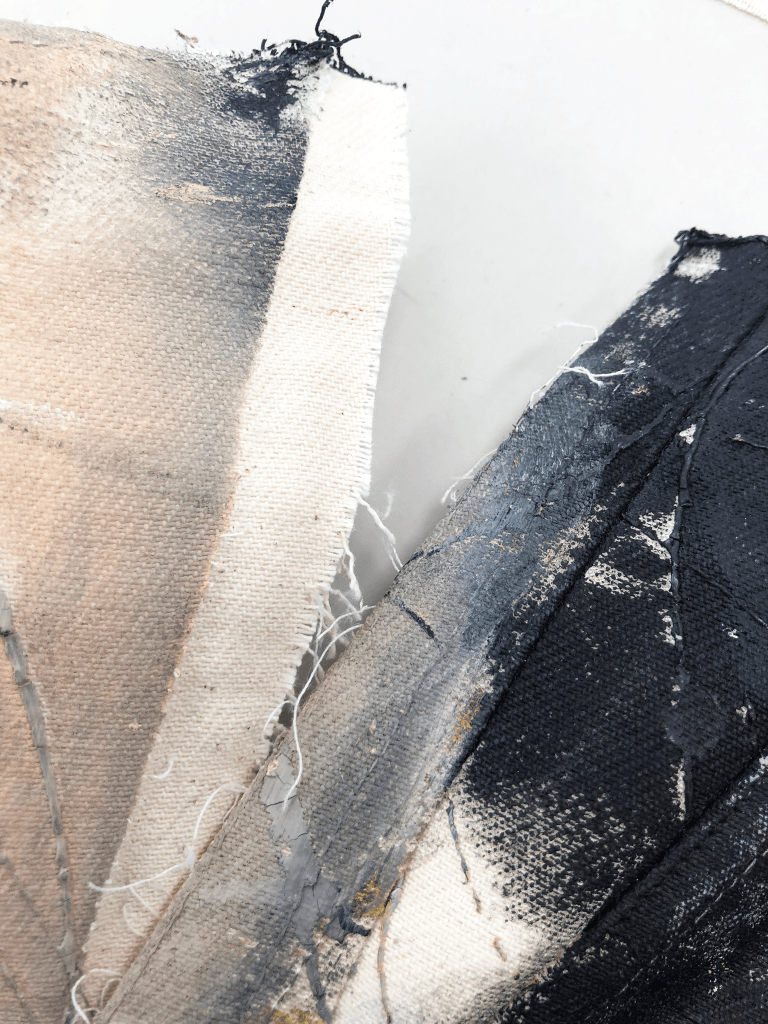
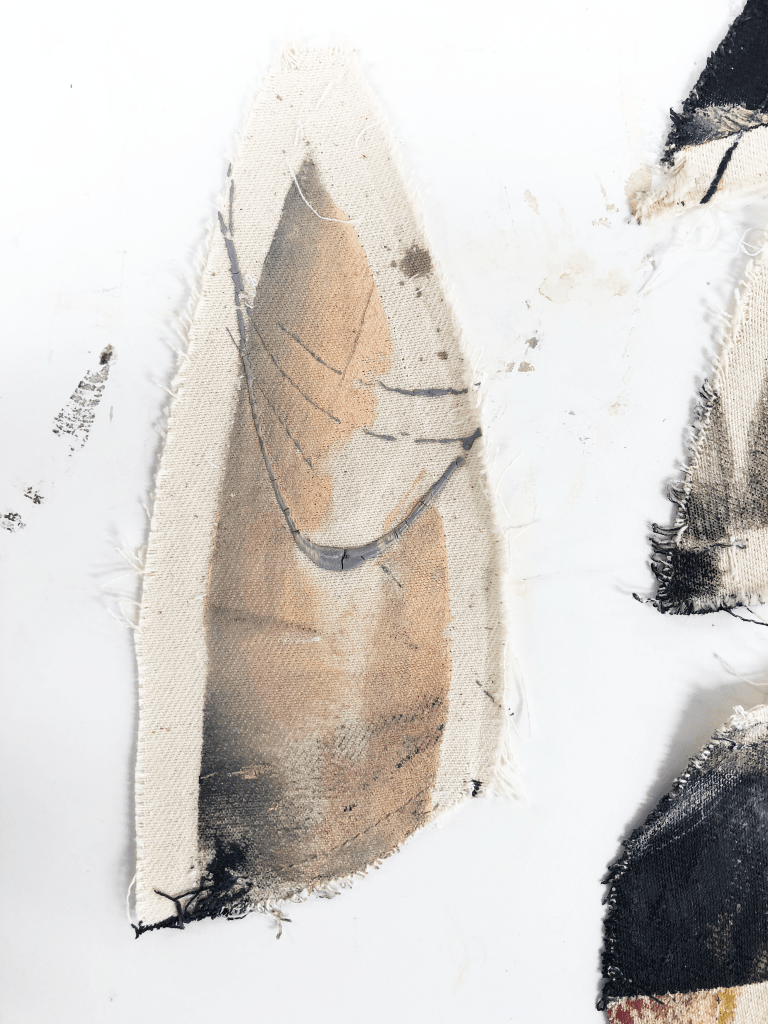
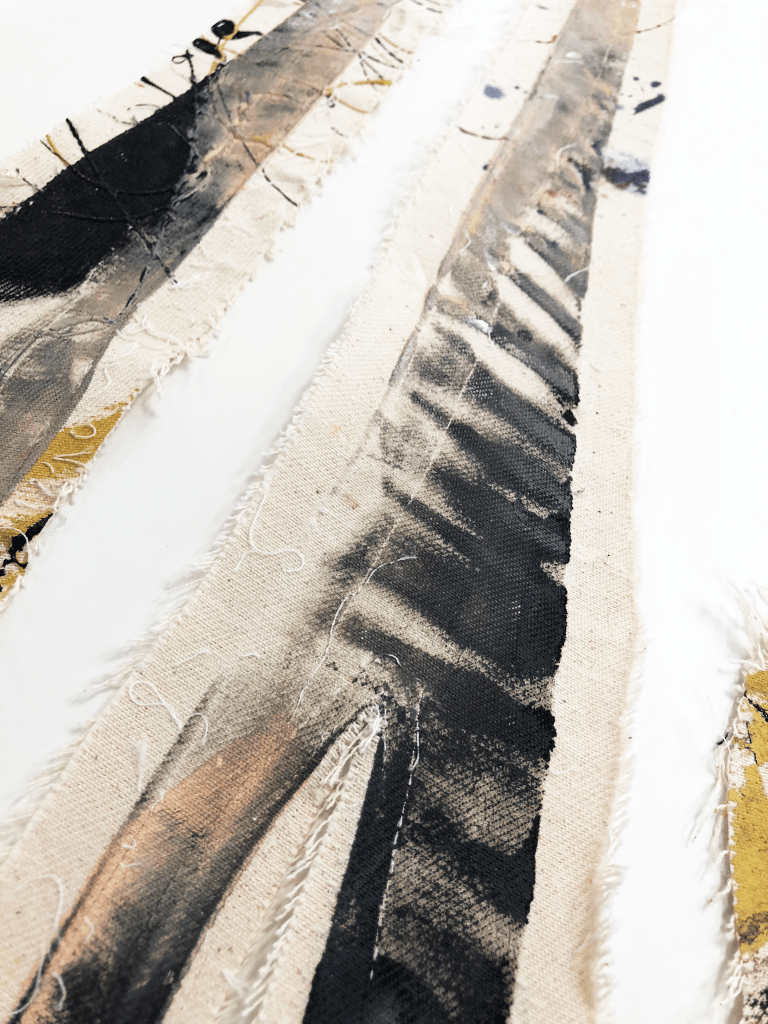
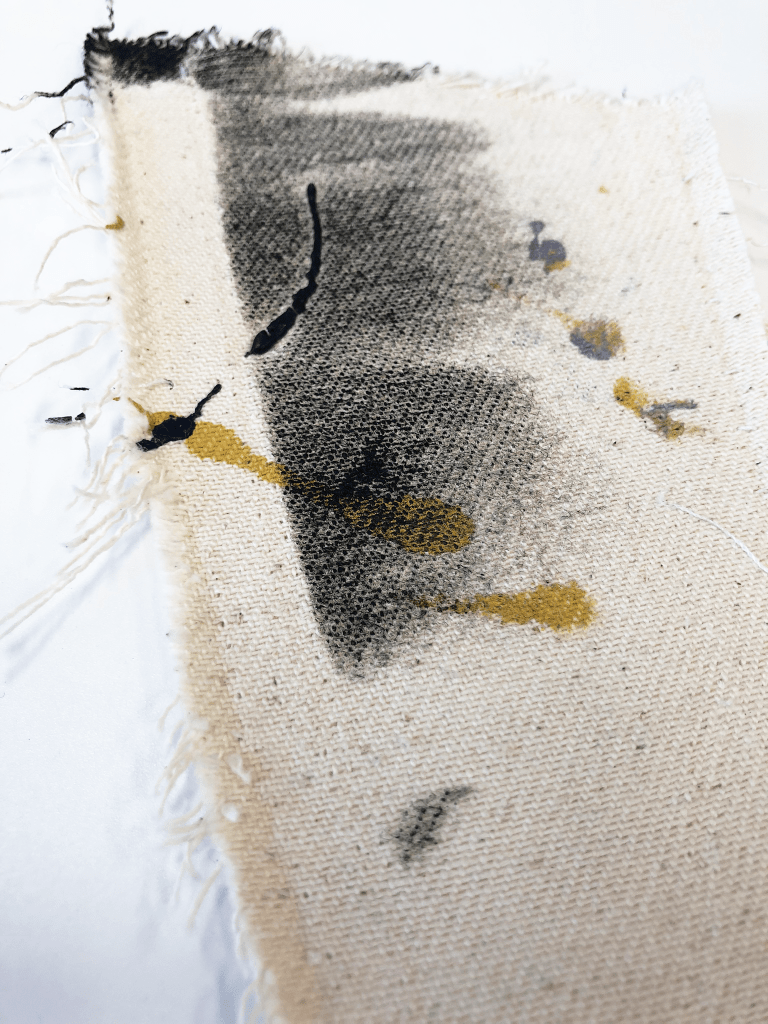
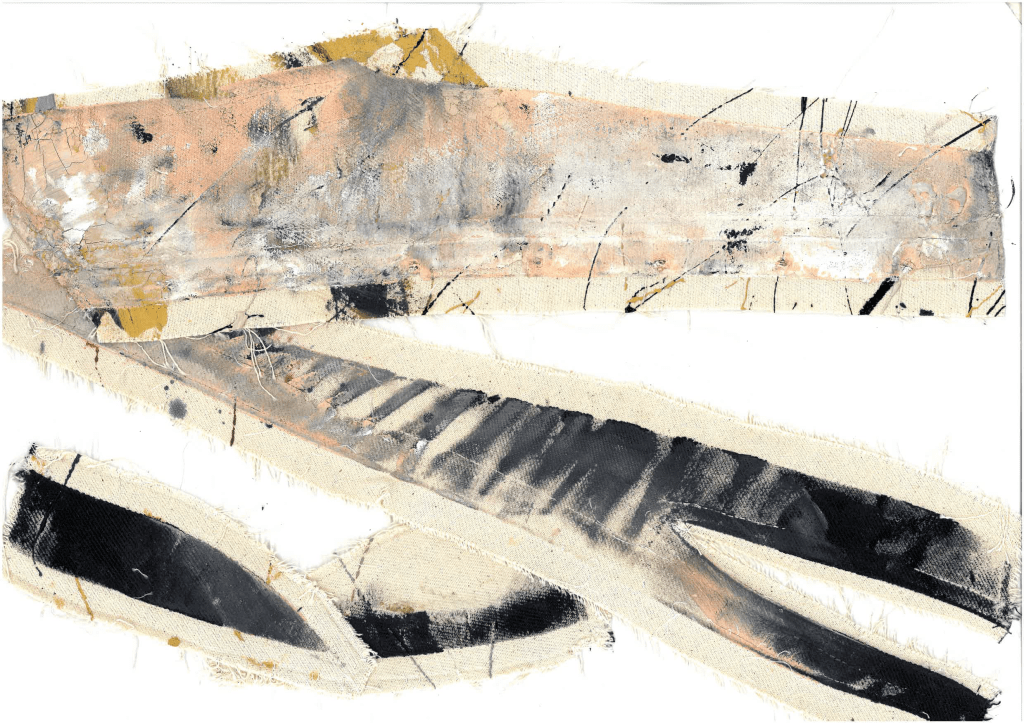
Yesterday I completely deconstructed the corset that I had painted for the video. What I love is that there were layers of different paints, and you could almost see how the corset looked on the body and in what order It was constructed (because of the marks left behind).

During the process of unpicking the corset, I was thinking about how I can indicate time through the process of painting. Obviously I will take a video of the process, but there is something so special about the layering of the paints. Even seeing how the seam allowances are less marked/covered in paint is very important. During one of our early critiques, Julian mentioned how the inside of the garment is so interesting…

Me and Kaelan had a discussion about how the inside of the garment is where the actual artistry is. I like the idea of showing the process of construction or how a garment may look inside, in a more overt manner.

I’m excited for tomorrow’s painting experiments, but I’m not sure what my outcome will manifest as. For the critique, I think I will present all of the deconstructed work, as I like the roughness of the materials, and I want to use it in the next project (there is also something so nice about the canvas).

I’ve also been thinking a lot about control in my work. I think it would be interesting to set up a process where I have limited control over the outcome, but I’ll have to marinade with this a bit longer, and see all the materials before I make any decisions.

Robert Rauschenberg

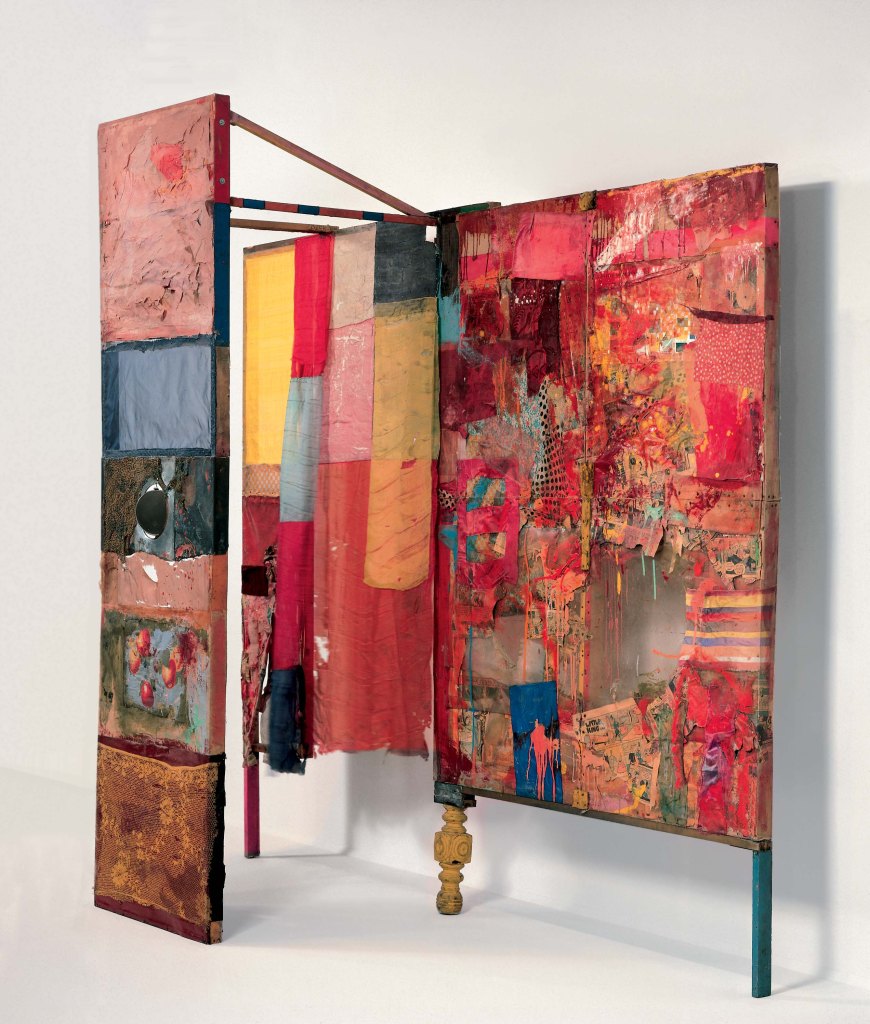
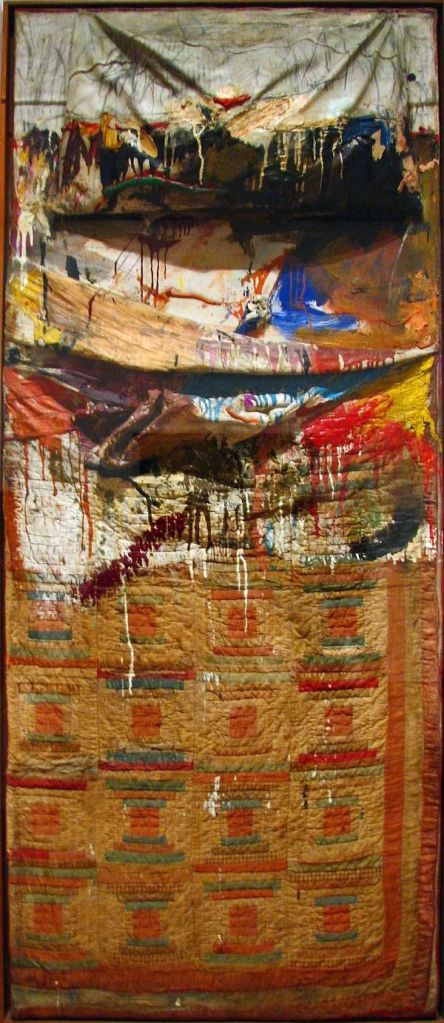
Today, Julian looked at the corset painting video that I made, and he recommended I look at Robert Rauschenberg’s work. Rauschenberg (October 22, 1925 – May 12, 2008) was an American painter and graphic artist whose early works anticipated the pop art movement. Rauschenberg is well known for his “combines” of the 1950s, in which non-traditional materials and objects were employed in various combinations. Rauschenberg was both a painter and a sculptor, and the combines are a combination of the two, but he also worked with photography, printmaking, papermaking and performance.

What I love about his work is the use of materials and the layering of those materials. For example, in Bed, he literally painted on his bed sheets and the textures of the fabrics underneath create interesting shadows and folds in the piece.

I’m hoping to emulate some of these effects by painting onto thrifted clothes and taking them apart. In the next post, I will show how the corset looks deconstructed. I think I will then somehow layer or collect multiple different painted textures.

Design a site like this with WordPress.com
Get started