Since my SOI Feedback, I’ve been researching other designers and artists who work in a similar subject area or theme (look to previous posts). I thought I would continue by looking at one of my favorite designers who is an alum of the RCA, Karoline Vitto.
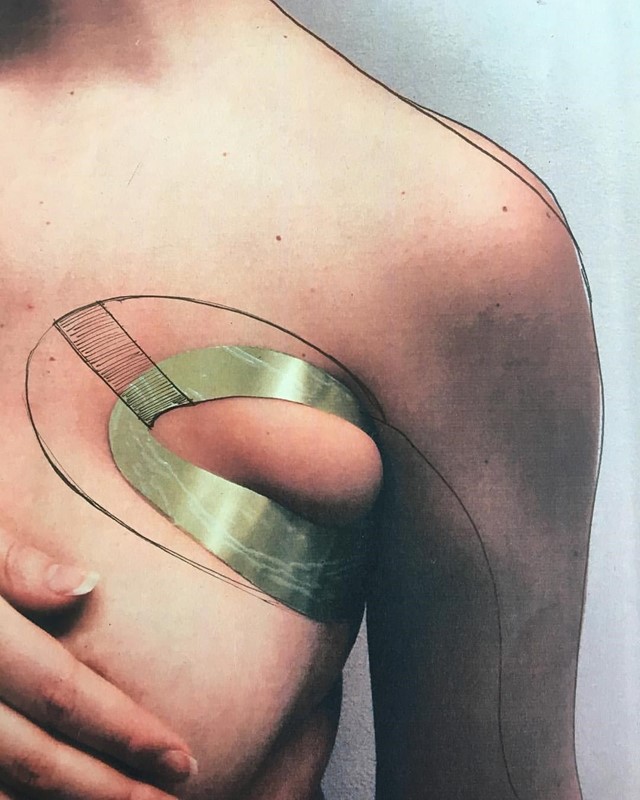
Her work is so on point at calling attention to the ridiculousness of the body expectations on women. For example:
Her work really resonates with me because it is so relatable and real. I would say that I definitely aspire to create work that causes the same response and feelings that her work does for me.
I’ve been thinking about how to push my work to the next stage so I can hit the ground running when I come back to school. I’m going to start with a google survey so I can gather more information. Then I plan to sketch and ideate on some “looks” to show Julian right when I get back.
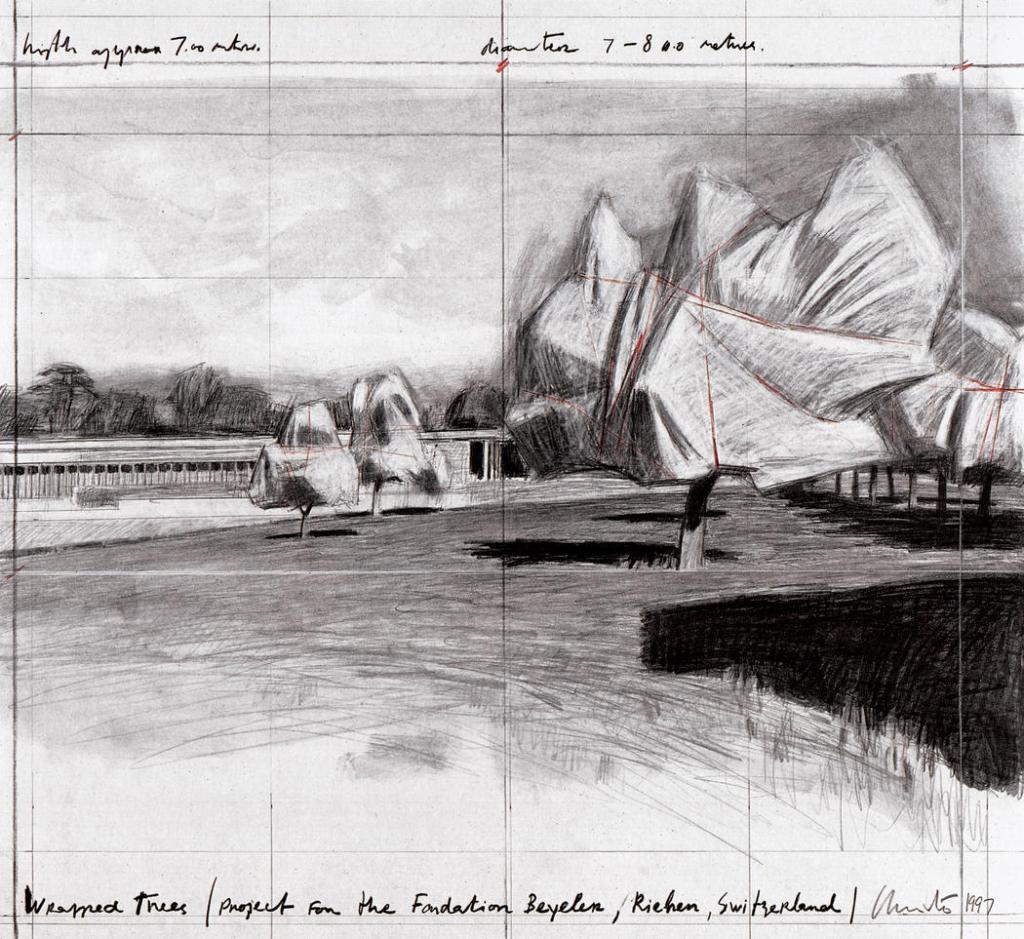
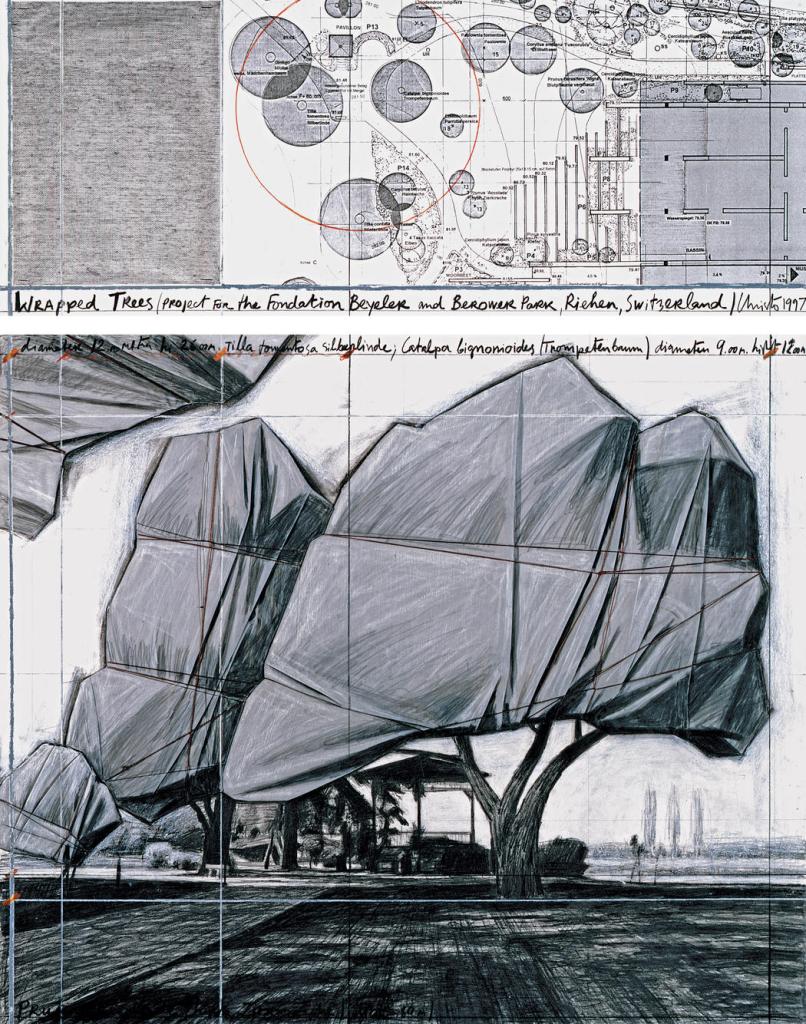
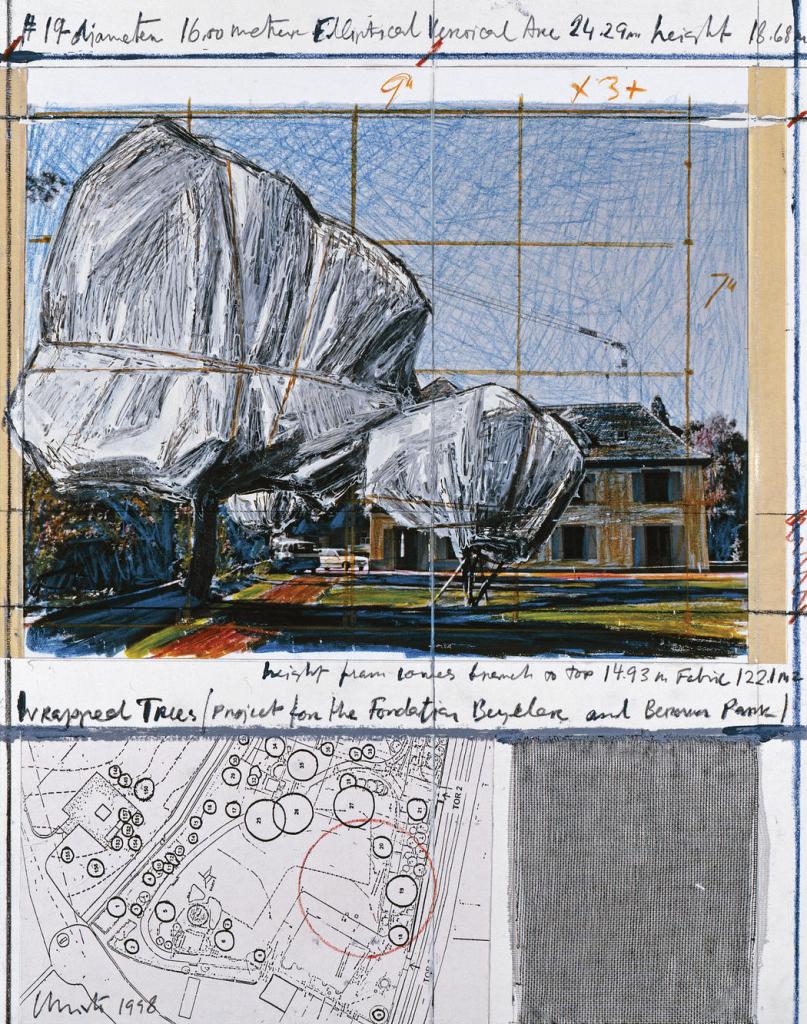
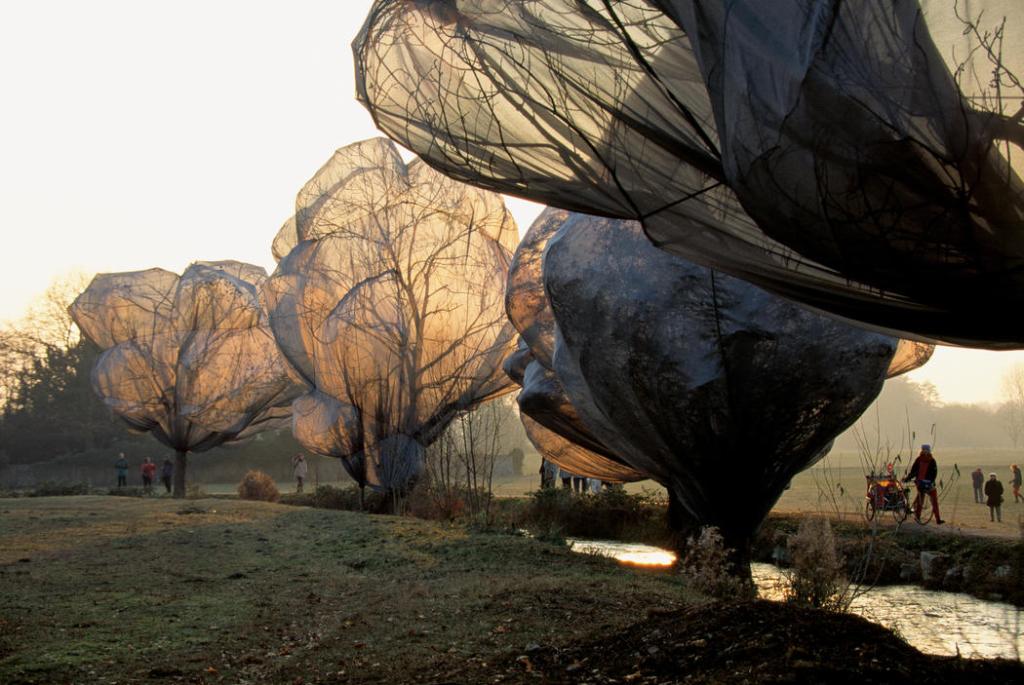
In my tutorial with Kyung Hwa, she recommended that I think about what shapes I am draping around. This project reminded me of the black mesh sack experiment that I did for Artifact. I think it might be nice to do some more geometric sketches like this, I really have found sketching to be a useful part of my process, and I know that I need to embed it in various parts of the investigating and research process.
I think the way these projects are photographed is very nice as well. The photograph of the light shining through the fabric and showing the silhouette of the tree is very strong, and it makes me think about how I could document my own work. The final image is strong as well, it looks almost like a surrealist piece, which I’m into.
Overall, with these projects the scale is astounding… scale is something that keeps coming up in my research but it is SO HARD to execute large scale pieces as an individual. I’m not sure how to reconcile this in my own work, but it is something I will continue to think about in the future.
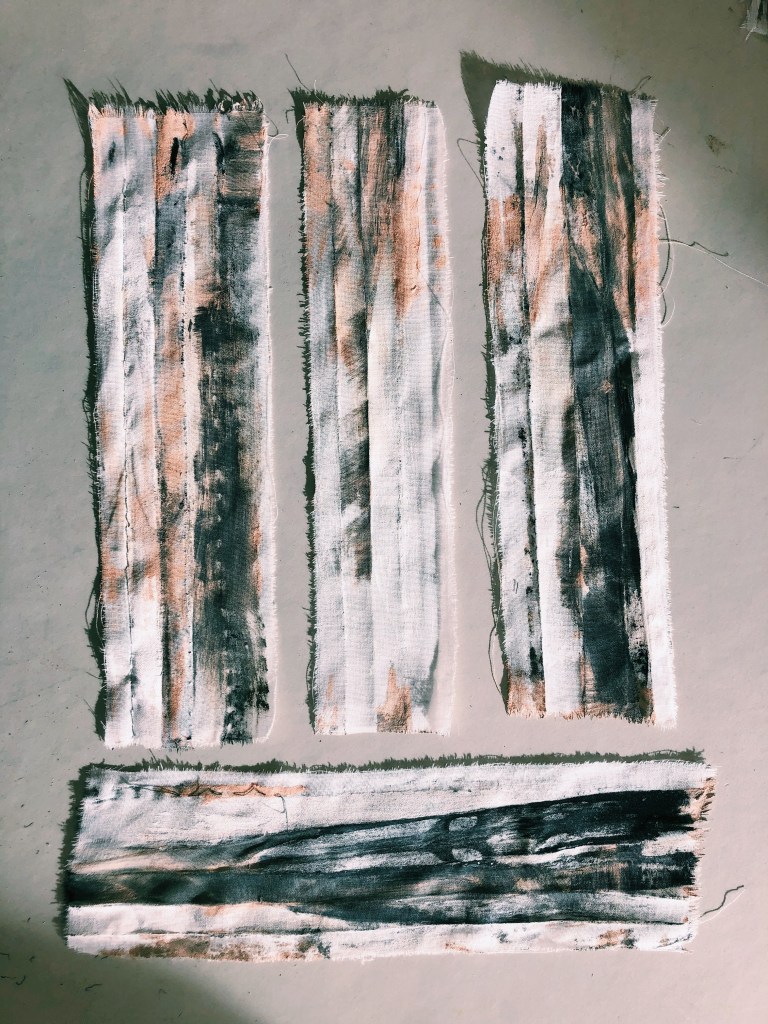
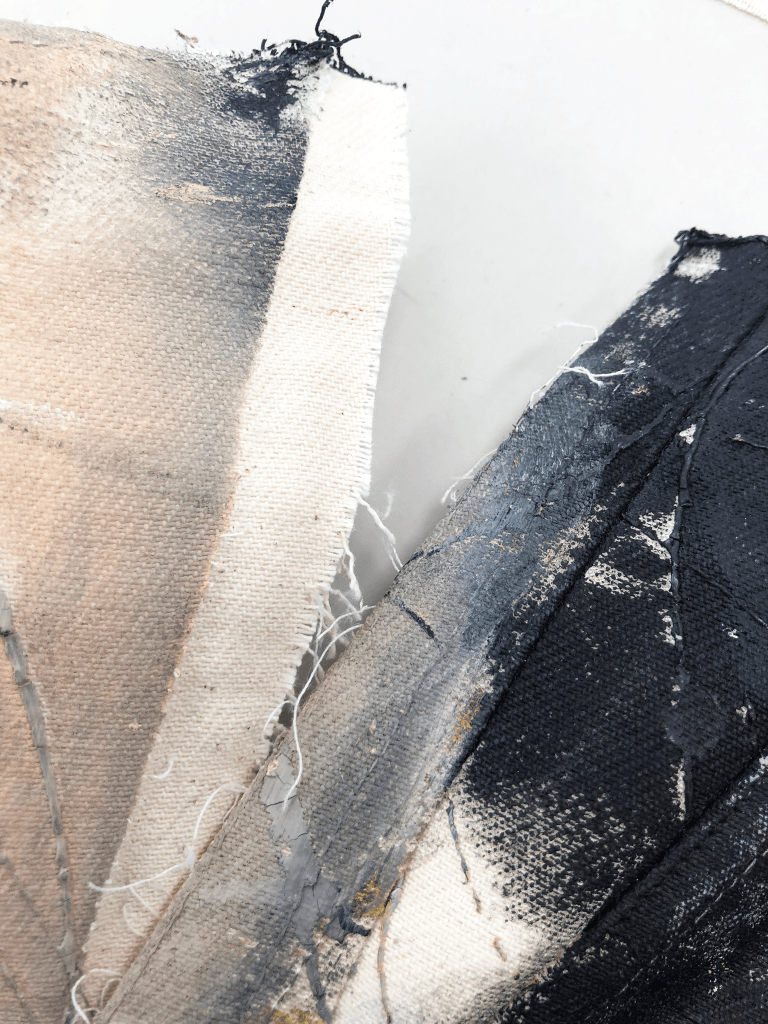
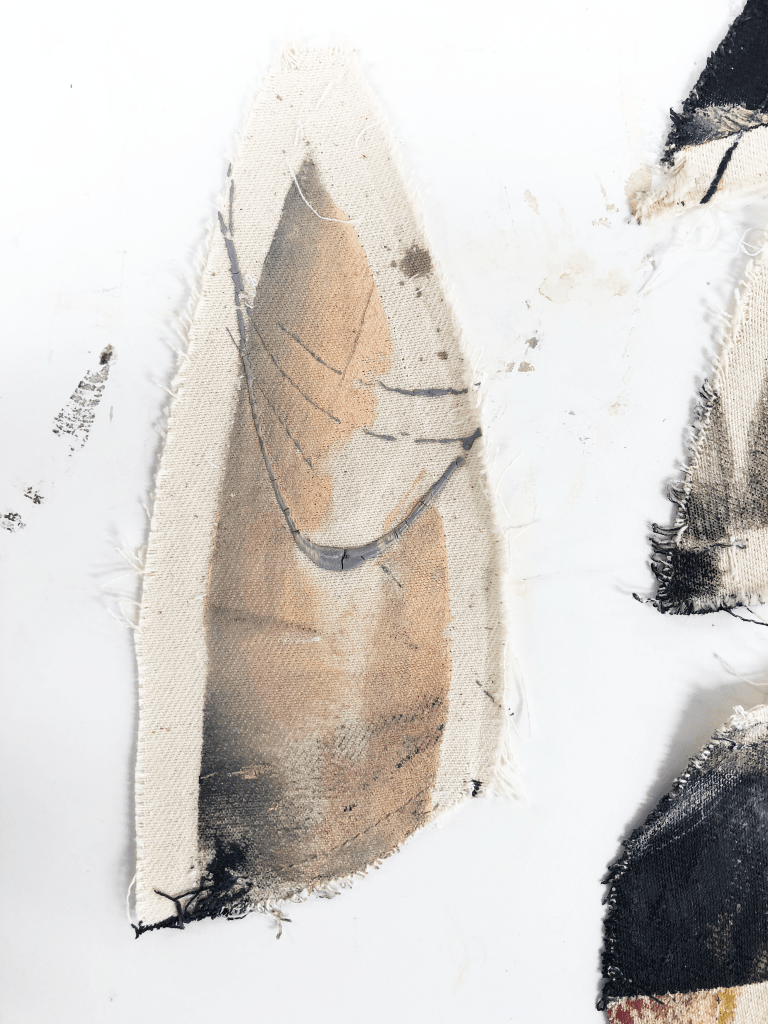
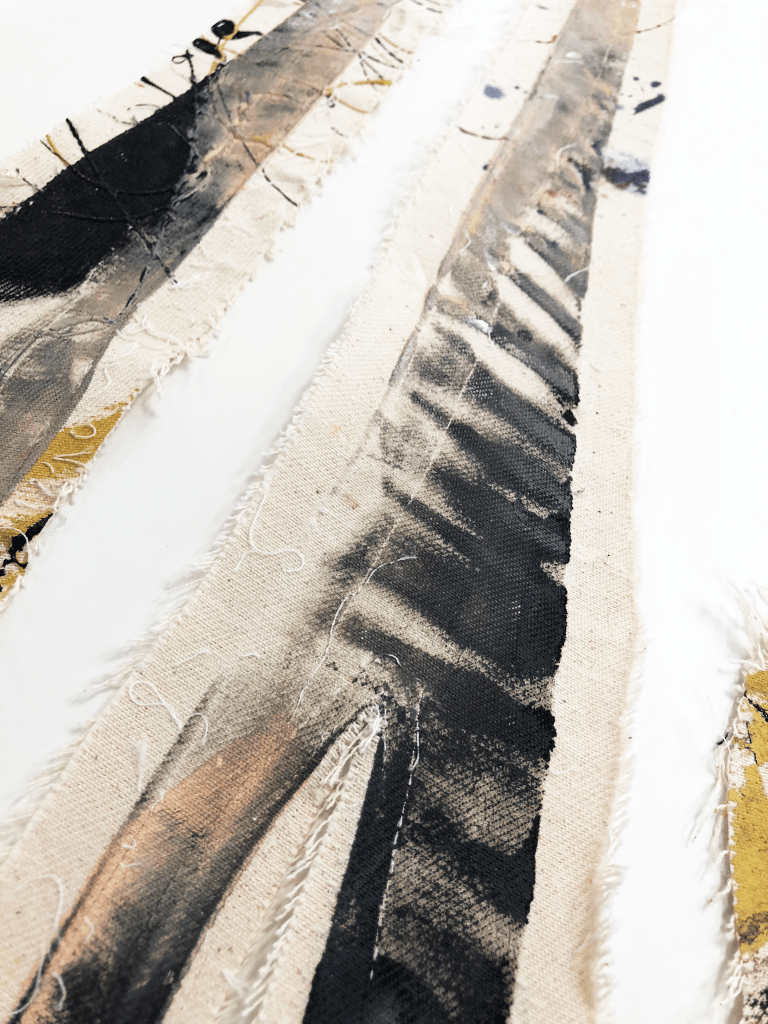
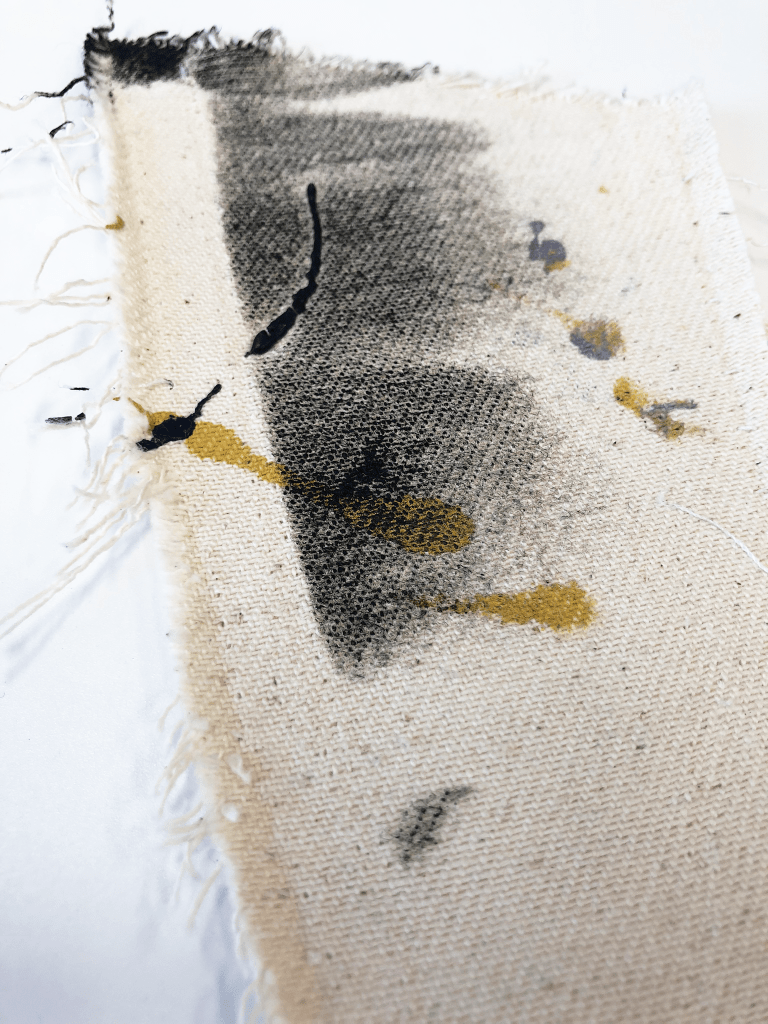
I also painted and unpicked the little samples from earlier in the project: These were little tests that I did before the bigger videos I posted in the last post.
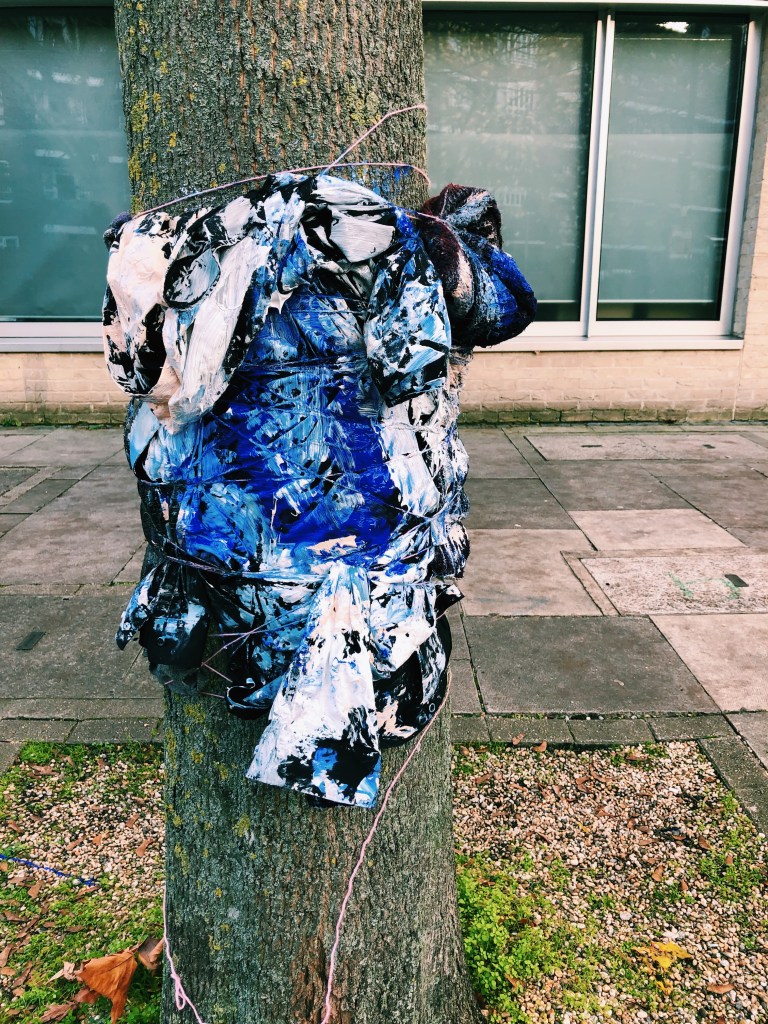
For this sample I was thinking about elements of control and looking at what is “natural”. I was also thinking about using a more abstract/free flowing methods of painting with more rigid or restrictive elements would be an interesting contrast. With both of the videos below, there is an element of control that is lost to the test being done, which I think produced interesting results.
Kyung Hwa pointed out that, even though it is a natural element, the tree is still somewhat rigid, and it may be interesting to capture more encompassing shapes. She also pointed out that by deconstructing the corset and painting it in such a free form way, I’m almost killing the idea of what a corset is– and this is something I could amplify in the next project. In this way the corset is almost taking on a new identity or having a rebirth that is the exact opposite of its original purpose. This gave me a lot of ideas about how I may move forward to create a more “final” piece.
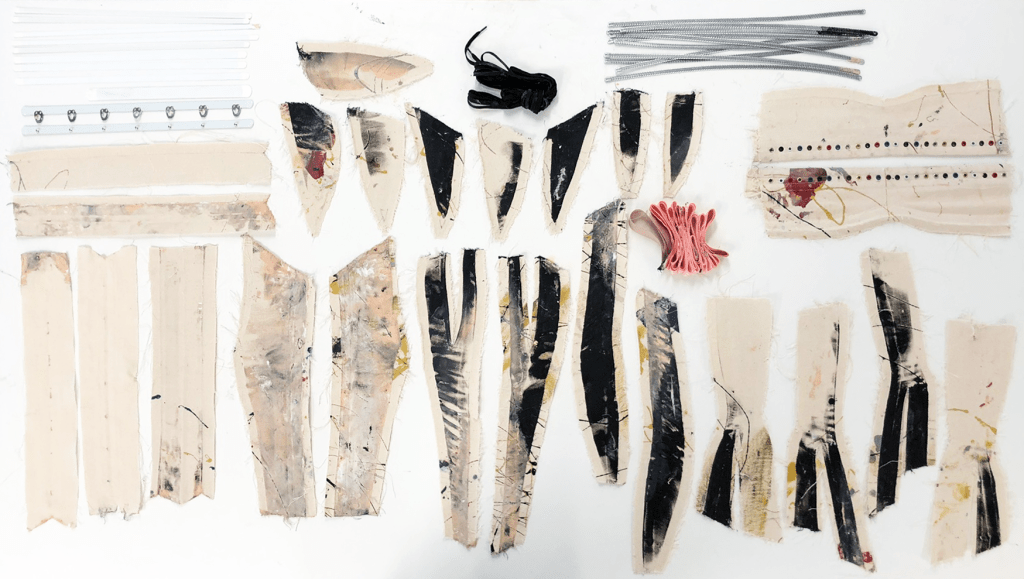
She also said something similar to Julian, which really interested me. They were both interested in the spaces in between the corset patterns when I placed it out flat and deconstructed. Julian also talked a lot about exploded views of things, which would be super interesting with a corset. There are so many intricate pieces. Something me and Kaelan were discussing was the element of craft and education in fashion and making, which could be shown through this type of model. All of these elements are related, and I’m not exactly sure how I would do it yet, but it would be interesting to have visuals which reference these ideas in the final piece.
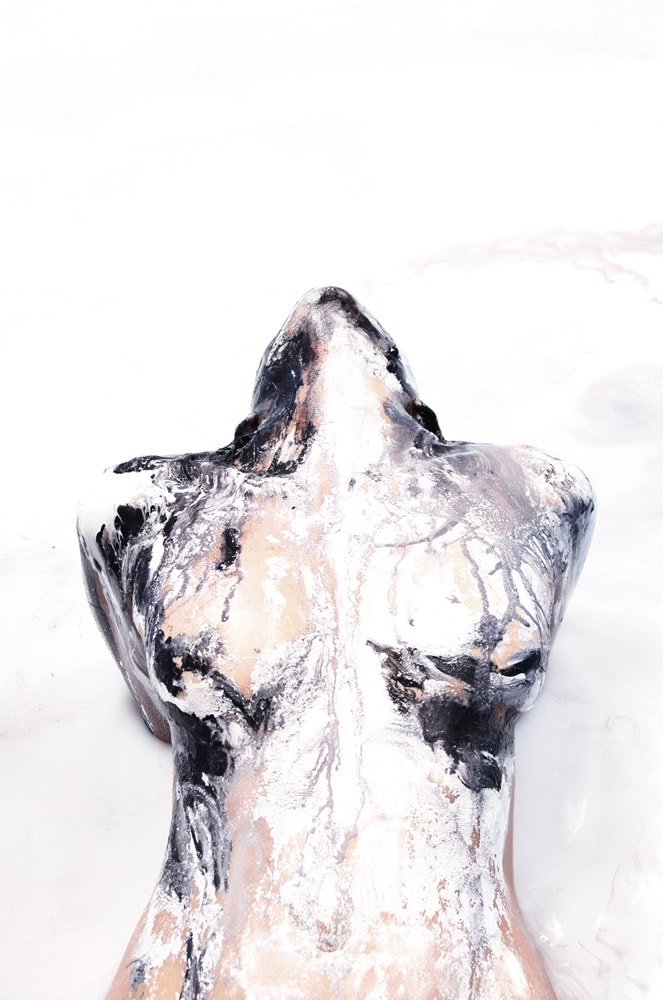
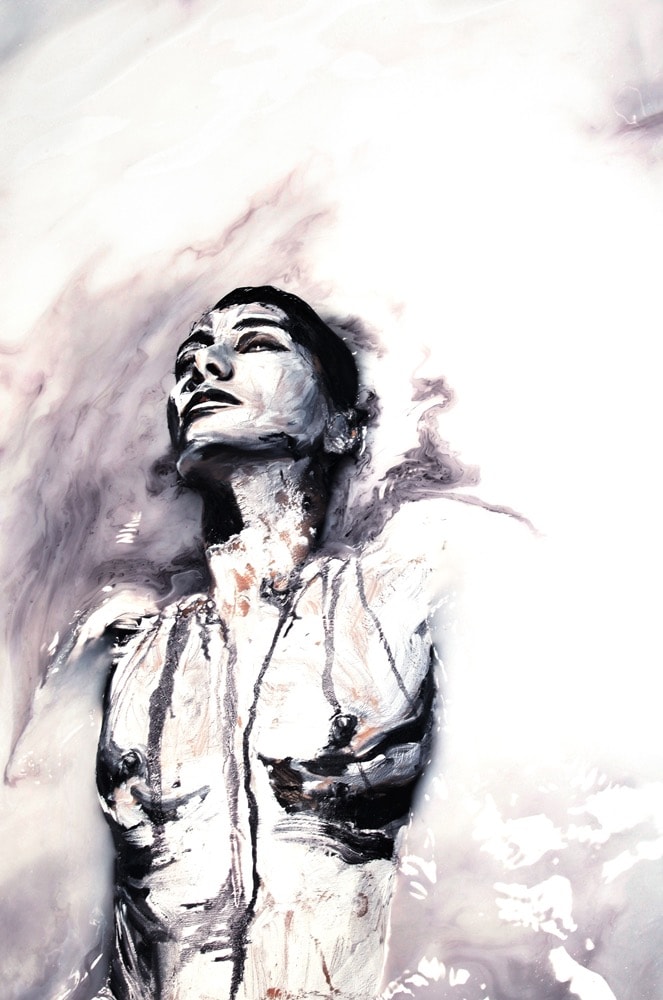
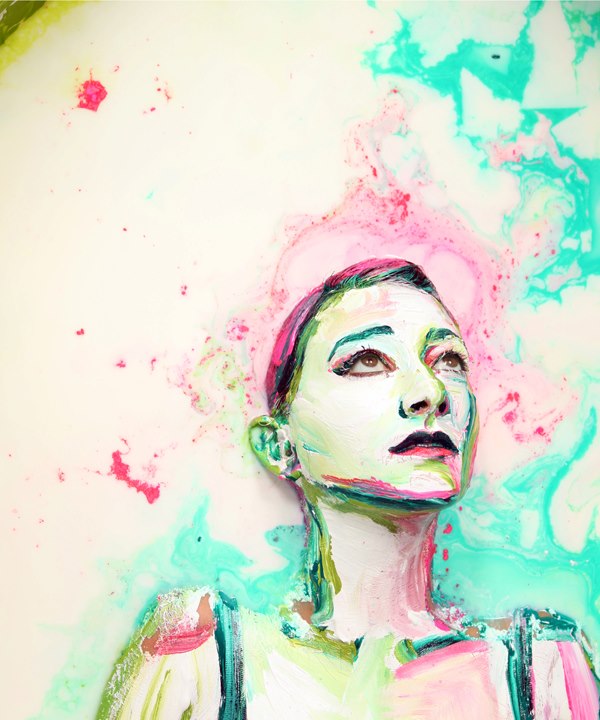
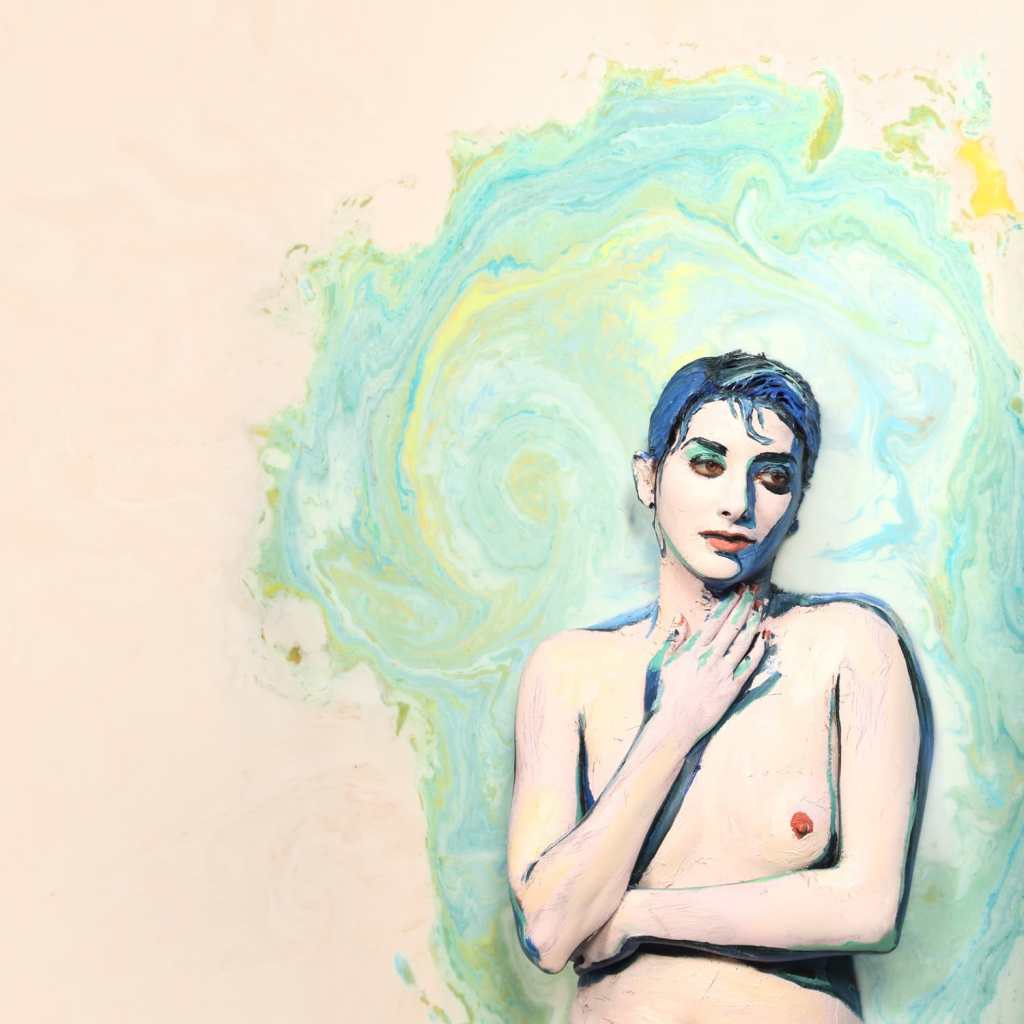
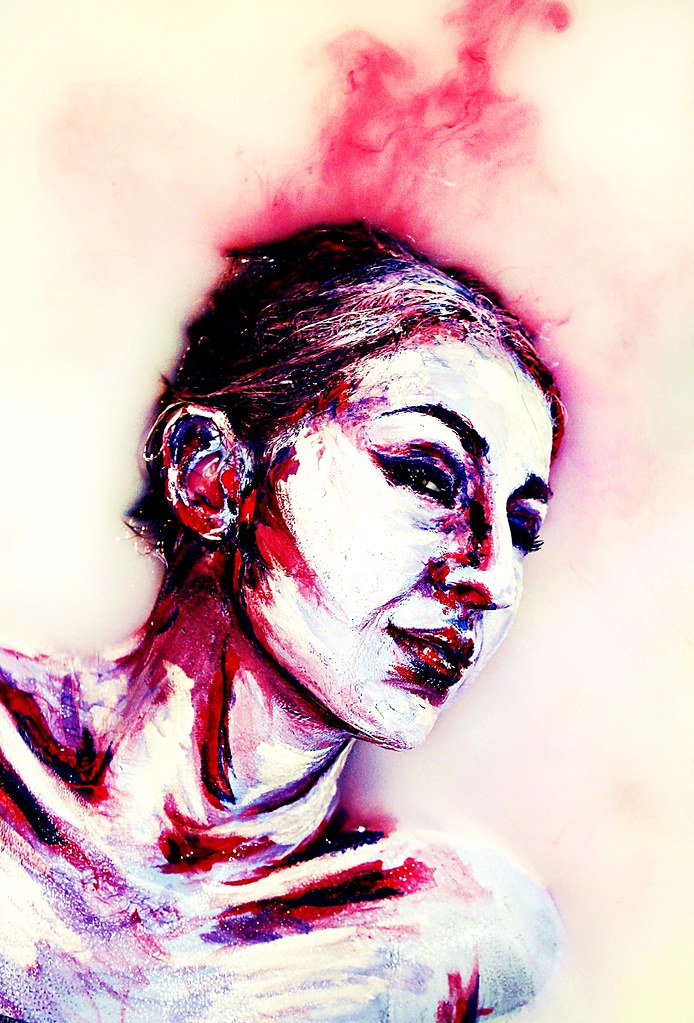
As I am doing some body painting, I thought I would look at other artists doing the same thing. Previously I had researched Lui Bolin, and enjoyed his work however I am also interested in Alexa Meade’s work.
I like how, in the video, they talk about how the work is time based and alive. The final pieces are so dependent on variables that the artists cannot control (the milk’s age, how the paint flows, etc).
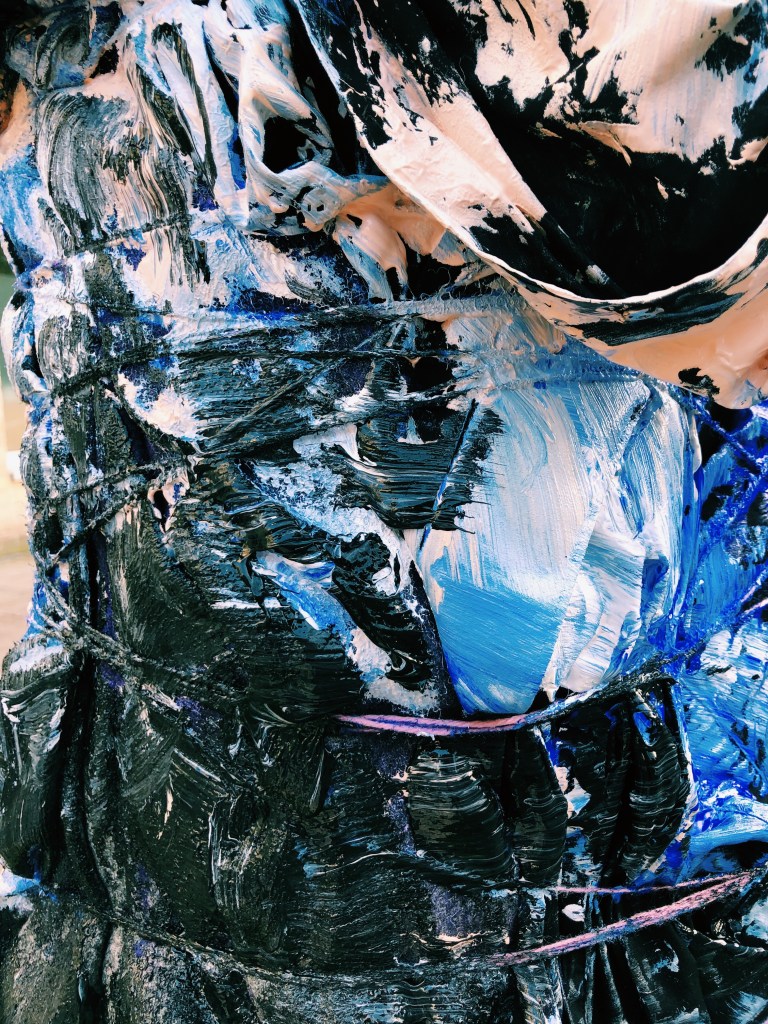
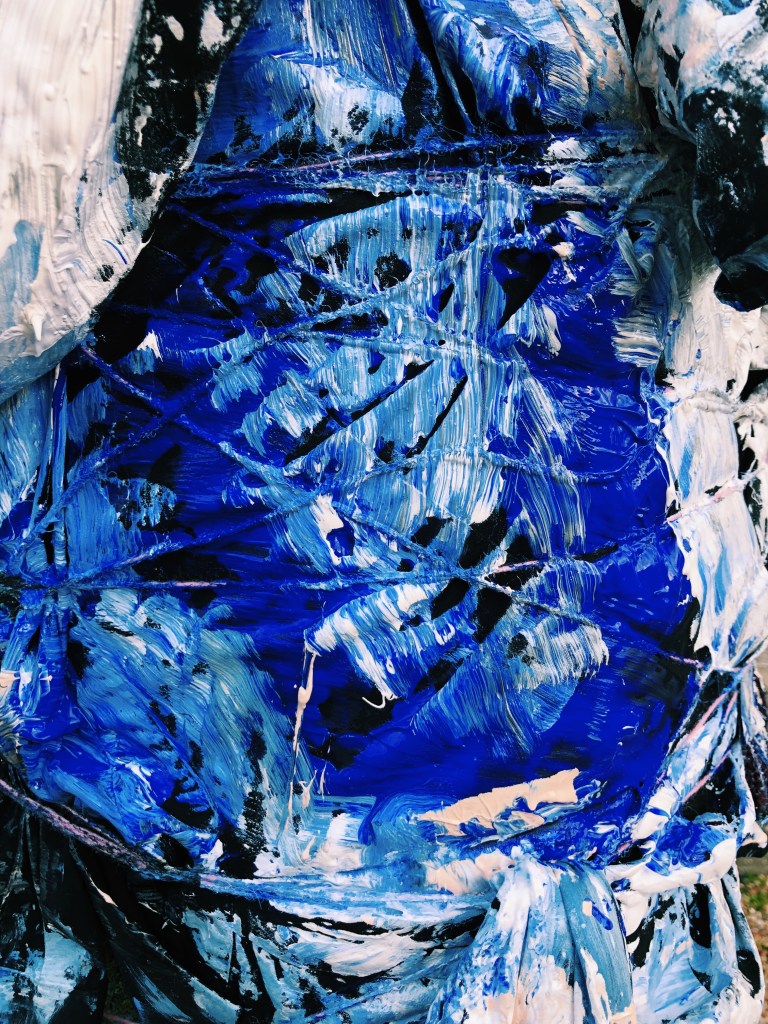
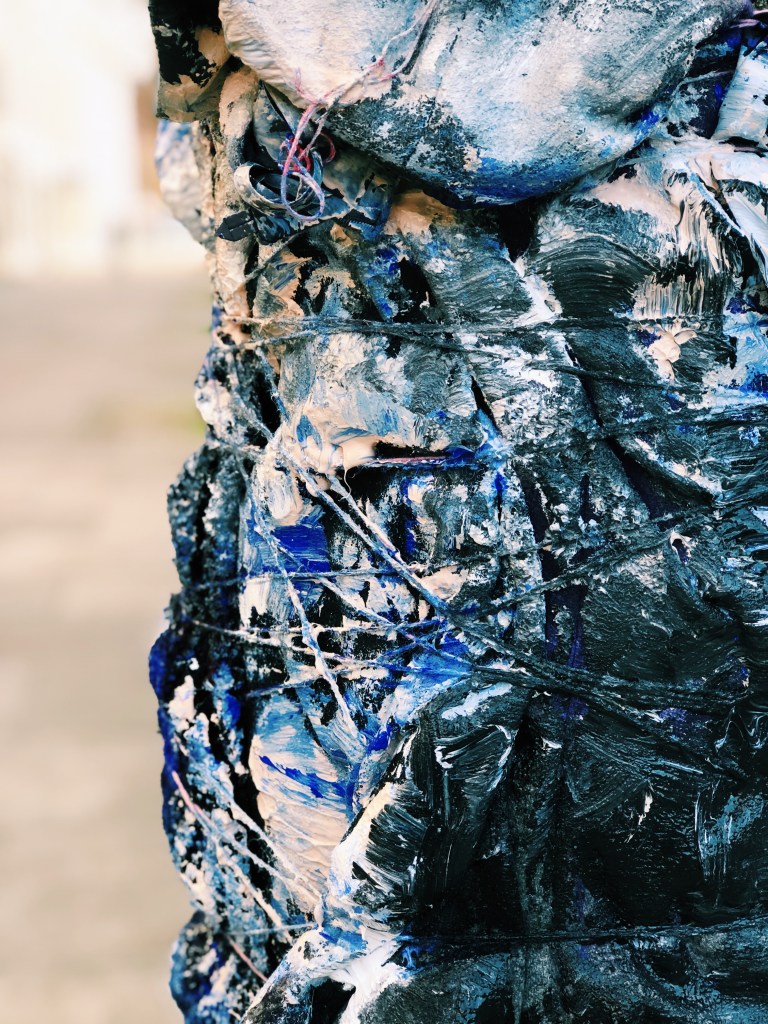
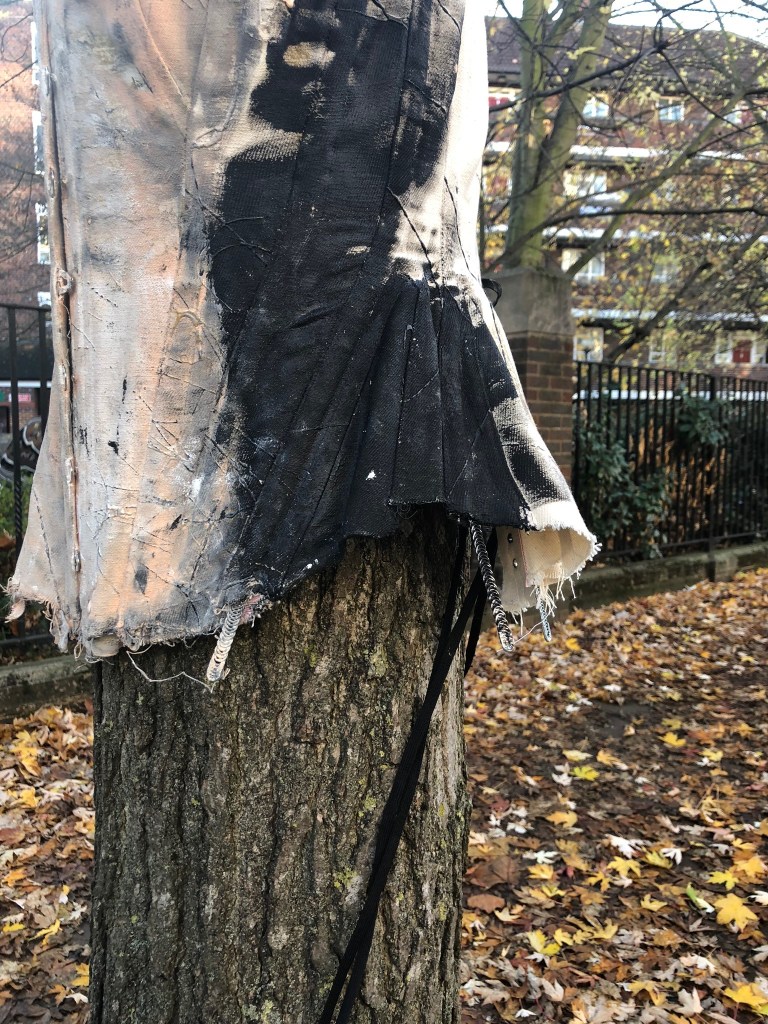
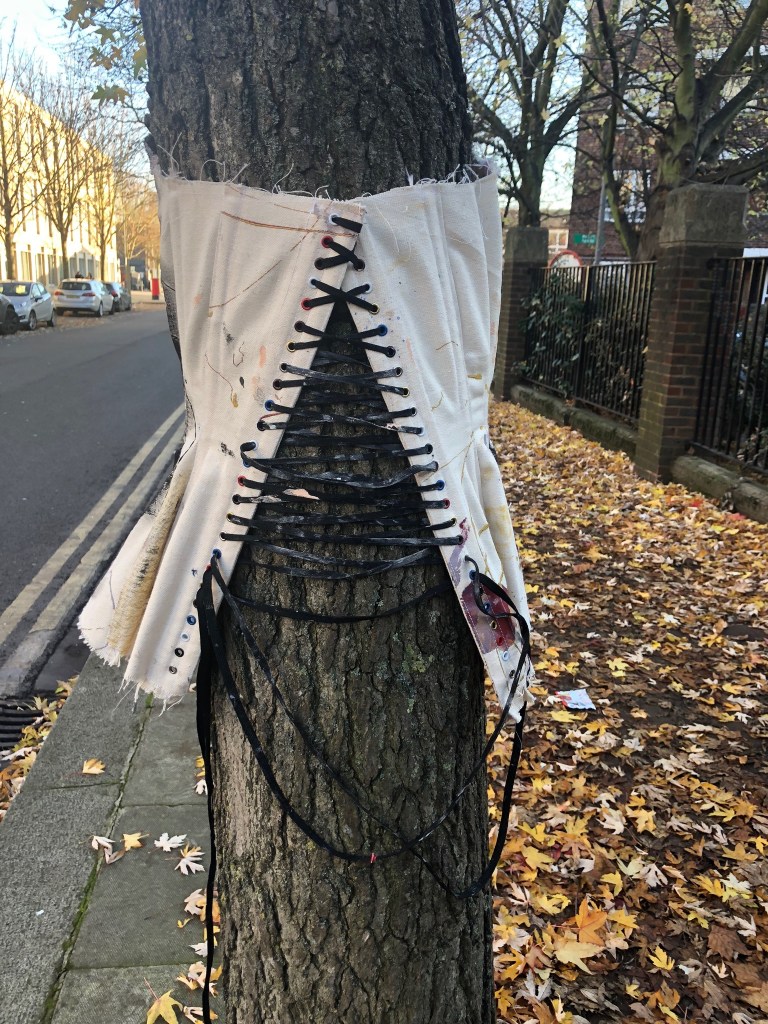
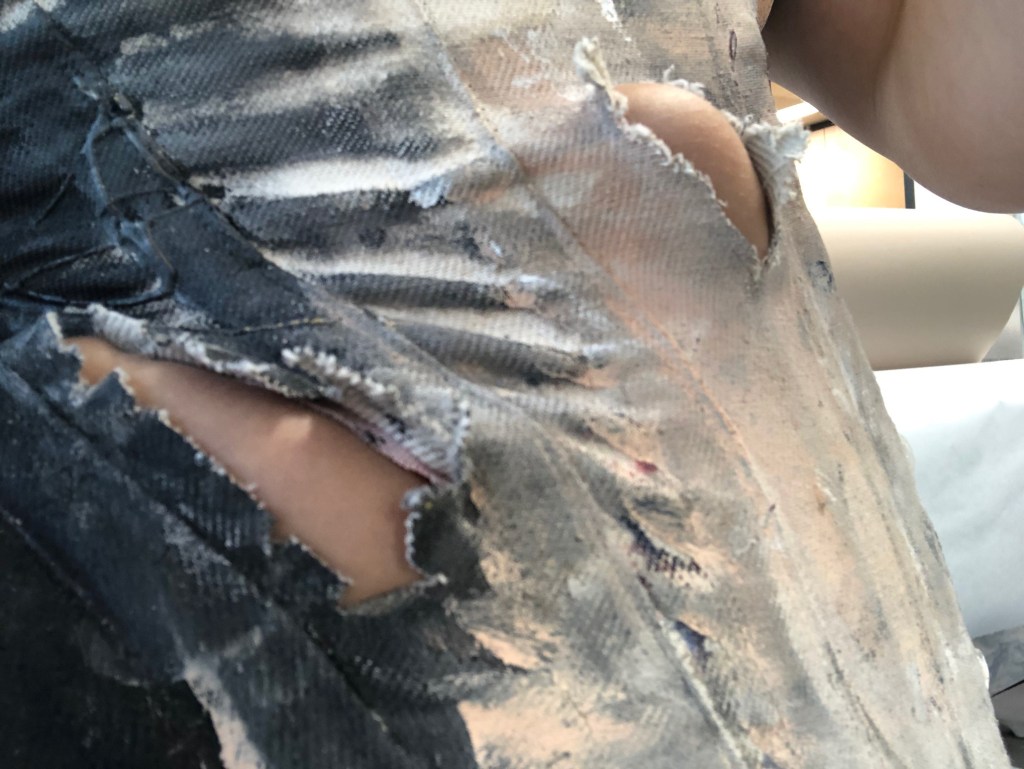
I put the corset on the tree, thinking about how it is a tool which controls what is natural. Viewing a corset as a tool has opened my mind to new possibilities (for example, incorporating or using other elements where I can use control or the loss of control as a theme to work with.
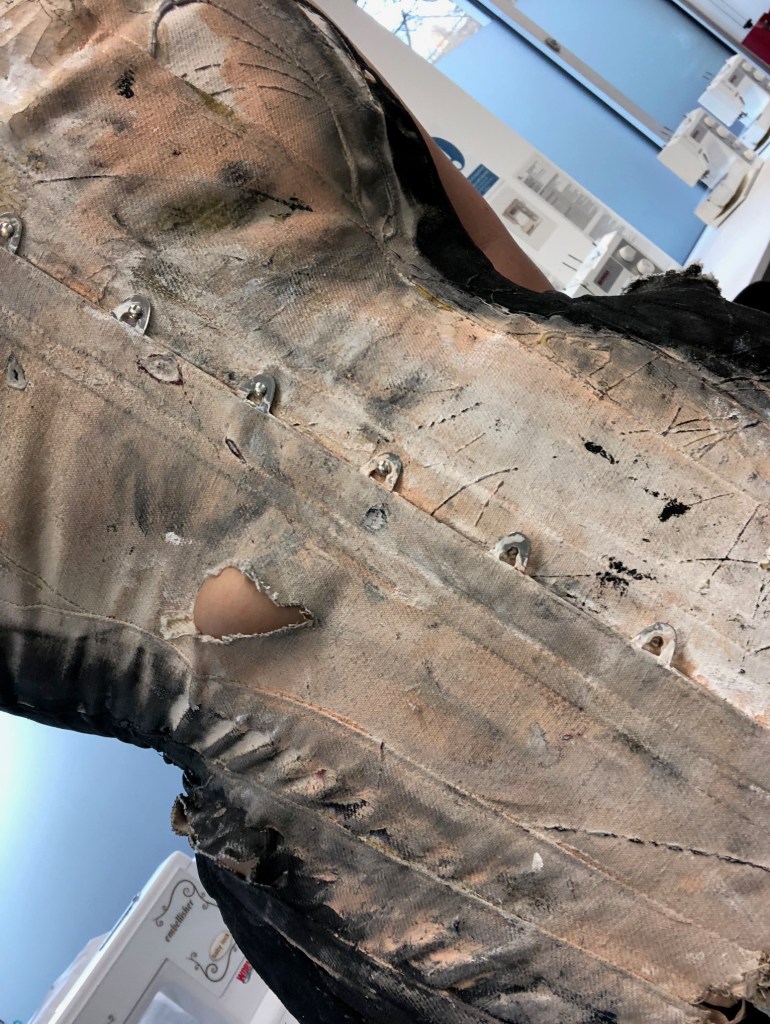
I the above photos and videos I ripped holes in the corset to Illustrate the loss of control, and even the failure of this tool. I think this could be a fun thing to work with in the future, because it honestly looked so gross.
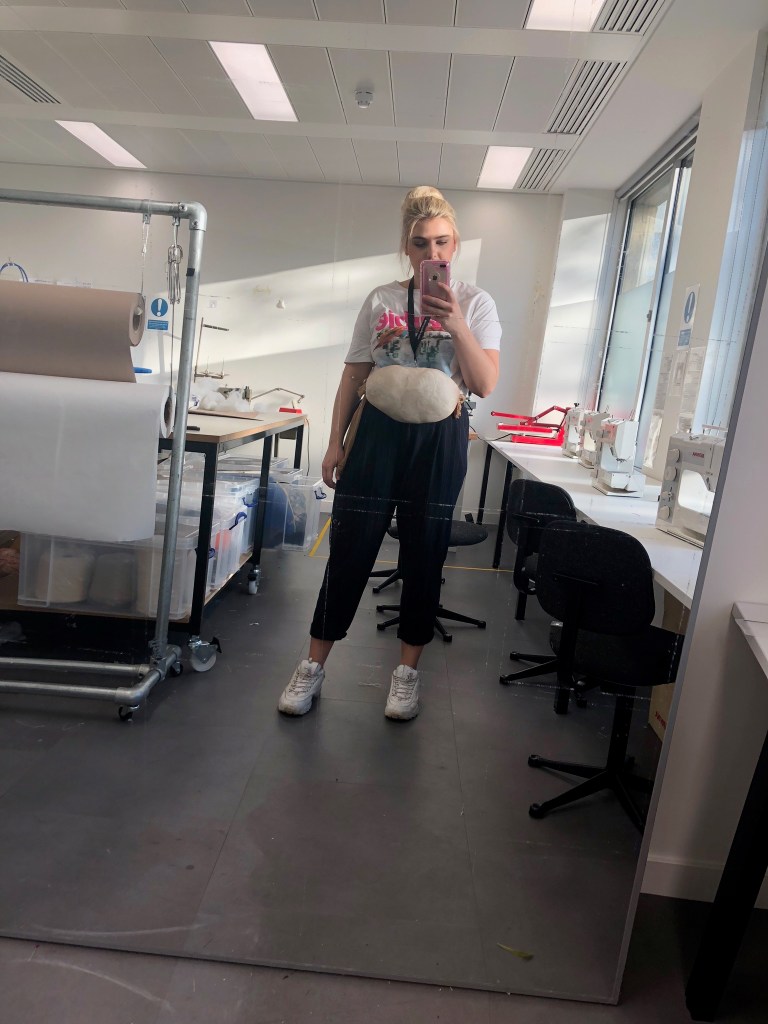
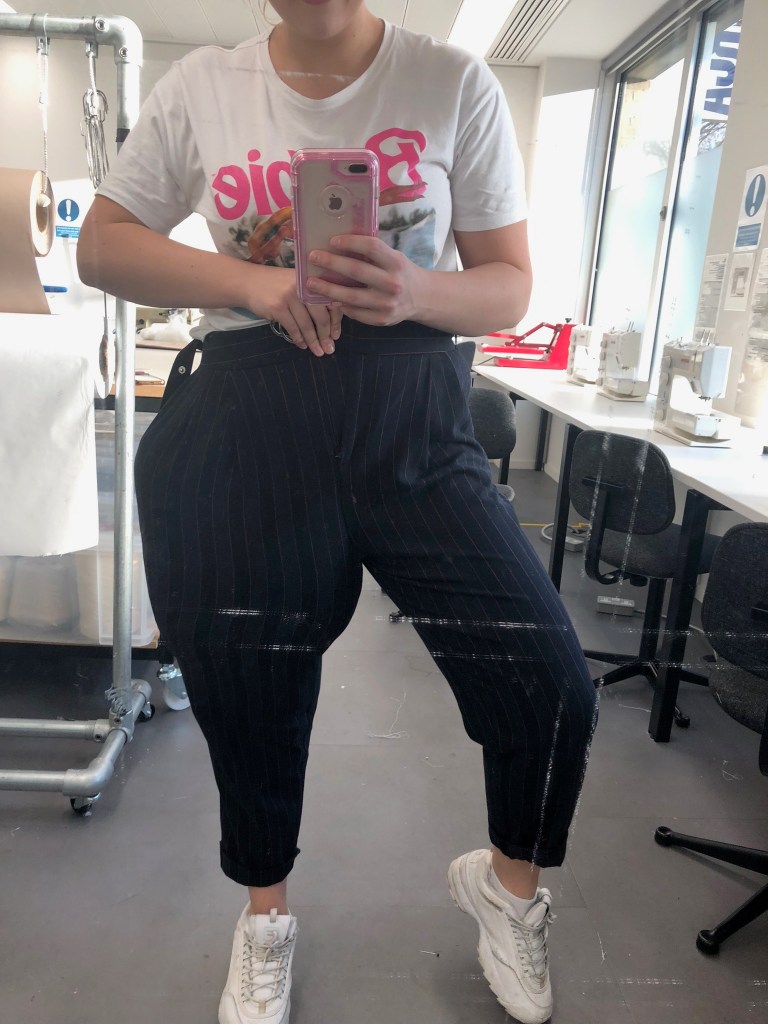
I then did an experiment where I made fat packs out of hosiery and cotton, which was fun. I don’t know if ill do anything with this in the future but it was good as an experiment.
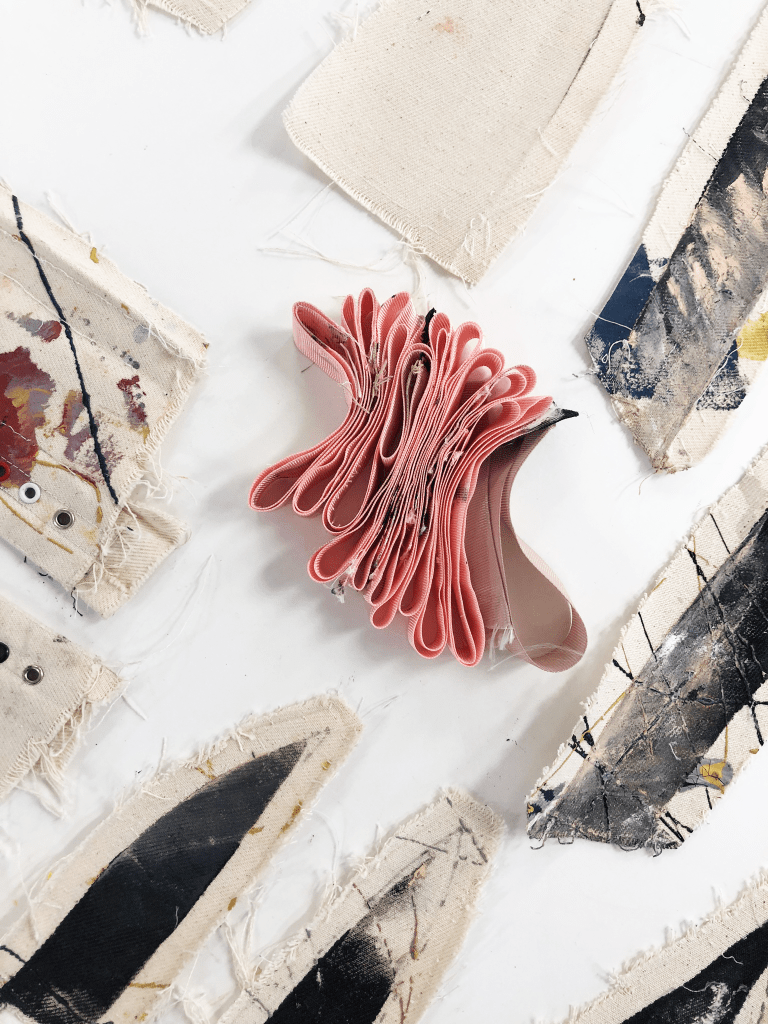
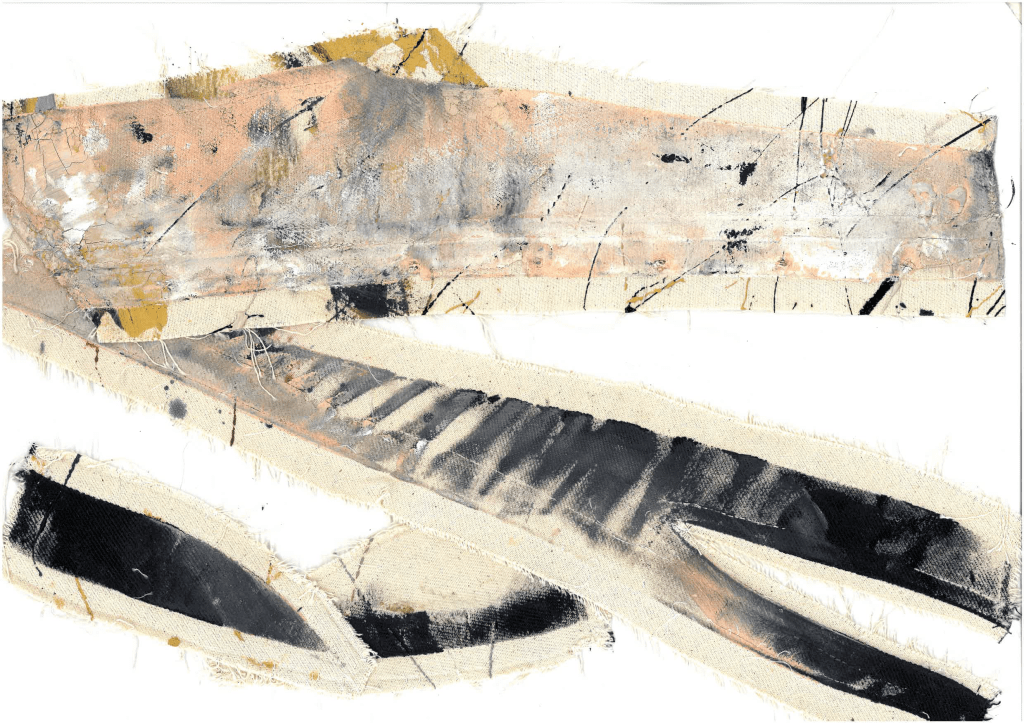
Yesterday I completely deconstructed the corset that I had painted for the video. What I love is that there were layers of different paints, and you could almost see how the corset looked on the body and in what order It was constructed (because of the marks left behind).
During the process of unpicking the corset, I was thinking about how I can indicate time through the process of painting. Obviously I will take a video of the process, but there is something so special about the layering of the paints. Even seeing how the seam allowances are less marked/covered in paint is very important. During one of our early critiques, Julian mentioned how the inside of the garment is so interesting…
Me and Kaelan had a discussion about how the inside of the garment is where the actual artistry is. I like the idea of showing the process of construction or how a garment may look inside, in a more overt manner.
I’m excited for tomorrow’s painting experiments, but I’m not sure what my outcome will manifest as. For the critique, I think I will present all of the deconstructed work, as I like the roughness of the materials, and I want to use it in the next project (there is also something so nice about the canvas).
I’ve also been thinking a lot about control in my work. I think it would be interesting to set up a process where I have limited control over the outcome, but I’ll have to marinade with this a bit longer, and see all the materials before I make any decisions.
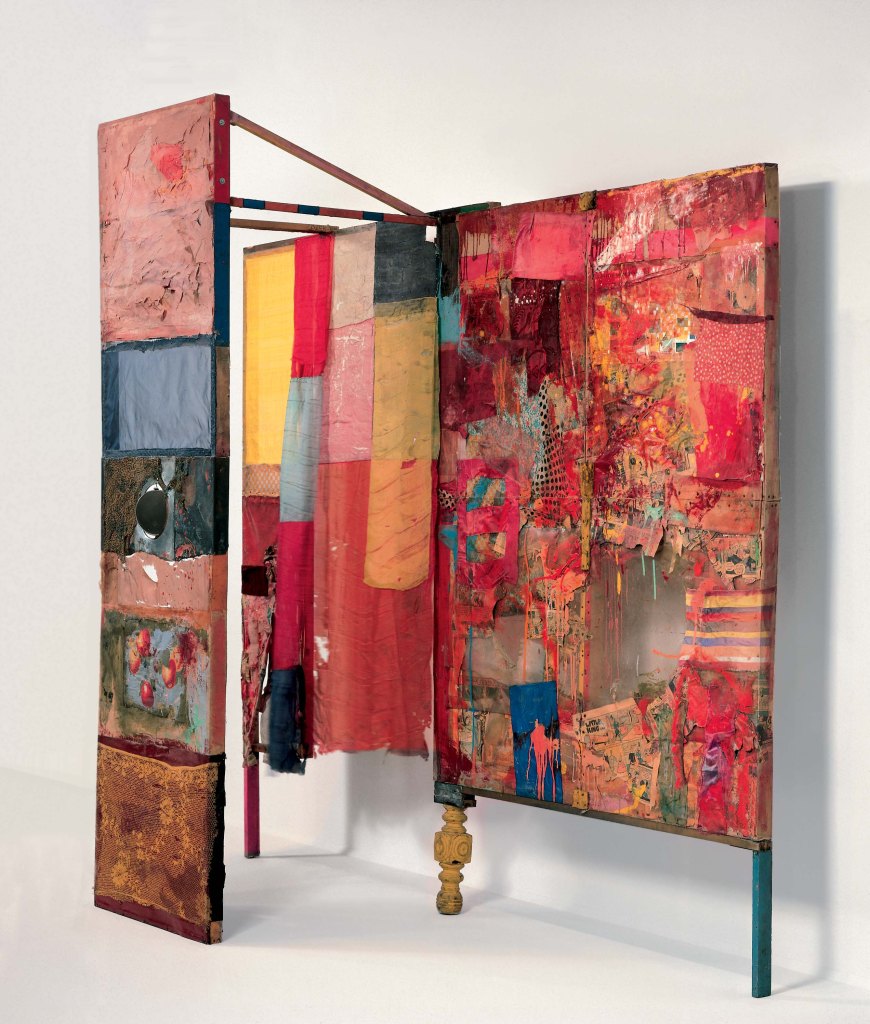
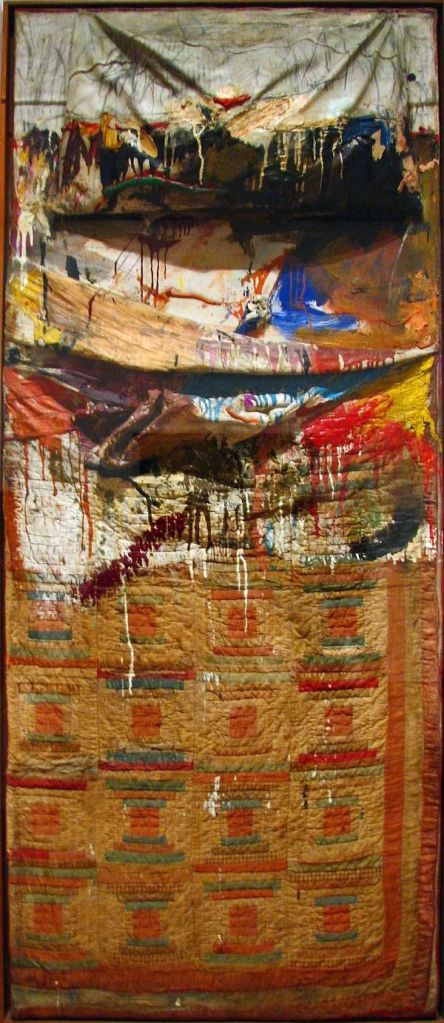
Today, Julian looked at the corset painting video that I made, and he recommended I look at Robert Rauschenberg’s work. Rauschenberg (October 22, 1925 – May 12, 2008) was an American painter and graphic artist whose early works anticipated the pop art movement. Rauschenberg is well known for his “combines” of the 1950s, in which non-traditional materials and objects were employed in various combinations. Rauschenberg was both a painter and a sculptor, and the combines are a combination of the two, but he also worked with photography, printmaking, papermaking and performance.
What I love about his work is the use of materials and the layering of those materials. For example, in Bed, he literally painted on his bed sheets and the textures of the fabrics underneath create interesting shadows and folds in the piece.
I’m hoping to emulate some of these effects by painting onto thrifted clothes and taking them apart. In the next post, I will show how the corset looks deconstructed. I think I will then somehow layer or collect multiple different painted textures.
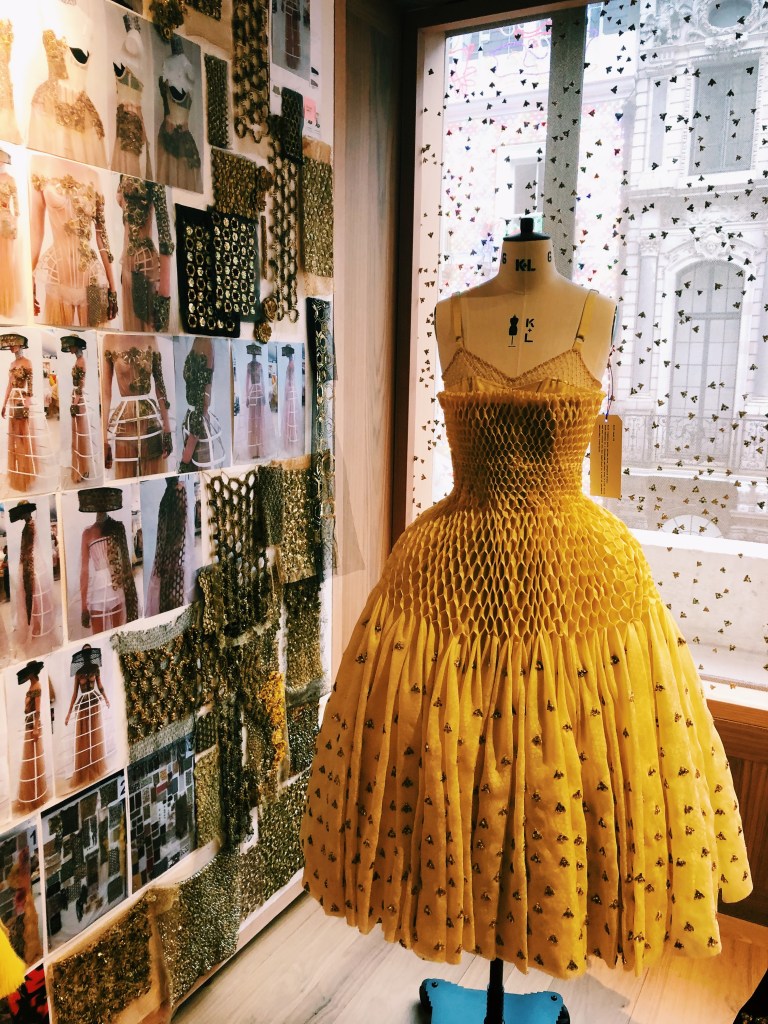
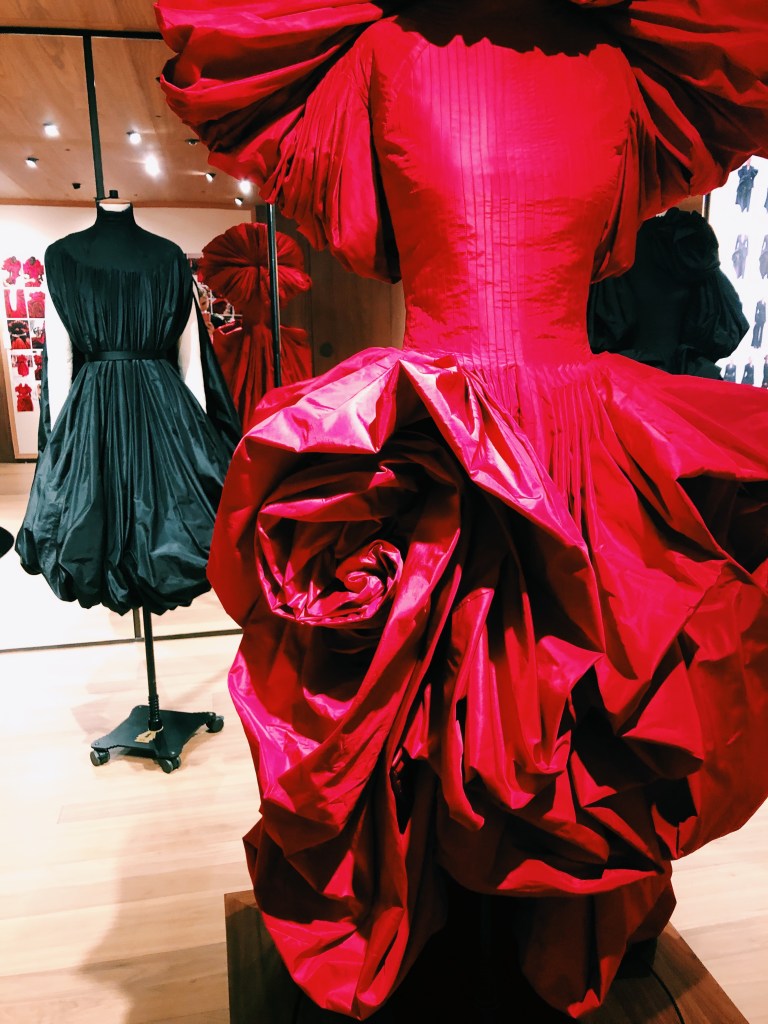
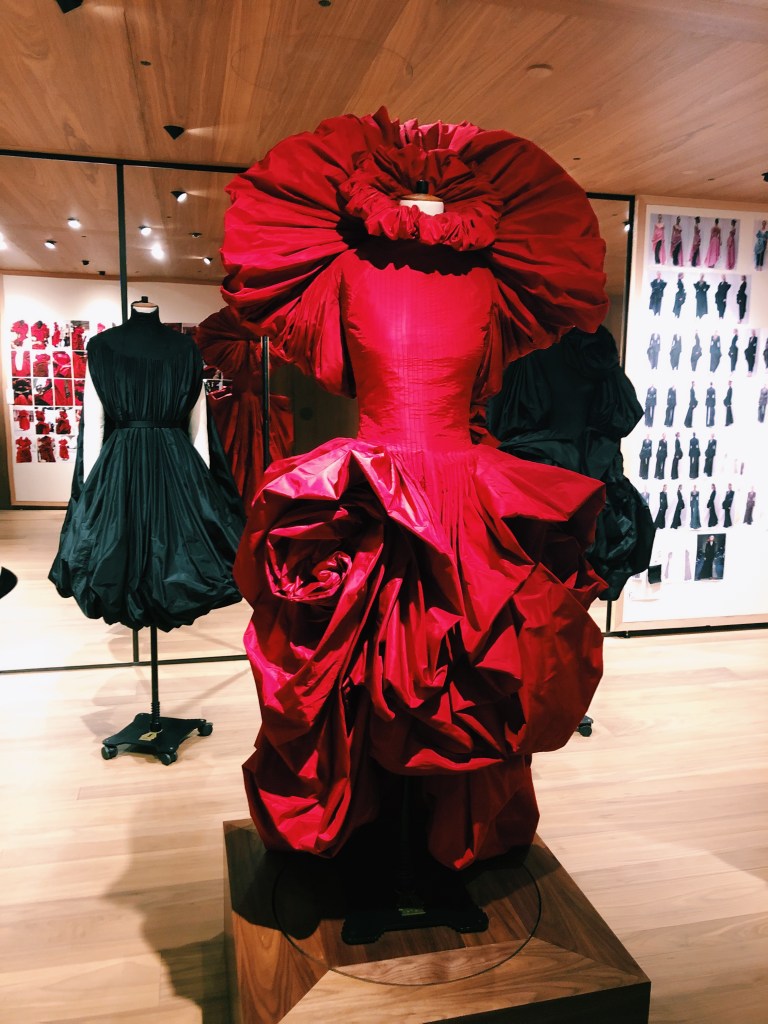
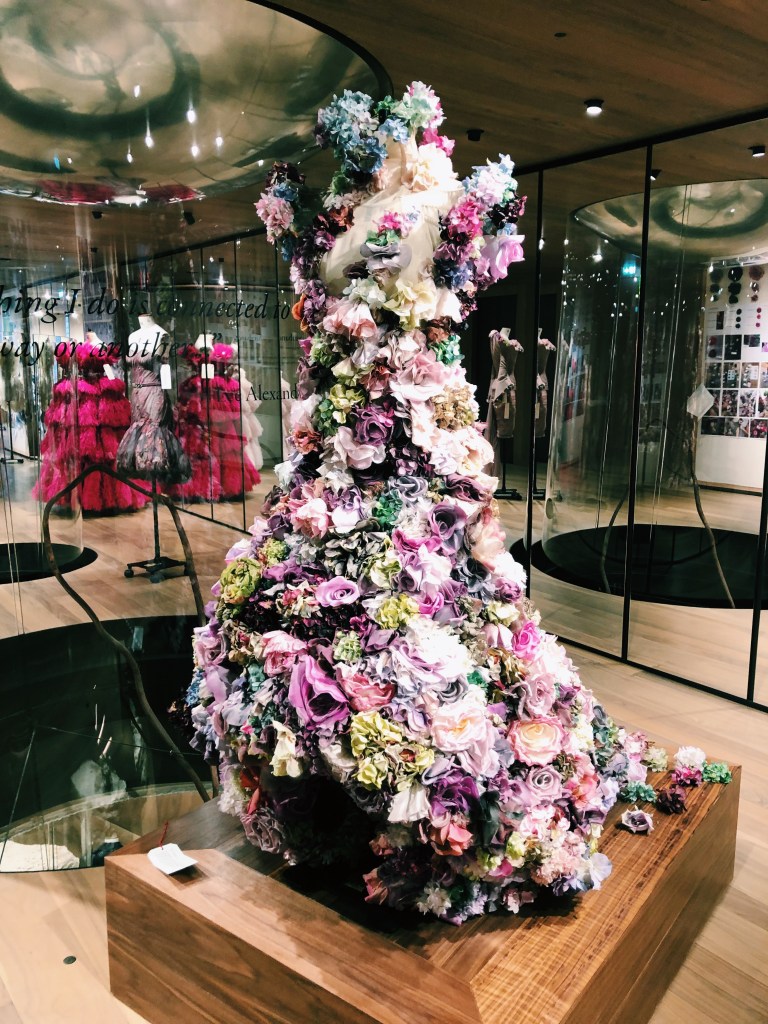
I’m writing my contemporary practitioner essay on both Sarah Burton and Alexander McQueen’s work at the brand, so this exhibition could not have come at a more perfect time.
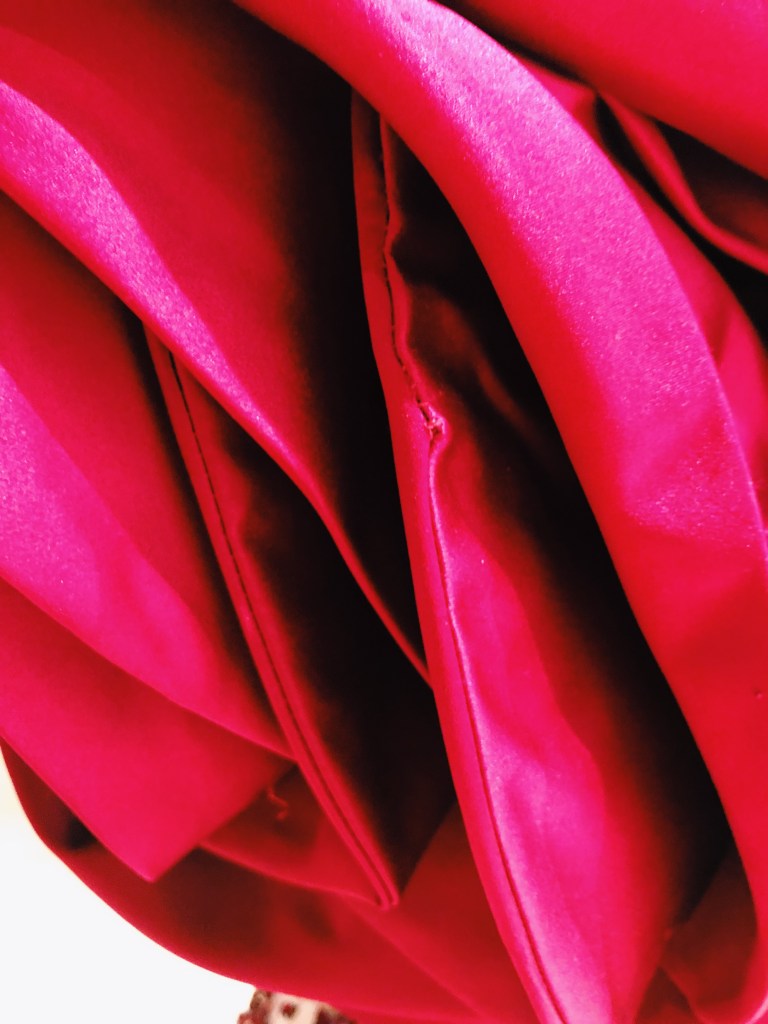
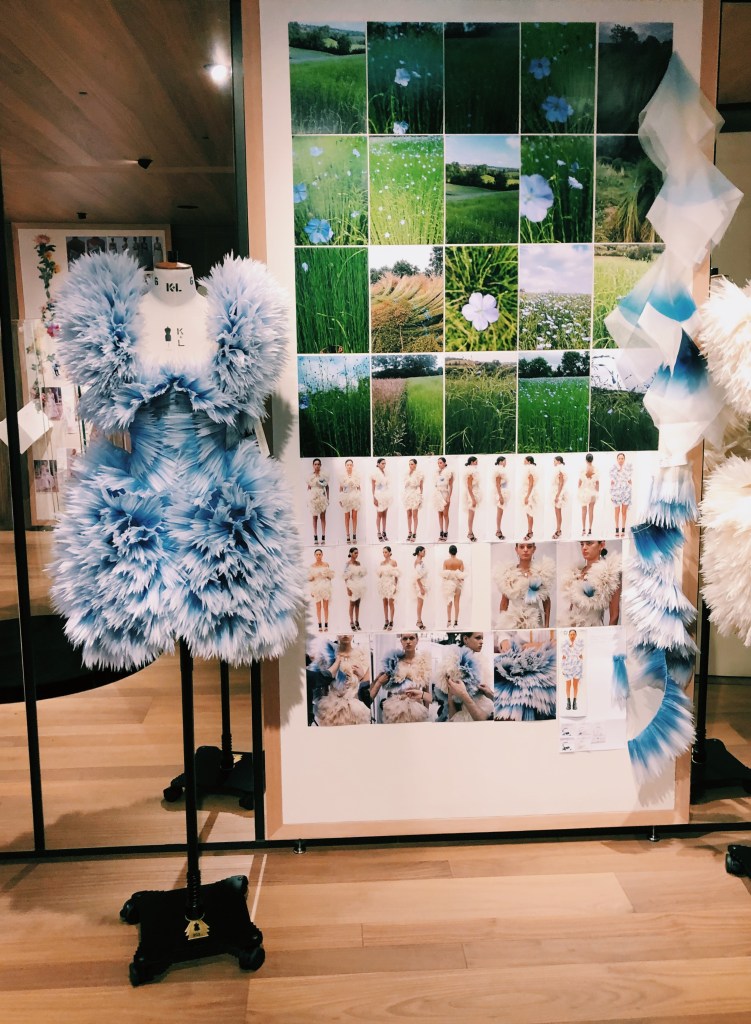
During this exhibition, I was trying to be very sensitive to material and whether or not it has a structural function. I was looking at how the smocking and draping can be used to create large and interesting shapes.
I admire how Burton was so open about process in this exhibition. She had walls of process work and a video of workers in the atelier showing how a garment is constructed. In the fashion industry people are so secretive about methods, and this was honestly refreshing.
In a way, this also “humanized” the brand for me. Seeing the garments so close up was helpful, I was even able to see the hand stitching! It reminded me of my previous post about high quality things having evidence of human craftwork.
On a completely separate note, the exhibition made me think a lot about nature, as the subject of the exhibition was roses. In relation to my work, it seems that fashion (specifically corsetry) is aimed at controlling what is “natural”. I think this is a theme I could expand upon in my experimentation. I’m interested in exploring nature and the human body in their basic forms as well as enhanced or manipulated forms. This will be the subject of tomorrow’s experiments: Control over what is Natural.
In the process of making my corset, and running the stitch experiment, I started to think about the discomfort of widely made objects in contrast with the personal-ness of handmade objects. There is something so much more intimate about an object that is made by hand.
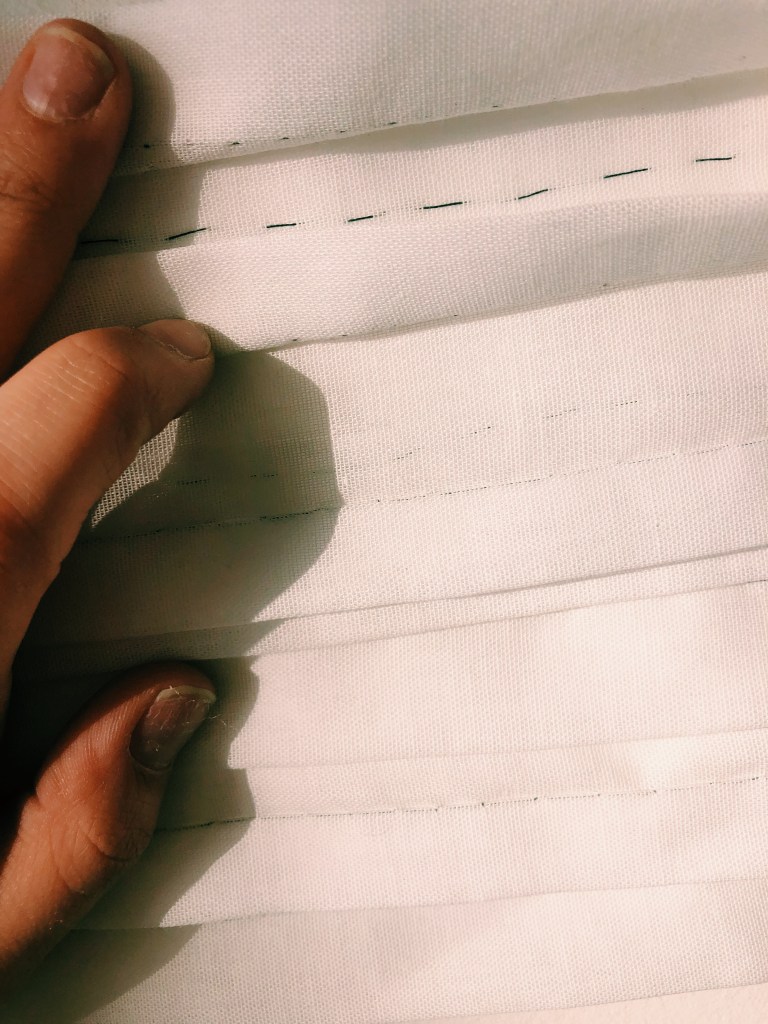
The first sample below, is a bunch of slip stitched hems, sewn together with running stitches. Whenever I look at a piece of homemade clothing, I always run my fingers along the lining to assess the slip stitches (see video below). For me, it is a way of checking quality, the talent of the maker, and I feel more connected to the garment in a way.
There is such a preciousness to something which is handmade. In my past research on sustainability, I know that creating a connection between a user and a garment is a strong way to lengthen the life of a garment.
I also found it interesting (in the video) how I had to dig through the sample. There was an element of surprise/veiling and unveiling that interested me about what I was creating.
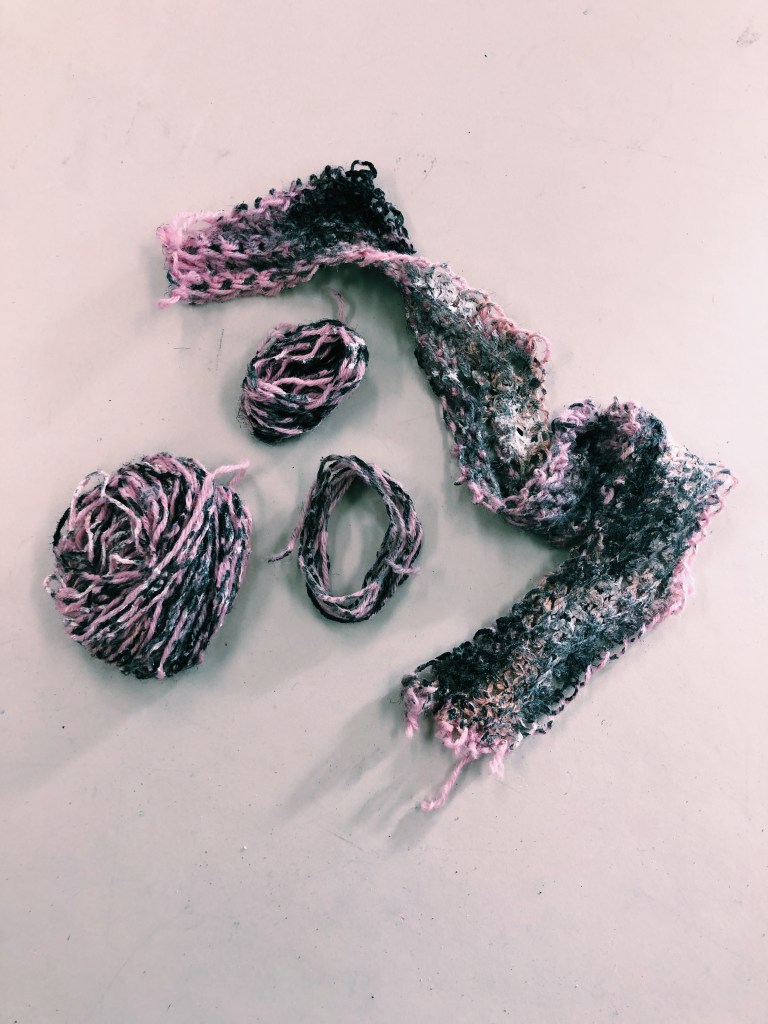
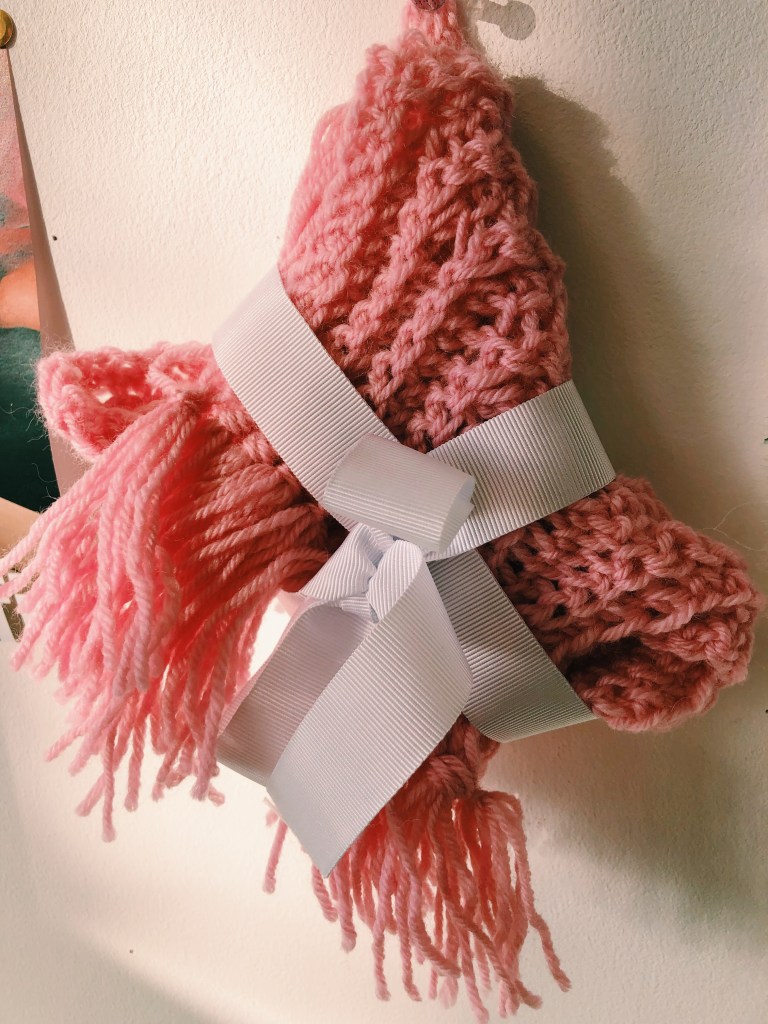
Below (crochet sample) I was thinking about my personal experiences with handcraft and tradition. Crochet is a practice in my family that has been passed down from generation to generation. My mom used to make baby blankets for people and wrap them in grosgrain ribbon, like how I showed it in the picture.
Again, for me there is so much more importance to an object that has been hand made (especially if it is by somebody who loves you). Also, I was thinking about material, and how the cotton has a grittiness to it. Its nice.
Both of these processes are “cathartic” to me. I think the repetitive action and simple task combined really just frees my mind up from any stress.
I don’t know if either of these experiments will go any further, but Julian wanted us to make more things and experiment.







 Samantha's RCA Process