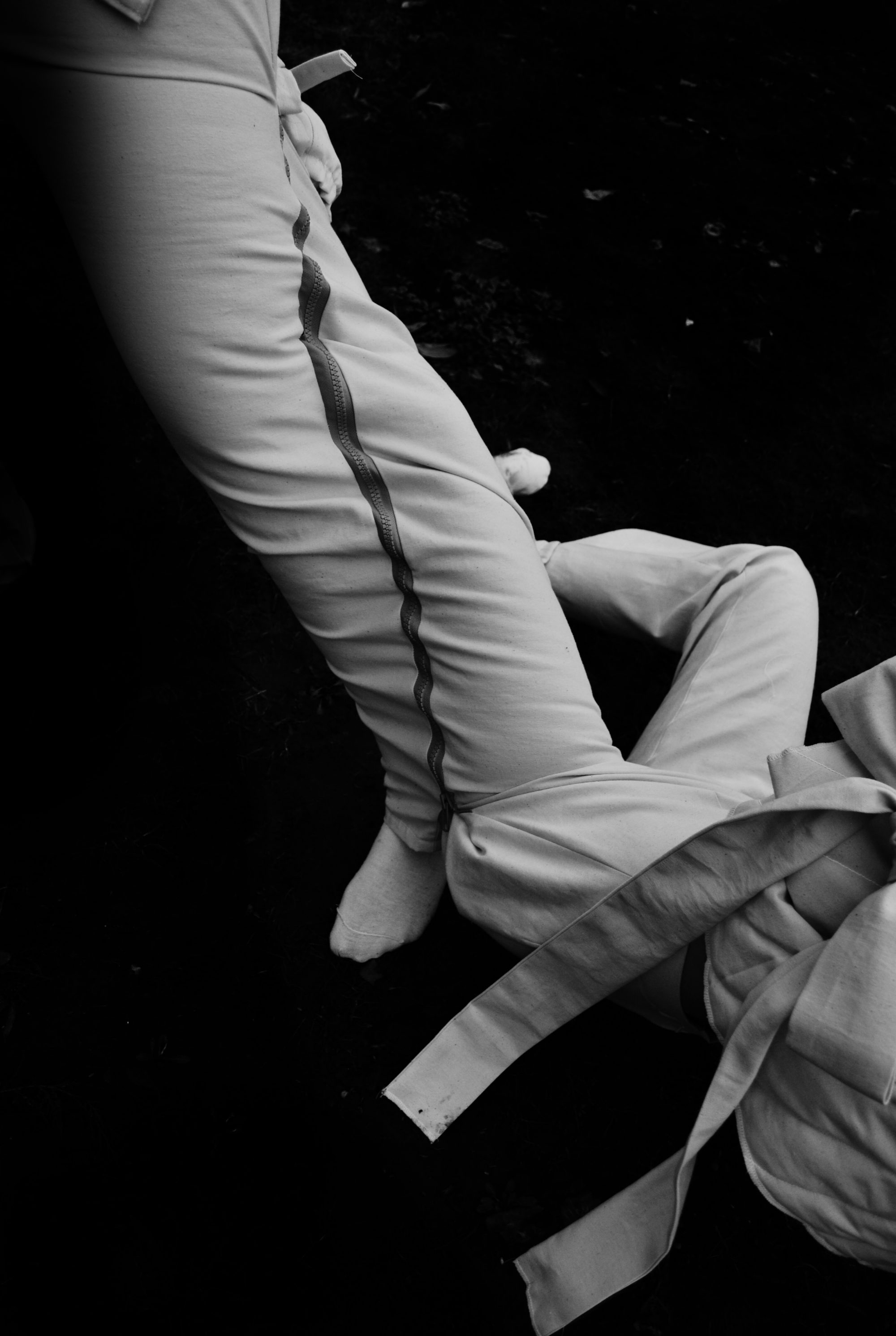
Quotations from FETISH: FASHION, SEX, AND POWER by Valerie Steele (Chapter on Corsetry)

“I am neither for nor against any particular item of clothing- and I am cognizant of the fact that sartorial enthusiasm can have a variety of meanings. (58)

sadomasochism- psychological tendency or sexual practice characterized by both sadism and masochism.

sadism- the tendency to derive pleasure, especially sexual gratification, from inflicting pain, suffering, or humiliation on others

masachism- the tendency to derive pleasure, especially sexual gratification, from one’s own pain or humiliation.

…”Pearl’s idol, Fakir Mustafar, a key figure in the world of body modification, has identified “three basic types of people” who wear corsets today. First there are what he calls the “corset nonconformists,” who want to “change the shape of the body… and realize some kind of aesthetic ideal.” (This is, presumably, the category in which he would place himself.) Second, there are the “corset identificationists,” who associate corsets with felinity and feminine undergarments.” They are not necessarily particularly interested in “sculpting the body” (i.e. tight lacing), “but by wearing the corset they seemed to have a kind of gender transformation.” (He does not say so specifically, but many transvestites fall into this category.) Third are the “corset masochists,” who tight-lace “to create erotic discomfort.” Considerable overlap exists among these categories, and some people do not fit neatly into any one category. There are also, of course, the followers of fashion— fewer today than in the nineteenth century, but not to be discounted.” (63)

Book Presents some interesting ideas about corsetry and its social aspects. I didn’t realize that there were so many niche aspects of corsetry (which is, itself, already a niche). Overall, this was a good read. Steele even does some myth busting when it comes to health, tight lacing, and feminism, which I think, was necessary.


Navigator: Notes on Psychogeography Today

Merlin Coverley., (2007) Psychogeography, Pocket Essentials

pp. 111-139

People:

William Blake– Godfather of Psychogeography

Iain Sinclair (trek around M25); Lud Heat; Uses Psychogeogaphy as a way to write; author and film maker; “occult paranoia and historical investigation”

Peter Ackroyd– “invokes the visionary traditions of the nineteenth century in his writing”; has been described as a ‘historic-mystical psychogeographer’; author

Nicholas Hawksmoor– architect of many historical churches in London (including St. Paul’s, Westminster Abbey, and Christ Church in Spatialfields

“Through efforts of the imagination as much as through research, Hawksmoor’s work has been woven into a parallel history of London’s underworld, particularly his Christ Church Spitalfields, near which Jack the Ripper performed his grisly murders in the 1880s. Published in 1975, Iain Sinclair’s feverish poem Lud Heat suggests that the sites of Hawksmoor’s London churches form an invisible geometry of power lines in the city, corresponding to an Egyptian hieroglyph. Peter Ackroyd built on this myth a decade later with his murder thriller Hawksmoor” -The Guardian

JG Ballard– ‘Death of Affect’ – loss of emotional engagement with our surroundings;

Stewart Home– resurgence of psychogeography in the 1990s

Patrick Keiller– films London, Robinson in Space; 1994 film London

Definitions:

Situationists– Revolutionary alliance of European avant-garde artists, writers and poets formed at a conference in Italy in 1957 (as Internationale Situationiste or IS).

The IS developed a critique of capitalism based on a mixture of Marxism and surrealism. Leading figure of the movement Guy Debord identified consumer society as the Society of the Spectacle in his influential 1967 book of that title. In the field of culture situationists wanted to break down the division between artists and consumers and make cultural production a part of everyday life.

Situationist ideas played an important role in the revolutionary Paris events of 1968. The IS was dissolved in 1972.

avant-garde |ˌaväntˈɡärd| noun (usually the avant-garde) new and unusual or experimental ideas, especially in the arts, or the people introducing them: works by artists of the Russian avant-garde.

surrealism |səˈrēəˌlizəm| noun a 20th-century avant-garde movement in art and literature that sought to release the creative potential of the unconscious mind, for example by the irrational juxtaposition of images.

Memorable Quotes

…Modern life in advanced industrial societies as characterized by a loss of emotional sensitivity. Amidst the barrage of media imagery to which we are subjected, our emotional response is blunted and we become unable to engage directly with our surroundings without the mediated images television and advertising.” (116)

… I think the suburbs are more interesting than people will let on . IN the suburbs you find uncenred lives… so that people have more freedom to explore their own imaginations, their own obsessions” (118)

  • earlier he says essentially that people are so overstimulated by imagery that their boredom will mirror the violent and sexualized imagery surrounding them. But i guess in the suburbs what is there to mirror?

“xxx zones within the city which display chronological resonance with earlier events, activities, and inhabitants” (124)

“Ackroyd’s detective muses upon the tendency of murderers and their victims to return repeatedly through the generations to similar locations as if drawn by some malevolent force, noting that ‘certain streets or patches ground provoked a malevolence which generally seemed to be quite without motive'” (124)

Suggested Reading: Art Practice as Research

Little Nuggets of Wisdom

“…To continue to borrow research methods from other fields denies the intellectual maturity of art practice as a plausible basis for raising significant life questions and as a viable site for exploring important cultural and educational ideas” (p. 95)

After reading Art Practice as Research by Graeme Sullivan, I began to think about how I can research more effectively. Reading and writing have always been staples, but my approach to visual research is definitely lacking. At the recommendation of Lee, I did quite a bit of collaging for the Manifesto project. I have found this method to be very helpful.

“the visual artist is not only adept at expression and communication, but also plays a crucial role in a cultural critique, historical inquiry, and educational development” (p.97)

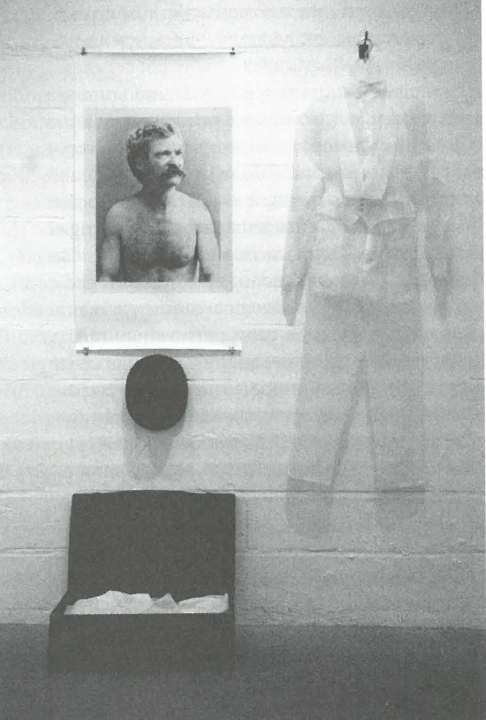
I found this work by Anne Graham to be so inspiring because she created work based on Mark Twain, that critically analyzed who he was as a person. This work has a greater meaning attached to transparency in politics as well. I think it addresses things in both literal and metaphorical way. Graham makes it easier to understand complex ideas and concepts through her creative practice.

Anne Graham: Mark Twain’s New Clothes

“the artist or researcher is also changed by the creative inquiry process” (p. 104)

I had a really thought-provoking conversation with Nathan about this idea that the creative process is so transformative for the creator. It is hard not to be self critical, when my level of knowledge by the end of a project is so much greater than at the beginning.

Overall this reading was pretty interesting. It later discussed the levels of interaction between artistic research and more traditional types of research and understanding.

Design a site like this with WordPress.com
Get started