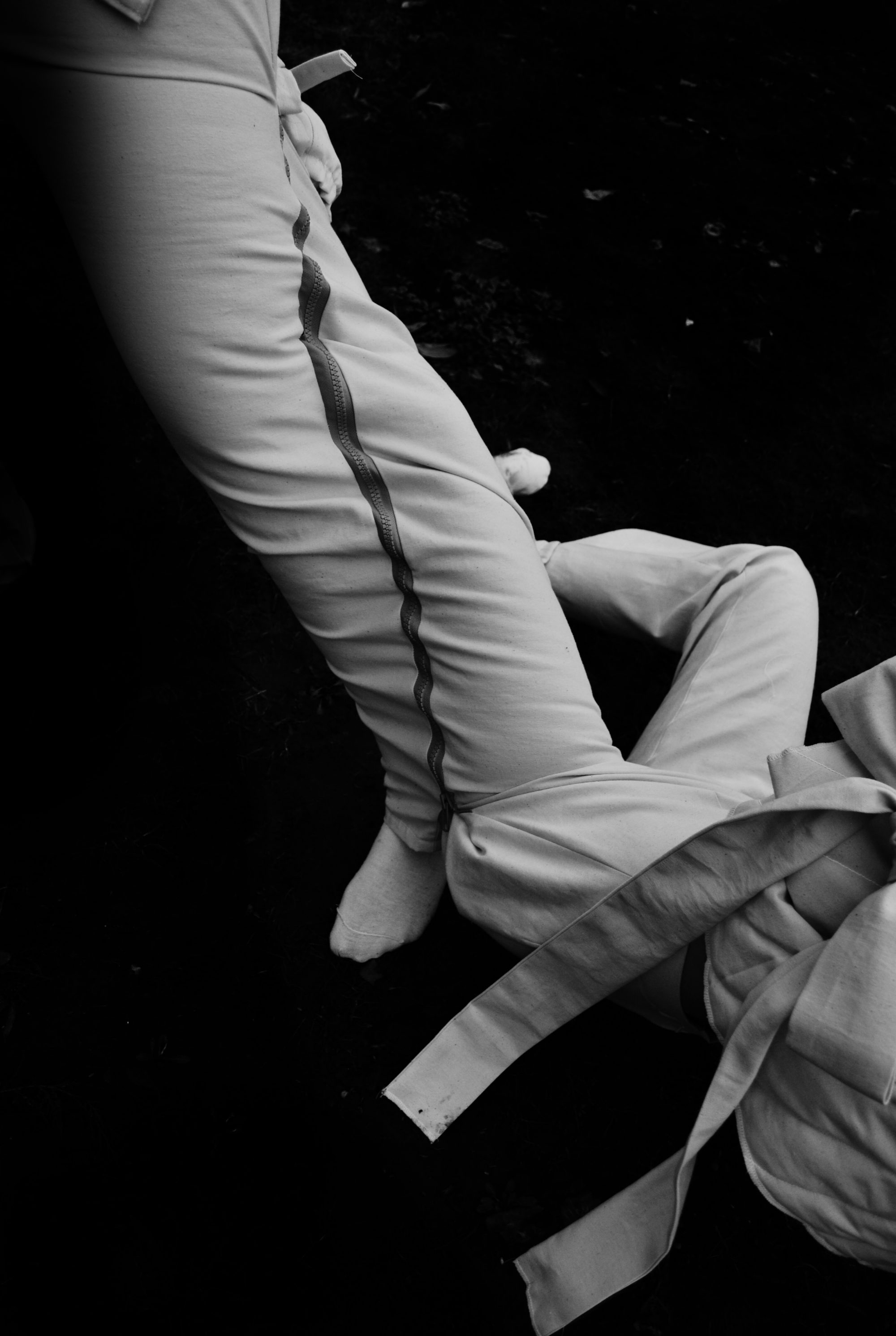
In the process of making my corset, and running the stitch experiment, I started to think about the discomfort of widely made objects in contrast with the personal-ness of handmade objects. There is something so much more intimate about an object that is made by hand.
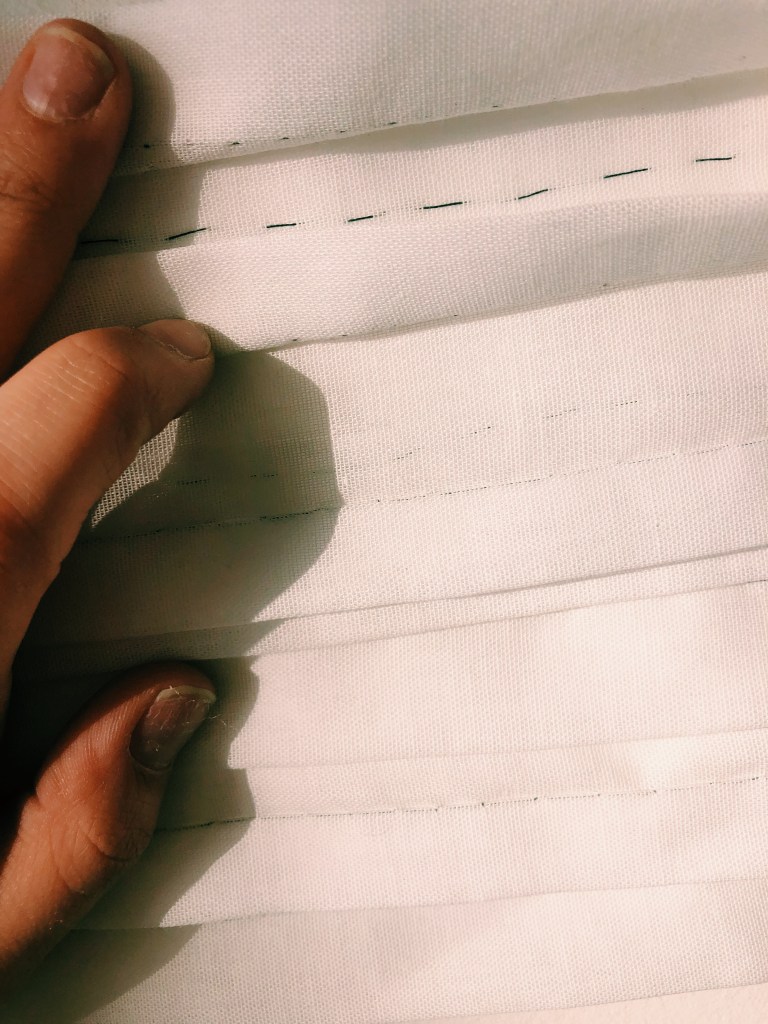
The first sample below, is a bunch of slip stitched hems, sewn together with running stitches. Whenever I look at a piece of homemade clothing, I always run my fingers along the lining to assess the slip stitches (see video below). For me, it is a way of checking quality, the talent of the maker, and I feel more connected to the garment in a way.
There is such a preciousness to something which is handmade. In my past research on sustainability, I know that creating a connection between a user and a garment is a strong way to lengthen the life of a garment.
I also found it interesting (in the video) how I had to dig through the sample. There was an element of surprise/veiling and unveiling that interested me about what I was creating.
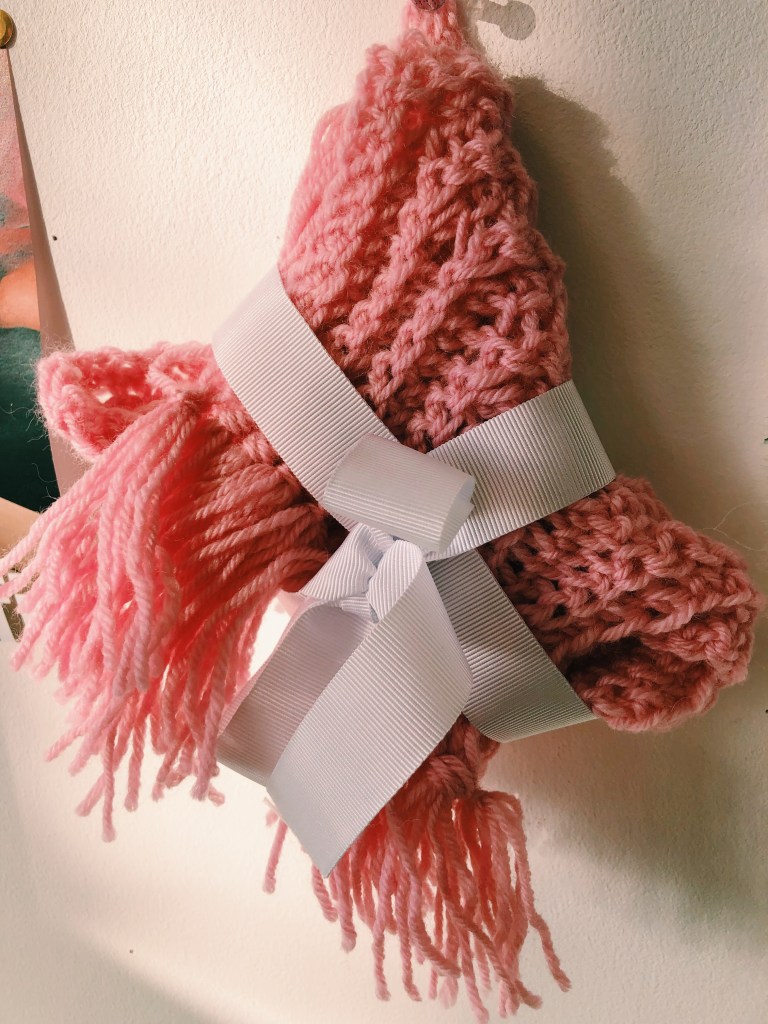
Below (crochet sample) I was thinking about my personal experiences with handcraft and tradition. Crochet is a practice in my family that has been passed down from generation to generation. My mom used to make baby blankets for people and wrap them in grosgrain ribbon, like how I showed it in the picture.
Again, for me there is so much more importance to an object that has been hand made (especially if it is by somebody who loves you). Also, I was thinking about material, and how the cotton has a grittiness to it. Its nice.
Both of these processes are “cathartic” to me. I think the repetitive action and simple task combined really just frees my mind up from any stress.
I don’t know if either of these experiments will go any further, but Julian wanted us to make more things and experiment.
 Samantha's RCA Process